Category Archives: microbial contamination

USA – FDA Alert: Certain Lots of Sportmix Pet Food Recalled for Potentially Fatal Levels of Aflatoxin

FDA

The U.S. Food and Drug Administration, in cooperation with the state departments of agriculture for Missouri, Oklahoma, Arkansas, Kansas, Kentucky, Louisiana, New Mexico, Oregon, Texas, and Washington, is investigating certain Sportmix pet food products manufactured by Midwestern Pet Foods, Inc. that may contain potentially fatal levels of aflatoxins. 

On January 11, 2021, Midwestern Pet Foods expanded the recall to include additional products that contain corn and were made in their Oklahoma manufacturing plant.

On January 25, 2021, FDA added a list of countries to which the recalled product may have been exported by Midwestern Pet Foods. 

Fast Facts

  • FDA is alerting pet owners and veterinary professionals about certain Sportmix pet food products (see list below) manufactured by Midwestern Pet Foods, Inc. in their Oklahoma plant that may contain potentially fatal levels of aflatoxins.
  • As of January 21, 2021, FDA is aware of more than 110 pets that have died and more than 210 pets that are sick after eating Sportmix pet food. Not all of these cases have been officially confirmed as aflatoxin poisoning through laboratory testing or veterinary record review. This count is approximate and may not reflect the total number of pets affected.
  • This is an ongoing investigation. Case counts and the scope of this recall may expand as new information becomes available.
  • Aflatoxins are toxins produced by the mold Aspergillus flavus, which can grow on corn and other grains used as ingredients in pet food. At high levels, aflatoxins can cause illness and death in pets.
  • Pets experiencing aflatoxin poisoning may have symptoms such as sluggishness, loss of appetite, vomiting, jaundice (yellowish tint to the eyes or gums due to liver damage), and/or diarrhea. In severe cases, this toxicity can be fatal. In some cases, pets may suffer liver damage but not show any symptoms.
  • Pet owners should stop feeding their pets the recalled products listed below and consult their veterinarian, especially if the pet is showing signs of illness.  The pet owner should remove the food and make sure no other animals have access to the recalled product.
  • FDA is asking veterinarians who suspect aflatoxin poisoning in their patients to report the cases through the Safety Reporting Portal or by calling their local FDA Consumer Complaint Coordinators. Pet owners can also report suspected cases to the FDA.

Midwestern Pet Foods, Inc. may have exported the recalled product to one consignee, respectively, in each of the following countries: Bahrain, Barbados, Chile, Costa Rica, Curacao, Cyprus, Czech Republic, Ecuador, El Salvador, French Polynesia, Ghana, Guatemala, Honduras, Hong Kong, Iceland, Indonesia, Ireland, Israel, Korea, Kuwait, Lebanon, Lithuania, Malaysia, Mexico, New Zealand, Nicaragua, Panama, Peru, Singapore, Taiwan, Trinidad, Ukraine, UAE, Uruguay, and Vietnam.

France – Sheep fresh and Grated organic sheep cheese from the Fromagerie du Val d’Ormèze brand – Salmonella

Oulah

Product reminder: Sheep fresh and Grated organic sheep cheese from the Fromagerie du Val d'Ormèze brand

ENCOUNTERED PROBLEM

Presence of salmonella

PROPOSED SOLUTION

People who may have this product are asked not to consume it and to return it to the point of sale where it was purchased.

Foodborne illness caused by Salmonella results in gastrointestinal disturbances, diarrhea, vomiting and abdominal pain, often accompanied by fever; these symptoms may be more severe in young children, immunocompromised individuals and the elderly. The incubation period can range from 6 to 72 hours.
People who have consumed the products mentioned below and who have these symptoms are invited to consult their doctor, notifying him of this consumption.

FURTHER INFORMATION

▸ Sheep
fresh 120g • Barcode: 3368131220115
• Lot: 212006
• DLC: 11/02/2021 – 14/02/2021 – 16/02/2021

▸ Grated organic sheep 90g
• Barcode: 3368130719078
• Lot: 212006
• DLC: 02/14/2021 – 02/15/2021 – 02/17/2021 – 02/18/2021

▸ Sanitary
approval N ° FR 07.095.001 CE

▸ Consumer service contact
For more information, please contact the cheese factory on 0611110638 or 0475062131

▸ Source
https://www.naturalia.fr/

Portugal – Legionnaires’ disease outbreak in northern Portugal declared over

Outbreak News Today

CDC legionella

In a follow-up on the Legionnaires’ disease outbreak in the North Region of Portugal, health authorities have declared the outbreak over, according to the European Centre for Disease Prevention and Control (ECDC).

The outbreak in Póvoa de Varzim, Vila do Conde and Matosinhos counties, which began in late October, resulted in a total of 88 cases, including 15 deaths.

The source of exposure has not been identified.

Legionella bacteria occur naturally in the environment. Water containing Legionella can be aerosolized through cooling towers, showers, hot tubs, and decorative fountains, and can cause Legionnaire’s disease, a serious lung infection (pneumonia) when inhaled.

Argentina – Argentina reports 145 confirmed Salmonella cases in Salta province

Outbreak News Today

The supervisor of the Epidemiological Surveillance program, María Valdez said in a press conference Friday since the beginning of the year, 145 confirmed salmonellosis cases have been reported in Salta province.

More than 80 percent of the infections were concentrated in the city of Salta and the rest in municipalities in the interior. “In the last outbreak, the cases were doubled compared to the previous period,” said the official.

According to provincial statistics, the age range that has contracted the most salmonellosis is found in babies and children up to 9 years of age, representing 44 percent of cases.

It was stated that the health authorities work together with the Bromatology teams of the province and the municipalities. In addition, actions, preventive measures and investigation of cases are coordinated with the company Aguas del Norte and with the Regulatory Body of Public Services.

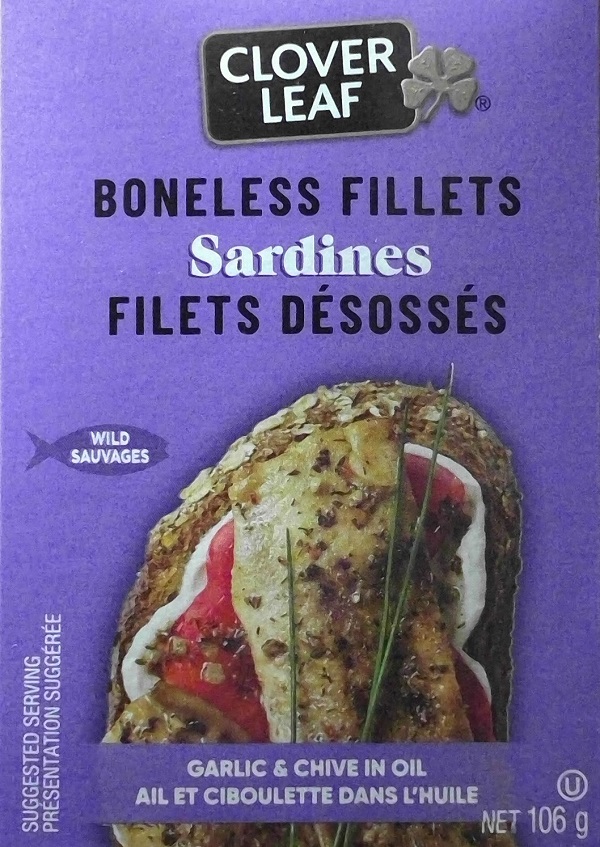
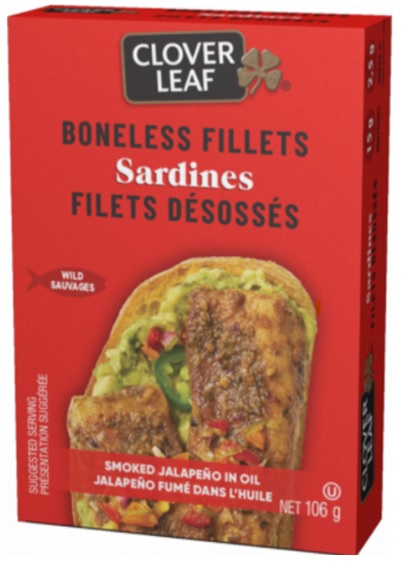
Canada – Food Recall Warning – Clover Leaf brand Sardines Boneless Fillets – Garlic & Chive in Oil and Sardines Boneless Fillets – Smoked Jalapeño in Oil recalled due to potential presence of dangerous bacteria – Clostridium botulinum

CFIA

Recall details

Ottawa, January 22, 2021 – Clover Leaf Seafoods Corp. is recalling Clover Leaf brand Sardines Boneless Fillets – Garlic & Chive in Oil and Sardines Boneless Fillets – Smoked Jalapeño in Oil from the marketplace because they may permit the growth of Clostridium botulinum. Consumers should not consume the recalled products described below.

Recalled product

Brand Product Size UPC Codes
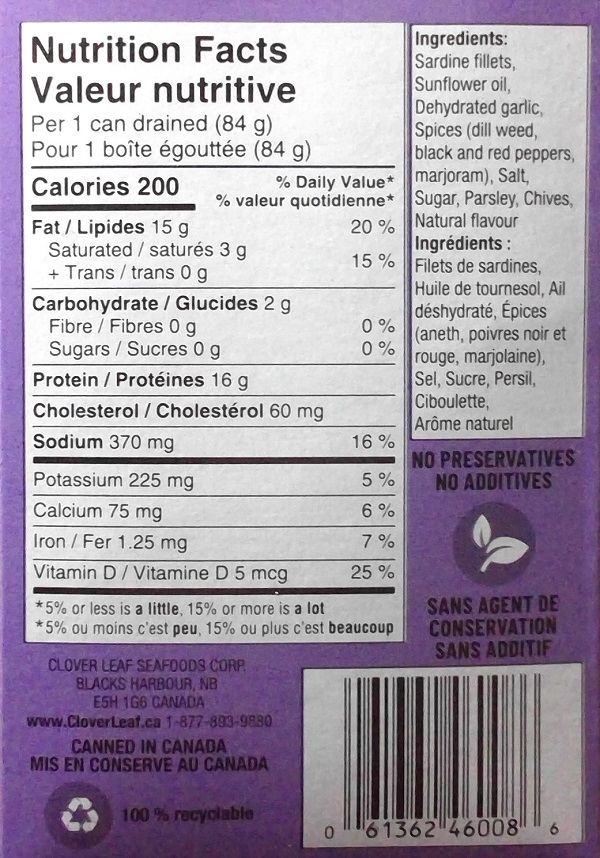
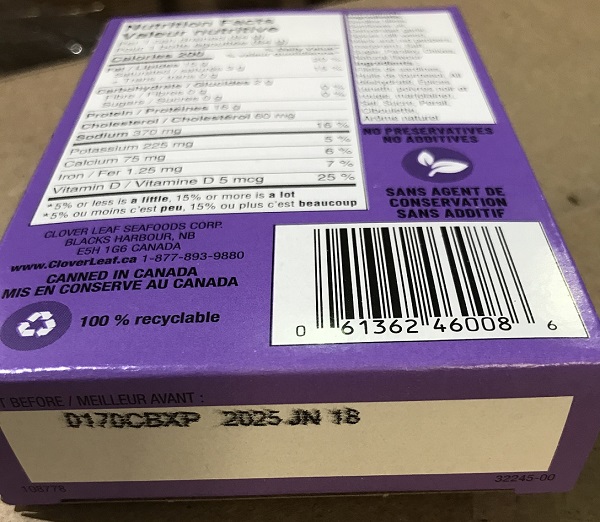
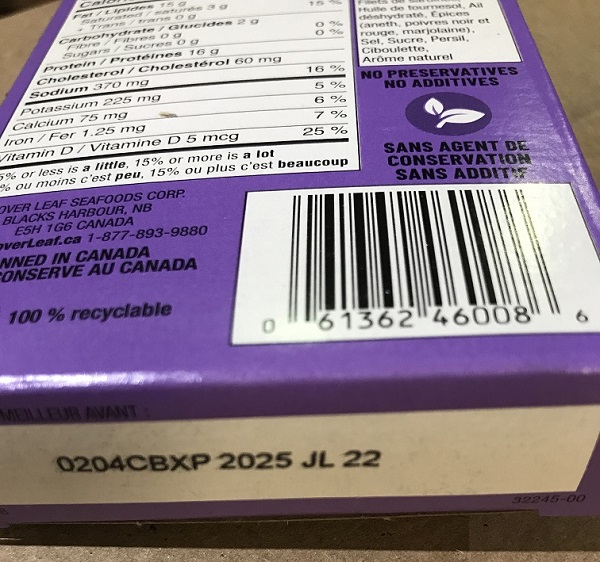
Clover Leaf Sardines Boneless Fillets – Garlic & Chive in Oil 106 g 0 61362 46008 6

0170CBXP 2025 JN 18

0204CBXP 2025 JL 22

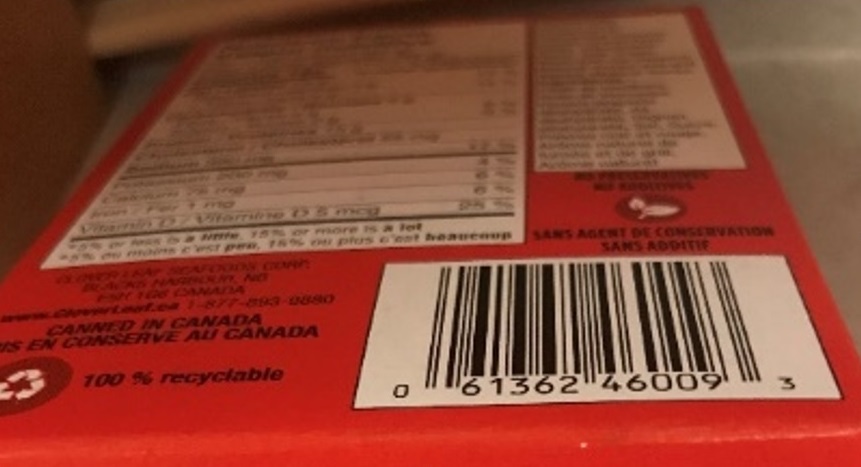
Clover Leaf Sardines Boneless Fillets – Smoked Jalapeño in Oil 106 g 0 61362 46009 3

0171CBXP 2025 JN 19

0218CBXP 2025 AU 05

0307CBXS 2025 NO 02

What you should do

If you think you became sick from consuming a recalled product, call your doctor.

Check to see if you have the recalled products in your home. Recalled products should be thrown out or returned to the store where they were purchased.

Food contaminated with Clostridium botulinum toxin may not look or smell spoiled but can still make you sick.

Symptoms in adults can include facial paralysis or loss of facial expression, unreactive or fixed pupils, difficulty swallowing, drooping eyelids, blurred or double vision, difficulty speaking, including slurred speech, and a change in sound of voice, including hoarseness.

Symptoms of foodborne botulism in children can include difficulty swallowing, slurred speech, generalized weakness and paralysis. In all cases, botulism does not cause a fever. In severe cases of illness, people may die.

Background

This recall was triggered by the company. The Canadian Food Inspection Agency (CFIA) is conducting a food safety investigation, which may lead to the recall of other products. If other high-risk products are recalled, the CFIA will notify the public through updated Food Recall Warnings.

The CFIA is verifying that industry is removing the recalled products from the marketplace.

Illnesses

There have been no reported illnesses associated with the consumption of these products.

Product photos

Printer ready version of photos

  • Clover Leaf – Sardines Boneless Fillets – Garlic & Chive in Oil – 106 grams (front)
  • Clover Leaf – Sardines Boneless Fillets – Garlic & Chive in Oil – 106 grams (back)
  • Clover Leaf – Sardines Boneless Fillets – Garlic & Chive in Oil – 106 grams (lot code - JN)
  • Clover Leaf – Sardines Boneless Fillets – Garlic & Chive in Oil – 106 grams (lot code - JL)
  • Clover Leaf – Sardines Boneless Fillets – Smoked Jalapeño in Oil – 106 grams(front)
  • Clover Leaf – Sardines Boneless Fillets – Smoked Jalapeño in Oil – 106 grams(back)

Public enquiries and media

Company information
Clover Leaf Seafoods Corp.: Consumer Affairs Recall Line, 1-888-686-1535
Public enquiries
Toll-free: 1-800-442-2342 (Canada and U.S.)
Telephone: 1-613-773-2342 (local or international)
Email: cfia.enquiries-demandederenseignements.acia@canada.ca
Media relations
Telephone: 613-773-6600
Email: cfia.media.acia@canada.ca

UK – Several retailers recall chilled and frozen seafood products because of possible contamination with Salmonella

FSA

Several retailers listed below are recalling several chilled and frozen seafood products because they might be contaminated with salmonella.

Product details

by Sainsbury’s Mussels (Chilled)
Pack size 150g
Best before All Date codes
by Sainsbury’s Cockles (Chilled)
Pack size 90g
Best before All Date codes
Co-op Cooked Mussels (Chilled)
Pack size 140g
Best before All date codes
Asda Seafood Selection (Mussels, seafood bites and king prawns) (Chilled)
Pack size 240g
Best before 22, 24, 25, 26, 27 and 28 January 2021
Asda Cooked Mussels (Chilled)
Pack size 150g
Best before 22, 23, 24, 25, 26, 27 and 28 January 2021
by Sainsbury’s Seafood Selection (Chilled)
Pack size 200g
Best before All Date codes
by Sainsbury’s Cooked Cockles (Frozen)
Pack size 200g
Best before All Date codes
by Sainsbury’s Cooked Mussels (Frozen)
Pack size 300g
Best before All Date codes
by Sainsbury’s Seafood Selection (Frozen)
Pack size 300g
Best before All Date codes
Waitrose & Partners Essential Frozen Seafood Selection, (King prawns, mussels and squid rings) (Frozen)
Pack size 250g
Best before All dates up to and including end January 2022
Co-op Cooked Seafood Selection (Frozen)
Pack size 300g
Best before All date codes
Product
Pack size Pack Size
Best before Use by dates
Waitrose & Partners Essential Cooked Seafood Selection, (Mussels, king prawns and squid) (Chilled)
Pack size 200g
Best before All use by dates from 20 December 2020 to 20 January 2021

Risk statement

The products listed above might be contaminated with salmonella. Symptoms caused by salmonella usually include fever, diarrhoea and abdominal cramps.

Action taken by the company

The retailers listed are recalling the above products. Point of sale notices will be displayed in all retail stores that are selling these products. These notices explain to customers why the products are being recalled and tell them what to do if they have bought the product. Please see the attached notices.

Our advice to consumers

If you have bought any of the above products do not eat them. Instead, return them to the store from where they were bought for a full refund.

Research – Listeria monocytogenes Biofilms in the Food Industry: Is the Current Hygiene Program Sufficient to Combat the Persistence of the Pathogen?

MDPI

Biofilms contain microbial cells which are protected by a self-produced matrix and they firmly attach themselves to many different food industry surfaces. Due to this protection, microorganisms within biofilms are much more difficult to eradicate and therefore to control than suspended cells. A bacterium that tends to produce these structures and persist in food processing plants is Listeria monocytogenes. To this effect, many attempts have been made to develop control strategies to be applied in the food industry, although there seems to be no clear direction on how to manage the risk the bacteria poses. There is no standardized protocol that is applied equally to all food sectors, so the strategies for the control of this pathogen depend on the type of surface, the nature of the product, the conditions of the food industry environment, and indeed the budget. The food industry performs different preventive and corrective measures on possible L. monocytogenes-contaminated surfaces. However, a critical evaluation of the sanitization methods applied must be performed to discern whether the treatment can be effective in the long-term. This review will focus on currently used strategies to eliminate biofilms and control their formation in processing facilities in different food sectors (i.e., dairy, meat, fish, chilled vegetables, and ready-to-eat products). The technologies employed for their control will be exemplified and discussed with the objective of understanding how L. monocytogenes can be improved through food safety management systems. View Full-Text

Research – Evaluation of foodborne pathogen die-off in back-sweetened wine and apple cider models

Journal of Food Protection

Wine and alcoholic apple cider are commonly back-sweetened with unpasteurized juice to produce fresh, natural, and palatable sweetened alcoholic beverages. Foodborne pathogens may be introduced from unpasteurized juice into alcoholic beverages through this back-sweetening process. Although pathogens generally do not survive under low pH conditions or high alcohol environment, the die-off of these pathogens has not been established to ensure the safety of the products. To determine the safety of these back-sweetened beverages, we evaluated the survival of three common foodborne pathogens, E. coli O157:H7, Salmonella enterica , and Listeria monocytogenes in modified white grape juice and apple juice models. White grape juice and apple juice were modified with hydrochloric acid/sodium hydroxide and ethanol to achieve conditions that are similar to the back-sweetened white wine and alcoholic apple cider. Pathogen cocktails were inoculated separately into modified juice models and their survival in the juice models were recorded over a 96-hour period. Our results show that a combination of low pH and high ethanol content resulted in a faster pathogen die-off compared to higher pH and lower ethanol conditions. The holding times required for different combinations of pH and ethanol concentration for each juice model to achieve 5-log reduction were reported. This research provides data to validate pathogen die-off to comply with Juice HACCP 5-log pathogen inactivation requirements for back-sweetened wine and alcoholic apple cider.

Research – Impact of a Combination of UV-C Irradiation and Peracetic Acid Spray Treatment on Brochothrix thermosphacta and Yersinia enterocolitica Contaminated Pork

MDPI

Efficient ways of decontamination are needed to minimize the risk of infections with Yersinia (Y.) enterocolitica, which causes gastrointestinal diseases in humans, and to reduce the numbers of Brochothrix (B.) thermosphacta to extend the shelf-life of meat. While many studies have focused on a single treatment of peracetic acid (PAA) or UV-C-irradiation, there are no studies about a combined treatment on meat. Therefore, in the present study, pork was inoculated with either Y. enterocolitica or B. thermosphacta, and was treated with a combination of 2040 mJ/cm2 UV-C irradiation followed by a 2000 ppm PAA spray treatment (30 s). Samples were packed under modified atmosphere and stored for 1, 7, or 14 days. The samples were examined for Y. enterocolitica and B. thermosphacta content, chemical and sensory effects, and meat quality parameters. For Y. enterocolitica, a significant reduction of up to 2.16 log10 cfu/cm2 meat and for B. thermosphacta, up to 2.37 log10 cfu/cm2 meat was seen on day 14 after UV-C/PAA treatment compared to the untreated controls.

Research – Case Report: Identification of the Source for Salmonella Contamination of Carcasses in a Large Pig Slaughterhouse

MDPI

To identify the major source of Salmonella contamination in a pig slaughterhouse, samples were collected from the clean and unclean area and Salmonella isolates were further typed. Carcasses entering the clean area showed a Salmonella contamination rate of 96.7% in the oral cavity and 55.0% in the rectum content samples. Evisceration seemed not to be critical as the contamination rate of the carcasses was similar before (16.7%) and after (18.3%) this slaughter step. In the unclean area, a limited number of oral cavity samples were positive after bleeding, while a dramatic increase of positives was observed after dehairing. Salmonella was detected in up to 0.01 mL of the recycled water collected from the dehairing machine. Genotyping of Salmonella isolates showed that similar pulsotypes were present in the oral cavity and recycled water. Based on these observations it can be concluded that the recycled water used in the dehairing machine was the major source for the carcass contamination in this slaughterhouse. View Full-Text