Category Archives: Illness

Canada – Public Health Notice: Outbreak of Salmonella infections linked to frozen whole kernel corn

PHAC

This notice has been updated to communicate the source of the outbreak and reflect 5 additional illnesses that have been reported in the ongoing outbreak investigation. There are now 84 Salmonella illnesses reported across 5 provinces. Based on the investigation findings to date, the outbreak is linked to Alasko brand frozen whole kernel corn.

The Canadian Food Inspection Agency (CFIA) issued food recall warnings on December 14 and 19 for Alasko brand frozen whole kernel corn imported by New Alasko Limited Partnership. Some of these products were possibly distributed nationally. This led to a secondary recall for Fraser Valley Meats brand frozen whole kernel corn on December 18. Additional food recall warnings in Canada are possible. More information on recalled products is available online.

Do not eat, use, sell, or serve any recalled Alasko brand or Fraser Valley Meats brand frozen whole kernel corn. This advice applies to individuals, as well as retailers, distributors, manufacturers and food service establishments such as hotels, restaurants, cafeterias, hospitals and long-term care homes, across Canada.

The Public Health Agency of Canada (PHAC) is collaborating with provincial public health partners, the Canadian Food Inspection Agency (CFIA) and Health Canada to investigate an outbreak of Salmonella infections involving 5 provinces: British Columbia, Alberta, Saskatchewan, Manitoba and Ontario. The illnesses reported in Ontario were related to travel to Alberta and British Columbia.

Many of the individuals who became sick reported eating a variety of raw and cooked produce items before their illness. Initially, investigators identified that fresh avocados were reported by many cases before they became ill; however, more information was needed to confirm the source of the outbreak.

As part of the food safety investigation, the CFIA collected different food items from restaurants where ill people dined. Testing found the outbreak strain of Salmonella in an unopened package of Alasko brand frozen whole kernel corn. Traceback findings identified Alasko as the common brand of frozen corn consumed at various food service establishments by individuals who became sick. Based on the investigation findings to date, the outbreak is linked to Alasko brand frozen whole kernel corn.

The CFIA issued food recall warnings on December 14 and 19 for Alasko brand frozen whole kernel corn. The recalled products were distributed in British Columbia, Alberta, Saskatchewan, Manitoba and Quebec, and may have been distributed in other provinces and territories. This led to a secondary recall for Fraser Valley Meats brand frozen whole kernel corn on December 18. More information on the recalled products are available online. The CFIA is continuing its food safety investigation, which may lead to the recall of other products. If other products are recalled, the CFIA will notify the public through updated food recall warnings.

The outbreak appears to be ongoing, as recent illnesses continue to be reported. Do not eat, use, sell, or serve recalled Alasko brand or Fraser Valley Meats brand frozen whole kernel corn. This advice applies to individuals, as well as retailers, distributors, manufacturers and food service establishments such as hotels, restaurants, cafeterias, hospitals and long-term care homes, across Canada.

This outbreak is an important reminder to Canadians and businesses that frozen vegetables can carry harmful germs that can lead to foodborne illness if not properly handled and cooked prior to consuming.

This public health notice will be updated as the investigation evolves.

Investigation summary

As of December 21, there have been 84 laboratory-confirmed cases of Salmonella Enteritidis illness investigated in: British Columbia (36), Alberta (30), Saskatchewan (4), Manitoba (12) and Ontario (2). The illnesses reported in Ontario are related to travel to Alberta and British Columbia.

Individuals became sick between early September 2021 and late November 2021. Four individuals have been hospitalized. No deaths have been reported. Individuals who became ill are between 5 and 89 years of age. The majority of cases (64%) are female.

The CFIA issued food recall warnings on December 14 and 19 for Alasko brand frozen whole kernel corn; and a secondary recall for Fraser Valley Meats brand frozen whole kernel corn on December 18. The CFIA is continuing its food safety investigation, which may lead to the recall of other products. If other products are recalled, the CFIA will notify the public through updated food recall warnings.

Who is most at risk

Anyone can become sick with a Salmonella infection, but young childrenthe elderlypregnant women or people with weakened immune systems are at higher risk for contracting serious illness.

Most people who become ill from a Salmonella infection will recover fully after a few days. It is possible for some people to be infected with the bacteria and to not get sick or show any symptoms, but to still be able to spread the infection to others.

What you should do to protect your health

The following advice applies to individuals, as well as retailers, distributors, manufacturers and food service establishments such as hotels, restaurants, cafeterias, hospitals and long-term care homes, across Canada:

  • Do not eat, use, sell or serve any recalled Alasko brand or Fraser Valley Meats brand frozen whole kernel corn.
  • Clean and sanitize all surfaces and storage areas that recalled Alasko brand or Fraser Valley Meats brand frozen whole kernel corn may have come in contact with, including countertops, containers, utensils, freezers, and refrigerators.
  • If you have been diagnosed with a Salmonella infection or any other gastrointestinal illness, do not cook food for other people.

For general use of frozen vegetables, including frozen corn, the following tips will also help reduce your risk of becoming ill:

  • Frozen vegetables are not ready to eat products. Always remember to cook frozen vegetables according to the package directions.
  • Wash your hands with soap and warm water for at least 20 seconds before and after handling frozen vegetables.
  • Wash and sanitize any surfaces that may have come in contact with frozen vegetables and its packaging, such as countertops, containers, utensils, freezers, and refrigerators.

Symptoms

Symptoms of a Salmonella infection, called salmonellosis, typically start 6 to 72 hours after exposure to Salmonella bacteria from an infected animal or contaminated product.

Symptoms include:

  • fever
  • chills
  • diarrhea
  • abdominal cramps
  • headache
  • nausea
  • vomiting

These symptoms usually last for 4 to 7 days. In healthy people, salmonellosis often clears up without treatment, but sometimes antibiotics may be required. In some cases, severe illness may occur and hospitalization may be required. People who are infected with Salmonella bacteria can be infectious from several days to several weeks.

People who experience symptoms, or who have underlying medical conditions, should contact their health care provider if they suspect they have a Salmonella infection.

What the Government of Canada is doing

The Government of Canada is committed to protecting the health of Canadians from enteric disease outbreaks.

PHAC leads the human health investigation into an outbreak and is in regular contact with its federal, provincial and territorial partners to monitor the situation and to collaborate on steps to address an outbreak.

Health Canada provides food-related health risk assessments to determine whether the presence of a certain substance or microorganism poses a health risk to consumers.

CFIA conducts food safety investigations into the possible food source of an outbreak.

Epidemiological information

Figure 1 is an epidemiological curve for this outbreak, which shows the numbers of new cases by week. Outbreak investigators use this information to show when illnesses begin, when they peak, and when they trail off. It can take several weeks from the time a person becomes ill to when the illness is reported and testing confirms a link to the outbreak. Data are available for 84 cases.
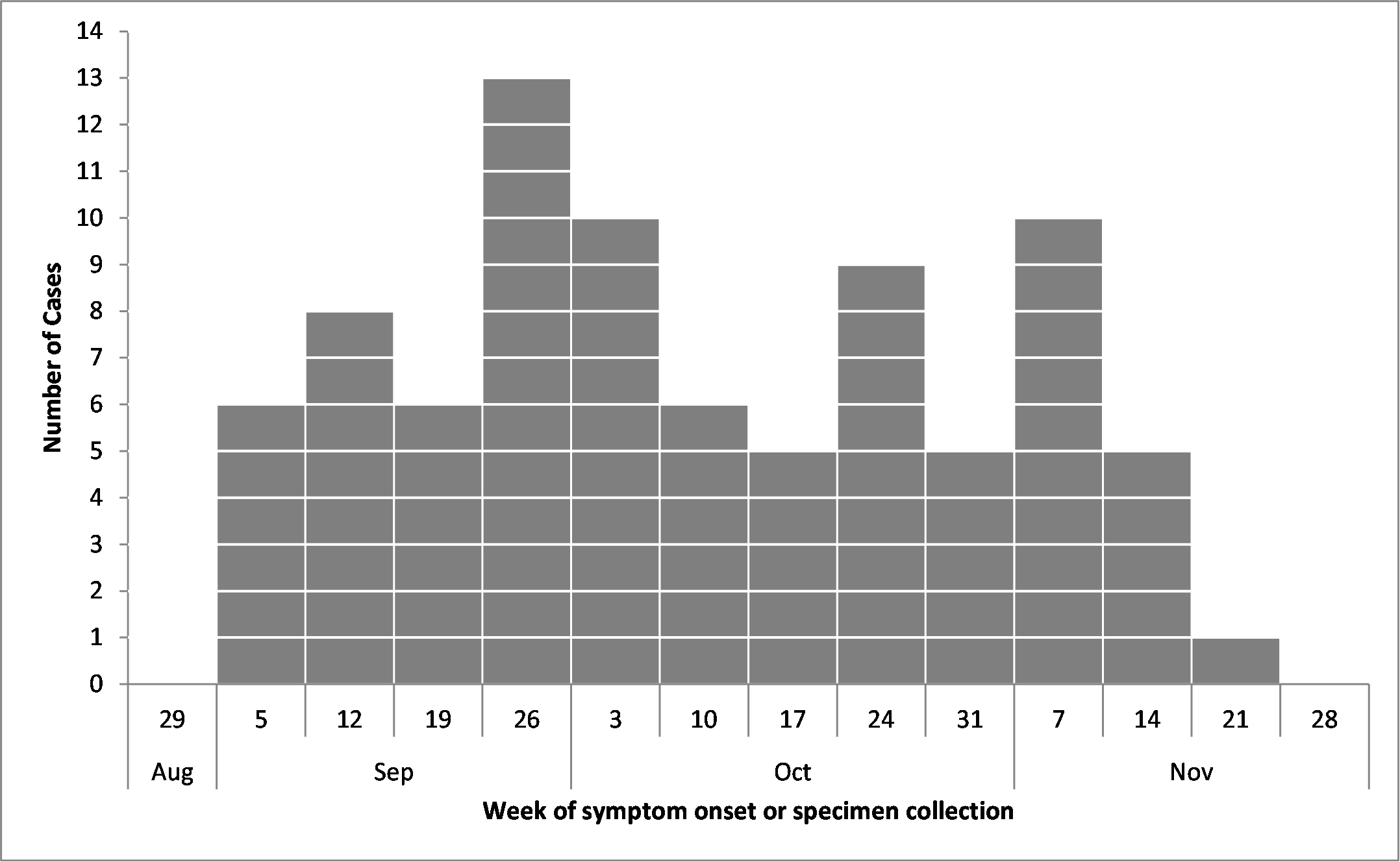
Figure 1. Number of people infected with Salmonella Enteritidis
Figure 1. Number of people infected with Salmonella Enteritidis

Figure 1: Text description

Additional information

Investigation history

Public Health Notice: December 9, 2021

Public Health Notice: November 29, 2021

Public Health Notice: November 12, 2021

Media contact

Public Health Agency of Canada
Media Relations
613-957-2983
media@hc-sc.gc.ca

Public inquiries

Call toll-free: 1-866-225-0709
Email: info@hc-sc.gc.ca

Cruise ship outbreak: More than 100 sickened on recent Viking Sea voyage – Cause Unknown

Outbreak News Today

The Centers for Disease Control Prevention Vessel Sanitation Program (CDC-VSP) reported that 118 passengers and crew on a recent voyage of the Viking Cruises, Viking Sea, were sickened with diarrhoea due to a gastrointestinal illness of unknown etiology.

The voyage, which took place November 29–December 13, 2021, resulted in 114 of 640 (17.8%) passengers and 4 of 404 (1.0%) crew members sickened.

In response to the outbreak, Viking Cruises and the crew aboard the ship reported the following actions:

  • Increased cleaning and disinfection procedures according to the ship’s outbreak prevention and response plan.
  • Collected stool specimens from passenger and/or crew gastrointestinal illness cases and sent specimens for testing.
  • Sent daily reports of gastrointestinal illness cases to VSP.

VSP is monitoring the situation and the ship’s outbreak response and sanitation procedures.

USA – CDC Outbreaks Food Illness Outbreaks 2021

India – Toll in suspected food poisoning in Dahod rises to eight

India Express

The death toll in a suspected case of food poisoning in Dahod district’s Bhulwan village went up to eight on Wednesday, with one more person succumbing during treatment.

Seven of the 17 affected persons died until Tuesday after allegedly consuming a meal from the concluding ceremony of a nine-day religious event in Bhulwan village on Sunday. While four persons died late Monday, three succumbed Tuesday evening.

According to police, the villagers participated in sacrificing goats at the concluding ceremony of “Jatar” gathering, which is a nine-day religious event held every five years to pray for the well-being of the village.

Hong Kong – Food-poisoned in quarantine hotel – and no one to help

The Standard

A 23-year-old man suffering from food poisoning for more than 18 hours in his quarantine hotel room at Four Points by Sheraton in Tung Chung and was left unattended, raising alarm bells about lack of care for sick residents at isolation hotels.

He was however sent to North Lantau Hospital more than one hour after his friend’s Australian mother, who is a resident finally alerted the hotel front desk at about 2.30 pm Tuesday. Doctor later diagnosed he was suffering from food poisoning.

The man, named JB, arrived in Hong Kong from San Francisco with a 22-year-old friend last Sunday and started their 21 days quarantine at Four Points by Sheraton Hong Kong, Tung Chung. The two are Hong Kong residents and returning home after visited San Francisco.

JB felt gassy and nauseous on Monday night after eating chicken wings and rice provided by the hotel and started vomiting due to suspected food poisoning.

“It [the food] was a little cold when I picked it up,” said JB, “[the chicken wing] looked raw when I inspected after I threw up.”

Sweden – Salmonella outbreak over.

Food Safety News

Salmonella

An outbreak of Salmonella has ended in Sweden with officials unable to find the source of infection.

In October, 40 people became ill with monophasic Salmonella Typhimurium with the majority falling sick in the first half of the month. An earlier update identified 33 patients. Cases were linked by whole genome sequencing.

As no new illnesses have been recorded after late October, the outbreak was recently judged to be over by authorities.

Sick people were 2 to 92 years old with a median age of 44. They lived in eight different regions.

Canada – Avocados are possible link in Canada Salmonella Outbreak

Food Poison Journal

Food Safety News reports that in a public health notice, officials report a Salmonella Enteritidis outbreak of unknown origin is continuing to grow, with patients spread across five Canadian provinces.

As of Dec. 9, there were 16 new confirmed patients, bringing the tally to 79, according to the Public Health Agency of Canada. Four people have been hospitalized. No deaths have been reported.

“Many of the individuals who became sick reported eating fresh avocados purchased from grocery stores or served at restaurants before their illness. Investigation findings to date have identified that these avocados have been distributed in British Columbia, Alberta, Saskatchewan and Manitoba. More information is needed to confirm the source of the outbreak. The outbreak appears to be ongoing, as illnesses continue to be reported,” according to public health officials.

Argentina – More Salmonella cases reported in Salta, Nearly half in young children

Outbreak News Today

kswfoodworld salmonella

In a follow-up on the Salmonella situation in Salta province, Argentina, the Ministry of Public Health reported that from the beginning of 2021 and until the end of last week, 1,283 cases of salmonellosis were confirmed in the province.

In the first months of the year, a greater number of cases comprised in the first nine epidemiological weeks was observed. Then, between weeks 10 and 38, isolated infections occurred. And, from week 32 that began on August 8 until today, 665 laboratory-confirmed cases were reported.

UK – Advice to reptile owners following withdrawal and recall of frozen mice used as food for pets linked to Salmonella outbreak in people

FSA

The Food Standards Agency (FSA) is issuing further instructions to reptile owners following an outbreak of human salmonellosis linked to frozen mice used to feed snakes and other animals and birds.
11 December 2021
 

The FSA, along with Food Standards Scotland, Department for Environment, Food and Rural Affairs, the Animal and Plant Health Agency and the UK Health Security Agency, Public Health Wales and Public Health Scotland are advising animal keepers not to feed their pets specific batches of frozen mice.   

Since the outbreak was first reported in 2015, there have been almost 900 cases of illness. Salmonella (which causes salmonellosis) is a common bacterial disease that affects the intestines and can pass from animals to people or via consumption of contaminated food or exposure to contaminated environments and cause infection. 

This outbreak of Salmonella has been linked to specific frozen mice products and as a result, a product recall information notice detailing affected products has been issued by the FSA. The recall does not affect rats from the same supplier, however investigations are ongoing. Should concerns about the safety of rats be identified, our advice will be updated accordingly.
The FSA is instructing reptile owners and others who have a supply of the affected frozen mice to return them to the place of purchase so they can be carefully disposed of.

However, the FSA and partners are also warning people to be extra careful when handling any frozen rodents including mice product and packaging, not just the batches identified, due to the risk of salmonella from other batches linked to this recall. 
People should be extra vigilant, washing hands thoroughly with soap and water immediately after contact, when handling not just the product, but their reptiles and associated equipment and environment, due to the risk of the illness. 
Further general advice on reducing the risk of contracting Salmonella is available at https://www.gov.uk/government/publications/salmonella-reducing-infection-from-reptiles(Opens in a new window)

A government spokesperson said:

“In September this year, the FSA introduced new requirements for shops to provide a leaflet warning about the risks of Salmonella and how to keep customers safe when buying and feeding frozen mice to their reptiles. However, the outbreak continues and a full withdrawal and recall of the specific batches of frozen mice is necessary. The withdrawal and recall does not affect rats from the same supplier, however investigations are continuing, should concerns about the safety of rats be identified, advice will be updated.

Therefore, if you have the affected feeder mice product in your freezer, please return it to where you purchased it from so it can be disposed of carefully and thoroughly clean and disinfect any surfaces it has been in contact with, including your hands. We are also asking people to be extra vigilant with all frozen rodent product, however, do check the specific information about which batches are involved as retailers will not be accepting other material.”

Advice to reptile owners about feeding their pets

Snake owners and others using frozen mice as food may have concerns about maintaining their animal’s welfare, as the product withdrawal and recall will cause short term shortages. There should be sufficient mice to maintain animal welfare for all snakes and other animals, including birds that need to be fed mice, if owners adapt their current feeding routines. Detailed advice for reptile owners will be published at www.casc.org.uk/rodent-recall(Opens in a new window)

Advice to parents and guardians of children handling reptiles

Children have been particularly affected so we are urging parents and guardians to make sure everyone washes their hands thoroughly with warm soapy water every time they handle and feed frozen mice to their pets and handle their reptiles to reduce risk of becoming ill with Salmonella. Both the vivarium and the areas reptiles are able to roam could be contaminated with salmonella. Good hygiene should be observed.

If you, or other family members become ill with symptoms such as diarrhoea, abdominal pain and fever, consult your doctor or NHS 111 and inform them that you own/keep a reptile. If you have symptoms, make sure you wash your hands regularly and avoid preparing food for others. Do not go to work or school until 48 hours after symptoms have passed to reduce the chances of passing on the infection.


Research – An outbreak of food poisoning due to Escherichia coli serotype O7:H4 carrying astA for enteroaggregative E. coli heat-stable enterotoxin1 (EAST1) – Seaweed

Cambridge Org

In June 2020, a large-scale food poisoning outbreak involving about 3000 elementary and junior high school students occurred in Yashio, Saitama, Japan. A school lunch was the only food stuff ingested by all of the patients. Escherichia coli serotype O7:H4 carrying the astA gene for enteroaggregative E. coli (EAggEC) heat-stable enterotoxin 1 (EAST1) was detected in faecal specimens from the patients, and sample inspection revealed its presence in a seaweed salad and red seaweed (Gigartina tenella) as one of the raw materials. Analysis of the antibiotic sensitivity of the isolates revealed resistance to ampicillin and cefotaxime. All isolates were confirmed to be of the same origin by pulsed-field gel electrophoresis after digestion with the restriction enzyme XbaI, and single nucleotide polymorphism analysis using whole genome sequencing. To our knowledge, this is the first report of a large-scale food poisoning caused by E. coli O7:H4, which lacks well-characterized virulence genes other than astA.