Category Archives: foodbourne outbreak

USA – Outbreak Investigation of Salmonella Typhimurium: BrightFarms Sunny Crunch Salad (July 2021) – Salmonella

FDA

The FDA, along with CDC and state and local partners, is investigating a multistate outbreak of Salmonella Typhimurium infections linked to the consumption of BrightFarms Sunny Crunch Salad produced in the firm’s Rochelle, IL facility.

The FDA is working with BrightFarms to determine if there are additional products that could have been affected. Additional information will be provided as it becomes available.

Recommendation

Consumers, restaurants, and retailers should not eat, sell, or serve BrightFarms Sunny Crunch Salad produced in Rochelle, IL. Sunny Crunch salads are packaged in a plastic clamshell container labeled as “fresh from Rochelle, IL.” According to the firm, these products were distributed in Illinois, Wisconsin, Iowa, and Indiana.

Consumers, restaurants, retailers, and distributors should check their refrigerators and throw away any of the products identified above.

If you purchased or used these products, you should use extra vigilance in cleaning and sanitizing any surfaces that may have come in contact with the product, to reduce the risk of cross contamination.

FDA recommends that anyone who has symptoms of salmonellosis contact their healthcare provider.

Investigation Background

Although it is early in the investigation, epidemiological and traceback evidence from sick people indicate that this outbreak is linked to BrightFarms Sunny Crunch Salad produced in Rochelle, IL. Interview data and shopper card records show that five people ate or bought BrightFarms brand Sunny Crunch salad before they got sick. FDA conducted a traceback investigation and identified the farm in Rochelle, IL, as the likely source of the BrightFarms brand Sunny Crunch salad bought by people who became ill.


Product Images

Outbreak Investigation of Salmonella Typhimurium in BrightFarms Sunny Crunch Salad - Product Image (July 15, 2021)

Case Count Map Provided by CDC

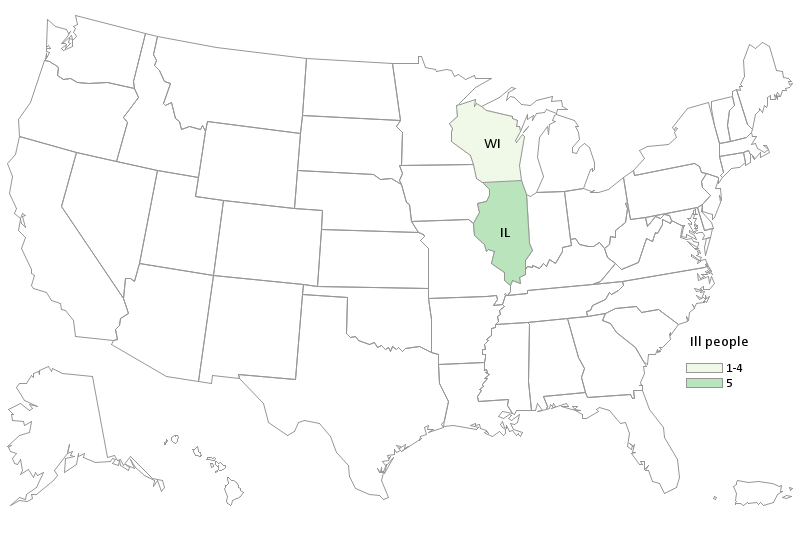
Outbreak Investigation of Salmonella Typhimurium in BrightFarms Sunny Crunch Salad Case Count Map

Case Counts

Total Illnesses: 8
Hospitalizations: 0
Deaths: 0
Last Illness Onset: June 15, 2021
States with Cases: IL (5), WI (3)
Product Distribution*: IL, WI, IA, IN
*Distribution has been confirmed for states listed, but product could have been distributed further, reaching additional states
USA – CDC announces 208 confirmed Cyclospora cases with no clear common source

Food Poison Journal

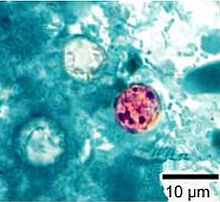
220px-Cyclospora_cayetanensis_stained

As of July 13, 2021, 208 laboratory-confirmed cases of cyclosporiasis in people who had no history of international travel during the 14-day period before illness onset have been reported to CDC by 23 jurisdictions, including 22 states and New York City.

The median illness onset date is June 17, 2021 (range: May 1, 2021–July 3, 2021).

At least 21 people have been hospitalized; no deaths have been reported.

EU – EU countries investigate Salmonella illnesses linked to imported tahini, halva

Food Safety News

Five European countries have reported Salmonella infections with at least some of them linked to tahini and halva from Syria.

Up to 80 people may have been affected since 2019 in Germany, Sweden, Norway, Denmark and the Netherlands with several types of Salmonella being linked to the outbreak.

Research – Sachet water consumption as a risk factor for cholera in urban settings: Findings from a case control study in Kinshasa, Democratic Republic of the Congo during the 2017–2018 outbreak

PLOS One

Food Illness

Cholera is a diarrheal disease caused by ingestion of the Vibrio cholerae bacterium. Outbreaks in urban areas are becoming increasingly frequent in Sub-Saharan Africa. Risk factors for cholera have been studied in rural settings but not sufficiently in urban areas. Understanding context-specific risk factors is key for successful outbreak response. During a cholera outbreak in Kinshasa, the Democratic Republic of the Congo we were able to identify a previously unknown behavioural risk factor of particular relevance in urban settings–the consumption of drinking water from plastic sachets. Water sachets are sold on the streets of all major cities in Sub-Saharan Africa. It requires biting off an edge and sucking out the water, and we think that external contamination of these sachets was an important transmission route in the Kinshasa outbreak. Water sachets are predominantly consumed by socio-economically disadvantaged groups who lack piped water supply in their homes and have poor access to sanitary infrastructure. This makes our findings particularly relevant because these are the very populations who are at increased risk of getting and transmitting cholera. Health messaging and response measures should include consumption of water sachets as a potential risk factor during future cholera outbreaks in urban low-resource settings.

Wales – North Wales playgroup, breakfast and afterschool clubs closed after child struck down with E.coli

Daily Post

Public health chiefs have confirmed that as a result Cylch Meithrin and Clwb Y Morfa, Breakfast Club and Afterschool Club have all closed for a deep clean.

A parent at Ysgol Glan Morfa, who asked not to be named, said: “There are a number of kids in my child’s class who have been off all week.”

Public Health Wales, Conwy County Borough Council and Betsi Cadwaladr University Health Board are now investigating

Richard Firth, consultant in health protection at Public Health Wales confirmed a single case of a Shiga toxin-producing E.coli (STEC) has been identified in a pupil at the Cylch Meithrin, Abergele.

Research -Evidence of on-going transmission of Shiga toxin-producing Escherichia coli O157:H7 following a foodborne outbreak

Cambridge Org

In August 2019, public health surveillance systems in Scotland and England identified seven, geographically dispersed cases infected with the same strain (defined as isolates that fell within the same five single nucleotide polymorphism single linage cluster) of Shiga toxin-producing Escherichia coli O157:H7. Epidemiological analysis of enhanced surveillance questionnaire data identified handling raw beef and shopping from the same national retailer (retailer A) as the common exposure. Concurrently, a microbiological survey of minced beef at retail identified the same strain in a sample of minced beef sold by retailer A, providing microbiological evidence of the link. Between September and November 2019, a further four primary and two secondary cases infected with the same strain were identified; two cases developed haemolytic uraemic syndrome. None of the four primary cases reported consumption of beef from retailer A and the transmission route of these subsequent cases was not identified, although all four primary cases visited the same petting farm. Generally, outbreaks of STEC O157:H7 in the UK appear to be distinct, short-lived events; however, on-going transmission linked to contaminated food, animals or environmental exposures and person-to-person contact do occur. Although outbreaks of STEC caused by contaminated fresh produce are increasingly common, undercooked meat products remain a risk of infection.

RASFF Alert – Foodborne outbreak -Suspected Histamine -Frozen Yellowfin Tuna Loins

RASFF

Foodborne outbreak suspected (histamine poisoning) to be caused by frozen yellowfin tuna loins from Spain in Italy

USA – Outbreak Investigation of Salmonella: Jule’s Cashew Brie (April 2021) – Outbreak Over

FDA

he FDA, along with CDC, state and local partners, investigated a multistate outbreak of Salmonella infections linked to the consumption of Jule’s Cashew Brie, a vegan, or plant-based cheese alternative. On April 23, 2021, Jule’s Foods of Carlsbad, California, conducted a voluntary recall of all varieties of Jule’s Foods products.

As of July 7, 2021, CDC announced that the outbreak is over. There are a total of 20 illnesses in four states. Two additional strains of SalmonellaSalmonella Typhimurium and Salmonella Chester, have been linked to this outbreak. The illnesses of Salmonella Chester have the same genetic fingerprint as Salmonella found in a sample of Jule’s Cashew Brie collected by the California Department of Public Health (CDPH).

Illnesses of Salmonella Duisburg and Salmonella Urbana have been previously reported and are linked to this outbreak. Other strains of Salmonella have been identified in raw and finished product samples and environmental samples but have not been linked to illnesses.

Based on FDA traceback investigation and sample results, the cashews used by Jule’s Foods have been identified as the likely source of contamination in the Jule’s Cashew Brie products. The FDA worked with the cashew supplier to ensure that potentially contaminated product was removed from the market and that the supplier implemented corrective actions.

Recommendation

CDC announced that the outbreak is over. There are no recommendations for consumers, restaurants, or retailers.


Product Images

Outbreak Investigation of Salmonella Duisburg Jule's Brie

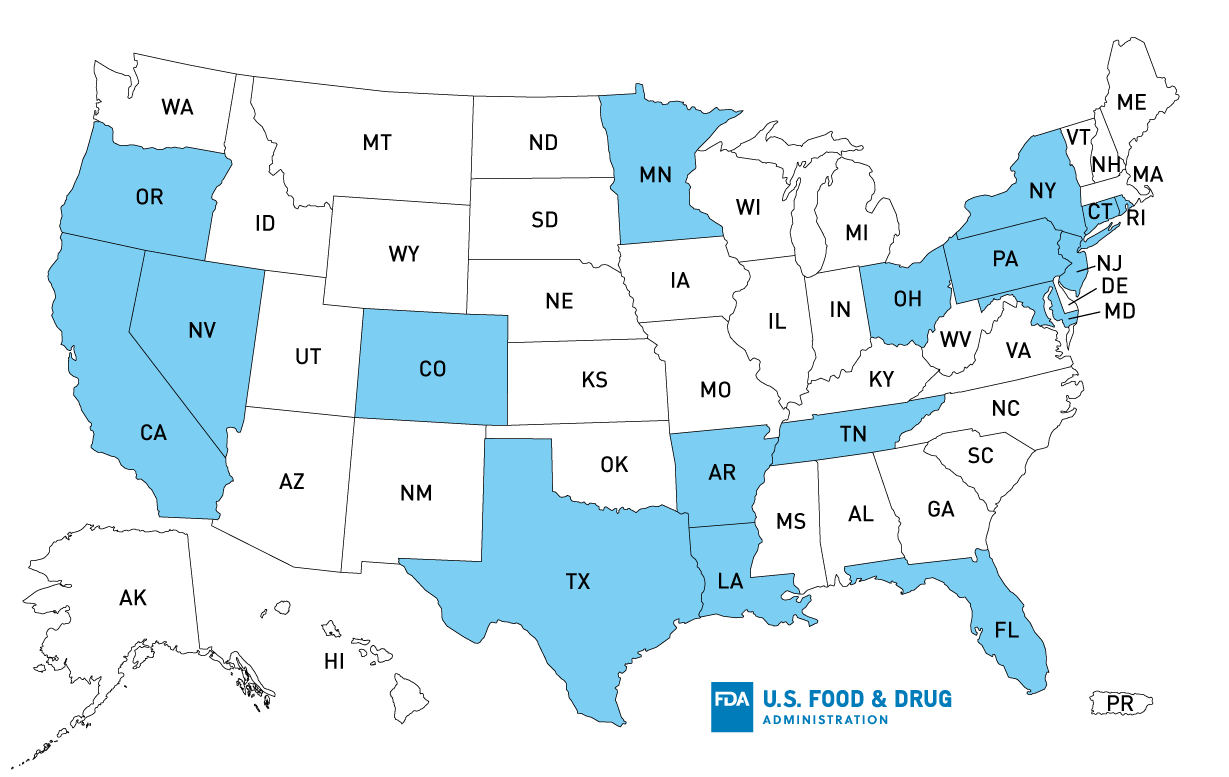
Map of U.S. Distribution of Recalled Jule’s Foods Products

Outbreak Investigation of Salmonella Duisburg - Cashew Brie Products - Map of U.S. Distribution (04-23-2021)

Case Count Map Provided by CDC

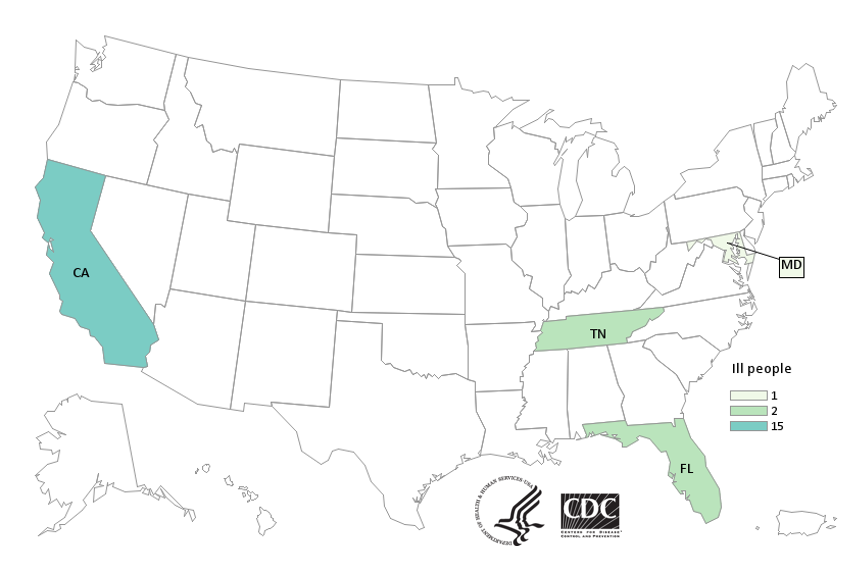
Outbreak Investigation of Salmonella in Cashew Brie Products - CDC Case Count Map (July 7, 2021)

Case Counts

Total Illnesses: 20
Hospitalizations: 5
Deaths: 0
Last Illness Onset: May 9, 2021
States with Cases: CA (15), FL (2), MD (1), TN (2)
Product Distribution*: Arkansas, California, Colorado, Connecticut, Florida, Louisiana, Maryland, Minnesota, Nevada, New York, New Jersey, Ohio, Oregon, Pennsylvania, Rhode Island, Tennessee, Texas
*Distribution has been confirmed for states listed, but product could have been distributed further, reaching additional states

Spain – Salmonella sickens six in Spain; outbreaks decline in Andalucía

Food Safety News

Public health officials in a Spanish region have reported six confirmed Salmonella infections.

Surveys and epidemiological work by Castilla y León Public Health have shown the outbreak could have been caused by the consumption of tortillas in two establishments in Soria. A Spanish tortilla also called a Spanish omelet can contain herbs, spices, potatoes, and eggs.

The product was cooked at one of these sites and part of it was transferred, once prepared, to the second.

Two children and four adults are affected. The two young people went to the Santa Bárbara Hospital and were then transferred to Burgos University Hospital, where they were admitted to the pediatric Intensive Care Unit (ICU).

Finland – Salmonella outbreak affects 450 in Jyväskylä, Linked to imported lettuce

Outbreak News Today

In a follow-up on the salmonella outbreak in the Jyväskylä region of Finland, the City of Jyväskylä said imported lettuce served in day care centres has been confirmed as the source of an outbreak of salmonella bacterial infections that affected about 450 children and day care centre staff.

The salad contained domestic cucumber, peas and foreign iceberg lettuce. Domestically-produced cucumbers and peas were also suspected to be the cause of the outbreak, but the city said tests had revealed no connection between these products and the salmonella infections.

The most likely source of Salmonella is iceberg lettuce, which came to Finland from Germany via Sweden.