Category Archives: Foodborne Illness

UK – FSA research suggests new higher estimates for the role of food in UK illness

FSA

A scientific review by the Food Standards Agency (FSA) estimating that around 2.4 million cases of foodborne illness occur every year in the UK has been published. This is up from the 2009 estimate of approximately one million.

The FSA is also publishing a ground-breaking five-year study into the extent of norovirus in food carried out by a consortium of UK scientists, and a further FSA paper which reviews and updates the assessment developed during that project.

These new figures do not indicate an increase in total illness, or any new risk to public health, but rather provide a better estimation of the proportion of infectious intestinal disease that is due to food. The overall estimate for this type of illness, from all sources, remains the same, at around 18 million cases each year in the UK.

These new studies and their accompanying models reveal:

  • an estimated 380,000 cases of norovirus linked to food occur in the UK per year
  • a breakdown of the roles of the main transmission pathways in food suggest eating out accounts for an estimated 37% of all foodborne norovirus cases, takeaways at 26%, open-headed lettuce on retail sale at 30%, raspberries on retail sale at 4%, and oysters on retail sale at 3%
  • the revised foodborne norovirus estimate, combined with better analysis of how many illnesses of unknown cause are also likely to be caused by food, suggest around 2.4 million estimated UK cases of foodborne illness occur each year

Professor Guy Poppy, Chief Scientific Adviser to the Food Standards Agency, said:

‘This work gives us a much better idea of the role of food in the spread of all infectious intestinal disease in the UK. However, this does not mean more people are getting unwell, only that we estimate food is responsible for more existing cases than previously thought.

‘Most of this increase is due to innovative new research into foodborne norovirus. As part of this, sampling surveys focused on the five most common food-related transmission routes. Although the percentages may appear striking, the risk to consumers remains very low for most of these pathways. For example, on average, an individual would only end up with norovirus once in every 15,000 portions of open-headed lettuce – that would take around 40 years. Oysters pose the highest risk per serving, with illness likely on average once in around 160 servings.

‘We are not changing our advice to consumers and businesses. Instead this research reinforces the need for the highest standards of good personal and food hygiene practices in catering establishments and at home to avoid infection.’

Professor Sarah J. O’Brien, lead NoVAS researcher, added:

‘Estimating the contribution of norovirus to the burden of UK foodborne disease has been particularly difficult up until now. This is largely due to people not attending doctors’ surgeries when they are unwell with symptoms of the winter vomiting bug. And whilst helpful in preventing the spread of the virus and alleviating the strain on healthcare settings, it does mean that crucial information about the virus cannot be collected. This is why the development of the first risk assessment of this type for the UK is particularly significant.’

The FSA can now use this new and improved understanding of the significance of foodborne disease to inform future efforts to control and reduce the risk of infection posed to the public from food by all pathogens.

Find out more about the importance of good food hygiene to reduce the risk of spreading norovirus.

Food business operators can find more guidance on personal hygiene when handling food.

USA – Caribbean Princess update: More than 400 cases reported – Norovirus ?

Outbreak News Today

According to the CDC today, 371 of 3,035 passengers and 32 of 1,161 crew have been sickened, 12,2 percent and 2.8 percent, respectively.

Officials say the causative agent remains unknown to date.

Norovirus is a highly contagious viral illness that often goes by other names, such as viral gastroenteritis, stomach flu, and food poisoning.

Cruise Ship – Cruise ship outbreak: 190 sickened onboard Princess Cruises’ Caribbean Princess

Outbreak News Today

Federal health officials report investigating a gastrointestinal disease outbreak on a Princess Cruises’ Caribbean Princess February 2–16, 2020 voyage.

To date, 190 passengers and crew have experienced symptoms of vomiting and diarrhea. The exact etiology of the outbreak has not been determined.

UK – Nearly 200 ill in UK after eating oysters – No Recalls?

Food Safety News

Almost 200 people have fallen ill after eating oysters in the United Kingdom in recent months.

Since November 2019 there have been at least 180 reported cases of gastroenteritis associated with oyster consumption linked to multiple food outlets and oyster producers.

A Public Health England spokeswoman told Food Safety News that norovirus had been identified as the cause of a number of these outbreaks.

“Public Health England is working with the Food Standards Agency and Food Standards Scotland, and affected local authorities, to investigate outbreaks of gastrointestinal illness reported since November 2019 associated with consumption of oysters.”

Officials say there is no connection to the norovirus outbreaks from oysters in Europe. In Sweden, 70 people fell sick after eating oysters, some of which came from domestic production and others from France.

Research – Novel composite antimicrobial film could take a bite out of foodborne illnesses

Science Daily

A novel composite film — created by the bonding of an antimicrobial layer to conventional, clear polyethylene plastic typically used to vacuum-package foods such as meat and fish — could help to decrease foodborne illness outbreaks, according to researchers in Penn State’s College of Agricultural Sciences.

The antimicrobial lining of the film is comprised of a pullulan-based biopolymer produced from starch syrup during a fermentation process, which is already approved for use in foods. Pullulan, a water-soluble “polysaccharide,” is essentially a chain of sugar, glycerin and cellulose molecules linked together. To kill pathogens such as SalmonellaListeria and pathogenic E. coli, researchers infused the pullulan with Lauric arginate, made from naturally occurring substances and already approved for use in foods.

Development of the composite antimicrobial film is important because 76 million cases of foodborne illnesses occur each year in the U.S. alone, resulting in 300,000 hospitalizations and 5,000 deaths, according to the U.S. Centers for Disease Control and Prevention. In light of this problem and the commercial potential of this discovery, Penn State has applied for a provisional patent on the composite antimicrobial film.

Information -Food Poisoning

foodsafety.gov

Food poisoning—any illness or disease that results from eating contaminated food—affects millions of Americans each year. While the American food supply is among the safest in the world, the Federal government estimates that there are about 48 million cases of foodborne illness annually—the equivalent of sickening 1 in 6 Americans each year. And each year these illnesses result in an estimated 128,000 hospitalizations and 3,000 deaths.

Causes of Food Poisoning

  • Bacteria and Viruses: Bacteria and viruses are the most common cause of food poisoning. The symptoms and severity of food poisoning vary, depending on which bacteria or virus has contaminated the food.
  • Parasites: Parasites are organisms that derive nourishment and protection from other living organisms known as hosts. In the United States, the most common foodborne parasites are protozoa, roundworms, and tapeworms.
  • Molds, Toxins, and Contaminants: Most food poisoning is caused by bacteria, viruses, and parasites rather than toxic substances in the food. But some cases of food poisoning can be linked to either natural toxins or added chemical toxins.
  • Allergens: Food allergy is an abnormal response to a food triggered by your body’s immune system. Some foods, such as nuts, milk, eggs, fish, crustacean shellfish, tree nuts, peanuts, wheat or soybeans, can cause allergic reactions in people with food allergies.

Click the link above for more information.

RASFF Alerts – Norovirus – Oysters

RASFF-Logo

RASFF – foodborne outbreak suspected to be caused by live oysters from France in Italy

RASFF – foodborne outbreak caused by and norovirus in live oysters from France in Sweden

RASFF – norovirus (presence) in oysters (Crasosstrea gigas) from France in the Netherlands

RASFF – withdrawal of live bivalve molluscs harvested in France because of possible contamination with norovirus in France

RASFF – withdrawal of live bivalve molluscs harvested in France because of possible contamination with norovirus in Denmark

RASFF – withdrawal of live bivalve molluscs harvested in France because of possible contamination with norovirus in France

RASFF – withdrawal of cupped oysters (huitres creuses) harvested in France because of possible contamination with norovirus in the Netherlands

RASFF – norovirus in frozen oysters (Crassostrea gigas) from South Korea, via the Netherlands and via Sweden in Finland

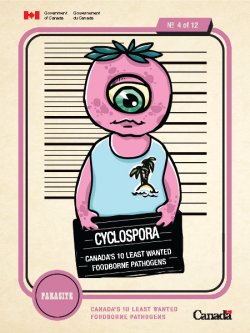
USA – Cyclospora Number One Multistate Food Poisoning Outbreak For 2019

Food Poisoning Bulletin cardcyclosporasme

Cyclospora is the number one multistate food poisoning outbreak for 2019, with more than 2400 people sick. This wasn’t an individual outbreak, but many individual cases and several outbreaks linked to a venue or product. The overall number of domestically acquired cases is higher than those from 2017 and 2018.

hese are the outbreaks of cyclosporiasis linked to a venue or food:

  • An outbreak associated with workplace cafeterias in Virginia that sickened at least 39 people.
  • A large cyclospora outbreak at Cooper’s Hawk Winery in the Jacksonville, Florida area sickened at least 132 people in 11 states.
  • An outbreak in Minnesota sickened 35 people and was associated with three restaurants located in different areas of the state.
  • Cyclosporiasis illnesses in New York City in July sickened more than 90 people.
  • Boston Cyclospora outbreak, also in July, sickened more than 100 people.
  • A cyclospora outbreak linked to Siga Logistics de RL de CV basil imported from Mexico sickened more than 240 people. this was the largest individual outbreak in the overall case count.

USA -Investigation of E. coli O157:H7 Outbreak Linked to Romaine from Salinas, California, November 2019

FDA

December 12, 2019

Case Counts

Total Illnesses: 102
Hospitalizations: 58
Deaths: 0
Last illness onset: November 18, 2019
States with Cases:  AZ (3), CA (4), CO (6), FL (1), IA (1), ID (3), IL (1), MD (4), MI (1), MN (3), MT (1), NE (1), NJ (7), NC (1), NM (2), OH (12), OR (1), PA (8), SD (1), TX (4), VA (4), WA (2), WI (31)

Recommendation

FDA, CDC, and state health authorities are investigating an outbreak of illnesses caused by E. coli O157:H7 in the United States. Epidemiologic, laboratory, and traceback evidence indicates that romaine lettuce from the Salinas, California growing region is a likely source of this outbreak. According to CDC, there have been 102 cases reported in 23 states.  The latest date that one of these patients reports becoming ill was on November 18, 2019.

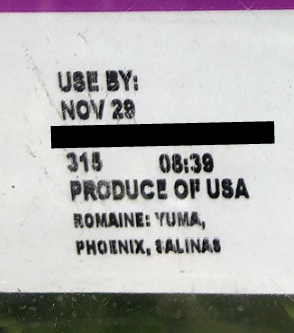
Romaine from Salinas, California Label Enjoy By December 2, 2019


Romaine from Salinas, California Label Use By November 29, 2019

Consumers: Consumers should not eat romaine lettuce harvested from Salinas, California. Additionally, consumers should not eat products identified in the recall announced by the USDA on November 21, 2019.

Romaine lettuce may be voluntarily labeled with a harvest region. If this voluntary label indicates that the romaine lettuce was grown in “Salinas” (whether alone or with the name of another location) do not eat it. Throw it away or return it to the place of purchase.  If romaine lettuce does not have information about harvest region or does not indicate that it has been grown indoors (i.e., hydroponically- and greenhouse-grown), throw it away or return it to the place of purchase. Consumers ordering salad containing romaine at a restaurant or at a salad bar should ask the staff whether the romaine came from Salinas.  If it did, or they do not know, do not eat it.

At this time, romaine lettuce that was harvested outside of the Salinas region has not been implicated in this outbreak investigation. Hydroponically- and greenhouse-grown romaine, which is voluntarily labeled as “indoor grown,” from any region does not appear to be related to the current outbreak. There is no recommendation for consumers to avoid using romaine harvested from these other sources.

Restaurants and Retailers: Restaurants and retailers should not serve or sell romaine harvested from Salinas, California.  If you do not know the source of your romaine lettuce, and if you cannot obtain that information from your supplier, you should not serve, nor sell it.

Suppliers and Distributors: Suppliers, distributors and others in the supply chain should not ship or sell romaine harvested in Salinas, California. If the source of the romaine lettuce is unknown, you should not ship, nor sell the product.

For Restaurants, Retailers, Suppliers and Distributors: Currently, the FDA does not have enough traceback information to identify the specific source of the contamination that would allow us to request a targeted recall from specific growers.

FDA requested that industry voluntarily withdraw romaine grown in Salinas from the market and is requesting that industry withhold distribution of Salinas romaine for the remainder of the growing season in Salinas. Without more specific traceback information, this was the most efficient way to ensure that contaminated romaine was off the market.

At this time, romaine lettuce that was harvested outside of the Salinas region has not been implicated in this outbreak investigation. Hydroponically- and greenhouse-grown romaine, which is voluntarily labeled as “indoor grown,” from any region does not appear to be related to the current outbreak. There is no recommendation for consumers or retailers to avoid using romaine harvested from these other sources.

Update

Based on the information indicating that ill people in Maryland were exposed to romaine lettuce harvested in Salinas, California, FDA, with the assistance of staff from the California Department of Public Health and the California Department of Food and Agriculture, immediately deployed investigators to three farms in the Salinas area that were identified based on the traceback investigation.

FDA continues to actively investigate the cause of this outbreak. Additionally, FDA is investigating two other E. coli outbreaks, each caused by strains that are different from each other and different from the larger outbreak. One of the additional outbreaks, in Washington state, is linked to romaine lettuce, and the other outbreak, with cases in the U.S. and Canada, is linked to Fresh Express Sunflower Crisp Chopped Salad Kits. As part of these investigations, FDA and state partners are conducting traceback investigations to trace romaine exposures to the source.

Currently, the tracebacks on all three outbreaks have identified a common grower in Salinas. FDA, CDC, and California partners are deploying a team to conduct new investigations at several ranches used by this grower as we try to identify the source of the contamination.

Europe – Salmonella the most common cause of foodborne outbreaks in the European Union

ECDC

Nearly one in three foodborne outbreaks in the EU in 2018 were caused by Salmonella. This is one of the main findings of the annual report on trends and sources of zoonoses published today by the European Food Safety Authority (EFSA) and the European Centre for Disease Prevention and Control (ECDC).

In 2018, EU Member States reported 5 146 foodborne outbreaks affecting 48 365 people. A foodborne disease outbreak is an incident during which at least two people contract the same illness from the same contaminated food or drink.

Slovakia, Spain and Poland accounted for 67% of the 1 581 Salmonella outbreaks. These outbreaks were mainly linked to eggs.

 “Findings from our latest Eurobarometer show that less than one third of European citizens rank food poisoning from bacteria among their top five concerns when it comes to food safety. The number of reported outbreaks suggests that there’s room for raising awareness among consumers as many foodborne illnesses are preventable by improving hygiene measures when handling and preparing food” said EFSA’s chief scientist Marta Hugas.

Salmonellosis was the second most commonly reported gastrointestinal infection in humans in the EU (91 857 cases reported), after campylobacteriosis (246 571).

Shiga toxin-producing E. coli (STEC) has become the third most common cause of foodborne zoonotic disease with 8 161 reported cases – replacing yersiniosis with a 37% increase compared to 2017. This may be partly explained by the growing use of new laboratory technologies, making the detection of sporadic cases easier.

Of the zoonotic diseases covered by the report, listeriosis accounts for the highest proportion of hospitalised cases (97%) and highest number of deaths (229), making it one of the most serious foodborne diseases.

The number of people affected by listeriosis in 2018 is similar to 2017 (2 549 in 2018 against 2 480 the previous year). However, the trend has been upward over the past ten years.

The report also includes data on Mycobacterium bovisBrucellaYersiniaTrichinellaEchinococcusToxoplasma, rabies, Coxiella burnetii (Q fever), and tularaemia.

Read the report

Publication

The European Union One Health 2018 Zoonoses Report

Surveillance report  

This report of the European Food Safety Authority and the European Centre for Disease Prevention and Control presents the results of zoonoses monitoring activities carried out in 2018 in 36 European countries (28 Member States (MS) and 8 non-MS).

e.