Category Archives: Food Toxin

China – 7 die from food poisoning in northeast China – Aflatoxin?

Shine

Seven people have died after eating contaminated food during a family meal in northeast China’s Heilongjiang Province, local authorities announced on Saturday.

The food poisoning occurred on October 5 when a resident surnamed Wang in Jidong County dined with eight family members at home and had sour noodles, a local food made of fermented corn flour, which had remained frozen for a year.

Police have ruled out homicide by poisoning since no toxic substances were detected from the extracts on the premises. A preliminary investigation suggested aflatoxin poisoning as hospital lab test results showed that the level of aflatoxin in the food was far higher than normal.

India – 40 taken ill due to ‘food poisoning’ in Hamirpur village

Tribune India

As many as 40 persons reportedly fell sick due to food poisoning at Katiyara village near here on Saturday.

It was reported that they had a lunch at a community gathering organised at a house on the occasion of ‘Rasam Uthala’ after the demise of a woman.

Dr RK Agnihotri, medical officer, said samples of the food had been taken for testing.

He said 25 persons were admitted at Tauni Devi and 15 were admitted at medical college here.

Italy – Botulism suspected as 35 sick in Italy

Food Safety News

kswfoodworld

More than 30 people have needed hospital treatment in Italy for suspected botulism intoxication.

The 35 patients seen at the emergency department of the Giglio Foundation hospital in Cefalù, a city in northern Sicily, had the same meal in a canteen.

Currently, 24 patients are being looked after in three Sicilian hospitals with seven in intensive care and four under observation in an emergency room. Admissions started on Wednesday this past week.

Suspicion falls on food for construction workers
Those sick are workers from Toto Costruzioni Generali and initial investigations point toward a shared meal of salad containing tuna, tomato and mozzarella.

RASFF Alerts – Aflatoxin – Milk – Chilli Mix -Groundnuts – Chilli Powder –

European Food Alerts

RASFF

aflatoxins (Tot. = 0.214 µg/kg – ppb) in milk from Italy in Italy

RASFF

aflatoxins (B1 = 26.8; Tot. = 78.8 µg/kg – ppb) in chili mix powder from Ethiopia, packaged in Germany in Switzerland

RASFF

aflatoxins (B1 = 8.2; Tot. = 9.4 µg/kg – ppb) in groundnuts from the United States in the Netherlands

RASFF

aflatoxins (B1 = 7.9; Tot. = 9.1 µg/kg – ppb) in groundnuts from Argentina in the Netherlands

RASFF

aflatoxins (B1 = 16.4; Tot. = 17.4 µg/kg – ppb) in chilli powder from Sri Lanka in the UK

RASFF

aflatoxins (B1 = 11; Tot. = 13 µg/kg – ppb) in groundnuts from India, via Switzerland in the Netherlands

RASFF Alerts – STEC E.coli – Chilled Hamburgers – Dried Fenugreek

European Food Alerts

RASFF

shigatoxin-producing Escherichia coli (O26 stx2+ eae+ /25g) in chilled hamburgers from the Netherlands in the Netherlands

RASFF

shigatoxin-producing Escherichia coli (VTEC /25g) and Salmonella (presence /25g) in dried fenugreek leaves from India in Germany

RASFF Alert – Ochratoxin A – Date Syrup

European Food Alerts

RASFF

ochratoxin A (27.9 µg/kg – ppb) in date syrup from Sweden, via the Netherlands in Germany

Research – Fate of aflatoxins during almond oil processing

Journal of Food Protection

Almonds rejected as inedible are often used for production of almond oil. However, low-quality almonds are frequently contaminated with aflatoxins, and little is known regarding transfer of aflatoxins to almond oil during processing. In this study, oil was produced from reject almonds by hexane extraction. Of 19 almond samples that were naturally contaminated with aflatoxins, 17 oil samples contained measurable amounts of aflatoxins, and aflatoxin content of contaminated oil was correlated with aflatoxin content of the nuts. However, oil aflatoxin levels were not correlated with the oxidation level of the oil as measured by percent free fatty acids and peroxide value. Adsorbents used in oil refining were tested for their ability to remove aflatoxins from contaminated oil. Fuller’s earth and bentonite were the most effective, removing 96% and 86% of total aflatoxins from contaminated oil samples, respectively. Treatment with diatomaceous earth, in contrast, had no effect on aflatoxin levels in oil. These results show that oil refining steps using mineral clay adsorbents may also function to remove aflatoxins from contaminated oil.

Netherlands – Important safety warning AH burgers, bratwurst and beef finches – STEC E.coli

NVWA

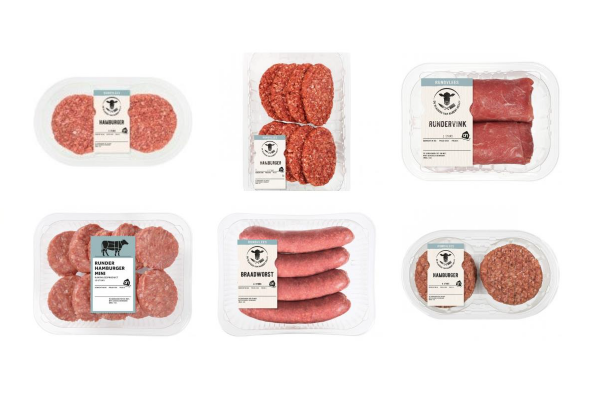
Albert Heijn warns against a number of beef products with an expiry date of 24 or 25 September 2020. The E.coli bacteria was found in the products.

It concerns the following products:

  • AH mini hamburger 10 pieces, TGT 24-09-2020
  • AH hamburger 8 pieces, use-by-date 9/24/2020 and 9/25/2020
  • AH beef bratwurst 4 pieces, TGT 24-09-2020
  • AH hamburger 2 pieces, TGT 25-09-2020
  • AH hamburger 4 pieces, TGT 25-09-2020
  • AH beef finch 2 pieces, TGT 25-09-2020

The beef products are no longer in Albert Heijn stores, but customers can have these products in the freezer. Albert Heijn asks customers not to eat the beef products and to return them to an Albert Heijn store where they will be reimbursed for the purchase price upon return.

See also the Albert Heijn website

Download ‘Important safety warning for AH burgers, bratwurst and beef finches’

PDF document | 1 page | 166 KB

Warning | 05-10-2020

E.coli

Eating a product with an E.coli bacteria (faeces bacteria, STEC, EHEC) can, if not thoroughly cooked, cause nausea, vomiting and (bloody) diarrhea within a week. Especially for young children, the elderly, people with low immunity and pregnant women. Consult your doctor or general practitioner for more information if you have health complaints after eating the said product.

6 packs of Albert Heijn beef products

Research – Recovery Rate of Cells of the Seven Regulated Serogroups of Shiga Toxin-Producing Escherichia coli from Raw Veal Cutlets, Ground Veal, and Ground Beef from Retail Stores in the Mid-Atlantic Region of the United States

Journal of Food Protection

A total of 482 veal cutlet, 555 ground veal, and 540 ground beef samples were purchased from retail establishments in the Mid-Atlantic region of the U.S. over a non-contiguous, two-year period between 2014 and 2017. Samples (325 g each) were individually enriched and screened via real-time PCR for all seven regulated serogroups of Shiga toxin-producing Escherichia coli (STEC). Presumptive STEC positive samples were subjected to serogroup-specific immunomagnetic separation and plated onto selective media. Up to five isolates typical for STEC from each sample were analyzed via multiplex PCR for both the virulence genes (i.e., eae , stx 1 and/or stx 2 , and ehxA ) and serogroup-specific gene(s) for the seven regulated STEC serogroups. The recovery rates of non-O157 STEC from veal cutlets (3.94%, 19 of 482 samples) and ground veal (7.03%, 39 of 555 samples) were significantly higher (P < 0.05) than that from ground beef (0.93%, 5 of 540 samples). In contrast, only a single isolate of STEC O157:H7 was recovered; this isolate originated from one (0.18%) of 555 samples of ground veal. Recovery rates for STEC were not associated with state, season, packaging type, or store type (P > 0.05), but were associated with brand and fat content (P < 0.05). Pulsed-field subtyping of the 270 viable/confirmed STEC isolates from the 64 total samples testing positive revealed 78 pulsotypes (50 to 80% similarity) belonging to 39 pulsogroups, with ≥90% similarity among pulsotypes within pulsogroups. Also, multiple isolates from the same sample displayed an indistinguishable pulsotype for 43 of 64 (67.7%) samples testing positive.  These findings support related data from regulatory sampling exercises over the past decade and confirm that recovery rates for the regulated STEC serogroups are appreciably higher for raw veal compared to raw beef samples as was also observed herein for meat purchased at food retailers in the Mid-Atlantic region of the U.S.

Germany – Good & cheap salad mix leaf salad mix – STEC E.coli

Warning type:

Food

Date of first publication:

02.10.2020

Product name:

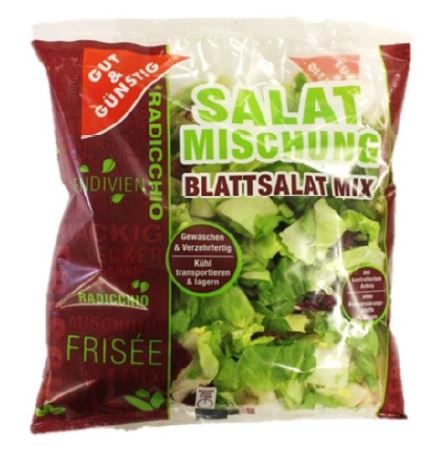
Good & cheap salad mix leaf salad mix

Product pictures:

Product photo.jpg
Manufacturer (distributor):

GARTENFRISCH Jung GmbH

Reason for warning:

E. Coli producing shiga toxin

Packaging Unit:

150 g pack

Durability:

05/10/2020

Additional Information:

Reference is made to the attached press release from the food business operator.

Contact to the responsible authorities:

Baden-Württemberg:

poststelle@mlr.bwl.de

Bavaria:

poststelle@lgl.bayern.de

Hesse:

Schnellwarnung@rpda.hessen.de

Lower Saxony:

poststelle@ml.niedersachsen.de

Saxony:

poststelle@sms.sachsen.de

Thuringia:

LM-Ueberektiven@tlv.thueringen.de

Press releases and information
title Attachment or web link
Press release