Category Archives: Food Technology

Research – Influence of Light and Water Activity on Growth and Mycotoxin Formation of Selected Isolates of Aspergillus flavus and Aspergillus parasiticus

MDPI

kswfoodworld

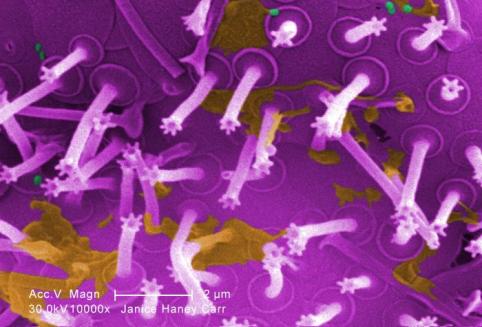
Image CDC

Aspergillus flavus and A. parasiticus are the main causes of aflatoxin contamination in various foods, particularly grains, as they can thrive in environments with lower water activity and higher temperatures. The growth of Aspergillus and the formation of the mycotoxins aflatoxin and cyclopiazonic acid are strongly influenced by environmental stimuli and can be reduced by modulating parameters such as water activity, pH, temperature and light during the storage. This study has two objectives—on the one hand, to assess how global warming and an increase in exposure to sunlight affect growth and mycotoxin formation, and on the other hand, how the findings from these experiments can be used to reduce fungal growth and mycotoxin formation in stored foods. Using growth substrates with two different water activities (aw 0.95, aw 0.98), together with a light incubation device consisting of different chambers equipped with diodes emitting visible light of five different wavelengths (455 nm, 470 nm, 530 nm, 590 nm, 627 nm) plus white light, we analyzed the growth and mycotoxin formation of selected Aspergillus flavus and A. parasiticus isolates. It was shown that light with a wavelength of 455/470 nm alone, but especially in combination with a lower water activity of aw 0.95, leads to a significant reduction in growth and mycotoxin formation, which was accompanied by reduced transcriptional activity of the responsible mycotoxin biosynthetic genes. Therefore, these results can be used to significantly reduce the growth and the mycotoxin formation of the analyzed fungi during storage and to estimate the trend of fungal infestation by Aspergillus flavus and A. parasiticus in water activity- and light exposure-equivalent climate change scenarios. Mycotoxin-producing aspergilli can be effective and sustainably inhibited using a combination of short-wave light and lowered water activity in the substrate. A higher annual mean temperature accompanying climate change may lead to an increased spread of aflatoxin-producing fungi in areas that were previously too cold for them. On the other hand, there will be regions in the world where contamination with aflatoxin-producing fungi will be reduced due to increased drought and sun exposure.
Research – Investigation and Follow-Up of a Staphylococcal Food Poisoning Outbreak Linked to the Consumption of Traditional Hand-Crafted Alm Cheese

MDPI

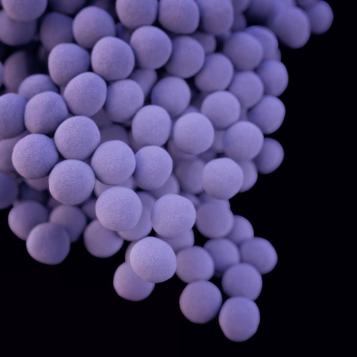
Staph

Image CDC

Staphylococcal food poisoning (SFP) is one of the most important foodborne diseases. This work describes a SFP event linked to the consumption of alm cheese and involved three people belonging to the same family. Leftovers of the consumed cheese, samples from the grocery store and the producing alm were collected and tested for Coagulase positive staphylococci (CPS) enumeration and for the presence of staphylococcal enterotoxins (SEs). Isolates were typed with MLST, spa typing, and tested for SEs and methicillin resistance genes. An in vitro test evaluated SEs production in relation to bacterial growth. The presence of CPS and SEs was detected in all cheese samples and all isolates belonged to the same methicillin sensitive ST8/t13296 strain harbouring sedser and sej genes. The in vitro test showed the production of enterotoxins started from 105 CFU/mL. The farmer was prescribed with corrective actions that led to eradication of the contaminating strain. View Full-Text

Research – Photocatalytically Enhanced Inactivation of Internalized Pathogenic Bacteria in Fresh Produce using Ultraviolet Irradiation with Nano-titanium Dioxide

Journal of Food Protection

Once pathogens are internalized in fresh produce, they pose a challenging food safety issue since they are not effectively inactivated by conventional rinsing or sanitization. To protect food safety and public health, the objectives were to examine internalized levels of foodborne pathogens in different types of fresh produce and to investigate the effectiveness of photocatalytically enhanced inactivation of internalized pathogens in fresh produce using UV irradiation with titanium dioxide (TiO 2 ). For this, green fluorescent protein-labeled S. Typhimurium and E. coli O157:H7 were inoculated on the leaf surface of four types of fresh produce (~10 8 CFU (colony-forming unit)/leaf) and varying concentrations of TiO 2 suspension (0.50, 0.75, 1.00, 1.25, and 1.50 µg/ml)) were applied to the surface of contaminated leaves. Depending on the nature of each vegetable, the internalized bacterial level differed (log 2 – 5 CFU/g of leaf). When UV irradiation (6,000 J/m 2 ) was applied, the internalized S. Typhimurium and E. coli levels were reduced by 0.8 – 2.4 log CFU/leaf and was with TiO 2 , the reduction was 1.1 – 3.7 log CFU/leaf. The inactivation efficiency increased as the TiO 2 concentration (up to 1.50 μg/leaf). These results indicate that the TiO 2 application enhanced the photocatalytic inactivation of internalized foodborne pathogens. The application of TiO2 would be most practical before UV irradiation and before distributing the produce. This study established a platform for future research on the inactivation of various internalized pathogens for protecting public health and scaling up fresh produce treatments by the food industry.

Research – Antimicrobial Blue Light versus Pathogenic Bacteria: Mechanism, Application in the Food Industry, Hurdle Technologies and Potential Resistance

MDPI

Blue light primarily exhibits antimicrobial activity through the activation of endogenous photosensitizers, which leads to the formation of reactive oxygen species that attack components of bacterial cells. Current data show that blue light is innocuous on the skin, but may inflict photo-damage to the eyes. Laboratory measurements indicate that antimicrobial blue light has minimal effects on the sensorial and nutritional properties of foods, although future research using human panels is required to ascertain these findings. Food properties also affect the efficacy of antimicrobial blue light, with attenuation or enhancement of the bactericidal activity observed in the presence of absorptive materials (for example, proteins on meats) or photosensitizers (for example, riboflavin in milk), respectively. Blue light can also be coupled with other treatments, such as polyphenols, essential oils and organic acids. While complete resistance to blue light has not been reported, isolated evidence suggests that bacterial tolerance to blue light may occur over time, especially through gene mutations, although at a slower rate than antibiotic resistance. Future studies can aim at characterizing the amount and type of intracellular photosensitizers across bacterial species and at assessing the oxygen-independent mechanism of blue light—for example, the inactivation of spoilage bacteria in vacuum-packed meats. View Full-Text

India – FSSAI issues new manual for analysing aflatoxin in food

FNB News

The apex food regulator, FSSAI, has issued a revised manual for methods of analysis of mycotoxins including aflatoxin in food. FSSAI has stated that the manual shall be used by the laboratories with immediate effect and this manual shall supersede the earlier manual on mycotoxins.

According to the FSSAI all food samples suspected of being contaminated with mycotoxins must be handled with extreme care, as aflatoxins are potent carcinogenic substances.

The manual talks about personal safety precautions, precautions during analysis  and handling of glassware for aflatoxin analysis.

Currently, the regulatory limits for mycotoxins in food as defined by the FSSAI include 15 microgram per kg in cereals, and cereal products, pulses, nuts and nuts for further processing. For Aflatoxins  the limit is prescribed at 10 microgram  per kg for ready to eat products, and dried figs, while 30 microgram per kg for spices and for oilseeds for further processing, the limit is set at 15 microgram per kg.

Similarly, the limit of Aflatoxin M1 in milk is 0.5 microgram per kg, Ochratoxin A in wheat, barley and rye is at 20 microgram per kg, and for Patulin, the limit is 50mcrogram per kg in apple juice and apple juice ingredients in other beverages.

Further, the limit for Deoxynivalenol  in wheat is fixed at 1000ppm.

Mycotoxins—toxic secondary metabolites of filamentous fungi—are biological in origin. Only a few of the thousands of mycotoxins present significant food safety challenges to the farm-to-fork food continuum. The natural fungal flora associated with food safety is dominated by three genres: Aspergillus, Fusarium, and Penicillium.

Aflatoxins are highly toxic secondary metabolites and aflatoxin-producing fungi can contaminate crops in the field, at harvest, and during storage. Some of the more common crops susceptible to contamination with aflatoxins are cereals (e.g. maize, rice and wheat). The husk of these cereals are often used as animal feed.

Deoxynivalenol (DON) Deoxynivalenol (DON) also known as vomitoxin is a trichothecene mycotoxin mainly produced by Fusarium fungi (Fusarium molds). This plant pathogens can cause scab mainly in wheat and barley etc., and damages cereals the most widely by contamination in the field. The main commodities affected are cereals such as wheat, rice, barley, oats and maize etc.

Patulin is a mycotoxin that is produced by certain species of Penicillium, Apergillus, and Byssochylamys molds that may grow on a variety of foods including fruit, grains, and cheese  while Ochratoxin A (OTA) is a naturally occurring foodborne mycotoxin found in a wide variety of agricultural commodities worldwide, ranging from cereal grains to dried fruits to wine and coffee.

Research – Sporadic Pediatric Norovirus Cases May Predict Broader Outbreaks

Contagion Live

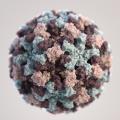
Norovirus Food Safety kswfoodworld

Seasonal increases in sporadic pediatric cases of norovirus gastroenteritis correlate with norovirus outbreaks among older populations, a new study found.

The study, published in Clinical Infectious Diseases, analyzed seasonal patterns and genotypic characteristics of norovirus cases between December 2012 and June 2016 in middle Tennessee.

“Sporadic case surveillance and outbreaks followed very similar patterns geographically and temporally,” John R. Dunn, DVM, PhD, state epidemiologist with the Tennessee Department of Health, told Contagion®. “These commonalities in the different surveillance systems indicate that opportunities may exist to slow or prevent outbreaks when sporadic cases start to increase in the community.”

During the study period, 755 pediatric sporadic norovirus cases and 45 outbreaks involving 1924 people were reported.

The mean age of sporadic pediatric cases was 2.9 years, 81.3% were among children younger than 5, and 30% reported attending childcare facilities.

Among 740 outbreak cases with reported ages, 61.6% were in people older than 50, and 42% of outbreaks occurred in long-term care facilities. Childcare facilities and restaurants each accounted for 8.9% of outbreaks. Person-to-person transmission was reported in 80% of outbreaks and 8.9% were reported as foodborne transmission.

Research – Innovative Antimicrobial Chitosan/ZnO/Ag NPs/Citronella Essential Oil Nanocomposite—Potential Coating for Grapes – Antimicrobial

MDPI

New packaging materials based on biopolymers are gaining increasing attention due to many advantages like biodegradability or existence of renewable sources. Grouping more antimicrobials agents in the same packaging can create a synergic effect, resulting in either a better antimicrobial activity against a wider spectrum of spoilage agents or a lower required quantity of antimicrobials. In the present work, we obtained a biodegradable antimicrobial film that can be used as packaging material for food. Films based on chitosan as biodegradable polymer, with ZnO and Ag nanoparticles as filler/antimicrobial agents were fabricated by a casting method. The nanoparticles were loaded with citronella essential oil (CEO) in order to enhance the antimicrobial activity of the nanocomposite films. The tests made on Gram-positive, Gram-negative, and fungal strains indicated a broad-spectrum antimicrobial activity, with inhibition diameters of over 30 mm for bacterial strains and over 20 mm for fungal strains. The synergic effect was evidenced by comparing the antimicrobial results with chitosan/ZnO/CEO or chitosan/Ag/CEO simple films. According to the literature and our preliminary studies, these formulations are suitable as coating for fruits. The obtained nanocomposite films presented lower water vapor permeability values when compared with the chitosan control film. The samples were characterized by SEM, fluorescence and UV-Vis spectroscopy, FTIR spectroscopy and microscopy, and thermal analysis.

Research – Tech developed to detect food poisoning in real-time

Korea Biomed

The Korea Food Research Institute (KFRI) said Wednesday its researchers have developed a technology to manage food-poisoning bacteria in food materials safely in variable temperature environments of the food supply chain, such as storage and distribution.

KFRI’s “dynamic prediction model” can predict the proliferation of food poisoning and contamination of food supplies in real-time using the Internet of Things by linking the temperature provided by the food supply network.

Most of the food ingredients in group meals are safe. Still, some food products contaminated with food poisoning bacteria may increase due to temperature changes during the distribution-storage process. This explains why real-time safety management technology is needed in the process, KFRI said in a news release.

Research – Bioengineered probiotic could prevent Listeria infections

Purdue

WEST LAFAYETTE, Ind. — For pregnant women, the elderly and those with weakened immune systems, listeriosis is a serious foodborne illness often linked to deli meats, fresh produce and dairy products. Even with antibiotic treatment, listeriosis is fatal for about 20 percent of patients, resulting in thousands of deaths annually.

Purdue University’s Arun Bhunia, a professor of food science, and postdoctoral researcher Rishi Drolia have developed a probiotic that could prevent infections in at-risk populations. A bioengineered version of Lactobacillus, a bacterium common in the human gut, can block the pathway the Listeria monocytogenes bacteria use to cross intestinal wall cells into the bloodstream, his team reports in the journal Nature Communications.

“The Lactobacillus bacteria we developed seeks out the same proteins as Listeria monocytogenes in the gut. When it attaches, it blocks the roadway for Listeria,” Bhunia said. “This could be included in probiotic yogurts, capsules or gummies and used as a preventive measure to treat people who are at high risk of infection.”

Research – Antibiotic Resistance and Biofilm-Forming Ability in Enterococcal Isolates from Red Meat and Poultry Preparations

MDPI

kswfoodworld biofilm

This study investigated the resistance to antibiotics and the capacity to form a biofilm of 200 isolates of enterococci isolated from raw preparations of beef (51 strains), pork (47), chicken (50), and turkey (52) acquired in north-western Spain. Fifteen antimicrobials of clinical importance were tested by the disc diffusion method. The average number of resistances per strain was 4.48 ± 1.59. If resistant strains were taken together with those showing reduced susceptibility, the total number of resistances per strain was 6.97 ± 2.02. Two isolates (1.0% of strains) were resistant to a single antibiotic, twenty-two isolates (11.0%) presented resistance to two, one strain (0.5%) was resistant to three, and 175 isolates (87.5%) showed a multiple drug-resistant phenotype (MDR; defined as no susceptibility to at least one agent from each of three or more antimicrobial categories). The prevalence of resistance varied between 0.5% (gentamicin) and 100% (kanamycin). All strains produced biofilm on polystyrene microwell plates, determined using crystal violet assay. Isolates were classified as having a weak (51 strains; average optical density at 580 nanometers -OD580– = 0.206 ± 0.033), moderate (78 strains; average OD580 = 0.374 ± 0.068), or strong (71 strains; average OD580 = 1.167 ± 0.621) ability to produce biofilm (p < 0.05). Isolates from beef preparations produced the most substantial (p < 0.05) biofilms. The results of this study indicate that meat and poultry preparations are major reservoirs of antibiotic-resistant enterococcal strains capable of forming a biofilm. In order for food-borne infections to be prevented, the importance of careful handling of these foodstuffs during preparation, avoiding cross-contamination, and ensuring thorough cooking, is stressed.