Category Archives: Food Pathogen

China – Authorities probe norovirus outbreak in residential community in E. China’s Shandong

Global Times

Norovirus Food Safety kswfoodworld

An investigation is underway after some residents, including children in a kindergarten in Ji’nan, East China’s Shandong Province, contracted the norovirus, according to the local authorities.

On March 11, some members of a residential community in Ji’nan, including some children from a kindergarten, were reported to be suffering syndromes of vomiting and diarrhea. District disease control and prevention personnel had taken samples of water, vomitus and related food for immediate further investigation.

Three children were sent to the hospital, but no severe cases were reported, and norovirus was detected in their vomit, the local authorities said on March 12.

The district education authority has temporarily closed the kindergarten and carried out a disinfection of its premises, and also taught children and parents on how to prevent norovirus infection.

Taiwan – 164 hospitalized in southern Taiwan with suspected food poisoning

Taiwan News

At least 164 students have been taken to hospitals in Pingtung County since Thursday evening (March 11) after developing symptoms of food poisoning.

Students from Donggang Senior High School began to display symptoms associated with food poisoning — including stomach cramps, vomiting, and diarrhea — after arriving home from school on Thursday. The school said it began to receive calls from parents at 11 p.m. and that a total of 231 students had called in sick on Friday.

As of press time, 121 of the 164 students who sought treatment at Fooyin University Hospital and Antai Hospital had been discharged, leaving 43 still hospitalized for further observation. Since all the patients had eaten food sourced from the same supplier, the authorities suspect the outbreak is a case of mass food poisoning and have sent samples of the school lunch to a medical laboratory for analysis.

Singapore – Recall of eggs from Lay Hong Berhad Layer Farm Jeram (Malaysia)due to presence of Salmonella Enteritidis

Click to access sfa-media-release_120321_recall-of-eggs-from-lay-hong-berhad-layer-farm-jerame3e2294028dc42c980dbc111d1baad50.pdf

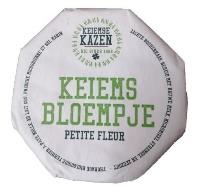
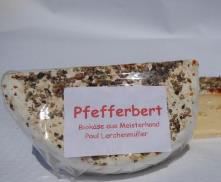
Germany – Petit Fleur Camembert, Pfefferbert, Kreitaberti, 250 g- Listeria monocytogenes

LMW

Warning type:Food
Date of first publication:03/12/2021
Product name:Petit Fleur Camembert, Pfefferbert, Kreitaberti, 250 g
Product pictures:

Product image1.png
Product image2.png
Product picture3.png
Manufacturer (distributor):Cheese wholesaler Paul Lerchenmüller
Reason for warning:

Listeria

Packaging Unit:see attached press release
Durability:see attached press release
Production date:see attached press release
Lot identification:see attached press release
Further information:

Reference is made to the attached press release from the food company.

Contact to the responsible authorities:

Baden-Württemberg:poststelle@mlr.bwl.de

Bavaria:poststelle@lgl.bayern.de
Hesse:Schnellwarnung@rpda.hessen.de
Press releases and information
title Attachment or web link
Press release

Germany – CAMEMBERT GRAINDORGE – STEC E.coli

steLMW

Warning type:Food
Date of first publication:03/13/2021
Product name:CAMEMBERT GRAINDORGE
Product pictures:

4813_Camembert LC_1.jpg
Manufacturer (distributor):MUNICH fromage GmbH & Co. KG
Reason for warning:

Detection of verotoxin-producing E. coli

Packaging Unit:250 g
Durability:04/07/2021
Lot identification:270121LI13
Further information:For more information, please refer to the attached press release.
Contact to the responsible authorities:

Baden-Württemberg:poststelle@mlr.bwl.de

Bavaria:poststelle@lgl.bayern.de
Hamburg:poststelle@justiz.hamburg.de
Hesse:Schnellwarnung@rpda.hessen.de
Lower Saxony:poststelle@ml.niedersachsen.de
North Rhine-Westphalia:poststelle@mulnv.nrw.de
Press releases and information
title Attachment or web link
Press release MÜNNICH fromage GmbH & Co. KG

Research – Campylobacter Contamination of UK-Produced Halal Chicken at Retail

Journal of Food Protection

CDC Campy

Campylobacter is the leading cause of human bacterial diarrhoeal disease worldwide, with poultry meat products accounting for the majority of human cases. Recent surveys by the Food Standards Agency estimate the Campylobacter prevalence in fresh UK retail chicken to be 41.2%. However, such surveys have not distinguished between broiler chickens produced for different consumer demographics, such as the Halal market. Campylobacter colonisation of broilers is difficult to prevent, especially during routine partial depopulation of flocks. Broilers produced for the Halal market may undergo multiple depopulation events, which may increase the risk of colonisation and subsequent Campylobacter contamination of chicken meat. This project aimed to determine the prevalence and levels of Campylobacter contamination of chicken meat produced for the UK Halal market. Campylobacter was identified and enumerated from the neck skin and outer packaging of 405 Halal chickens. Following culture, isolates were assigned to species via PCR and disc diffusion antimicrobial susceptibility tests determined. Logistic regression analysis assessed risk factors for Campylobacter isolation, the level of Campylobacter contamination among positive carcasses and antimicrobial resistance outcomes. Campylobacter spp. were confirmed in 65.4% of neck skin samples and 17.1% of packaging samples. 13.8% of neck skin samples had the highest level of contamination (>1000 cfu/g). Large birds had a significantly higher number of samples with >1000 cfu/g (p<0.001) and as chicken carcass weight increased, birds were more likely to be Campylobacter-positive (p<0.05). A high prevalence of resistance was seen to ciprofloxacin (42.0%) and 38.5% of samples contained at least one multi-drug resistant Campylobacter isolate. This study demonstrates that Halal chicken has a higher Campylobacter prevalence than non-Halal chicken. Interventions should be introduced to reduce this increased public health risk to consumers.

Research – Effect of Chlorine Dioxide Treatment on Human Pathogens on Iceberg Lettuce

MDPI

In the vegetable processing industry, the application of chlorine dioxide (ClO2) as a disinfectant solved in washing water to eliminate undesirable microorganisms harmful to consumers’ health and the shelf life of produce has been discussed for years. The disinfection efficacy depends on various factors, e.g., the location of microorganisms and the organic load of the washing water. The present study analyzed the sanitation efficacy of various concentrations of water-solved ClO2 (cClO2: 20 and 30 mg L−1) on Escherichia coli (1.1 × 10⁴ cfu mL−1), Salmonella enterica (2.0 × 10⁴ cfu mL−1) and Listeria monocytogenes (1.7 × 10⁵ cfu mL−1) loads, located on the leaf surface of iceberg lettuce assigned for fresh-cut salads. In addition, it examined the potential of ClO2 to prevent the cross-contamination of these microbes in lettuce washing water containing a chemical oxygen demand (COD) content of 350 mg L−1 after practice-relevant washing times of 1 and 2 min. On iceberg leaves, washing with 30 mg L−1 ClO2 pronouncedly (1 log) reduced loads of E. coli and S. enterica, while it only insignificantly (<0.5 × log) diminished the loads of L. monocytogenes, irrespective of the ClO2 concentration used. Although the sanitation efficacy of ClO2 washing was only limited, the addition of ClO2 to the washing water avoided cross-contamination even at high organic loads. Thus, the application of ClO2 to the lettuce washing water can improve product quality and consumer safety. View Full-Text

UK – Update 12 March: The FSA is reiterating its advice on cooking frozen raw breaded chicken products following links to cases of Salmonella

FSA

The FSA is repeating advice to consumers following an updated recall linked to salmonella contamination.

SFC has issued an updated recall of chicken products because Salmonella Enteritidis (a food poisoning bug) has been found in some of these foods.

This update includes the original products identified in previous recalls as well as additional products.

Dr Colin Sullivan, Chief Operating Officer, FSA said:

‘The products are linked to two ongoing outbreaks of Salmonella Enteritidis (a food poisoning bug) in chicken from Poland.

‘The producer put additional controls in place to improve the safety of their products in November 2020. SFC has decided to withdraw and recall all of its chicken products produced before this date.

‘The FSA will be making additional checks to ensure the effectiveness of this withdrawal and recall.’

Products affected

The full list of products is available in the food alert.

Update on the wider Salmonella investigation

We are continuing to work with Food Standards Scotland (FSS), Public Health England (PHE), Public Health Scotland, Public Health Wales and the Public Health Agency in Northern Ireland as part of the ongoing investigation into two particular strains of Salmonella linked to frozen raw breaded chicken products from Poland.

We previously issued precautionary consumer advice in October 2020 and February 2021. Additional controls have been put in place by food businesses at production level. These changes to the production process are proving to be effective and we hope to see a further reduction in cases in the coming months as these products are removed from the food chain. While we continue these efforts, it is important that people carefully follow food hygiene advice.

Investigations are ongoing into identifying the source of the outbreaks at farm level in Poland. Should more products be identified actions to remove unsafe food will be taken.

Saheer Gharbia, Head of the Gastrointestinal Pathogens Unit of PHE’s National Infection Service, said:

‘While we appear to be past the peak of this outbreak, and case reporting rate has decreased in recent months, we are still detecting some cases through whole genome sequencing, so it is important that people carefully follow food hygiene advice. We continue to work closely with the Food Standards Agency to resolve the outbreak.

‘Salmonella generally causes a mild illness, although vulnerable groups like children under five years, the elderly, and those with weakened immune systems may experience more severe illness and may require hospitalisation. Symptoms of a Salmonella infection include diarrhoea, stomach cramps and sometimes vomiting and fever. Anyone who is concerned about symptoms should contact their GP or out of hours service in the first instance.’

Our advice to consumers

If consumers have bought any of the products in the updated recall, they can return them to the store where they were bought for a full refund.

We are encouraging consumers to always cook food at the right temperature and for the correct length of time to ensure any harmful bacteria are killed. Before serving these products, make sure they are steaming hot and cooked all the way through. When you cut into the thickest part of the meat, check that none of the meat is pink and that any juices run clear.

Anyone who is concerned about symptoms should contact their GP or out of hours service in the first instance.

Only the products listed in the recall notice are affected. There is no need to change your shopping habits for chicken products.


FSA – Update 4 – SFC recalls SFC Chicken products because of the presence of Salmonella

FSA

SFC are recalling an extended range of SFC products because Salmonella has been found in some of their product ranges. This update extends the recall to all SFC products for certain dates, listed in the table below and adds an additional product, Little Hill Farm Chicken Breast Fillets. All batch codes are affected with best before dates up to and including 30 of June 2022. Products after this best before date are not affected.
The business put additional food safety controls in place in November 2020 to improve the safety of their products. They have now taken the precautionary step of recalling all products manufactured before the new and additional controls were put in place.

Product details

SFC Crispy Dippers
Pack size 200g
Batch code All codes
Best before Up to and including 30 of June 2022
SFC Crispy Dippers (Halal)
Pack size 200g
Batch code All codes
Best before Up to and including 30 of June 2022
SFC Southern Fried Chicken Strips
Pack size 400g
Batch code All codes
Best before Up to and including 30 of June 2022
SFC Southern Fried Chicken Strips
Pack size 155g
Batch code All codes
Best before Up to and including 30 of June 2022
SFC Southern Fried Chicken Strips (Halal)
Pack size 155g
Batch code All codes
Best before Up to and including 30 of June 2022
SFC Mega Box
Pack size 1610g
Batch code All codes
Best before Up to and including 30 of June 2022
SFC Southern Fried Chicken Burgers
Pack size 228g
Batch code All codes
Best before Up to and including 30 of June 2022
Little Hill Farm Chicken Breast Fillets
Pack size 500g
Batch code All codes
Best before Up to and including 30 of June 2022
SFC Poppets
Pack size 190g
Batch code All codes
Best before Up to and including 30 of June 2022
SFC Poppets (Halal)
Pack size 190g
Batch code All codes
Best before Up to and including 30 of June 2022
SFC Take-Home Boneless Bucket
Pack size 650g
Batch code All codes
Best before Up to and including 30 of June 2022
SFC Take-Home Boneless Box
Pack size 600g
Batch code All codes
Best before Up to and including 30 of June 2022
SFC Take-Home Boneless Box
Pack size 625g
Batch code All codes
Best before Up to and including 30 of June 2022
SFC Take-Home Boneless Box
Pack size 550g
Batch code All codes
Best before Up to and including 30 of June 2022
SFC Take-Home Boneless Box (Halal)
Pack size 550g
Batch code All codes
Best before Up to and including 30 of June 2022
SFC Chicken Nuggets
Pack size 200g
Batch code All codes
Best before Up to and including 30 of June 2022

Risk statement

The presence of Salmonella in the products listed above.

Symptoms caused by Salmonella usually include fever, diarrhoea and abdominal cramps.

Action taken by the company

SFC is recalling the above products. Point of sale notices will be displayed in all retail stores that are selling these products. These notices explain to customers why the products are being recalled and tell them what to do if they have bought the product. Please see the attached notice.

Our advice to consumers

If you have bought any of the above products do not eat them. Instead, return them to the store from where they were bought for a full refund or alternatively, email a photo of the product packaging clearly showing the best before date and where the product was purchased, to customerservices@sfcwholesale.co.uk for a refund and then safely dispose of the product at home.

Denmark – Three suspected cases of botulism in Denmark

SSI

kswfoodworld

An outbreak of disease with suspected botulism has occurred among the participants in a private company in the region of Southern Denmark. The Danish Veterinary and Food Administration, Fødevareinstituttet DTU and Statens Serum Institut are working to identify the source of the infection, which is presumed to be limited to a single company.

Following a private party held on Friday, March 5, 2021, three adults have been hospitalized on suspicion of having botulism.

They are being treated with botulism antitoxin and are improving. The Statens Serum Institut (SSI) is now examining samples from the patients to find out if there was actually botulism.

SSI is also in the process of analyzing the ingredients and leftovers of the food that has been eaten by that company. No other patients with botulism are known outside the company that has been affected.