Category Archives: Food Microbiology Testing

USA – Could the Wendy’s E. coli Outbreak have sickened over 2,600?

Food Poison Journal

According to the CDC, as of September 1, 2022, a total of 97 people infected with the outbreak strain of E. coli O157:H7 have been reported from six states – Indiana 11, Kentucky 1, Michigan 58, New York 1, Ohio 24, and Pennsylvania 2.  It is expected, according to the NCBI database, that the actual numbers of ill will be 115 or more shortly.  Interestingly, according to the CDC, for E. coli O157:H7, there is an underreporting rate of 26.1 – meaning for everyone 1 person counted by the CDC another 26.1 were actually sickened.

USA – CDFA ANNOUNCES RECALL OF RAW SHEEP MILK PRODUCED AT VALLEY MILK SIMPLY BOTTLED OF STANISLAUS COUNTY- Campylobacter

CDFA

campy2

SACRAMENTO, September 27, 2022 – Raw sheep milk produced and packaged by Valley Milk Simply Bottled of Stanislaus County is the subject of a statewide recall and quarantine order announced by California State Veterinarian Dr. Annette Jones.  The quarantine order came following the confirmed detection of the bacteria Campylobacter jejuni in the farm’s packaged raw whole sheep milk sampled and tested by the California Department of Food and Agriculture.

The raw sheep milk is distributed in half-gallon (64 oz) plastic jugs and labeled as “Valley Milk Simply Bottled Raw Sheep Milk”. The recall order applies to products marked on the container with expiration code dates of SEP 28 2022 through OCT 01 2022.

Consumers are strongly urged to dispose of any product remaining in their refrigerators.  The current order does not include the farm’s raw cow milk or raw goat milk.

CDFA found the campylobacter bacteria in a routine sample collected at the Valley Milk Simply Bottled production and packaging facility.  No illnesses have been reported.

Belgium – Protein chips cheese from the Organic Crave brand.- Salmonella

AFSCA

Recall by Albert Heijn
Product: Protein chips cheese from the Organic Crave brand.
Problem: Possible presence of Salmonella.


In agreement with the FASFC, Albert Heijn withdraws from sale the product “protein chips cheese with DDM 08/05/2023” of the Organic Crave brand and recalls it to consumers following the possible presence of Salmonella.

Albert Heijn asks its customers not to consume this product and to return it to the point of sale where it was purchased. The product will be refunded or exchanged there.

Product description

• Product category: appetizer
• Product name: protein cheese chips
• Brand: Organic Crave
• Date of minimum durability (BDD): 08/05/2023
• Period of sale: until 28/09/2022 inclusive
• Type of packaging: sachet
• Weight: 30 g

Consumption of this product can potentially cause food poisoning and therefore pose a health risk – especially to young children, the elderly, people with weakened immune systems and pregnant women. Please contact a doctor in case of any health problem.

For further information , please contact Albert Heijn via 0800 777 05 .

USA – FDA Core Outbreak Investigation Table

FDA

What’s New

  • For the Cyclospora outbreak in a not yet identified food (reference #1080), sample collection and analysis has been initiated and an on-site inspection has been initiated.
  • For the Salmonella Mississippi outbreak in a not identified food (reference #1097), the investigation is closed, and the outbreak has ended.
  • A new outbreak has been added to the table: Salmonella Litchfield (reference #1105) in a not yet identified food. Traceback has been initiated.
  • For the Salmonella Typhimurium outbreak in a not yet identified food (reference #1095), the case count has increased from 84 cases to 86 cases.

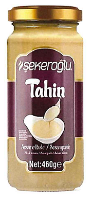
Germany – SEKEROGLU TAHINI 460G -Salmonella

LMW

Product Image.png

Alert type: Food
Date of first publication:

09/27/2022

Product name:

SEKEROGLU TAHIN 460G

Manufacturer (distributor):

Akar Ltd

Reason for warning:

France – Artisanal sausage from Ardèche IGP 300g -Listeria monocytogenes

Gov france

Identification information of the recalled product

  • Product category Feed
  • Product subcategory Meats
  • Product brand name Ferdinand Chaudouard
  • Model names or references Dry sausage 300g in microperforated film Dry sausage 300g without packaging
  • Identification of products
    Batch Date
    22331 Date of minimum durability between 06/11/2022 and 20/11/2022
  • Marketing start/end date From 06/09/2022 to 26/09/2022
  • Storage temperature Product to be stored at room temperature
  • Health markFR-07.138.002-CE
  • Geographic area of ​​sale Whole France
  • Distributors LECLERC, INTERMARCHE, SUPER U, HYPER U, SADIS
  • List of points of saleLists_customers_concerned_ALERT_LISTERIA.pdf

Practical information regarding the recall

  • Reason for recall Presence of Listeria monocytogenes above the regulatory threshold
  • Risks incurred by the consumer Listeria monocytogenes (causative agent of listeriosis)

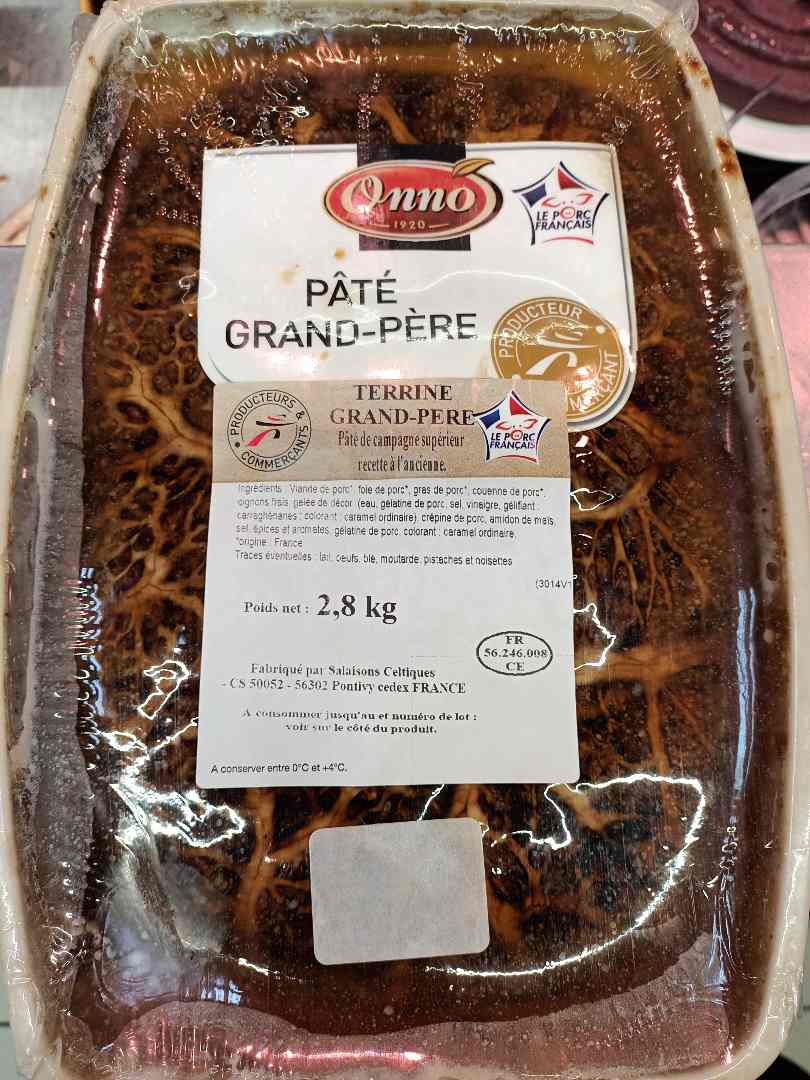
France – GRAND FATHER TERRINE – Salmonella

Gov france

Identification information of the recalled product

  • Product category Feed
  • Product subcategory Others
  • Product brand name ONNO
  • Model names or references Batch number: PY01200235 Use by date: 06/10/2022 Packer code/stamp: FR 56246008 CE
  • Identification of products
    Batch Date
    PY01200235 Use-by date 06/10/2022
  • Marketing start/end date From 09/14/2022 to 09/19/2022
  • Storage temperature Product to be stored in the refrigerator
  • Geographic area of ​​sale Whole France
  • Distributors Intermarché CHALLUY 58000

Practical information regarding the recall

  • Reason for recall Presence of salmonella
  • Risks incurred by the consumer Salmonella spp (causative agent of salmonellosis)

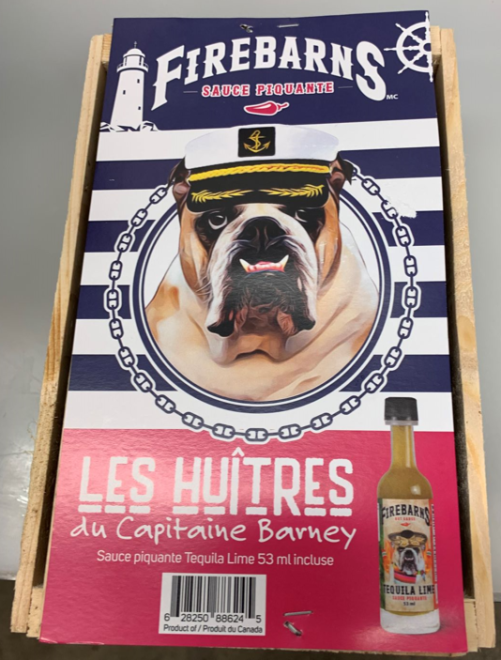
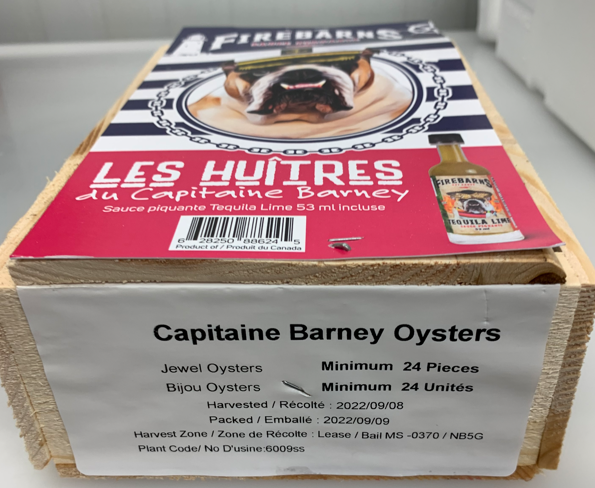
Canada – Various brands of oysters recalled by Oyster Kings Inc. due to Salmonella

CFIA

Summary

Product
Oysters
Issue
Food – Microbial Contamination – Salmonella
What to do

Do not consume, use, sell, serve, or distribute recalled products

Affected products

Issue

The affected products are being recalled from the marketplace due to possible Salmonella contamination.

The recalled products have been sold in Ontario and Quebec and may have been distributed in other provinces and territories.

These products may have been sold clerk-served from counters with or without a label or coding. Consumers who are unsure if they have purchased the affected product are advised to contact their retailer.

What you should do

  • If you think you became sick from consuming a recalled product, contact your healthcare provider
  • Check to see if you have recalled products
  • Do not consume, serve, use, sell, or distribute recalled products
  • Recalled products should be thrown out or returned to the location where they were purchased

Food contaminated with Salmonella may not look or smell spoiled but can still make you sick. Young children, pregnant women, the elderly and people with weakened immune systems may contract serious and sometimes deadly infections. Healthy people may experience short-term symptoms such as fever, headache, vomiting, nausea, abdominal cramps and diarrhea. Long-term complications may include severe arthritis.

France – Shelled NATURAL shrimp tails without added sulphites- Vibrio vulnificus

Gov france

Identification information of the recalled product

  • Product category Feed
  • Product subcategory Fishery and aquaculture products
  • Product brand name Carrefour Market
  • Model names or references Peeled NATURAL shrimp tails without added sulphites Carrefour Le Marché – 250g tray
  • Identification of products
    GTIN Batch Date
    352368043666 2222570002 Use-by date 09/26/2022
    352368043666 2222580002 Use-by date 09/27/2022
    352368043666 2222620116 Use-by date 01/10/2022
    352368043666 2222650003 Use-by date 04/10/2022
  • Packaging Tray under protective atmosphere 250g.
  • Marketing start/end date From 09/15/2022 to 09/23/2022
  • Storage temperature Product to be stored in the refrigerator
  • Health mark EN 62.160.112 EC
  • Geographic area of ​​sale Whole France
  • Distributors Crossroads

Practical information regarding the recall

  • Reason for recall Vibrio vulnificus
  • Risks incurred by the consumer Vibrio vulnificus

UK – AMR in Campylobacter in UK chicken over the last 20 years

FSA

Campylobacter kswfoodworld

The Food Standards Agency (FSA) has published a report analysing 20 years of data on antimicrobial resistance (AMR) in Campylobacter from retail chicken in the UK.

The study aimed to assess any trends during this 20-year period and provides a baseline against which to evaluate future, hoped-for reductions in AMR.

AMR is when bacteria adapt to become resistant to the killing effects of antimicrobials, such as antibiotics. This resistance subsequently makes such infections in humans more difficult to treat using drugs.  AMR can develop in any bacteria, including Campylobacter. Campylobacter is the main cause of bacterial food poisoning in the developed world and it is estimated that there are in excess of half a million cases annually in the UK.

The FSA’s Science lead in Microbiological Risk Assessment, Dr Paul Cook, said:

“While the data shows a marked increase in AMR in Campylobacter to certain antimicrobials, it is encouraging that there has been no significant increase in resistance since 2014.

“Any increase of AMR in Campylobacter is a concern and continued surveillance is essential. We will continue to carry out AMR surveillance in chicken and other meats and to monitor any long-term trends in resistance, while promoting good food hygiene practice to reduce exposure to AMR bacteria and protect consumer safety.”

Since its formation in 2000, the FSA has commissioned several UK-wide retail surveys and sampling studies that involved testing for Campylobacter in chicken. A significant proportion of the Campylobacter isolates detected were further tested to assess resistance to a range of antimicrobials.

Key findings from this report vary between the five main types of antimicrobial drugs included in the study. Resistance to quinolones (ciprofloxacin and nalidixic acid) and tetracycline was common in the most prevalent types of Campylobacter from chicken (Campylobacter jejuni and Campylobacter coli). In comparison, resistance to erythromycin and streptomycin was much rarer in the Campylobacter isolates examined.  Gentamicin resistance was very rare.

There are effective ways for consumers to reduce exposure to AMR bacteria. This includes cleaning surfaces properly, cooking food thoroughly, chilling food at the correct temperature and handling food hygienically so it doesn’t cross contaminate other foods or surfaces. For any fruit or vegetables consumed raw, make sure they are washed thoroughly or peeled as this will help to remove any visible dirt or bacterial contamination.

For more information on AMR, including an ‘FSA Explains’ video, visit our dedicated AMR webpage. The research report is available on our research pages.