Category Archives: Food Microbiology Research

Research – Survival of Listeria Strains and Shelf Life Determination of Fresh Blueberries (Vaccinium corymbosum) Treated with Cold Atmospheric Plasma

MDPI

Abstract

Fresh blueberries are delicate, hand-picked, packaged, and refrigerated fruits vulnerable to spoilage and contamination. Cold atmospheric plasma (CAP) is a promising antimicrobial technology; therefore, this study evaluated the CAP treatment effect on acid-tolerant Listeria innocua and Listeria monocytogenes and evaluated changes in the quality of the treated fruit. Samples were spot-inoculated with pH 5.5 and 6.0 acid-adapted Listeria species. Samples were treated with gliding arc CAP for 15, 30, 45, and 60 s and evaluated after 0, 1, 4, 7, and 11 days of storage at 4 °C and 90% humidity for the following quality parameters: total aerobic counts, yeast and molds, texture, color, soluble solids, pH, and titratable acidity. CAP treatments of 30 s and over demonstrated significant reductions in pathogens under both the resistant strain and pH conditions. Sixty-second CAP achieved a 0.54 Log CFU g−1 reduction in L. monocytogenes (pH 5.5) and 0.28 Log CFU g−1 for L. monocytogenes (pH 6.0). Yeast and mold counts on day 0 showed statistically significant reductions after 30, 45, and 60 s CAP with an average 2.34 Log CFU g−1 reduction when compared to non-CAP treated samples. Quality parameters did not show major significant differences among CAP treatments during shelf life. CAP is an effective antimicrobial treatment that does not significantly affect fruit quality.
Research – Fates of attached E. coli o157:h7 on intact leaf surfaces revealed leafy green susceptibility

Science Direct

Abstract

Leafy greens, especially lettuce, are repeatedly linked to foodborne outbreaks. This paper studied the susceptibility of different leafy greens to human pathogens. Five commonly consumed leafy greens, including romaine lettuce, green-leaf lettuce, baby spinach, kale, and collard, were selected by their outbreak frequencies. The behavior of E. coli O157:H7 87-23 on intact leaf surfaces and in their lysates was investigated. Bacterial attachment was positively correlated with leaf surface roughness and affected by the epicuticular wax composition. At room temperature, E. coli O157:H7 had the best growth potentials on romaine and green-leaf lettuce surfaces. The bacterial growth was positively correlated with stomata size and affected by epicuticular wax compositions. At 37 °C, E. coli O157:H7 87-23 was largely inhibited by spinach and collard lysates, and it became undetectable in kale lysate after 24 h of incubation. Kale and collard lysates also delayed or partially inhibited the bacterial growth in TSB and lettuce lysate at 37 °C, and they sharply reduced the E. coli O157:H7 population on green leaf lettuce at 4 °C. In summary, the susceptibility of leafy greens to E. coli O157:H7 is determined by a produce-specific combination of physiochemical properties and temperature.

Research – Survival of Listeria monocytogenes and Salmonella in finishing waxes used for fresh citrus fruits

Science Direct

Abstract

Citrus fruits are typically waxed before packaging to prevent water loss and extend shelf-life. The survival of Listeria monocytogenes and Salmonella was evaluated in 15 different commercial finishing waxes used for fresh citrus in California. Survival of L. monocytogenes and Salmonella in citrus finishing waxes depended on wax type. Over 24 h at 4 and 22 °C, populations of L. monocytogenes declined more slowly than or equal to Salmonella in all finishing waxes except wax F8 (organic, beeswax based, non-morpholine). Over 24 h of storage at 4 °C, L. monocytogenes populations declined by > 4 log (below the detection limit by enrichment, 0.3 log CFU/mL) in waxes F4, F7, F8, and F9. Population declines of 1.2–2.8 log were observed in waxes F5, F10, F11, F13, and F14 and of <1.0 log in waxes F1, F2, F3, F6, F12, and F15. With the exception of waxes F2 (polyethylene based, non-morpholine) and F6 (shellac based, non-morpholine), greater declines of L. monocytogenes were observed over 24 h in most waxes when the storage temperature was increased to 22 °C. During long-term storage at 4 °C, L. monocytogenes declined by > 5 log after 5, 10, 30, 30, and 135 days in waxes F3, F1, F15, F12, and F6, respectively. L. monocytogenes populations in all waxes stored at 22 °C fell below the detection limit by enrichment within 20 days except for wax F2. In two separate lots of wax F2, L. monocytogenes populations inoculated at ∼4 or ∼6 log CFU/mL declined by1.6–2.6 log by day 10 and then increased to 5.4 to 5.7 log CFU/mL on day 20. Citrus packinghouse hazard assessments and food safety plans should consider the survival of foodborne pathogens in commercial citrus finishing waxes.

RASFF Alert- E.coli – Mussels

RASFF

E. Coli in Irish mussels in France, Spain and Italy

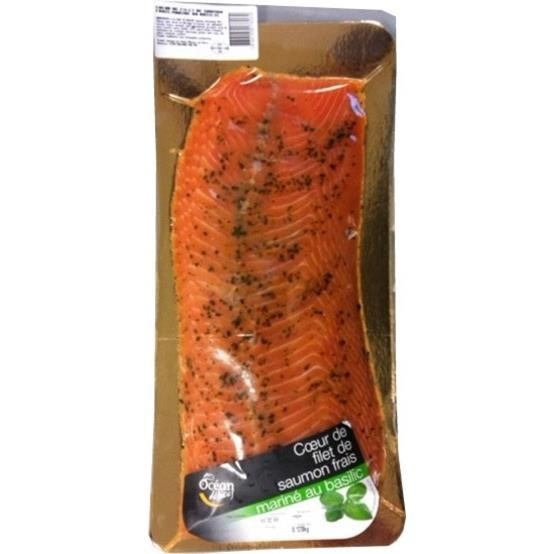
France – Heart of salmon fillet marinated in basil 500g, packaged with vacuum-packed aluminium plate – Salmonella

Gov France

Identification information of the recalled product
Product category
Food
Product subcategory
Fishing and aquaculture products
Product brand name
Ocean delights
Model names or references
Basil marinated salmon fillet heart 500g EAN 3760105172299
Product identification
GTIN Batch Date
3760105172299 24057 Use-by date 03/05/2024
Products List
RECAP_PFF01021.pdfAttachment
Packaging
Heart of salmon fillet marinated in basil 500g, packaged with vacuum-packed aluminum plate
Start/end date of marketing
From 02/28/2024 to 03/04/2024
Storage temperature
Product to keep in the refrigerator
Health mark
FR 62160128
Further information
EAN 3760105172299, lot 24057
Geographical sales area
Whole France
Distributors
Reynaud (wholesaler)

Research FSIS Foodborne Illness Outbreak Investigations, Fiscal Year 2023

FSIS USDA

The U.S. Department of Agriculture’s Food Safety and Inspection Service (FSIS), Office of
Public Health Science, Applied Epidemiology Staff, coordinates the FSIS response to
foodborne illness outbreaks that may involve FSIS-regulated products. This includes outbreaks that involve four foodborne pathogens that most frequently contaminate FSIS-regulated products: Salmonella, Shiga toxin-producing Escherichia coli (STEC), Listeria monocytogenes, and Campylobacter.

A foodborne outbreak occurs when two or more persons experience a similar illness after ingestion of a common food, and epidemiologic analysis implicates the
food as the source of the illness. FSIS may investigate illnesses associated with other, less
common, foodborne pathogens (e.g., Clostridium botulinum) if they are potentially associated with FSIS-regulated products. FSIS collects and evaluates epidemiologic, laboratory, and traceback information to determine if there is an association between an FSIS-regulated product and human illnesses. Epidemiologic information can include details like which foods ill people ate, where they purchased these foods, and where they live. Laboratory information can include comparing bacteria from FSIS samples and ill people to see if they are genetically similar or have similar characteristics. Traceback activities may include determining the location where the product was sold (e.g., grocery store, deli counter, or restaurant) or the source of a product (e.g., the federally inspected slaughter or processing facility). Depending on the evidence collected during an investigation, FSIS may have enough detailed exposure and product information to take one or more actions to prevent additional illnesses. These actions may include requesting that a company remove product from commerce and FSIS issuing a press release announcing that a firm is recalling meat, poultry, or egg products linked to human illnesses or FSIS notifying the public of potential food safety concerns through the issuance of a Public Health Alert (PHA).
This report summarizes outbreaks that FSIS investigated from October 1, 2022, to September
30, 2023, Fiscal Year 2023 (FY 2023). This report also highlights key lessons learned from
outbreak investigations in FY 2023.

Research – Assessing Biofilm Formation and Resistance of Vibrio parahaemolyticus on UV-Aged Microplastics in Aquatic Environments

Science Direct

Abstract

UV degradation of marine microplastics (MPs) could increase their vector potential for pathogenic bacteria and threaten human health. However, little is known about how the degree of UV aging affects interactions between MPs and pathogens and how various types of MPs differ in their impact on seafood safety. This study investigated five types of UV-aged MPs and their impact on Vibrio parahaemolyticus, a seafood pathogen. MPs exposed to UV for 60 days showed similar physicochemical changes such as surface cracking and hydrophobicity reduction. Regardless of the type, longer UV exposure of MPs resulted in more biofilm formation on the surface under the same conditions. V. parahaemolyticus types that formed biofilms on the MP surface showed 1.4- to 5.0-fold upregulation of virulence-related genes compared to those that did not form biofilms, independently of UV exposure. However, longer UV exposure increased resistance of V. parahaemolyticus on MPs to chlorine, heat, and human gastrointestinal environment. This study implies that the more UV degradation occurs on MPs, the more microbial biofilm formation is induced, which can significantly increase virulence and environmental resistance of bacteria regardless of the type of MP.

Research- Notes from the Field: Rapidly Linking an Outbreak of Salmonella Typhimurium Infections to Domestically Grown Cantaloupes Through Early Collaboration — United States, 2022

CDC

Summary

What is already known about this topic?

A 2020 outbreak of Salmonella infections was found to be associated with melons after conclusion of harvesting, when melons were no longer likely to be on the market.

What is added by this report?

In 2022, whole genome sequencing (WGS)–based Salmonella surveillance, historical melon farm environmental sampling results, and patient interviews were used to rapidly link a Salmonella Typhimurium outbreak to contaminated cantaloupes.

What are the implications for public health practice?

WGS-based surveillance, combined with rapid collection of epidemiologic data by state and local agencies, can be used to reduce the time to outbreak detection and response.

Research – The prevalence and concentration of mycotoxins in rice sourced from markets: A global description

Science Direct

Highlights

The manuscript discusses the global prevalence and concentrations of mycotoxins in rice.


Analysis of 61 articles with 408 studies showed a 15% (95% CI: 12–17%) global prevalence of mycotoxins in rice.


Aflatoxins and nivalenol, respectively, ranked first for the highest prevalence and pooled concentration of mycotoxins in rice.


Europe (44%) had the highest prevalence of mycotoxins in rice, followed by Africa (32%).


The highest concentration of mycotoxins is observed in Africa (32.14 μg/kg), followed by Asia (17.01 μg/kg).

Italy – CASTELMAGNO DOP – STEC E.coli

Salute

Brand : TERRE D’ITALIA

Name : CASTELMAGNO DOP

Reason for reporting : Recall due to microbiological risk

Publication date : 1 March 2024

Documentation

Documentation