Category Archives: Food Microbiology Research

Research – Researchers use compressed carbon dioxide to decontaminate almonds and other nuts

Food Safety News

Researchers at the Fraunhofer Institute for Environment, Safety, and Energy Technology UMSICHT have developed a process to kill germs on almonds and nuts by using compressed carbon dioxide to decontaminate food.

The advantage of this process is that almonds retain their characteristic flavor and quality, according to the research report. Almonds are decontaminated and impregnated with antimicrobial oils using compressed carbon dioxide in a high-pressure autoclave. The oil extract coats the almond, making it difficult for germs to contaminate the fruit again. Some types of processing can affect the quality of food, particularly that of plant-based products that are consumed raw.

Without processing, almonds and other nuts may be contaminated with salmonella and these bacteria can spread to dry foods. Low-moisture foods like flour, baking mixes, dried meats, nuts, fruits and cereals are often used as ingredients in food products with almonds, which means that if one supplier faces a recall, many items that used the ingredient could be affected. However, the risk of E.coli, Salmonella and Listeria in dry foods can never be completely eliminated.

Research – Tech developed to detect food poisoning in real-time

Korea Biomed

The Korea Food Research Institute (KFRI) said Wednesday its researchers have developed a technology to manage food-poisoning bacteria in food materials safely in variable temperature environments of the food supply chain, such as storage and distribution.

KFRI’s “dynamic prediction model” can predict the proliferation of food poisoning and contamination of food supplies in real-time using the Internet of Things by linking the temperature provided by the food supply network.

Most of the food ingredients in group meals are safe. Still, some food products contaminated with food poisoning bacteria may increase due to temperature changes during the distribution-storage process. This explains why real-time safety management technology is needed in the process, KFRI said in a news release.

Hong Kong – CFS announces food safety report for October

CFS

logo

The Centre for Food Safety (CFS) of the Food and Environmental Hygiene Department today (November 30) released the findings of its food safety report for last month. The results of about 13,300 food samples tested were satisfactory except for 21 samples that were announced earlier. The overall satisfactory rate was 99.8 per cent.

A CFS spokesman said about 1,000 food samples were collected for microbiological tests, some 3,900 samples were taken for chemical tests and the remaining 8,400 (including about 8,200 taken from food imported from Japan) were collected to test radiation levels.

The microbiological tests covered pathogens and hygiene indicators, while the chemical tests included pesticides, preservatives, metallic contaminants, colouring matters, veterinary drug residues and others.

The samples comprised about 3,300 samples of vegetables and fruit and their products; about 700 samples of cereals, grains and their products; about 900 samples of meat and poultry and their products; about 700 samples of milk, milk products and frozen confections; about 1,500 samples of aquatic and related products; and about 6,200 samples of other food commodities (including beverages, bakery products and snacks).

The 21 unsatisfactory samples comprised 10 frozen confection samples detected with counts of hygiene indicator organisms exceeding the legal limits, two red chilli samples and a prepackaged mantis shrimp sample found to contain excessive cadmium, a freshwater grouper sample and a rabbitfish sample found to contain trace amounts of malachite green, a sample of mala goose gizzard found to contain Salmonella, a sample of ground turmeric detected with a non-permitted colouring matter sudan dyes, a prepackaged candy sample detected with a non-permitted colouring matter Acid Red 52 and in breach of the food labelling regulation, a sample of prepackaged bamboo fungi found to contain excessive preservative and in breach of the food labelling regulation, a prepacked fresh beef sample found to contain sulphur dioxide and in breach of the food labelling regulation, and a sample of bottled chilli paste detected with an allergen, fish, undeclared on the food label.

The CFS has taken follow-up action on the unsatisfactory samples including informing the vendors concerned of the test results, instructing them to stop selling the affected food items and tracing the sources of the food items in question.

The spokesman reminded the food trade to ensure that food for sale is fit for human consumption and meets legal requirements. Consumers should patronise reliable shops when buying food and maintain a balanced diet to minimise food risks.

USA – Investigations of Foodborne Illness Outbreaks – Update

FDA

The list in the link above of outbreak investigations being managed by FDA’s CORE Response Teams. The investigations are in a variety of stages, meaning that some outbreaks have limited information, and others may be near completion.

USA – Estimate of Burden and Direct Healthcare Cost of Infectious Waterborne Disease in the United States

CDC

Provision of safe drinking water in the United States is a great public health achievement. However, new waterborne disease challenges have emerged (e.g., aging infrastructure, chlorine-tolerant and biofilm-related pathogens, increased recreational water use). Comprehensive estimates of the health burden for all water exposure routes (ingestion, contact, inhalation) and sources (drinking, recreational, environmental) are needed. We estimated total illnesses, emergency department (ED) visits, hospitalizations, deaths, and direct healthcare costs for 17 waterborne infectious diseases. About 7.15 million waterborne illnesses occur annually (95% credible interval [CrI] 3.88 million–12.0 million), results in 601,000 ED visits (95% CrI 364,000–866,000), 118,000 hospitalizations (95% CrI 86,800–150,000), and 6,630 deaths (95% CrI 4,520–8,870) and incurring US $3.33 billion (95% CrI 1.37 billion–8.77 billion) in direct healthcare costs. Otitis externa and norovirus infection were the most common illnesses. Most hospitalizations and deaths were caused by biofilm-associated pathogens (nontuberculous mycobacteria, PseudomonasLegionella), costing US $2.39 billion annually.

At the beginning of the 20th century, diseases commonly transmitted by water, such as cholera and typhoid, were major causes of death in the United States (1). Reliable provision of treated, safe drinking water dramatically reduced the burden of these diseases and has been recognized as one of the greatest public health achievements of the 20th century (2). Despite this achievement, waterborne disease in the United States persists (35).

In the United States, outbreaks associated with large public drinking water systems have sharply declined in the past 40 years (3,6), likely the result of improvements in regulation and operation. However, transmission of disease via drinking water systems still occurs, often attributable to aging infrastructure, operational challenges, and the private or unregulated water systems (e.g., private wells) that serve an estimated 43 million persons (7). At the same time, the complexity and scope of water use has increased; drinking, sanitation, hygiene, cooling, and heating needs are supported by 6 million miles of plumbing inside US buildings (i.e., premise plumbing) (8,9). Premise plumbing water quality can be compromised by long water residency times, reduced disinfectant levels, and inadequate hot water temperatures, creating environments where pathogens (e.g., nontuberculous mycobacteria [NTM], Pseudomonas, and Legionella) can amplify in biofilms (10). People can be exposed to these pathogens through contact, ingestion, or inhalation of aerosols (e.g., from showerheads, building cooling towers, or decorative fountains).

As leisure time has increased, swimming pools, waterparks, water playgrounds, and hot tubs have proliferated (5). These venues rely largely on chlorination as the major barrier against disease transmission. Cryptosporidium has emerged as the major cause of outbreaks associated with treated aquatic venues because it is extremely chlorine resistant and has a low infectious dose (5,11,12). Warmer oceans have led to Vibrio-associated wound infections farther north than previously documented (13).

Estimates of the overall burden of foodborne disease in the United States, including both known and unknown agents, have been useful in directing prevention activities and setting public health goals (14,15). Quantifying the burden of infectious waterborne disease in the United States would also be beneficial.

Previous studies have attempted to estimate the burden of gastrointestinal illness (16,17) or all illness associated with drinking water (18) and untreated recreational water (19) in the United States, but the burden of disease from all water sources (drinking, recreational, environmental) and exposure routes (ingestion, contact, inhalation) has not been estimated. We present an estimate of the burden of waterborne disease in the United States that includes gastrointestinal, respiratory, and systemic disease; accounts for underdiagnosis; and includes all water sources and exposure routes.

Research – Assessing Food Safety Practices Among Texas Small Growers

Journal of Food Protection

This could be applied to many small growers all over the world.

This study aimed to assess current food safety gaps among small growers in Texas to identify key areas of focus for potential education and training materials for these stakeholders. Small growers earn ≤$25,000 in annual sales over a 3-year period and have an average food sale of less than $500,000. To this end, a survey tool was designed to determine the gaps in small farm growers’ food safety knowledge. A total of 29 questions were disseminated to participants at fruit and vegetable conference. The questions included topics such as food safety practices and perceptions, and current and past food safety training experiences. Data from 70 growers was collected and analyzed and the results demonstrated that more than 34% of growers use manure and 51% have domestic animals on the farm premises. Even though more than 51% of participants use bare hands for harvesting, 39% of growers do not provide handwashing facilities for workers, and 46% of the growers do not provide toilet facilities for their workers. Only 25% of the growers surveyed have access to food safety training materials for their employees. The results also showed that 21% of participants have previous food safety training. Furthermore, half of the growers surveyed used soil amendments and approximately 87% did not test irrigation water. About 30% of growers believe that organic produce is safer than conventional produce and 37% believe that organically grown produce has fewer harmful bacteria. Also, > 41% of participants could not recognize the difference between hydroponically grown produce and conventional systems. The results indicated specific areas of opportunity, gaps in resources needed by growers, and lack of food safety training materials. The results of this study will help in the design of targeted and specific food safety training materials for small growers.


Research – Bioengineered probiotic could prevent Listeria infections

Purdue

WEST LAFAYETTE, Ind. — For pregnant women, the elderly and those with weakened immune systems, listeriosis is a serious foodborne illness often linked to deli meats, fresh produce and dairy products. Even with antibiotic treatment, listeriosis is fatal for about 20 percent of patients, resulting in thousands of deaths annually.

Purdue University’s Arun Bhunia, a professor of food science, and postdoctoral researcher Rishi Drolia have developed a probiotic that could prevent infections in at-risk populations. A bioengineered version of Lactobacillus, a bacterium common in the human gut, can block the pathway the Listeria monocytogenes bacteria use to cross intestinal wall cells into the bloodstream, his team reports in the journal Nature Communications.

“The Lactobacillus bacteria we developed seeks out the same proteins as Listeria monocytogenes in the gut. When it attaches, it blocks the roadway for Listeria,” Bhunia said. “This could be included in probiotic yogurts, capsules or gummies and used as a preventive measure to treat people who are at high risk of infection.”

USA – Cannibal Sandwiches: Wisconsin officials advise against this holiday tradition.

Outbreak News Today

The Wisconsin Department of Health Services (DHS) reminded the public to abstain from the state holiday tradition– eating raw meat sandwiches, sometimes called Tiger Meat or Cannibal Sandwiches.

What is a cannibal sandwich?

A cannibal sandwich or Tiger meat sandwich is by definition, raw ground beef typically served on rye bread or crackers with onions. Occasionally, a raw egg will be mixed with the meat. It is a traditional winter holiday specialty in certain regions of the upper Midwest.

Health officials say there are foodborne illness risks with eating raw meat like ground beef like SalmonellaE. coli O157:H7, Campylobacter and Listeria and it doesn’t matter where you buy the meat.

Since 1986, eight outbreaks have been reported in Wisconsin linked to eating a raw ground beef dish, including a large Salmonella outbreak involving more than 150 people during December 1994. Ground beef should ALWAYS be cooked to an internal temperature of 160° F.

Research – Biofilm-Forming Ability of Pathogenic Bacteria Isolated from Retail Food in Poland

Journal of Food Protection

ABSTRACT

Biofilms have a significant impact on food safety in the food industry. Many foodborne outbreaks have been associated with pathogenic bacterial strains that can form a biofilm. The present study was conducted under the Official Control and Monitoring Program in Poland to examine the ability of pathogenic bacteria collected from retail food samples to form biofilms. Biofilm formation was assessed by qualitative detection of extracellular polymeric substances on Congo red agar, by adherence to glass with the tube method, by the crystal violet biofilm (CV) assay, and by the 3-(4,5-dimethylthiazol-2-yl)-2,5-diphenyl tetrazolium bromide (MTT) assay. A total of 40 isolates from food samples (10 strains each of Listeria monocytogenes, Staphylococcus aureus, Escherichia coli, and Bacillus cereus) were examined. The strains were classified as adherent, slightly adherent, or nonadherent; biofilm production was classified as weak (WBP), moderate (MBP), or strong (SBP); and metabolic activity was classified as weak (WMA), moderate (MMA), or high (HMA). The incubation conditions and time influenced the amount of biofilm formed as well as did the growth medium. In the test tubes with Luria-Bertani broth (LBB), 22.5% of the strains were adherent and 77.5% were slightly adherent. Stronger adhesion was obtained in brain heart infusion (BHI) with 2% sucrose; 60% of the isolates were classified as adherent. With the CV assay with LBB, SBP was noted for 7.5% of the strains after 24 h of incubation and for 37.5% of the strains after 48 h. In BHI plus 2% sucrose, SBP was noted for 42.5 and 37.6% of the strains after 24 and 48 h, respectively. With the MTT assay with LBB, HMA was found for 15% of the strains after 24 h of incubation and for 25% of the strains after 48 h. In BHI plus 2% sucrose, 70 and 85% of the incubated strains were classified as HMA after 24 and 48 h, respectively.

HIGHLIGHTS
  • All tested bacterial pathogens isolated from food formed biofilms.
  • Biofilm formation was dependent on environmental conditions and the assay used.
  • Culture in BHI plus 2% sucrose produced more biofilm with higher metabolic activity.

Research – Antibiotic Resistance and Biofilm-Forming Ability in Enterococcal Isolates from Red Meat and Poultry Preparations

MDPI

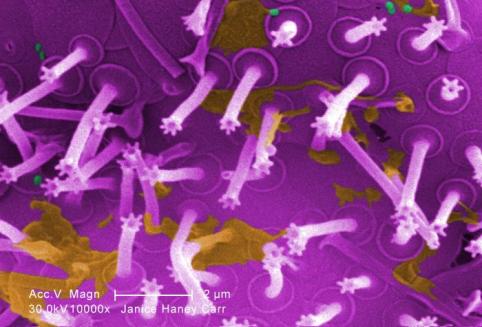
kswfoodworld biofilm

This study investigated the resistance to antibiotics and the capacity to form a biofilm of 200 isolates of enterococci isolated from raw preparations of beef (51 strains), pork (47), chicken (50), and turkey (52) acquired in north-western Spain. Fifteen antimicrobials of clinical importance were tested by the disc diffusion method. The average number of resistances per strain was 4.48 ± 1.59. If resistant strains were taken together with those showing reduced susceptibility, the total number of resistances per strain was 6.97 ± 2.02. Two isolates (1.0% of strains) were resistant to a single antibiotic, twenty-two isolates (11.0%) presented resistance to two, one strain (0.5%) was resistant to three, and 175 isolates (87.5%) showed a multiple drug-resistant phenotype (MDR; defined as no susceptibility to at least one agent from each of three or more antimicrobial categories). The prevalence of resistance varied between 0.5% (gentamicin) and 100% (kanamycin). All strains produced biofilm on polystyrene microwell plates, determined using crystal violet assay. Isolates were classified as having a weak (51 strains; average optical density at 580 nanometers -OD580– = 0.206 ± 0.033), moderate (78 strains; average OD580 = 0.374 ± 0.068), or strong (71 strains; average OD580 = 1.167 ± 0.621) ability to produce biofilm (p < 0.05). Isolates from beef preparations produced the most substantial (p < 0.05) biofilms. The results of this study indicate that meat and poultry preparations are major reservoirs of antibiotic-resistant enterococcal strains capable of forming a biofilm. In order for food-borne infections to be prevented, the importance of careful handling of these foodstuffs during preparation, avoiding cross-contamination, and ensuring thorough cooking, is stressed.