Archives
-
Join 346 other subscribers
KSWFoodWorld
Blog Stats
- 484,621 Views
Category Archives: Food Micro Blog
Research – Identification of Genetic Markers for the Detection of Bacillus thuringiensis Strains of Interest for Food Safety
Bacillus thuringiensis (Bt), belonging to the Bacillus cereus (Bc) group, is commonly used as a biopesticide worldwide due to its ability to produce insecticidal crystals during sporulation. The use of Bt, especially subspecies aizawai and kurstaki, to control pests such as Lepidoptera, generally involves spraying mixtures containing spores and crystals on crops intended for human consumption. Recent studies have suggested that the consumption of commercial Bt strains may be responsible for foodborne outbreaks (FBOs). However, its genetic proximity to Bc strains has hindered the development of routine tests to discriminate Bt from other Bc, especially Bacillus cereus sensu stricto (Bc ss), well known for its involvement in FBOs. Here, to develop tools for the detection and the discrimination of Bt in food, we carried out a genome-wide association study (GWAS) on 286 complete genomes of Bc group strains to identify and validate in silico new molecular markers specific to different Bt subtypes. The analyses led to the determination and the in silico validation of 128 molecular markers specific to Bt, its subspecies aizawai, kurstaki and four previously described proximity clusters associated with these subspecies. We developed a command line tool based on a 14-marker workflow, to carry out a computational search for Bt-related markers from a putative Bc genome, thereby facilitating the detection of Bt of interest for food safety, especially in the context of FBOs.
Posted in Bacillus, Bacillus cereus, Bacillus thuringiensis , Bt, Decontamination Microbial, Food Micro Blog, Food Microbiology, Food Microbiology Blog, Food Microbiology Research, Food Microbiology Testing, Food Technology, microbial contamination, Microbial growth, Microbiological Risk Assessment, Microbiology, Microbiology Investigations, Microbiology Risk, Technology
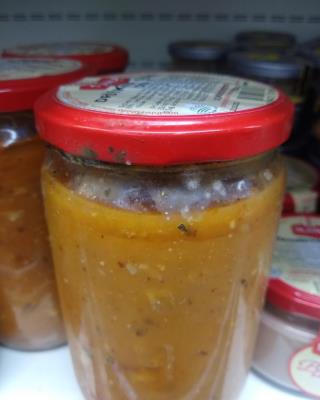
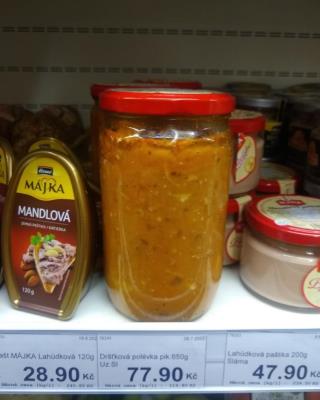
Czech Republic – Spicy tripe soup – Mold/Mould


Place of inspection:
ID: 19014325
Food group: Meat and meat products / Heat-treated perishable products
Spicy tripe soup
Category: Dangerous foods
Invalid parameter:
fungi visible to the eye
scent
There were colonies of mold inside the product. The food had a sour smell of spoilage.
Food is not considered safe if it shows signs of spoilage.
The food did not have an expiration date. Unsuitable storage temperatures for this food were not detected during the inspection.
| Batch: | O188907K |
| Expiration date: | 20/10/2022 |
| Packaging: | Glass + twist off cap |
| Quantity of the product in the package: | 650 g |
| Producer: | Smokehouse and delicatessen Sláma sro, Růžová 225, 595 01 Velká Bíteš |
| Date of sample collection: | 9/9/2022 |
| Reference number: | 22-000632-SZPI-CZ |
The sample was detected by the official control of the State Agricultural and Food Inspection.
Posted in food contamination, food handler, Food Hazard, Food Hygiene, Food Inspections, Food Micro Blog, Food Microbiology, Food Microbiology Blog, Food Microbiology Testing, food recall, Food Safety, Food Safety Alert, Food Safety Management, Food Spoilage, Food Testing, Mould Toxin, Mould/Mold, Moulds, Potravinynapranyri
Australia – Cause of illnesses from spinach in Australia identified; Costco among stores that received product
Investigations into almost 200 foodborne illnesses in Australia after eating a brand of baby spinach have revealed what caused the illnesses.
Riviera Farms said the spinach was contaminated with a weed called thornapple. The scientific name is Datura stramonium and it is also known as jimsonweed. How the weed got into the food supply is still being investigated by Victorian authorities with site inspections underway.
Riviera Farms issued a recall of baby spinach after reports of customers falling ill. The company then contacted its 20 clients. Costco is the only direct major retail client, however, the product was also sold to stores such as Coles, Aldi, and Woolworths.
Spinach products were grown on a farm in Victoria and shipped to several stores across the country. More than 190 potential cases were reported in New South Wales, Australian Capital Territory, Victoria, and Queensland.
There have been several hospitalizations. Toxicological impacts are still to be confirmed but it is understood most people experienced symptoms for a short time and then recovered.
Posted in Decontamination Microbial, E.coli, food bourne outbreak, Food Illness, Food Micro Blog, Food Microbiology, Food Microbiology Blog, Food Microbiology Research, Food Microbiology Testing, Foodborne Illness, foodborne outbreak, foodbourne outbreak, Illness, microbial contamination, Microbial growth, Microbiological Risk Assessment, Microbiology, Microbiology Investigations, Microbiology Risk, outbreak
Australia – Yoghurt Shop product sold in SA and NT recalled over E.coli contamination
A flavoured yoghurt has been pulled from shelves in South Australia and the Northern Territory due to contamination, with shoppers urged not to consume affected products.
Key points:
- The Yoghurt Shop has recalled one of its flavoured yoghurt cups due to E.coli contamination
- The affected yoghurt is the 190g Caramel Crumble yoghurt cup with a best before date of January 23, 2022
- Food products containing E.coli may cause illness if consumed
The Yoghurt Shop announced a recall of its 190g Caramel Crumble Yoghurt cups with a best before date of January 23, 2023 due to E.coli contamination.
The product has been available for sale at Coles and IGA supermarkets in South Australia and the Northern Territory, and at On The Run locations in South Australia.
Food Standards Australia and New Zealand said food products contaminated with E.coli may cause illness if consumed.
In a recall notice, Food Standards Australia and New Zealand said the product should not be eaten and should be returned to the place of purchase for a full refund.
Any consumers concerned about their health should seek medical advice.
Posted in E.coli, food contamination, food handler, Food Hazard, Food Hygiene, Food Inspections, Food Micro Blog, Food Microbiology, Food Microbiology Blog, Food Microbiology Testing, Food Pathogen, food recall, Food Safety, Food Safety Alert, Food Safety Management, Food Safety Regulations, Food Testing
Quebec – Notice not to consume feta-style cheese prepared and sold by Fromagerie Carpati inc. – E.coli
QUEBEC CITY , Dec. 22 2022 /CNW Telbec/ – The Ministry of Agriculture, Fisheries and Food (MAPAQ), in collaboration with Fromagerie Carpati inc., located at 5270, route Harwood , in Vaudreuil-Dorion , advises the population not to consume the product indicated in the table below, because analysis results show that this product is likely to contain E. coli bacteria and represents a health risk.
|
Product name |
Format |
Affected lot |
|
Feta style cheese |
Variable |
Units sold until December 22, 2022 |
The product that is the subject of this warning was offered for sale until December 22, 2022, in several establishments in the province of Quebec. The product came in many forms and was presented in various packaging. It was sold chilled.
The operator is voluntarily recalling the product in question. It has agreed with MAPAQ to issue this warning as a precautionary measure. In addition, people who have this product in their possession are advised not to consume it. They must return it to the establishment where they bought it or throw it away. Even if the affected product shows no signs of tampering or suspicious odors, its consumption may represent a health risk.
It should be noted that no case of illness associated with the consumption of this food has been reported to MAPAQ to date.
Posted in E.coli, food contamination, food death, food handler, Food Hazard, Food Hygiene, Food Inspections, Food Micro Blog, Food Microbiology, Food Microbiology Blog, Food Microbiology Testing, Food Pathogen, food recall, Food Safety, Food Safety Alert, Food Safety Management, Food Safety Regulations, Food Testing
Czech Republic – Deep frozen chicken breast steak – Salmonella

Place of inspection:
ID: 25572890
Food group: Meat and meat products / Packaged meat
Deep frozen chicken breast steak
Category: Dangerous foods
Invalid parameter:
Salmonella Minnesota
The pathogenic bacterium Salmonella Minnesota was detected in the frozen meat . This bacteria can cause a disease called salmonellosis.
| Batch: | 150222 |
| Best before date: | 15/02/2024 |
| Packaging: | Plastic bag |
| Quantity of the product in the package: | 2 kg |
| Producer: | São Salvador Alimentos S/A, Brazil |
| Importer: | KOVÁŘ Plus, Kunovice |
| Country of origin: | Brazil |
| Date of sample collection: | 15/09/2022 |
| Reference number: | 22-000056-SVS-CZ |
The sample was detected by the official control of the State Veterinary Administration.
Posted in food contamination, food handler, Food Hazard, Food Hygiene, Food Inspections, Food Micro Blog, Food Microbiology, Food Microbiology Blog, Food Microbiology Testing, Food Pathogen, food recall, Food Safety, Food Safety Alert, Food Safety Management, Food Safety Regulations, Food Testing, Potravinynapranyri, Salmonella, Salmonella in Chicken
USA – Morasch Meats Inc. Recalls Raw Frozen Diced Beef Products Due to Possible E. Coli O157:H7 Contamination
WASHINGTON, Dec. 22, 2022 – Morasch Meats Inc., a Portland, Ore. establishment, is recalling approximately 3,930 pounds of raw frozen diced beef products that may be contaminated with E. coli O157:H7, the U.S. Department of Agriculture’s Food Safety and Inspection Service (FSIS) announced today.
The raw frozen diced beef items were produced on August 24, 2022. The following products are subject to recall [view labels]:
- 30-lb. box packages containing “BEEF DICED 3/10# BAGS,” with case code FM010152, LOT#: 082422 and a date of 8/24/2022 on the case label. Each case contains three 10 lb. vacuum-sealed, clear plastic bags of the diced beef products.
The products subject to recall bear establishment number “EST. 4102” inside the USDA mark of inspection. These items were shipped to distributor locations in Oregon for further distribution to restaurants and other institutional users.
The problem was discovered by FSIS during review of testing results, which showed the product tested positive for E. coli O157:H7.
FSIS is concerned that some product may be in institutional or restaurant freezers. Restaurants and institutions are urged not to serve these products. These products should be thrown away or returned to the place of purchase.
Posted in E.coli O157, E.coli O157:H7, food contamination, food handler, Food Hazard, Food Hygiene, Food Inspections, Food Micro Blog, Food Microbiology, Food Microbiology Blog, Food Microbiology Testing, Food Pathogen, Food Poisoning, food recall, Food Safety, Food Safety Alert, Food Safety Management, Food Testing, Food Toxin, FSIS, STEC, STEC E.coli, USDA
Canada – Venetian Meats brand Finocchiona Salami Sweet Fennel recalled due to Salmonella
Summary
Product
Finocchiona Salami Sweet Fennel
Issue
Food – Microbial Contamination – Salmonella
What to do
Do not consume, use, sell, serve, or distribute recalled products.
Affected products
Issue
The affected product is being recalled from the marketplace due to possible Salmonella contamination.
The recalled product has been sold in British Columbia, Alberta, Manitoba and Ontario.
What you should do
- If you think you became sick from consuming a recalled product, contact your healthcare provider
- Check to see if you have recalled products
- Do not consume, serve, use, sell, or distribute recalled products
- Recalled products should be thrown out or returned to the location where they were purchased
Food contaminated with Salmonella may not look or smell spoiled but can still make you sick. Young children, pregnant women, the elderly and people with weakened immune systems may contract serious and sometimes deadly infections. Healthy people may experience short-term symptoms such as fever, headache, vomiting, nausea, abdominal cramps and diarrhea. Long-term complications may include severe arthritis.
Posted in CFIA, food contamination, food handler, Food Hazard, Food Hygiene, Food Inspections, Food Micro Blog, Food Microbiology, Food Microbiology Blog, Food Microbiology Testing, Food Pathogen, food recall, Food Safety, Food Safety Alert, Food Safety Management, Food Safety Regulations, Food Testing, Salmonella
Italy – Salame Milano – Salmonella
Brand : La Bottega del Gusto
Name : Salame Milano
Reason for reporting : Recall due to microbiological risk
Publication date : 22 December 2022
Documentation
France – AUCHAN HAM SUPERIEUR DECOUENNE DEGREASED 8 SLICES – Listeria monocytogenes

Identification information of the recalled product
- Product category Food
- Product subcategory Others
- Product brand name AUCHAN
- Model names or references AUCHAN HAM SUPERIEUR DECOUENNE DEGREASED 8 SLICES
- Identification of products
GTIN Batch Date 3596710507092 Lot 1129587 Use-by date 02/01/2023 - Products List Poster_LISTERIA_-_594579_-8T_TSR-_AUCHAN.pdf Enclosed
- Marketing start/end date From 07/12/2022 to 22/12/2022
- Storage temperature Product to be stored in the refrigerator
- Health mark FR 14 752 020 EC
- Geographic area of sale Whole France
- Distributors Auchan stores and any other brand selling Auchan brand products
Practical information regarding the recall
- Reason for recall Presence of Listeria
- Risks incurred by the consume Listeria monocytogenes (causative agent of listeriosis)
Posted in food contamination, food handler, Food Hazard, Food Hygiene, Food Inspections, Food Micro Blog, Food Microbiology, Food Microbiology Blog, Food Microbiology Testing, Food Pathogen, food recall, Food Safety, Food Safety Alert, Food Safety Management, Food Testing, Listeria, Listeria monocytogenes