Category Archives: Food Micro Blog

Norwegian – Disease-causing Yersinia enterocolitica in pork products – 2019

Mattilsynet

Yersinia p

On behalf of the Norwegian Food Safety Authority, the Norwegian Veterinary Institute has analyzed a total of 152 samples of minced pork and pork dough for Yersinia enterocolitica, a bacterium in which some varieties are capable of causing disease in humans. Pigs are considered to be the main reservoir for pathogenic Y. enterocolitica, and pork is considered an important source of infection.

What we investigated: A total of 152 samples of minced pork and pork dough were analyzed.
Period: 2019
What we were looking for: Yersinia enterocolitica
What we found:
  • The results indicate that the incidence of pathogenic Y. enterocolitica in Norwegian pork products is low, but that they may occur.
  • It is therefore important to fry pork products well and not to taste raw products such as pork dough, bacon and the like. Also remember good kitchen hygiene when handling raw meat.
  • Since it has been a long time since the previous survey took place and the surveys are not directly comparable, this survey provides updated knowledge for the benefit of both industry, authorities and knowledge institutions.

Research – Fate of Salmonella spp. in the Fresh Soft Raw Milk Cheese during Storage at Different Temperatures

MDPI

The aim of this study was to determine the survival kinetics of Salmonella spp. in unripened, fresh raw milk cheese during storage at 5, 15 and 25 °C. Microbiological (coliforms and E. coli, S. thermophilus, Lactococcus sp., total microbial count and Enterobacteriaceae) and physicochemical (pH and aw) characteristics were also determined. Two primary models were used to estimate the kinetic parameters of Salmonella spp., namely Weibull and Baranyi and Roberts (no lag) models. Additionally, goodness-of-fit of the primary models was assessed by calculating the R-Square and mean square error. Salmonella spp. growth in the unripened raw milk cheese was inhibited during storage, but nevertheless bacteria survived at 5 °C for 33 days (2.5 log cfu/g) and 15 °C for 18 days (1.8 log cfu/g). A decrease in the number of Salmonella spp. populations from an initial concentration 6.6 log cfu/g to below a detection limit was observed at 25 °C after 7 days of storage of contaminated cheese samples. It was concluded that the storage temperature significantly influenced the inactivation rate of Salmonella spp. in fresh raw milk cheese and proceeded faster at 25 °C compared to remaining storage temperatures.

Research – Stress test finds cracks in the resistance of harmful hospital bugs

Science Daily

Research has identified critical factors that enable dangerous bacteria to spread disease by surviving on surfaces in hospitals and kitchens.

The study into the mechanisms which enable the opportunistic human pathogen Pseudomonas aeruginosa to survive on surfaces, could lead to new ways of targeting harmful bacteria.

To survive outside their host, pathogenic bacteria must withstand various environmental stresses. One mechanism is the sugar molecule, trehalose, which is associated with a range of external stresses, particularly osmotic shock — sudden changes to the salt concentration surrounding cells.

Researchers at the John Innes Centre analysed how trehalose is metabolised by P. aeruginosa to define its role in protection against external stresses.

Combining analytical biochemistry and reverse genetics — using mutated bacteria lacking key functions — they show that trehalose metabolism in P. aeruginosa is connected to biosynthesis of the carbon storage molecule glycogen.

Experiments showed that disruption of either trehalose or glycogen pathways significantly reduced the ability of P. aeruginosa to survive on human-made surfaces such as kitchen or hospital counters.

The study found that while both trehalose and glycogen are important for stress tolerance in P. aeruginosa they counter distinct stresses: trehalose helps the bacteria to survive in conditions of elevated salt; glycogen contributes to survival in dry (desiccated) environments.

The findings raise the possibility of targeting the trehalose and glycogen pathways to limit pathogen survival on human-made surfaces.

“We have shown how a dangerous human pathogen Pseudomonas aeruginosa responds to environmental challenges, such as salt stress or drying out. Disrupting the production of certain stress-tolerance sugars in this bug significantly reduces its ability to survive on kitchen and hospital worksurfaces,” said corresponding author of the study Dr Jacob Malone.

An unexpected finding was how the bacteria operates different pathways for different stresses, said Dr Malone: “Conventional wisdom says that trehalose was responsible for both phenotypes, but we have shown that trehalose only protects against osmo-stress and glycogen is needed to protect against desiccation. We were also surprised to see such a marked drop in surface survival when we disrupted the pathways in the bugs.”

The next step for the research is to understand how trehalose and glycogen metabolic pathways are regulated in P. aeruginosa and closely related species. The group also wants to understand how glycogen accumulation allows the bacteria to survive in dry environments and provide more explanation of how and when different parts of the pathways are turned on and off.

P. aeruginosa is a significant pathogen in animals as well as humans. In humans it primarily affects immunocompromised individuals, where it is a major cause of pneumonia and hospital-acquired infections. Chronic P. aeruginosa infections occur in 80% of adult cystic fibrosis patients, where it is the primary cause of morbidity and mortality.


Story Source:

Materials provided by John Innes Centre. Note: Content may be edited for style and length.


Journal Reference:

  1. Stuart D. Woodcock, Karl Syson, Richard H. Little, Danny Ward, Despoina Sifouna, James K. M. Brown, Stephen Bornemann, Jacob G. Malone. Trehalose and α-glucan mediate distinct abiotic stress responses in Pseudomonas aeruginosa. PLOS Genetics, 2021; 17 (4): e1009524 DOI: 10.1371/journal.pgen.1009524

Research – Lactic acid bacteria can extend the shelf life of foods

Science Daily

Researchers at the National Food Institute have come up with a solution that can help combat both food loss and food waste: They have generated a natural lactic acid bacterium, which secretes the antimicrobial peptide nisin, when grown on dairy waste.

Nisin is a food-grade preservative, which can extend the shelf life of foods, and thus can be used to reduce food waste. The discovery also makes it possible to better utilize the large quantities of whey generated when cheese is made.

Nisin is approved for use in a number of foods, where it can prevent the growth of certain spoilage microorganisms as well as microorganisms that make consumers sick. It can for instance inhibit spore germination in canned soups and prevent late blowing in cheeses — without affecting its flavour.

In theory, nisin could be added to fresh milk to extend its shelf life. However, different countries have different rules stating what types of products nisin may be added to and in which amounts.

Extra step towards better utilization of whey

Many dairies are already turning a profit by extracting protein and lactose from the many tons of whey they generate, which they use in e.g. infant formula and sports nutrition. What is left behind can still be used to produce nisin.

In addition to ensuring better resource utilization, there may be a financial gain from producing nisin: Most commercially available nisin products contain 2.5% nisin and cost approximately 40 euro per kilogram.

Research – Expiration Date of Ready-to-Eat Salads: Effects on Microbial Load and Biochemical Attributes

MDPI

When minimally processed vegetables reach their expiration date, expose an increased microbial load. This includes mainly spoilage microorganisms but also foodborne pathogens, thus affecting the quality and safety of highly consumed ready-to-eat salads. A total of 144 ready-to-eat salads from the Cypriot market were analyzed in an attempt to determine the effects of the expiration date on the microbial load and plant metabolic variables of the salads. Possible correlations between them were also investigated for the first time. Furthermore, the impacts of the season (winter, summer), salad producing companies and type of salad and/or their interactions with the tested parameters were investigated. Results revealed that the microbial load (mainly spoilage microorganisms, such as Pseudomonas spp., yeasts and molds) increased towards the end of the shelf life. The microbial load was differentiated among the five salad producers and/or the salad types, highlighting the importance of a common and safe sanitation-processing chain in the preparation of ready-to-eat salads. Summer was the season in which Escherichia coli counts were found to be higher for plain lettuce, while Staphylococcus spp. was increased numbers for the lettuce+endive/radicchio, lettuce+rocket and lettuce+chives type of salads. Additionally, an increased Staphylococcus spp. was observed for plain rocket salads in winter. All samples examined were found negative for Salmonella enterica and Listeria monocytogenes. Moreover, carbon dioxide production and damage indexes (hydrogen peroxide and lipid peroxidation) increased on expiration date on both winter and summer seasons, indicating plant tissue stress at the end of shelf life. These findings indicate that the expiration date and relevant shelf life of processed vegetables are important parameters to be considered when postharvest management is applied to these products, ensuring safety and quality. View Full-Text

Norovirus – Increased hand sanitizer use blamed for rise in gastro outbreaks

New Atlas

Food Borne Illness - Norovirus -CDC Photo

A number of countries are reporting increasing rates of viral gastroenteritis over recent months, and experts suggest greater use of hand sanitizers, known to have little effect on pathogens such as norovirus, may be partly responsible.

New data released by health authorities in the Australian state of Victoria is reporting a four-fold increase in gastroenteritis outbreaks across childcare facilities over the first few months of 2021, compared to the five-year average. Other countries such as New Zealand and Taiwan have also reported spikes in norovirus outbreaks over recent months.

http://www.china.org.cn/world/Off_the_Wire/2021-04/28/content_77448785.htm

SYDNEY, April 28 (Xinhua) — Health authorities in Australia urged people to use soap and water rather than relying solely on hand sanitizers to ward off the norovirus.

The Food Safety Information Council (FSIC) made the suggestion on Wednesday following hundreds of outbreaks of the gastro virus around the nation in the past five months. Nearly 390 cases have been recorded this year in the state of Victoria, four times higher than average.

“Norovirus is highly contagious. A single infected person can easily spread it to many others, especially if they don’t wash their hands properly or prepare food or drink for others while they’re sick,” said FSIC chairwoman Cathy Moir.

She said not all viruses are the same and although hand sanitizers are very effective against reducing the spread of COVID-19, it has little effect on the spread of norovirus.

The FSIC suggested people to frequently wash their hands with soap and warm water for 20 seconds and drying for another 20 seconds to effectively remove norovirus.

The most important times to wash hands are after going to the toilet, vomiting, changing nappies, cleaning up vomit or faeces (poo) or attending to a sick person who has vomited, and before eating and preparing food.

The FSIC also suggested not to prepare food or drink for others if having gastro, and not to share plates, utensils or drink bottles with others.

Canada – Notification – Original Two-Bite brand Chocolate Chip Banana Bread recalled due to mould

CFIA

Recall / advisory date: April 22, 2021

Reason for recall / advisory: Microbiological – Non harmful (Quality/Spoilage)

Hazard classification: Class 3Company / Firm:Give and Go Prepared Foods Corp.Distribution:Alberta, Manitoba, Saskatchewan

Extent of the distribution: RetailReference number:14373

USA – Factors Potentially Contributing to the Contamination of Leafy Greens Implicated in the Fall 2020 Outbreak of E. coli O157:H7

FDA

Executive Summary

Between August and December 2020, the U.S. Food and Drug Administration (FDA) and multiple state and federal partners were involved in an outbreak investigation related to E. coli O157:H7 illnesses and the consumption of leafy greens. The outbreak, which caused 40 reported domestic illnesses, was linked via whole genome sequencing (WGS) and geography to outbreaks traced back to the California growing region associated with the consumption of leafy greens in 2019 and 2018. FDA, alongside state and federal partners, investigated the outbreak to identify potential contributing factors that may have led to leafy green contamination with E. coli O157:H7. The E. coli O157:H7 outbreak strain was identified in a cattle faeces composite sample taken alongside a road approximately 1.3 miles upslope from a produce farm with multiple fields tied to the outbreaks by the traceback investigations. In addition, several potential contributing factors to the 2020 leafy greens outbreak were identified.

Isolates within this cluster of illnesses are part of a reoccurring strain of concern and are associated with outbreaks that have occurred in leafy greens each fall since 2017. The two most recent outbreaks associated with this strain were an outbreak in 2018 (linked to romaine lettuce from the Santa Maria growing region of California) and an outbreak in 2019 (linked to romaine lettuce from the Salinas growing region of California). Clinical isolates from cases in this 2020 outbreak appear more closely related to those from the 2019 outbreak than the 2018 outbreak. In addition, several specific food and environmental isolates that appear to be highly related to this 2020 outbreak include a faecal-soil composite sample collected by FDA in February 2020 from the Salinas growing region and two leafy green samples collected in 2019 by state partners as a part of the 2019 investigation that traced back to the Salinas growing region.

As part of this investigation, tracebacks of leafy greens consumed by ten ill individuals from eleven points of service were conducted. Although that traceback investigation was based on a relatively small number of the total cases, it was based on those cases which presented the strongest evidence via purchase card information, invoices, bills of lading, and electronic data. The traceback investigation identified the Salinas growing region of California as a geographical region of interest.

In light of this most recent finding, combined with previous outbreak investigation findings in the region, FDA has identified key trends regarding the issues of a reoccurring strain, a reoccurring region, and reoccurring issues around adjacent and nearby land use of primary importance in understanding the contamination of leafy greens by E. coli O157:H7 that occurred in 2020 and previous years.

FDA also recognizes the interconnection between people, animals, plants, and their shared environment when it comes to public health outcomes. As such, we strongly encourage collaboration among various groups in the broader agricultural community (i.e. livestock owners; leafy greens growers, state and federal government agencies, and academia) to address this issue. With this collaboration, the agricultural community, alongside academic and government partners, can work to identify and implement measures to prevent contamination of leafy greens. FDA recommends that these parties participate in efforts to understand and address the challenge of successful coexistence of various types of agricultural industries to ensure food safety and protect consumers against foodborne illnesses.

Download the Full Report (PDF 563KB)

Canada – Public warning – Notice not to consume smoked coho salmon sold by Boucherie O’Max

Quebec

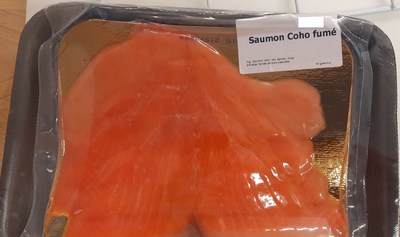
Smoked Coho Salmon (CNW Group / Ministry of Agriculture, Fisheries and Food)

QUEBEC, April 29, 2021 / CNW Telbec / – The Ministry of Agriculture, Fisheries and Food (MAPAQ), in collaboration with the company Boucherie O’Max, located at 85, rue Saint-Joseph , in Gracefield , is advising the public not to consume the product indicated in the table below if it has not been kept in the freezer at all times since the time of purchase. This is because the product packaging does not include the required “Keep frozen until use” statement.

Product name

Format

Targeted lot

“Smoked Coho Salmon”

65 g

Units sold until April 28, 2021

The product that is the subject of this warning was offered for sale until April 28, 2021 inclusive, and only at the establishment designated above. It was vacuum packed and sold frozen. The product label includes, in addition to its own name, the list of ingredients and the price of the product.

The operator is voluntarily recalling the product in question. He agreed with MAPAQ to disseminate this warning as a precautionary measure. People who have this product in their possession and have not kept it in the freezer at all times since the time of purchase are advised not to consume it. They must either return it to the establishment where they bought it or throw it away. Even if the affected product does not show any signs of spoilage or a suspicious odor, consuming it may represent a health risk. It should be noted that no case of illness associated with the consumption of this food has been reported to MAPAQ so far.

Additional information

The Ministry publishes various information documents concerning food safety. Those interested can consult them in the “Food consumption” section of the MAPAQ website: www.mapaq.gouv.qc.ca/consommation . They also have the option of registering online, by visiting www.mapaq.gouv.qc.ca/rappelsaliments , to receive, by email, the food recall releases published by the Department. Finally, it is possible to follow “MAPAQaliments” on Twitter at the following address: www.twitter.com/MAPAQaliments .

France – Product recall: Fromagerie des Frisonnes brand Marguerite’s Delight – E.coli

Oulah

Product recall: Fromagerie des Frisonnes brand Marguerite's Delight

ENCOUNTERED PROBLEM

Presence of Escherichia Coli

PROPOSED SOLUTION

People who hold the product in question are asked not to consume them – and more particularly young children, pregnant women, immunocompromised people and the elderly – and to return them to the point of sale where they were purchased.

People who have consumed it and who present symptoms such as diarrhea, abdominal pain or vomiting should consult their doctor as soon as possible, mentioning this consumption and the possible link with the bacterium Escherichia coli.

In the absence of symptoms within 10 days after consuming the affected products, there is no need to worry and consult a doctor.

The bacterium E. coli is naturally present among the digestive microflora of humans and warm-blooded animals. Some strains of E. coli are pathogenic, and can be responsible in humans for various disorders ranging from mild diarrhea to more serious forms such as hemorrhagic diarrhea or severe kidney damage such as HUS, mainly in young children.

FURTHER INFORMATION

▸ Lot
100221

▸ DDM
04/25/2021

▸ Packaging individually
wrapped in paper

▸ Start date / End of marketing
From 03/15/2021 to 04/16/2021

▸ Health mark
FR 86 042 001 CE

▸ Geographical sales area
• INDRE-ET-LOIRE (37)
• VIENNE (86)

▸ Distributors
• Retailers on 86 and 37,
• Amap at 37,
• Tours Beaujardin market
• farm gate sale

▸ Consumer service contact
0247920402

▸ Source
EARL DES FRISONNES EARL des Frisonnes