Category Archives: Food Micro Blog

France – Product recall: Unbranded Vegetable Stuffing – Salmonella

Oulah

Product recall: Unbranded Vegetable Stuffing

ENCOUNTERED PROBLEM

Presence of salmonella

PROPOSED SOLUTION

Those in possession of this product are asked not to consume it and to return it to the point of sale where it was purchased.

Foodborne illness caused by salmonella results in gastrointestinal disturbances, diarrhea, vomiting and abdominal pain, often accompanied by fever; these symptoms may be more severe in young children, immunocompromised individuals and the elderly. The incubation period can range from 6 to 72 hours.
People who have consumed the products mentioned below and who have these symptoms are invited to consult their doctor, notifying him of this consumption.

FURTHER INFORMATION

▸ Barcode
0298313000000


▸ DLC
between 04/27/2021 and 05/01/2021


▸ Start date / End of marketing
From 04/27/2021 to 05/01/2021


▸
TRIE-CHATEAU geographic sales area


▸
Leclerc distributors


▸ Consumer service contact
0344497575


▸ Source
SOCIETE TRIDIS LECLERC Trie-Château

Denmark – Risk of mold in organic coconut oil

DVFA

Haugen-Gruppen AS Denmark is recalling a batch of Green Choice Organic Coconut Oil Virgin, as there is a risk of mold in the product.

Recalled Foods , Published: May 7, 2021

Modified May 8, 2021
What food:
Green Choice Organic Coconut Oil Virgin
Net weight: 200 grams
Lot number: L20224
Best before date: 31-08-2024, 30-09-2024, 31-10-2024, 30-11-2024 and 31-12-2024
Lot number: L20253
Best before date: 31-01-2024, 31-03-2024, 31-10-2024 and 31-12-2024
Lot number: L20150
Best before date: 31-07-2024
Lot number: L20192
Best before date: 31-08-2024
Lot number: L20139
Best before date: 31-08-2024
Lot number: L19176
Best before date: 31-08-2024
Sold in:
Normal stores throughout the country
Menu shops throughout the country
Company recalling:
Haugen-Gruppen AS Denmark
Cause:
Mold has been found in products from the batch in question.
Risk:
Mold in the product makes it unsuitable as food.
Advice for consumers:
The Danish Veterinary and Food Administration advises consumers to deliver the product back to the store where it was purchased or to discard it.

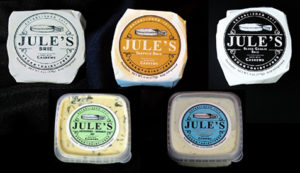
USA – Salmonella Duisburg and Salmonella Urbana outbreak linked to Jule’s cashew brie

Food Poison Journal

Seven sick in California, Tennessee and Florida

As of May 7, 2021, seven people infected with the outbreak strains of Salmonella Duisburg and Salmonella Urbana have been reported from three states. Illnesses started on dates ranging from January 31, 2021, to April 8, 2021.

Sick people range in age from 23 to 72 years, with a median age of 26, and 57% are female. Three people have been hospitalized, and no deaths have been reported.

The true number of sick people in an outbreak is likely much higher than the number reported, and the outbreak may not be limited to the states with known illnesses. This is because many people recover without medical care and are not tested for Salmonella. In addition, recent illnesses may not yet be reported as it usually takes 2 to 4 weeks to determine if a sick person is part of an outbreak.

Denmark – Legionnaires’ disease in Denmark in 2020

SSI

Legionella_Plate_01    CDC legionella

278 cases of legionnaires’ disease were detected in Denmark in 2020. Of these, 94.6% had been infected in Denmark. That is the highest number ever.

The Statens Serum Institut (SSI) has issued the annual report on how many cases of Legionnaires’ disease (LS) were found in Denmark in 2020.

A total of 278 cases of LS, also known as legionella pneumonia, were detected. Of these, 165 were men (59.4%) and 113 women (40.6%).

Out of these, 39 patients died within 30 days after the disease had broken out or they had been hospitalized. It gives a mortality rate of 14%.

Almost 95% infected in Denmark

Out of the 278, 263 people were infected in Denmark. This corresponds to 94.6%. This is an increase of 25% compared to the average for the last three years, and thus the highest number ever.

“The increase in the number of infected in Denmark may be related to a higher test activity in 2020. It may be due to the fact that many hospitalized patients with suspected covid-19 have also been examined for legionella infection,” says head of department Søren Anker Uldum from SSI.

15 infected on travel

There are only 15 cases (5.4%) where people in 2020 were infected with LS when traveling abroad. In 9 cases, it was while traveling in Europe. 5 were infected while traveling in Asia and 1 traveling to the American continent.

The proportion of travel-related LS cases is usually 20-25%

“Due to the extensive travel restrictions in 2020 due to the Covid-19 pandemic, there has been very limited travel activity. This is probably the reason for the few travel-associated legionella cases in 2020 ”, says Søren Anker Uldum.

Read more

You can read more about Legionnaires’ disease here.

You can also see the annual statement for legionnaires’ disease in Denmark in 2020 here .

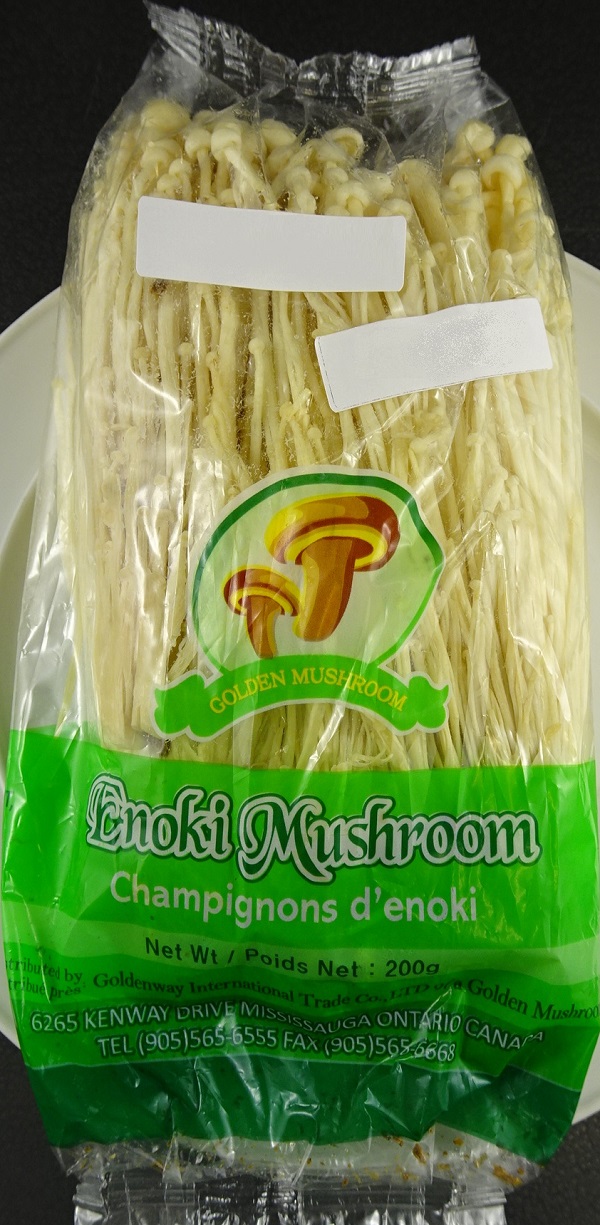
Canada- Food Recall Warning – Golden Mushroom brand Enoki Mushroom recalled due to Listeria monocytogenes

CFIA

Goldenway International Trade Co., Ltd.

Distribution:   Ontario, Possibly National, Quebec
Extent of the distribution:   Retail

Recall details

Ottawa, May 7, 2021 – Goldenway International Trade Co., Ltd. is recalling Golden Mushroom brand Enoki Mushroom from the marketplace due to possible Listeria monocytogenes contamination. Consumers should not consume the recalled product described below.

Recalled product

Brand Product Size UPC Codes
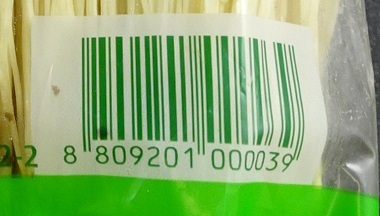
Golden Mushroom Enoki Mushroom 200 g 8 809201 000039 All units sold up to and including May 7, 2021

What you should do

If you think you became sick from consuming a recalled product, call your doctor.

Check to see if you have the recalled product in your home. Recalled products should be thrown out or returned to the store where they were purchased.

Food contaminated with Listeria monocytogenes may not look or smell spoiled but can still make you sick. Symptoms can include vomiting, nausea, persistent fever, muscle aches, severe headache and neck stiffness. Pregnant women, the elderly and people with weakened immune systems are particularly at risk. Although infected pregnant women may experience only mild, flu-like symptoms, the infection can lead to premature delivery, infection of the newborn or even stillbirth. In severe cases of illness, people may die.

Background

This recall was triggered by Canadian Food Inspection Agency (CFIA) test results. The CFIA is conducting a food safety investigation, which may lead to the recall of other products. If other high-risk products are recalled, the CFIA will notify the public through updated Food Recall Warnings.

The CFIA is verifying that industry is removing the recalled product from the marketplace.

Illnesses

There have been no reported illnesses associated with the consumption of this product.

Product photos

Printer ready version of photos

  • Golden Mushroom – Enoki Mushrooms – 200 grams (front)
  • Golden Mushroom – Enoki Mushrooms – 200 grams (back)
  • Golden Mushroom – Enoki Mushrooms – 200 grams (UPC)

Public enquiries and media

Public enquiries
Toll-free: 1-800-442-2342 (Canada and U.S.)
Telephone: 1-613-773-2342 (local or international)
Email: cfia.enquiries-demandederenseignements.acia@canada.ca
Media relations
Telephone: 613-773-6600
Email: cfia.media.acia@canada.ca

Research – Identification of Microorganisms from Several Surfaces by MALDI-TOF MS: P. aeruginosa Is Leading in Biofilm Formation

MDPI

New ecological trends and changes in consumer behavior are known to favor biofilm formation in household appliances, increasing the need for new antimicrobial materials and surfaces. Their development requires laboratory-cultivated biofilms, or biofilm model systems (BMS), which allow for accelerated growth and offer better understanding of the underlying formation mechanisms. Here, we identified bacterial strains in wildtype biofilms from a variety of materials from domestic appliances using matrix-assisted laser desorption/ionization-time of flight mass spectroscopy (MALDI-TOF-MS). Staphylococci and pseudomonads were identified by MALDI-TOF-MS as the main genera in the habitats and were analyzed for biofilm formation using various in vitro methods. Standard quantitative biofilm assays were combined with scanning electron microscopy (SEM) to characterize biofilm formation. While Pseudomonas putida, a published lead germ, was not identified in any of the collected samples, Pseudomonas aeruginosa was found to be the most dominant biofilm producer. Water-born Pseudomonads were dominantly found in compartments with water contact only, such as in detergent compartment and detergent enemata. Furthermore, materials in contact with the washing load are predominantly colonized with bacteria from the human. View Full-Text

Research – In-Plant Validation of Novel On-Site Ozone Generation Technology (Bio-Safe) Compared to Lactic Acid Beef Carcasses and Trim Using Natural Microbiota and Salmonella and E. coli O157:H7 Surrogate Enumeration

MDPI

The purpose of this study was to evaluate the antimicrobial efficacy of an aqueous ozone (Bio-Safe) treatment andtech lactic acid solutions on natural microbiota and E. coli O157:H7 and Salmonella surrogates on beef carcasses and trim in a commercial beef processing plant. For every repetition, 40 carcass and 40 trim swabs (500 cm2) were collected. Samples were taken using EZ-ReachTM swabs, and plated into aerobic plate count (APC), coliform, and E. coli PetrifilmTM for enumeration. In addition, a five-strain cocktail (MP-26) of E. coli surrogates was inoculated onto trim. For every trim surrogate repetition, 30 trim pieces were sampled after attachment and after ozone intervention. Samples were diluted and counts were determined using the TEMPO® system for E. coli enumeration. Ozone and lactic acid interventions significantly reduced (p < 0.003) bacterial counts in carcasses and trim samples. Moreover, lactic acid further reduced APC and coliforms in trim samples compared to ozone intervention (p < 0.009). In the surrogate trials, ozone significantly reduced (p < 0.001) surrogate concentration. Historical data from the plant revealed a reduction (p < 0.001) of presumptive E. coli O157:H7 in trim after a full year of ozone intervention implementation. The novel technology for ozone generation and application as an antimicrobial can become an alternative option that may also act synergistically with existing interventions, minimizing the risk of pathogens such as Salmonella and E. coli O157:H7. View Full-Text

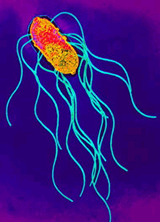
Research -Genome sequencing reveals how salmonella carves out a niche in pork production

Phys Org

Salmonella kswfoodworld

Variants of concern (VOCs) and variants of interest (VOIs) have become familiar terms due to the current pandemic, but variants of familiar pathogens such as salmonella also present a threat to human and animal health.

To better understand the different threats these variants pose, a collaboration led by Professor Rob Kingsley from the Quadram Institute and Professor Mark Stevens from the Roslin Institute working with scientists from the Earlham Institute has focused on common variants of  present in  in the UK. Their findings, published recently in the journal Communications Biology, has shown that despite being extremely closely related, variants can have very different effects on the health of the pig and also on the risks they pose to .

Salmonella Typhimurium is one of the most common types of salmonella. It is a major cause of human gastroenteritis, notably from consuming undercooked pork products or as a result of cross-contamination of foods consumed raw. This bacterial pathogen is also a concern to the pork industry as it can affect the health, productivity and welfare of pigs. Salmonella Typhimurium is relatively common in pig herds globally, and processes implemented in abattoirs are designed to prevent contamination of meat destined for the food chain.

RASFF Alert – Mycotoxin – Ochratoxin A – Paprika Powder

RASFF

Ochratoxin A in paprika powder from Portugal in the Netherlands, Belgium and Portugal

RASFF Alert – Aflatoxin – Pistachios – Groundnuts – Almonds

RASFF

Aflatoxin B1 in pistachios from Iran in Germany and Belgium

RASFF

Aflatoxin in groundnuts from Egypt in the Netherlands

RASFF

Aflatoxin in almonds from Australia in Spain

RASFF

Aflatoxin in almonds from Australia in Spain