Category Archives: Food Illness

Malawi bans sale of food in primary, secondary schools as cholera death toll hits 117

China Org

LILONGWE, Oct. 9 (Xinhua) — Malawi has banned sale of food in primary and secondary schools ahead of the new school year, which starts Monday, as cholera outbreak continues with 117 cumulative deaths recorded as of Sunday.

Requesting parents to pack homemade food for students, the education ministry “is directing that selling of food in primary and secondary schools is banned with immediate effect until further notice,” said a statement signed by Secretary for Education Chikondano Mussa.

Universities and colleges are advised to ensure that food vendors and suppliers are oriented and adhere to the standard operating procedures issued by the ministry to all learning institutions.

Cholera has been spreading sporadically across the country since the first cases were recorded in the south-eastern border district of Machinga in March.

As of Sunday, 23 districts have reported cases with 17 districts coming on board in the past 14 days, bringing the caseload and death toll to 4,223 and 117 respectively. Enditem

USA – Baked Goods linked to Salmonella Outbreak in Ohio

Food Poison Journal

Allen County Public Health (ACPH) is investigating a potential Salmonella outbreak affecting Allen, Putnam and Hancock counties. ACPH was notified by Hancock County regarding a multi-county Salmonella outbreak with illness onsets currently ranging from Oct. 1-6, 2022. As of Monday, Allen County had one confirmed case. Chances of other counties being affected is possible.

Undercooked food is the source for most illnesses related to Salmonella. This particular outbreak may be linked to baked goods prepared at a home bakery and distributed at establishments in Allen, Hancock and Putnam Counties. Diagnosing Salmonella infection requires testing a specimen (sample), such as stool (poop) or blood. Infection is diagnosed when a laboratory test detects Salmonella bacteria in stool, body tissue, or fluids.

USA – Updated – Outbreak Investigation of E. coli O121:H19 Frozen Falafel (October 2022)

FDA

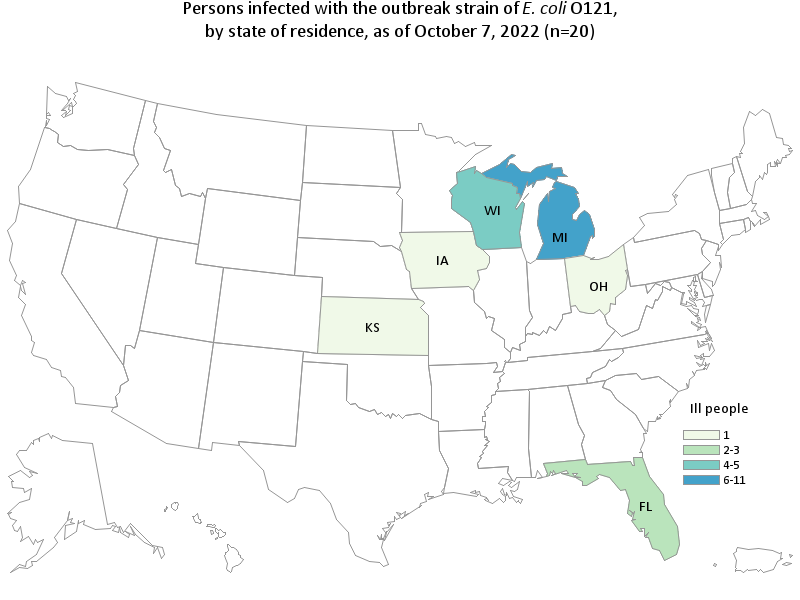
The FDA, along with CDC and state and local partners, are investigating a multistate outbreak of E. coli O121:H19 infections linked to Earth Grown frozen falafel.

Based on epidemiologic information provided by CDC and interviews conducted by state and local public health officials, of 18 people interviewed, 15 reported shopping at ALDI stores. Among these 15 people who reported shopping at ALDI stores, 6 reported eating Earth Grown brand frozen falafel purchased from ALDI in the week before getting sick.

On October 6, 2022, the manufacturer of Earth Grown frozen falafel, Cuisine Innovations, initiated a voluntary recall. Recalled products include Earth Grown vegan traditional falafel and garlic & herb falafel distributed and sold exclusively by ALDI. Additional information on recalled products is available in the firm’s recall notice.

On October 6, 2022, ALDI removed any remaining Earth Grown frozen falafel from stores.

FDA’s investigation is ongoing. Updates to this advisory will be provided as they become available.

Recommendation

Consumers, restaurants, and retailers should not eat, sell, or serve recalled Earth Grown Traditional Falafel or Garlic & Herb Falafel sold exclusively by ALDI after June 24, 2021.

These items are no longer available for sale but were sold frozen and have a long shelf-life of 18 months, so consumers should check their freezers for these products. If you have recalled frozen falafel in your freezer, do not eat or serve them.

Outbreak Investigation of E. coli O121: Frozen Falafel (October 2022) - CDC Case Count Map as of October 7, 2022

USA – Outbreak Investigation of Listeria monocytogenes: Brie and Camembert Soft Cheese Products (September 2022)

FDA

The FDA, along with CDC and state and local partners, is investigating a multistate outbreak of Listeria monocytogenes infections linked to Brie and Camembert soft cheese products, including all baked Brie cheeses, manufactured by Old Europe Cheese, Inc. of Benton Harbor, MI, and sold at various retailers under multiple labels and brands.

On September 30, 2022, Old Europe Cheese, Inc. voluntarily recalled multiple brands of Brie and Camembert cheeses produced at their Michigan facility and on October 5, 2022 expanded their recall to include multiple brands of baked Brie products. The firm has also halted production and distribution of their Brie and Camembert products from the Michigan facility and is working with FDA on corrective actions. Consumers, restaurants, and retailers should not eat, sell, or serve recalled products and should throw them away; this includes Best By Dates ranging from September 28, 2022 to December 14, 2022, and all flavors and quantities.

An expanded list of recalled products and stores that potentially sold these products is available below and on the firm’s recall. Swiss American has also issued a voluntary recall of their St. Louis Brie products sourced from Old Europe Cheese Inc.’s Michigan facility. A full list of their products can be found on the firm’s recall notice.

FDA’s investigation is ongoing to determine if additional products are potentially contaminated. Updates to this advisory will be provided as they become available.

Recommendation

Consumers, restaurants, and retailers should not eat, sell, or serve recalled products and should throw them away; this includes Best By Dates ranging from September 28, 2022 to December 14, 2022, and all flavors and quantities. An expanded list of recalled products and stores that potentially sold these products is available below and on the firm’s recall.

Retailers may have repackaged bulk Old Europe Cheese items into smaller containers and sold this repackaged product to consumers. This repackaged product may not bear the original labeling and product information. If you are unsure where your Brie or Camembert cheese products are from, ask your retailer or throw them away.

Listeria is most likely to sicken pregnant people and their newborns, adults aged 65 or older, and people with weakened immune systems. Other people can be infected with Listeria, but they rarely become seriously ill.

Call your healthcare provider right away if you have these symptoms after eating Old Europe Cheese Inc. Brie and Camembert products:

  • Pregnant people typically experience only fever, fatigue, and muscle aches. However, Listeria infection during pregnancy can lead to miscarriage, stillbirth, premature delivery, or life-threatening infection of the newborn.
  • People who are not pregnant may experience headache, stiff neck, confusion, loss of balance, and convulsions, in addition to fever and muscle aches.

Follow FDA’s safe handling and cleaning advice and use extra vigilance in cleaning and sanitizing any surfaces and containers that may have come in contact with these products to reduce the risk of cross-contamination, including retailers who repackaged bulk recalled cheese. Listeria can survive in refrigerated temperatures and can easily spread to other foods and surfaces.

Case Count Map Provided by CDC

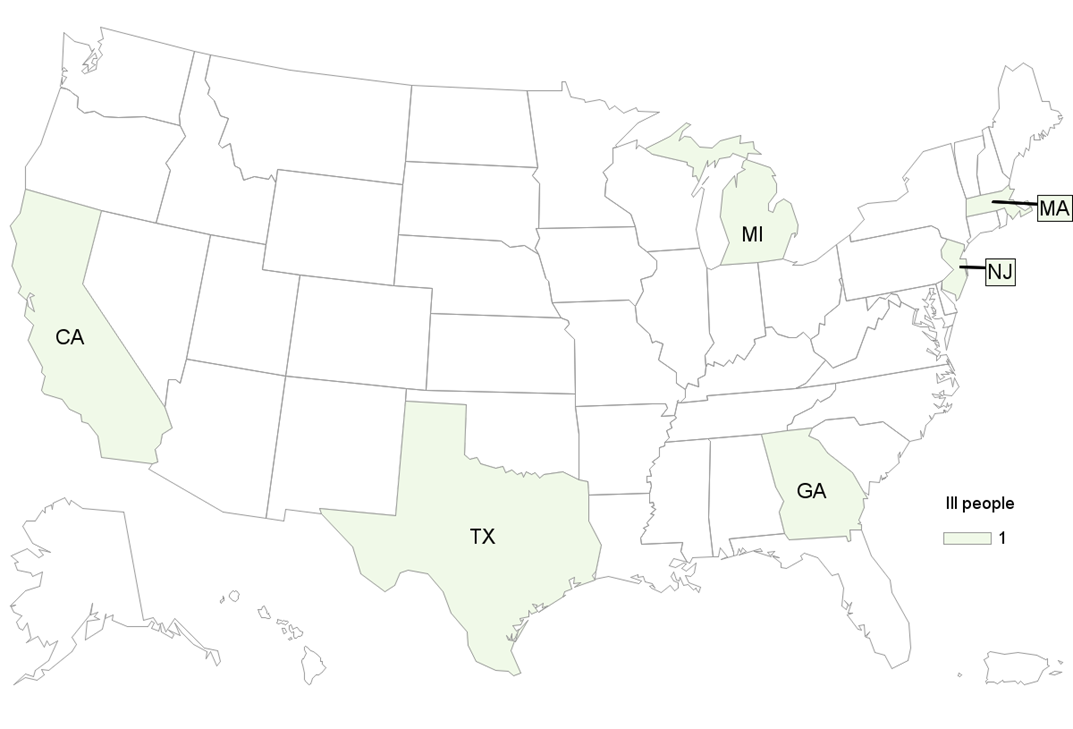
CDC Case Count for the Outbreak Investigation of Listeria monocytogenes from Brie and Camembert Soft Cheese Products (as of 10/6/2022)

Case Counts

Total Illnesses: 6
Hospitalizations: 5
Deaths: 0
Last illness onset: August 5, 2022
States with Cases: CA, GA, MA, MI, NJ, TX
Product Distribution: Nationwide

Research -The annual cost of foodborne illness in Australia

FSANZ

Executive summary
Foodborne illness causes a significant health burden in Australia. Estimates of both the extent of foodborne illness and the costs arising from illness are essential for measuring the impact on the population.
In 2010 it was estimated that Australians experience almost 16million episodes of gastroenteritis each year, with about one quarter of these due to contaminated food. This report updates these numbers to circa 2019 and estimates the associated costs to individuals and the health system. As foodborne disease interventions are often targeted at specific causes of illness, costs are also provided for ten high-priority pathogens.
We estimate that foodborne illness and its sequelae costs Australia AUD 2.44billion each year. The largest component of this cost is lost productivity due to non-fatal illness, followed by premature mortality and direct costs (including hospitalisations and other health care use).
While costs due to lost productivity are lower under the more conservative friction cost model, it remains the largest component cost for foodborne illness due to all causes. The pathogen with the highest individual cost is Campylobacter (AUD 365millionper year), while norovirus, other pathogenic E. coli, and Salmonella are all estimated to cost Australians over AUD 100 million each year. Lost productivity is the largest component cost for most pathogens, although premature mortality is the largest cost for pathogens that typically cause more severe illness, such as Listeria monocytogenes, Shiga toxin-producing Escherichia Coli, and Salmonella.
Significant advances in this report include the incorporation of estimated willingness to pay to avoid pain and suffering based on a discrete choice experiment from another FSANZ commissioned study, and the use of a simulation approach to estimating costs which provides uncertainty intervals on all estimates. A costing tool is provided with this report to allow estimates to be updated in the future.
Costs associated with surveillance for foodborne pathogens and related to outbreak investigations are considered separately to the model. Likewise, industry costs due to outbreaks such as lost sales, disposal of products, recall costs, enforcement related costs and potential business costs are not included in the costing model. Key limitations in this work include the lack of data on the long-term burden and health care usage associated with sequelae or ongoing illness due to toxoplasmosis and listeriosis. These costs are not included in this report due to unavailability of data. Costs of pain and suffering, which we approximate using willingness to pay to avoid pain and suffering, are relatively low compared to those estimated for other countries, which may represent differences in underlying preferences across countries and could suggest that greater international standardisation of methods and data collection may be required.

This report demonstrates that foodborne illness results in a substantial cost to Australia and that interventions to improve food safety across industry, retail, and consumers are needed to improve public health. Pathogen-specific costing estimates allow policy makers to target such interventions at individual pathogens, with the end goal of reducing the burden due to foodborne illness.

New Zealand – links Hepatitis A berry cases to EU illnesses

Food Safety News

Officials in New Zealand investigating Hepatitis A cases linked to berries have identified a connection with a past outbreak in Europe.

There are 12 hepatitis A infections from eating frozen berries in New Zealand. Eight have been linked by genetic sequencing, meaning they were likely exposed to the same source of the virus. Seven people have been hospitalized. The virus attacks the liver. The Ministry for Primary Industries (MPI) was informed by the Ministry of Health of three Hepatitis A cases in September.

Foodstuffs Own Brands has recalled various Pams brand frozen berry products because of a possible link to the hepatitis A cases. Products are being removed from New World, Pak’n Save and Four Square shops nationwide, and from Trents and Raeward Fresh stores in the South Island.

USA – FDA Core Outbreak Investigation Table

FDA

What’s New

  • For the Salmonella Litchfield outbreak in a not yet identified product (reference #1105), the case count has increased from 28 cases to 29 cases.
  • For the E. coli O157:H7 outbreak (reference #1081) in a not yet identified product, CDC announced the outbreak is over on 10/4/2022. FDA’s investigation is ongoing.
  • For the Listeria monocytogenes outbreak in Brie and Camembert cheese (reference #1106), an Outbreak Advisory was issued on 9/30/2022.
  • For the Salmonella Typhimurium outbreak (reference #1095), one additional case was added, and the product linked to illnesses has been changed to cantaloupe. The vehicle of the outbreak was confirmed after the outbreak ended. Given the product(s) were no longer on the market, there was no ongoing risk to public health and no need to avoid eating cantaloupe. Additional information on this outbreak will be forthcoming.
  • For the outbreak of Cyclospora cayetanensis in a not yet identified product (reference #1080) the case count has increased from 81 to 84 and the outbreak has ended.
  • For the outbreak of Cyclospora cayetanensis in a not yet identified product (reference #1084) the outbreak has ended.
  • For Listeria monocytogenes adverse event in a not identified product (reference #1040), the outbreak has ended.

USA – CDC says outbreak linked to Wendy’s sandwiches is over with more than 100 sick

Food Safety News

Federal officials have declared that an outbreak of E. coli O157:H7 infections related to romaine lettuce on Wendy’s sandwiches has ended.

The Centers for Disease Control and Prevention is reporting that the total number of confirmed patients is 109, up from the 97 reported in its most recent update on Sept. 1. About half — 52 — of the patients have been so sick they had to be admitted to hospitals. Thirteen of the patients developed hemolytic uremic syndrome (HUS), a serious often life-threatening condition that can cause kidney failure. No one had died as of this evening.

As of the report tonight from the CDC the specific source of the E. coli could not be 100 percent confirmed. However, 83 percent of 82 patients for whom the information was available reported eating at Wendy’s before becoming ill.

“The true number of sick people in this outbreak is likely much higher than the number reported, and the outbreak may not have been limited to the states with known illnesses. This is because many people recover without medical care and are not tested for E. coli,” according to the CDC statement.

New Zealand – Nationwide recall of Pams frozen berries as Hepatitis A infections rise to 12, several hospitalised

Stuff NZ

Another nine cases of hepatitis A have been detected with links to frozen berries, prompting a recall of half a dozen products from the Pams brand.

Pams – a New Zealand division of supermarket giant Foodstuffs – is recalling various frozen berry products as a precautionover a possible link to recent cases of the contagious virus.

Of the 12 cases found so far, seven have been hospitalised, including young, fit teenagers – not typically deemed at high risk from the illness, New Zealand Food Safety deputy director-general Vincent Arbuckle said.

The investigation into the source continues. Until, and unless, a definitive source is identified, the advice to heat-treat remains in place for all frozen berry products – regardless of brand, officials warned.

Viet Nam – Food poisoning kills 12 sailors on Chinese boat off Con Dao islands

E. VN Express

A China registered boat with 21 crew members has been hit by food poisioning, with 12 dead and nine in critical conditon.

The nine, being treated at the Con Dao District medical center Friday afternoon, were in critical condition, doctors said.

When the crew members of the ship, Wuzhou 8 were airlifted by a rescue helicopter to Con Dao (110 km to the southwest) for emergency treatment, 10 had already died. Of the remaining 11, one died on the way to the airport and another arrived dead at the district medical center.

A Ba Ria-Vung Tau Province border guard representative said that the cargo ship was on its way from Thailand to China when the crew were hit by food poisoning, off the Con Dao islands.

Hoyer Tranpost Vietnam Co. Ltd, agent of the Wuzhou 8, sent a notice to the Department of Health of Ba Ria-Vung Tau Province to request emergency arrangements for its crew members.

When Wuzhou 8 arrived in Con Dao waters, 18 crew members showed signs of food poisoning. The remaining victims looked seriously ill and in need of immediate treatment, so they were rushed to the mainland and taken to the local medical center.

“While people on the ship said they suffered food poisoning, it was not clear what they had consumed,” Loi said.