Category Archives: Food Hygiene

New Zealand – Mamma Lucia brand Halloumi Cheese – E.coli

MPI

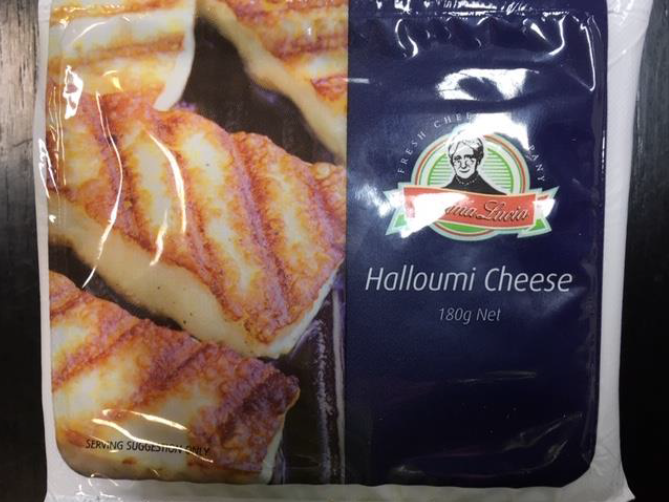
A pack of Mamma Lucia Brand Halloumi Cheese (180g)

Product identification
Product type Cheese
Name of product (size) Mamma Lucia brand Halloumi Cheese (180g)
Batch marking 20139
Date marking Use by 14 11 20
Package size and description The product is sold in a 180g plastic package.
Distribution The product is imported from Australia.

The affected product has only been sold at Mediterranean Foods Trattoria & Deli, 42 Constable Street, Newtown, Wellington.

Notes This recall does not affect any other Mamma Lucia brand products.

Consumer advice

Customers are asked to check the batch and date mark printed on the product packaging.

Affected product should not be consumed. There have been no reports of associated illness, however if you have consumed any of this product and have any concerns about your health, seek medical advice.

Customers should return the product to their retailer for a full refund.

Escherichia coli (E. coli) is a bacterium that normally lives in the intestines of people and other warm-blooded animals. Although most strains of E. coli are harmless, some types can cause serious illness with severe diarrhoea and stomach cramps.

Who to contact

If you have questions, contact Mediterranean Foods (Wgtn) Limited:

  • Phone: 021 750 211
  • Address: 30 Landfill Road, Owhiro Bay, Wellington.

UK -Cardiff City Road restaurant found infested with salmonella-carrying cockroaches

Wales Online

A popular City Road café in the Welsh capital was closed down after around 100 cockroaches were discovered in the kitchen and dining area.

The insects were found at Mr Tikka on City Road in Roath, Cardiff, when council officers carried out an unannounced routine inspection on May 7 of last year.

When officers arrived, the owner, Rubi Begum, was seen sweeping two live insects off the counter and white powder – believed to be an insecticide – was on the kitchen floor.

More insects, including German cockroaches, which pose a significant health risk, were later discovered in the kitchen and dining area where customers were eating.

Australia – Mamma Lucia Halloumi Cheese -E.coli

FSANZ

Product information

Fresh Cheese Company is undertaking a recall of one batch (Batch 20139) of the Mamma Lucia Halloumi Cheese 180g. The product has been for sale at IGA, independent food retailers and delicatessens in Vic. There are no other batches affected by this recall.

Date markings

Use by 14 11 20

Mamma Lucia Halloumi Cheese

Problem

The recall is due to possible E.coli contamination.

Food safety hazard

Food products contaminated with E.coli may cause illness if consumed.

Country of origin

Australia

What to do​

Consumers should not eat this product. Any consumers concerned about their health should seek medical advice. Customers should return the product to the place of purchase for a full refund.

For further information please contact:

Fresh Cheese Company
Phone 03 9301 9444
www.provedoregroup.com.au

Related links:


Japan and South Korea – Thousands sick in E. coli outbreaks

Food Safety News

Officials in Korea are investigating an E. coli outbreak that has affected 100 people while more than 3,000 students and teachers recently got food poisoning in Japan, according to media reports.

The Korea Centers for Disease Control and Prevention (KCDC) has been investigating an Enterohemorrhagic E. coli (EHEC) outbreak with the local municipality and relevant ministries since mid-June. EHEC is also known as Shiga toxin-producing E. coli (STEC).

The outbreak in a kindergarten in Ansan-si, Gyeonggi Province had 58 confirmed cases as of late June with 114 people showing symptoms. Most of these are students of the kindergarten but three are family members of pupils.

A total of 21 people — 19 kindergarten students and two family members — were in hospital for inpatient care. Sixteen people — 14 students and two family members — had onset of symptoms suspected to be hemolytic uremic syndrome (HUS), a type of kidney failure associated with E. coli infection, and four people were receiving dialysis treatment.

USA – TWO HOSPITALIZED AFTER REPORTED SALMONELLA OUTBREAK AT GRANTS PASS RESTAURANT

KDRV

GRANTS PASS, Ore. — Public health officials are investigating a cluster of Salmonella cases linked to a Grants Pass restaurant that has resulted in two hospitalizations, according to Josephine County Public Health.

The agency said that multiple cases of documented Salmonella were “potentially linked” to Si Casa Flores on NE Beacon Drive. Public health officials inspected the restaurant and collected 17 specimens for lab testing, with results expected this weekend.

“Si Casa Flores Corporation has been working closely with Public Health specialists to identify the source of the outbreak and ensure the continued safety of Si Casa customers,” Josephine County Public Health said in a statement.

Due to ingredients shared between local restaurants, state and local authorities are asking that anyone who has eaten at three Si Casa Flores-owned locations in Grants Pass from June 25 to July 7 complete an online survey. This includes the Beacon Drive location, the NW F Street location, and the Xpress trailer on Union Avenue.

USA – Paralytic shellfish poisoning (PSP) – Death

Food Safety News

The Alaska State Medical Examiner’s Office has confirmed that the death of an Alaska resident is consistent with paralytic shellfish poisoning (PSP). Officials have yet to release personal information.

Warnings have been issued to the community by email, fax, radio and social media after blue mussel samples collected from the beach on the same day the shellfish were consumed were found to have extremely high toxin levels, more than 100 times higher than the safe regulatory limit. The snail samples also had elevated toxin levels, but not as high as the blue mussels.

Research – Attributing human foodborne diseases to food sources and water in Japan using analysis of outbreak surveillance data

JFP

In Japan, strategies for ensuring food safety have been developed without reliable scientific evidence on the relation between foodborne infections and foods. The aim of this research was to provide information on the proportions of foodborne diseases caused by seven major causative pathogens ( Campylobacte r spp., Salmonella spp., EHEC, V. parahaemolyticus , Clostridium perfringens , Staphylococcus aureus , and Norovirus) attributable to foods using analysis of outbreak surveillance data. For the calculation of the number of outbreaks attributed to each source, simple-food outbreaks were attributed to the single-food category in question, and complex-food outbreaks were classified under each category proportionally to the estimated probability. Between 2007 and 2018, 8.730 outbreaks of foodborne diseases caused by seven pathogens were reported and another 6,690 (76.6%) were of “unknown source”. We observed fluctuations in the sources of foodborne diseases caused by the seven pathogens from 2013 to 2018 as follows: chicken products (92.9%, CI 92.6–92.9) for Campylobacter spp., beef products (40.1%, CI 38.2–41.2) and vegetables (39.3%, CI 38.2–41.2) for EHEC, eggs (22.8%, CI 14.9–31.9), chicken products (13,3%, CI 6.4–21.3) for Salmonella spp., finfish (86.3%, CI 62.5–95.8) and shellfish (13.7%, CI 4.2–37.5) for V. parahaemolyticus, grains and beans (47.2%, CI 31.2–62.5) for S. aureus, vegetables (69.3%, CI 50.8–79.7) and beef products (13.1%, CI 10.2–15.3) and chicken products (10.0%, CI 1.7–27.1) for C. perfringens , and shellfish (74.7%, CI 73.1–75.9) for Norovirus. In this study, we provide the best currently available basis to evaluate the link between foodborne diseases and foods. Additionally, our results reflected the effect of strict health regulations for raw beef during a given time period, and demonstrate the importance of controlling the contamination rate of Campylobacter spp. in chicken products at each step of the food supply chain.

Hong Kong – Cross contamination, temperature abuse factors in sandwich outbreak

Food Safety News

Cross contamination and temperature abuse are factors that played a role in an outbreak of Salmonella in Hong Kong earlier this year.

In May, the Centre for Health Protection (CHP) of the Department of Health recorded 236 illnesses linked to consumption of sandwiches produced in a food factory with more than 50 people needing hospital treatment.

Cross contamination of raw eggs by food handlers at the factory, prolonged storage of sandwiches at improper temperatures during delivery and at retail were suspected to be contributing factors to the outbreak.

The most commonly consumed items included a ham, cheese and egg sandwich by 166 cases, ham and egg sandwich by 50 cases and a cheese and egg sandwich by 29 patients.

Scotland – Salmonella and STEC behind most outbreaks in Scotland

Food Safety News

There were 11 foodborne outbreaks in Scotland this past year with almost 50 people falling ill.

Salmonella and Shiga toxin-producing E. coli (STEC) were the most frequently reported organisms.

Findings come from the Health Protection Scotland (HPS), part of Public Health Scotland (PHS), annual surveillance report on bacterial, protozoal and viral outbreaks of infectious intestinal disease in 2019.

The 11 outbreaks and 49 illnesses in 2019 is down from the 14 outbreaks and 117 illnesses reported in 2018, but in line with the previous five-year average of 13 outbreaks per year. Figures from 2018 include a norovirus outbreak that affected 60 people.

USA – Cyclospora Bagged Salad Outbreak in Iowa Affects 160 – And Authorities are Still Counting

Food Poisoning News

Iowa continues to hold the highest number of cases in the ongoing Fresh Express Bagged Salad Cyclospora Outbreak, compared to the other 7 affected states, with a total of 160 confirmed cases.

Cyclospora, officially known as Cyclospora cayetanensis, is a type of parasite which uses the human gut as its host. The parasite enters the human body by being ingested with fresh fruits, vegetables, or water, at which point the parasite begins to live and multiply in the gut.