Category Archives: Food Hygiene

France – Product recall: Mini Mont d’Or AOP Mini coin + ceramic and Mini branded coin OUR REGIONS HAVE TALENT – Listeria monocytogenes

Oulah

Product recall: Mini Mont d'Or AOP Mini coin + ceramic and Mini branded coin OUR REGIONS HAVE TALENT

ENCOUNTERED PROBLEM

Presence of Listeria monocytogenes

PROPOSED SOLUTION

People who may have this product are asked not to consume it and to return it to the point of sale where it was purchased.

People who have consumed this product and who present with fever, isolated or accompanied by headaches, are invited to consult their attending physician, notifying him of this consumption.
Pregnant women should pay special attention to these symptoms, as well as immunocompromised people and the elderly. These symptoms may suggest listeriosis, a disease that can be serious and can take up to eight weeks to incubate.

FURTHER INFORMATION

▸ Mini Mont d’Or AOP Mini coin + ceramic
• Barcode: 3564709172491
• Lot: 3053
• DLC: 01.04.21 – 02.04.21

▸ Mini Mont d’Or AOP Mini coin
• Barcode: 3564709170732
• Lot: 3053
• DLC: 01.04.21 – 02.04.21

▸ Health
stamp FR 25.041.001 CE

▸ Marketing
These products were marketed in the Self-Service department from 02/26/21.

▸ Consumer service contact
For more information, please contact the manufacturer on 0 800 87 41 87 (free service and call)

▸ Source
https://www.leclercdrive.fr/

Singapore – 82 ill in food poisoning outbreak; Chilli Api Catering suspended

Straits Times

A food poisoning outbreak has affected 82 people, 14 of whom are now in hospital.

The Ministry of Health (MOH) and the Singapore Food Agency (SFA) said the 82 people reported gastroenteritis symptoms after eating food prepared by Chilli Api Catering between March 10 and 12.

The catering company in Bedok North Street 5, Shimei East Kitchen, has been suspended by the SFA until further notice, they said in a statement last night.

Singapore – SFA recalls batches of satay seasoning with toxin that causes cancer, birth defects – Aflatoxin

Straits Times

SINGAPORE – A satay seasoning product has been recalled after high levels of a cancer-causing toxin were detected in it, the Singapore Food Agency (SFA) announced on Monday (March 15).

Instant Satay Spices by home-grown manufacturer Li Kwong Agencies Co was found to contain aflatoxins exceeding permitted levels.

SFA has directed the manufacturer to recall all batches of the product that bear the expiry date of Jan 19, 2022, and are sold in 50g and 500g packets.

Ireland – Recall of Further Batches of SFC Chicken Poppets Due to the Presence of Salmonella

FSAI

Summary
Category 1: For Action
Alert Notification: 2021.20 update 2
Product: The Original SFC Chicken Poppets, pack size: 190g
Batch Code: All best before dates up to, and including, 30.06.2022
Country Of Origin: United Kingdom

Message:

Further to the FSAI’s food alert 2021.20,  and 2021.20 update 1, SFC is extending the recall of its Chicken Poppets to all batches with best before dates up to, and including, 30 June 2022, due to the detection of Salmonella. Point-of-sale recall notices will be displayed in Tesco stores.

Nature Of Danger:

People infected with Salmonella typically develop symptoms between 12 and 36 hours after infection, but this can range between 6 and 72 hours.  The most common symptom is diarrhoea, which can sometimes be bloody.  Other symptoms may include fever, headache and abdominal cramps.  The illness usually lasts 4 to 7 days. Diarrhoea can occasionally be severe enough to require hospital admission. The elderly, infants, and those with impaired immune systems are more likely to have a severe illness.

Action Required:

Consumers:

Consumers are advised not to eat the implicated batches.

SFC Chicken Poppets

China – Authorities probe norovirus outbreak in residential community in E. China’s Shandong

Global Times

Norovirus Food Safety kswfoodworld

An investigation is underway after some residents, including children in a kindergarten in Ji’nan, East China’s Shandong Province, contracted the norovirus, according to the local authorities.

On March 11, some members of a residential community in Ji’nan, including some children from a kindergarten, were reported to be suffering syndromes of vomiting and diarrhea. District disease control and prevention personnel had taken samples of water, vomitus and related food for immediate further investigation.

Three children were sent to the hospital, but no severe cases were reported, and norovirus was detected in their vomit, the local authorities said on March 12.

The district education authority has temporarily closed the kindergarten and carried out a disinfection of its premises, and also taught children and parents on how to prevent norovirus infection.

Taiwan – 164 hospitalized in southern Taiwan with suspected food poisoning

Taiwan News

At least 164 students have been taken to hospitals in Pingtung County since Thursday evening (March 11) after developing symptoms of food poisoning.

Students from Donggang Senior High School began to display symptoms associated with food poisoning — including stomach cramps, vomiting, and diarrhea — after arriving home from school on Thursday. The school said it began to receive calls from parents at 11 p.m. and that a total of 231 students had called in sick on Friday.

As of press time, 121 of the 164 students who sought treatment at Fooyin University Hospital and Antai Hospital had been discharged, leaving 43 still hospitalized for further observation. Since all the patients had eaten food sourced from the same supplier, the authorities suspect the outbreak is a case of mass food poisoning and have sent samples of the school lunch to a medical laboratory for analysis.

Singapore – Recall of eggs from Lay Hong Berhad Layer Farm Jeram (Malaysia)due to presence of Salmonella Enteritidis

Click to access sfa-media-release_120321_recall-of-eggs-from-lay-hong-berhad-layer-farm-jerame3e2294028dc42c980dbc111d1baad50.pdf

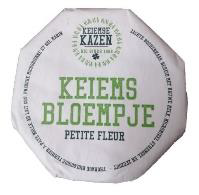
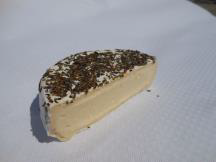
Germany – Petit Fleur Camembert, Pfefferbert, Kreitaberti, 250 g- Listeria monocytogenes

LMW

Warning type:Food
Date of first publication:03/12/2021
Product name:Petit Fleur Camembert, Pfefferbert, Kreitaberti, 250 g
Product pictures:

Product image1.png
Product image2.png
Product picture3.png
Manufacturer (distributor):Cheese wholesaler Paul Lerchenmüller
Reason for warning:

Listeria

Packaging Unit:see attached press release
Durability:see attached press release
Production date:see attached press release
Lot identification:see attached press release
Further information:

Reference is made to the attached press release from the food company.

Contact to the responsible authorities:

Baden-Württemberg:poststelle@mlr.bwl.de

Bavaria:poststelle@lgl.bayern.de
Hesse:Schnellwarnung@rpda.hessen.de
Press releases and information
title Attachment or web link
Press release

Germany – CAMEMBERT GRAINDORGE – STEC E.coli

steLMW

Warning type:Food
Date of first publication:03/13/2021
Product name:CAMEMBERT GRAINDORGE
Product pictures:

4813_Camembert LC_1.jpg
Manufacturer (distributor):MUNICH fromage GmbH & Co. KG
Reason for warning:

Detection of verotoxin-producing E. coli

Packaging Unit:250 g
Durability:04/07/2021
Lot identification:270121LI13
Further information:For more information, please refer to the attached press release.
Contact to the responsible authorities:

Baden-Württemberg:poststelle@mlr.bwl.de

Bavaria:poststelle@lgl.bayern.de
Hamburg:poststelle@justiz.hamburg.de
Hesse:Schnellwarnung@rpda.hessen.de
Lower Saxony:poststelle@ml.niedersachsen.de
North Rhine-Westphalia:poststelle@mulnv.nrw.de
Press releases and information
title Attachment or web link
Press release MÜNNICH fromage GmbH & Co. KG

Research – Campylobacter Contamination of UK-Produced Halal Chicken at Retail

Journal of Food Protection

CDC Campy

Campylobacter is the leading cause of human bacterial diarrhoeal disease worldwide, with poultry meat products accounting for the majority of human cases. Recent surveys by the Food Standards Agency estimate the Campylobacter prevalence in fresh UK retail chicken to be 41.2%. However, such surveys have not distinguished between broiler chickens produced for different consumer demographics, such as the Halal market. Campylobacter colonisation of broilers is difficult to prevent, especially during routine partial depopulation of flocks. Broilers produced for the Halal market may undergo multiple depopulation events, which may increase the risk of colonisation and subsequent Campylobacter contamination of chicken meat. This project aimed to determine the prevalence and levels of Campylobacter contamination of chicken meat produced for the UK Halal market. Campylobacter was identified and enumerated from the neck skin and outer packaging of 405 Halal chickens. Following culture, isolates were assigned to species via PCR and disc diffusion antimicrobial susceptibility tests determined. Logistic regression analysis assessed risk factors for Campylobacter isolation, the level of Campylobacter contamination among positive carcasses and antimicrobial resistance outcomes. Campylobacter spp. were confirmed in 65.4% of neck skin samples and 17.1% of packaging samples. 13.8% of neck skin samples had the highest level of contamination (>1000 cfu/g). Large birds had a significantly higher number of samples with >1000 cfu/g (p<0.001) and as chicken carcass weight increased, birds were more likely to be Campylobacter-positive (p<0.05). A high prevalence of resistance was seen to ciprofloxacin (42.0%) and 38.5% of samples contained at least one multi-drug resistant Campylobacter isolate. This study demonstrates that Halal chicken has a higher Campylobacter prevalence than non-Halal chicken. Interventions should be introduced to reduce this increased public health risk to consumers.