Category Archives: E.coli

Research – Microbiological control of pasteurized and unpasteurized dairy products, 2018 – Norway

Mattilsynet

The microbiological quality was generally good for the 189 dairy products on the Norwegian market that the Norwegian Food Safety Authority examined in 2018. Nevertheless, we see that there are microbiological challenges in connection with unpasteurized dairy products.

What did we investigate? 189 samples of unpasteurized and pasteurized cheeses and other dairy products produced in Norway and in the EU.
Period: 2018
What were we looking for? The four categories have been analyzed for various disease-causing bacteria (pathogens). These choices are made in order to get the most information for each category.

The different categories are:

PN = pasteurized milk product produced in Norway.

P EU = pasteurized milk product produced outside Norway.

UN = unpasteurized milk product produced in Norway.

U EU = unpasteurized milk product produced outside Norway.
The various disease-causing infectious agents we analyzed for:

Listeria monocytogenes (pathogen): PN, P EU, UN, U EU, number 189 pcs.

Shigatoxin-producing Escherichia coli (STEC) (pathogen): UN, U EU, number 96 pcs.

E. coli (hygiene parameter): PN, UN, U EU, 169 st.

S. aureus (hygiene parameter): UN, number 71 st.

Toxins (enterotoxin) from S. aureus (pathogen): UN, U EU, number 96 pcs.

Salmonella (pathogen): U EU, number 25 st.

What did we find? Listeria monocytogenes : No detection in 189 samples of dairy product.

Shigatoxin-producing Escherichia coli (STEC):
One finding in French red cow cheese of cow’s milk ( E. coli O-, stx2 and eae ). A total of 25 unpasteurized milk products produced outside Norway were examined. No findings in 71 unpasteurized milk products from Norway.

Escherichia coli (hygiene parameter):
In 73 pasteurized milk products from Norway, there was a detection and this was above the lower limit value (100 kde / g) but below the upper limit value (1,000 kde / g). No E. coli was detected above the detection limit of 10 colony forming units / g sample (kde / g) in the other samples.

In 61 of the 71 unpasteurized milk products produced in Norway, E. coli was not detected above the detection limit of 10 colony-forming units / g sample (kde / g). 3 st. (4.2%) was above 100 kde / g.

In unpasteurized dairy products from the EU (25), 5 (20%) of the products had more than 100 kde / g E. coli. There is no microbiological criterion for E. coli in the regulations for unpasteurized cheeses.

Staphylococcus aureus:
Of 71 samples, none exceeded the regulatory limit of 10,000 kde / g.

Of the 96 unpasteurized dairy products examined, the enterotoxins AE Toxins (enterotoxins), which some S. aureus can produce , were not detected .

Salmonella was not detected in the 25 samples of unpasteurized milk products produced outside Norway.

USA – Fresh Express recalls Romaine for E. coli O26

Food Poison Journal

Fresh Express is voluntarily recalling a limited number of cases of expired 10.5 oz. Fresh Express Kit Caesar Supreme with the Use-By Date of November 8, 2020 and Product Code S296 because it may be contaminated with Escherichia coli STEC 026 bacteria.  The recall is being executed out of an abundance of caution in the unlikely event the product, which is now 8 days past the Use-By Date, is still in stores or consumers’ homes.  The recalled product was distributed primarily in Western and Southwestern U.S. states.

Research – Microbiological Survey of Wheat Flour Sold at Retail in Canada, 2018-2019

Journal of Food Protection

Following two O121 STEC outbreaks linked to wheat flour, this study was conducted to gain baseline information on the occurrence of bacterial pathogens and levels of indicator organisms in wheat flour in Canada. A total of 347 pre-packaged wheat flour samples were analyzed for Salmonella spp., Shiga Toxin-Producing Escherichia coli (STEC), Listeria monocytogenes ( L. monocytogenes ) , aerobic colony count (ACC), total coliforms, and generic Escherichia coli ( E. coli ) . Salmonella spp. and O157 STEC were not detected in any of the samples. L. monocytogenes was identified in two samples (0.6%) at levels below the limit of detection (<0.7 log CFU/g). Non-O157 STEC were isolated from six samples (1.7%) and were characterized for the presence of STEC virulence genes: stx 1, stx 2 and subtypes, eae , hlyA, and aggR . One O103:H25 STEC isolate carried virulence genes ( stx 1 a + eae ) that are known to be capable of causing diarrhea and/or bloody diarrhea in humans. Of the five remaining non-O157 STEC isolates, four carried single stx 2a or stx 2c genes and were considered to have the potential of causing diarrhea. The remaining non-O157 STEC isolate ( stx 2 ), while not a priority non-O157 STEC was not available for sequencing and thus its potential to cause illness is unknown. ACC, total coliforms, and generic E. coli were detected   in 98.8%, 72.6% and 0.6% of the flour samples. The mean counts of ACC were greater in whole-wheat flour as compared to the other flour types tested ( p <0.001). The results of this study suggest that the occurrence of O157 STEC and Salmonella  is low, but the occurrence of non-O157 STEC in wheat flour with the potential to cause human illness of diarrhea is relatively common. Therefore, the consumption of raw flour could increase the likelihood of STEC infections. Further research is merited for potential risk mitigation strategies within the food production system and with consumers.

RASFF Alerts – E.coli – Live Clams – Live Mussels

European Food Alerts

RASFF

high count of Escherichia coli (930 MPN/100g) in live clams from France in France

RASFF

too high count of Escherichia coli (up to 2300 MPN/100g) in live mussels (Mytilus edulis) from the Netherlands in Italy

RASFF

Escherichia coli in live mussels (Mytilus galloprovincialis) from Italy in Italy

RASFF

too high count of Escherichia coli (3500 MPN/100g) in live clams (Mytilus gallorpovincialis) from Italy in Italy

Italy – Fontina Cheese Recalls – STEC E.coli

Salute

Brand : IT 02 2 CE C280 Pre-packaged 250g ATP 08-12-2020

Name : Fontina cheese DOP RED LABEL

Reason for reporting : Recall due to microbiological risk

Publication date : 12 November 2020

Brand : Fontina DOP IPER IT 02 2 CE C280 Pre-packaged 250g ATP TMC 08-12-2020
Name : Cheese Fontina DOP
Reason for reporting : Recall due to microbiological risk
Publication date : 12 November 2020

Recall model Fontina DOP IPER IT 02 2 CE C280 Pre-packaged 250g ATP TMC 08-12-2020 – Fontina DOP cheese


Salute

Brand : Fontina DOP IPER IT 02 2 CE C280 Pre-packaged 250g ATP TMC 08-12-2020
Name : Cheese Fontina DOP
Reason for reporting : Recall due to microbiological risk
Publication date : 12 November 2020

Doumentation

Salute

Brand : Fontina DOP ITALIAMO C280 IT 02 2 CE Pre-packaged 250g ATP TMC 08-12-2020
Name : Fontina DOP cheese
Reason for reporting : Recall due to microbiological risk
Publication date : 12 November 2020

Documentation

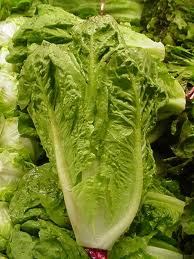
USA – Walmart recall: Tanimura & Antle romaine lettuce recalled from more than 1,000 Walmart stores over E. coli risk

USA Today

Eurofins Food Testing UK

Walmart has released a list of the stores that carried the recalled Tanimura & Antle romaine lettuce.

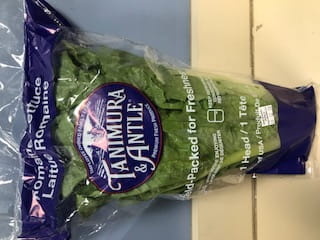
Last week, Salinas, California-based Tanimura & Antle Inc. voluntarily recalled select single heads of romaine lettuce distributed across the country for possible E. coli contamination. The company posted an announcement on the Food and Drug Administration website Friday.

The affected lettuce is labeled with a “packed on date of 10/15/2020 or 10/16/2020,” the company said. The UPC number on the lettuce is 0-27918-20314-9.

According to Tanimura & Antle, no other products or pack dates are being recalled and there have been “no reported illnesses associated with the recalled product.”

USA – Consumer Advisory: Romaine lettuce grown by Tanimura & Antle tests positive for E. coli

MDARD

Romaine lettuce

LANSING, Mich. – The Michigan Department of Agriculture and Rural Development (MDARD) is advising consumers not to eat Tanimura & Antle brand romaine lettuce packed as single heads due to food safety concerns.

A routine sample of the lettuce collected at a Walmart in Comstock Park, MI, and tested by MDARD’s Laboratory Division confirmed positive for E. coli 0157:H7. Further analysis conducted by the Michigan Department of Health and Human Services laboratory determined that the strain of E. coli recovered from the product sample is highly related genetically to E. coli causing two recent illnesses in Michigan.

The lettuce was sold in a zip-top clear plastic bag with a blue label and white lettering.  It has the UPC number 0-27918-20314-9 and a white sticker indicating it was packed in Salinas, California on October 15, 2020.

Consumers should discard this product or return it to the place of purchase. If you think you or a family member have become ill from consuming any of these products, please seek immediate medical attention.

E. coli can cause serious or life-threatening illness in some individuals. Symptoms of Shiga toxin-producing E. coli (STEC) infection vary for each person, but often include severe stomach cramps, diarrhea (often bloody), and vomiting. Some people may have a fever, which usually is not very high (less than 101˚F/38.5˚C). Most people get better within 5 to 7 days. Some infections are very mild, but others are severe or even life-threatening. People usually get sick from Shiga toxin-producing E. coli (STEC) 2 to 8 days (average of 3 to 4 days) after ingesting the bacteria. Some people with a STEC infection may get a type of kidney failure called hemolytic uremic syndrome (HUS). E. coli infection is usually diagnosed by testing a stool sample.

Research – Consecutive Treatments with a Multicomponent Sanitizer Inactivates Biofilms by Escherichia coli O157:H7 and Salmonella enterica and Removes Biofilm Matrix

Journal of Food Protection

Many foodborne pathogens including E. coli O157:H7 and Salmonella enterica can develop biofilms on contact surfaces at meat processing plants. Due to the high tolerance of the biofilm cells associated with the 3-dimensional biofilm structure and the well-expressed bacterial polymeric extracellular substances (EPS), it is a real challenge to completely inactivate and remove mature biofilms as well as further prevent biofilm reoccurrence and pathogen survival. We evaluated the effectiveness of consecutive treatments by repeatedly applying a multicomponent sanitizer, based on the functional mechanism by synergistic combination of hydrogen peroxide and quaternary ammonia compounds, against biofilms by E. coli O157:H7 and Salmonella strains. Biofilms were treated with 2.5%, 5%, or 10% of the sanitizer applied as foam or liquid solution. The sanitizer at all concentrations significantly reduced the amount of viable biofilm cells as enumerable bacteria were only detected after low concentration treatments (2.5% or 5%) with short exposure periods. Treatments with high concentrations (5% or 10%) of the sanitizer, multiple consecutive treatments and sufficient exposure time effectively controlled pathogen post-sanitization survival. Examination with a scanning electron microscope showed that treatment with the sanitizer at 5% strength significantly dissolved the connecting EPS matrix and removed most of the biofilm matrix. No intact biofilm structure was detected after the 10% sanitizer treatment, instead, scattered individual bacteria with visibly altered cell morphology were observed. The treated bacteria exhibited indented and distorted shapes with shortened cell length and increased surface roughness, indicating severe cell injury and death.  Our observations indicated that consecutive treatments with the multicomponent sanitizer was effective in inactivating E. coli O157:H7 and Salmonella enterica biofilms and preventing pathogen reoccurrence.

Scotland – The risk of STEC contamination in wild venison

FSS

Summary

We have published this report to address knowledge gaps and better understand the risk of STEC (Shiga toxin-producing Escherichia coli) contamination of wild venison.

The report is based on three core objectives to:

  • map the venison industry in Scotland
  • assess STEC prevalence in wild deer faeces in Scotland
  • review cross-contamination risks in the slaughter and processing stages of wild deer from the field to larder

Although the prevalence of STEC O157 in wild deer is low, the report found that when discovered, it is the strain associated with the most severe forms of human disease. Therefore, adherence to strict hygiene practices from cull to final product are strongly recommended within the report.

The venison industry continues to take a cooperative and responsible approach to STEC O157 when found, working to better understand the risks in the sector and how to mitigate them in the interest of public health protection.

Korea – McDonald’s HQ Raided in Food Poisoning Investigation of Alleged ‘Hamburger Disease’ – E.coli

Newsweek

Prosecutors have relaunched an investigation of McDonald’s in South Korea for its alleged connection to a recent case of the haemolytic uremic syndrome (HUS)—a life-threatening condition, dubbed the “hamburger disease”, caused by a strain of E.coli.