Category Archives: E.coli

Research – Biofilm-Forming Ability of Pathogenic Bacteria Isolated from Retail Food in Poland

Journal of Food Protection

ABSTRACT

Biofilms have a significant impact on food safety in the food industry. Many foodborne outbreaks have been associated with pathogenic bacterial strains that can form a biofilm. The present study was conducted under the Official Control and Monitoring Program in Poland to examine the ability of pathogenic bacteria collected from retail food samples to form biofilms. Biofilm formation was assessed by qualitative detection of extracellular polymeric substances on Congo red agar, by adherence to glass with the tube method, by the crystal violet biofilm (CV) assay, and by the 3-(4,5-dimethylthiazol-2-yl)-2,5-diphenyl tetrazolium bromide (MTT) assay. A total of 40 isolates from food samples (10 strains each of Listeria monocytogenes, Staphylococcus aureus, Escherichia coli, and Bacillus cereus) were examined. The strains were classified as adherent, slightly adherent, or nonadherent; biofilm production was classified as weak (WBP), moderate (MBP), or strong (SBP); and metabolic activity was classified as weak (WMA), moderate (MMA), or high (HMA). The incubation conditions and time influenced the amount of biofilm formed as well as did the growth medium. In the test tubes with Luria-Bertani broth (LBB), 22.5% of the strains were adherent and 77.5% were slightly adherent. Stronger adhesion was obtained in brain heart infusion (BHI) with 2% sucrose; 60% of the isolates were classified as adherent. With the CV assay with LBB, SBP was noted for 7.5% of the strains after 24 h of incubation and for 37.5% of the strains after 48 h. In BHI plus 2% sucrose, SBP was noted for 42.5 and 37.6% of the strains after 24 and 48 h, respectively. With the MTT assay with LBB, HMA was found for 15% of the strains after 24 h of incubation and for 25% of the strains after 48 h. In BHI plus 2% sucrose, 70 and 85% of the incubated strains were classified as HMA after 24 and 48 h, respectively.

HIGHLIGHTS
  • All tested bacterial pathogens isolated from food formed biofilms.
  • Biofilm formation was dependent on environmental conditions and the assay used.
  • Culture in BHI plus 2% sucrose produced more biofilm with higher metabolic activity.

Norway – Infectious substances in lettuce and herbs 2017-2019

Mattilsynet

Lettuce and herbs on the Norwegian market mainly have good hygienic quality, the Norwegian Food Safety Authority’s monitoring program shows. However, the samples analysed make up a small proportion of the total amount of lettuce and herbs sold.

What did we investigate? Imported and Norwegian-produced salad and fresh imported herbs

A total of 580 samples – 426 of lettuce and 154 of herbs

Period: 2017 -2019
What were we looking for? E. coli, Salmonella, Cryptosporidium , hepatitis A virus and norovirus.

Not all analyses were performed on all samples.

What did we find? In the 575 samples analysed for E. coli , was detected E. coli in low numbers (<100 cfu / g) in 57 samples and E. coli ≥100 cfu / g in 36 samples. 13 samples contained such high values ​​of E. coli that the products were withdrawn from the market. 10 of these were imported herbs from Southeast Asia.

Salmonella, Cryptosporidium , hepatitis A virus or norovirus were not detected in any of the samples analysed for these infectious agents.

Findings of high values ​​of E. coli in lettuce and herbs indicate a fresh faecal contamination, which may indicate that the product may also be contaminated with pathogenic bacteria, viruses and parasites. Herbs from Southeast Asia are a known risk product for Salmonella . The Norwegian Food Safety Authority recommends that such herbs be heat-treated before they are eaten.

Who performed the assignment? The bacterial analyses were performed at the Veterinary Institute and the parasite and virus analyses at NMBU Veterinary College.

Research – Consumer knowledge and behaviors regarding food safety risks associated with wheat flour

Journal of Food Protection

Consumers do not consider flour, a low-moisture food product, a high-risk for microbial contamination. In the past ten years, however, flour has been identified as a source of pathogenic bacteria, including Salmonella and E. coli . Online surveys were conducted to study consumers’ flour-handling practices and their knowledge about food safety risks related to flour. The survey also evaluated message impact on three food safety messages in communicating information and convincing consumers to adopt safe flour handling practices. Flour-using consumers (n = 1,045) from the United States reported they used flour to make cakes, cookies, and bread. Most consumers stored flour in sealed containers. Less than 1% kept a record of product identification numbers, like lot numbers, and less than 11% kept brand and use-by-date information. Many consumers (85%) were unaware of flour recalls, or outbreaks, and few (17%) believed they would be affected by flour recalls or outbreaks. If the recall affected the flour they bought, nearly half of the consumers (47%) would buy the same product from a different brand for a few months before they returned to the recalled brand. Among consumers who use flour to bake, 66% said they ate raw cookie dough or batter. Raw dough “eaters” were more difficult to convince to avoid eating and playing raw flour than “non-eaters.” Food safety messages were less impactful on those raw dough “eaters” than “non-eaters.” Compared with the food safety message with only recommendations, those messages with recommendations and an explanation as to the benefits of the practice were more effective in convincing consumers to change their practices. These findings provide insight into effective consumer education about safe flour-handling practices and could assist in the accurate development of risk assessment models related to flour handling.

Research – Competitive Exclusion Prevents Colonization and Compartmentalization Reduces Transmission of ESBL-Producing Escherichia coli in Broilers

Entero

Image CDC

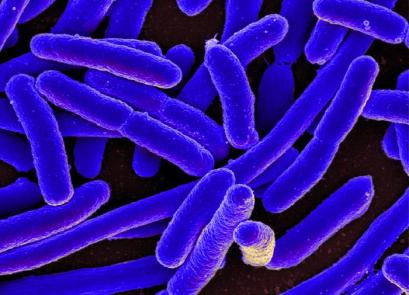
Extended spectrum beta-lactamase (ESBL)-producing bacteria are resistant to extended-spectrum cephalosporins and are common in broilers. Interventions are needed to reduce the prevalence of ESBL-producing bacteria in the broiler production pyramid. This study investigated two different interventions. The effect of a prolonged supply of competitive exclusion (CE) product and compartmentalization on colonization and transmission, after challenge with a low dose of ESBL-producing Escherichia coli, in broilers kept under semi-field conditions, were examined. One-day-old broilers (Ross 308) (n = 400) were housed in four experimental rooms, subdivided in one seeder (S/C1)-pen and eight contact (C2)-pens. In two rooms, CE product was supplied from day 0 to 7. At day 5, seeder-broilers were inoculated with E. coli strain carrying blaCTX–M–1 on plasmid IncI1 (CTX-M-1-E. coli). Presence of CTX-M-1-E. coli was determined using cloacal swabs (day 5–21 daily) and cecal samples (day 21). Time until colonization and cecal excretion (log10 CFU/g) were analyzed using survival analysis and linear regression. Transmission coefficients within and between pens were estimated using maximum likelihood. The microbiota composition was assessed by 16S ribosomal RNA gene amplicon sequencing in cecal content of broilers on days 5 and 21. None of the CE broilers was CTX-M-1-E. coli positive. In contrast, in the untreated rooms 187/200 of the broilers were CTX-M-1-E. coli positive at day 21. Broilers in C2-pens were colonized later than seeder-broilers (Time to event Ratio 3.53, 95% CI 3.14 to 3.93). The transmission coefficient between pens was lower than within pens (3.28 × 10⁻⁴ day–2, 95% CI 2.41 × 10⁻⁴ to 4.32 × 10⁻⁴ vs. 6.12 × 10⁻² day–2, 95% CI 4.78 × 10⁻² to 7.64 × 10⁻²). The alpha diversity of the cecal microbiota content was higher in CE broilers than in control broilers at days 5 and 21. The supply of a CE product from day 0 to 7 prevented colonization of CTX-M-1-E. coli after challenge at day 5, likely as a result of CE induced effects on the microbiota composition. Furthermore, compartmentalization reduced transmission rate between broilers. Therefore, a combination of compartmentalization and supply of a CE product may be a useful intervention to reduce transmission and prevent colonization of ESBL/pAmpC-producing bacteria in the broiler production pyramid.

RASFF Alert – E.coli – Japanese Clams

European Food Alerts

RASFF

high count of Escherichia coli (1700 MPN/100g) in japanese clams from Portugal in Spain

Research – Preharvest Treatment Improves Tomato Food Safety

Technology Networks

cherry-tomato-pristine-variety

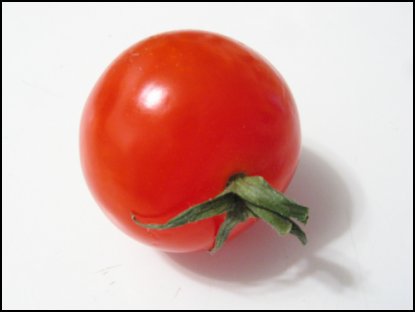
When vegetable farmers harvest crops, they often rely on postharvest washing to reduce any foodborne pathogens, but a new University of Georgia study shows promise in reducing these pathogens — as well as lowering labor costs — by applying sanitizers to produce while it is still in the fields.

Salmonella, Shiga toxin-producing E. coli and Listeria monocytogenes are major causes of foodborne diseases and of public health concern in the U.S. Tomato-associated salmonella outbreaks reported to the Centers for Disease Control and Prevention have increased in frequency and magnitude in recent years, and fresh produce accounted for 21% of E. coli outbreaks reported to the CDC over a 20-year span.

Initially researchers were going to study the use of a nonchlorine-based sanitizer made of two food additives approved by the U.S. Food and Drug Administration — levulinic acid and sodium dodecyl sulfate — as a postharvest wash solution. However, at the suggestion of a producer involved in the study — Bill Brim of Lewis Taylor Farms in Tifton, Georgia — they designed the study using the solution in a preharvest spray, said Tong Zhao, associate research scientist with the Center for Food Safety on the UGA Griffin campus.

While producers commonly use chlorine-based disinfectants — including chlorine gas, sodium hypochlorite, calcium hypochlorite and chlorine dioxide — to treat produce postharvest, the preharvest application of bactericides is not a common practice, Zhao said.

Research – Reducing Campylobacter jejuni, Enterobacteriaceae, Escherichia coli, and total aerobic bacteria on broiler carcasses using combined ultrasound and steam

Journal of Food Protection

Campylobacter kswfoodworld

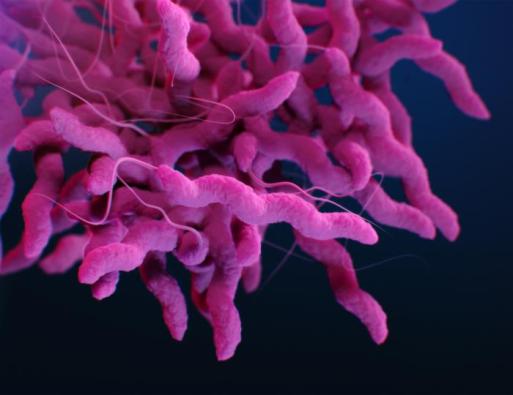
Campylobacteriosis is the most frequently reported foodborne illness in Europe and many other parts of the world. Campylobacter can colonize the intestines of broilers, most often in large amounts. Broilers are usually slaughtered in a high-speed automated system that can rupture the intestines during evisceration, resulting in contamination of carcasses with intestinal bacteria such as Campylobacter. This study evaluated the combined effect of ultrasound and steam (SonoSteam®) on naturally contaminated chicken carcasses at a large-scale abattoir in Sweden. Ultrasound at 30-40 kHz and steam at 84-85 °C or 87-88 °C was used at slaughter with a line speed of 18 000 birds per hour. The amount of Campylobacter spp., Enterobacteriaceae , Escherichia coli , and total aerobic bacteria on neck skins from 103 chicken carcasses, sampled before and after treatment by SonoSteam, was analyzed.Campylobacter spp. was detected in 58 (56%) of the 103 neck skins, from birds belonging to four of the seven flocks represented. All 58 isolates were identified as Campylobacter jejuni . After the SonoSteam treatment, a mean reduction in C. jejuni, Enterobacteriaceae, E. coli and total aerobic bacteria were log 0.5 ± 0.8, log 0.6 ± 0.6, log 0.5 ± 0.6, log 0.4 ± 0.7 CFU/g respectively. No significant differences in reduction between the two different treatment temperatures was observed for any of the bacteria.Although the bacterial reductions were significant, large amounts of bacteria remained on the carcasses after treatment. Further studies are needed to identify optimal measures at slaughter to reduce food spoilage bacteria and pathogenic bacteria, which should be considered in a One Health perspective.

France – Product recall: Large Japanese clam caught in the North-East Atlantic, MYTILIMER brand – E.coli

Oulah

Product recall: Large Japanese clam caught in the North-East Atlantic, MYTILIMER brand

ENCOUNTERED PROBLEM

Presence of Escherichia coli

PROPOSED SOLUTION

People who hold the product in question are asked not to consume them – and more particularly young children, pregnant women, immunocompromised people and the elderly – and to return them to the point of sale where they were purchased.

People who have consumed it and who present symptoms such as diarrhea, abdominal pain or vomiting should consult their doctor as soon as possible, mentioning this consumption and the possible link with the bacterium Escherichia coli.

If there are no symptoms within 10 days of consuming the affected products, there is no need to worry and consult a doctor.

The E. coli bacterium is naturally present in the digestive microflora of humans and warm-blooded animals. Some strains of E. coli are pathogenic, and can be responsible in humans for various disorders ranging from mild diarrhea to more serious forms such as hemorrhagic diarrhea or severe kidney damage such as HUS, mainly in young children.

FURTHER INFORMATION

▸ Barcode
204619000004

▸ Lot
PSM0211

▸ Health
stamp FR 35.299.053 CE

▸ Consumer service contact
For more information, you can contact the Consumer Service on 09 69 36 69 36 (non-premium rate call).

▸ Source
https://www.coursesu.com/

USA – Outbreak of E. coli Infections – Unknown Source 2 – Update

CDC

CDC E.coli

CDC, public health and regulatory officials in several states, and the U.S. Food and Drug Administration (FDA) are investigating several multistate outbreaks of E. coli O157:H7 infections. This outbreak is different from two other E. coli O157:H7 outbreaks CDC is currently investigating (E. coli outbreak with unknown source 1 and E. coli outbreak with unknown source 3).

At A Glance
  • Since the last update on October 28, 2020, 16 ill people were added to this investigation.
  • CDC is not advising people avoid any particular food at this time.
  • Investigators are working to collect different types of data to identify the source of this outbreak.
  • CDC will provide updates as they become available.

Take action if you have symptoms of an E. coli infection:

  • Talk to your healthcare provider.
  • Write down what you ate in the week before you got sick.
  • Report your illness to your local or state health department.
  • Help us solve the outbreak by answering public health officials’ questions about your illness.

Follow these general ways to prevent getting sick from E. coli:

  • Wash your hands after using the restroom or changing diapers, before and after preparing or eating food, and after contact with animals.
  • Cook meats thoroughly. Use a food thermometer to check that the meat has reached a safe internal temperatureexternal icon.
  • Don’t cross-contaminate food preparation areas. Thoroughly wash hands, counters, cutting boards, and utensils after touching raw meat.
  • Wash fruits and vegetables before eating, unless the package says the contents have been washed.
  • Avoid raw milk, other unpasteurized dairy products, and unpasteurized juices.
  • People usually get sick from Shiga toxin-producing E. coli (STEC) 2 to 8 days (average of 3 to 4 days) after swallowing the germ.
  • Symptoms often include severe stomach cramps, diarrhea (often bloody), and vomiting. Some people may have a fever, which usually is not very high (less than 101˚F/38.5˚C).
  • Some people with a STEC infection may get a type of kidney failure called hemolytic uremic syndrome (HUS).
  • Antibiotics are not recommended for patients with suspected E. coli infections until diagnostic testing can be performed and E. coli infection is ruled out. Some studies have shown that administering antibiotics to patients with E. coli infections might increase their risk of developing HUS, and a benefit of treatment has not been clearly demonstrated.
  • For more information, see Symptoms of E. coli Infection.
Investigation Details

November 23, 2020

Since the last update on October 28, 2020, 16 ill people were added to this investigation.

As of November 19, 2020, a total of 39 people infected with the outbreak strain of E. coli O157:H7 have been reported from 18 states. A list of the states and the number of cases in each can be found on the Map of Reported Cases page.

Illnesses started on dates ranging from August 10, 2020, to October 23, 2020. Ill people range in age from 1 to 85 years, with a median age of 38 years, and 62% are female. Of 30 ill people with information available, 19 people were hospitalized and 4 people developed hemolytic uremic syndrome (HUS), a type of kidney failure. No deaths have been reported.

Illnesses might not yet be reported due to the time it takes between when a person becomes ill and when the illness is reported. This takes an average of 2 to 4 weeks. Please see the Timeline for Reporting Cases of E. coli O157 Infection for more details.

Investigation of the Outbreak

Investigators are continuing to collect different types of data to identify the source of this outbreak.

State and local public health officials are interviewing ill people to determine what they ate and other exposures in the week before they got sick. Of the 22 ill people interviewed to date, all reported eating a variety of leafy greens, like spinach (16), romaine lettuce (15), iceberg lettuce (12), and mixed bag lettuce (8). No single type or brand of leafy greens or other food item has been identified as the source of this outbreak. CDC is not advising people avoid any particular food at this time.

This investigation is ongoing, and CDC will provide more information as it becomes available.

USA – Dole Fresh Vegetables Announces Limited Recall of Organic Romaine Hearts – STEC E.coli

FDA

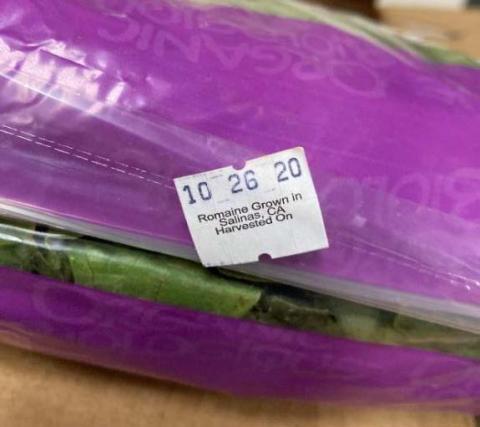
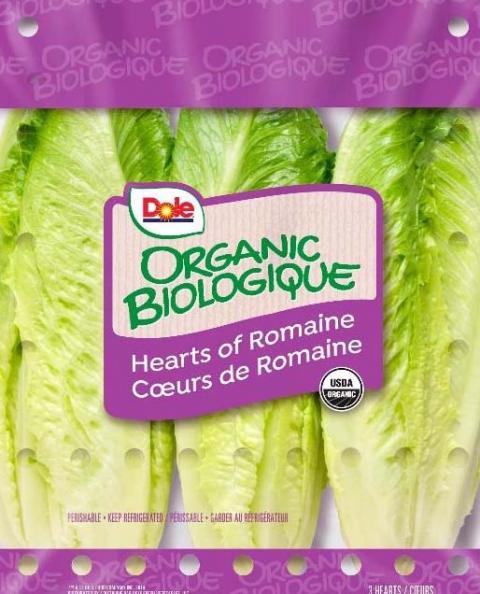
Dole Fresh Vegetables, Inc. is voluntarily recalling a limited number of cases of organic romaine hearts. The products being recalled are Dole™ Organic Romaine Hearts 3pk (UPC 0-71430-90061-1), combined English/French packaging, with Harvested-On dates of 10-23-20 and 10-26-20, and Wild Harvest Organic Romaine Hearts (UPC 7-11535-50201-2), with Harvested-On dates of 10-23-20 and 10-26-20.  The recall is being conducted due to a possible health risk from E. coli in the two products.  Dole Fresh Vegetables is coordinating closely with regulatory officials. No illnesses have been reported to date in association with the recall.

Pathogenic E. coli can cause diarrhea, severe stomach cramps and vomiting.  Most people recover within a week, but some illnesses can last longer and can be more severe.

The Harvested-On sticker is located on the upper right corner of each bag and the UPC code is located on the bottom right corner of the back of each bag. The Dole package contains three organic romaine hearts and the Wild Harvest product is packaged in a 12oz bag. The impacted products were distributed in AZ, HI, IA, IL, IN, KS, MD, MI, MN, MO, MS, MT, NC, ND and VA. These products were harvested and packed nearly 4 weeks ago and should no longer be in commerce.  Consumers are advised to check product they have in their homes and discard any product matching the production description, UPC codes and Harvested-On dates listed above.

This precautionary recall notification is being issued due to an isolated instance in which a package of Dole™ Organic Romaine Hearts – 3pk yielded a positive result for pathogenic non-O157 E.coli STEC in a routine sample collected at a retail store by the Michigan Department of Agriculture and Rural Development. There is no indication at this time that this positive result is related to any illnesses nor consumer complaints and it is not associated with the strains connected to the ongoing outbreaks currently under regulatory investigation.

No other Dole products are included in the recall. This voluntary recall does not apply to any bagged or clamshell salad romaine product. Only the specific Organic Romaine Hearts listed, with the exact UPC codes and Harvested-On dates identified above, are included in the recall. Consumers who have any remaining product with these UPC codes and Harvested-On dates should not consume it, but rather discard it. Retailers and consumers with questions may call the Dole Consumer Center at 1-800-356-3111, which is open 24 hours a day.


Company Contact Information

Consumers:
Consumer Center
 1-800-356-3111
Media:
William Goldfield
 1-818-874-4853
 William.Goldfield@Dole.com

Product Photos