Category Archives: E.coli

Research – Microbiological Quality of Cooked Chicken: Results of Monitoring in England (2013 to 2017)

Journal of Food Protection

Results from monitoring of the microbiological quality of 2,721 samples of ready-to-eat cooked chicken collected between 2013 to 2017 in England were reviewed: 70% of samples were from retail, catering, or manufacture and 30% were imported and collected at English ports. Samples were tested for a range of bacterial pathogens and indicator organisms. Six samples (<1%) had unsatisfactory levels of pathogens that were potentially injurious to health. Neither Salmonella nor Campylobacter were recovered from any samples. Two samples from catering settings contained either an unsatisfactory level of Bacillus cereus (5 × 10⁶ CFU/g) or an unsatisfactory level of coagulase-positive staphylococci (1.6 × 10⁴ CFU/g). Listeria monocytogenes was recovered from 36 samples (1 at manufacture, 26 at catering, and 9 at retail) and in 4 samples, unsatisfactory levels (≥102 CFU/g) were detected (3 samples collected at catering and 1 sample at retail). For L. monocytogenes, there were no significant differences between the rates of contamination for the samples collected from ports, manufacture, retail supermarkets, and other retailers (P = 0.288). There were no differences between the rates of contamination for other potential pathogens detected between samples from different settings. The prevalence of hygiene indicators (Escherichia coli, Enterobacteriaceae, and aerobic colony counts) at import was significantly lower than in samples collected from manufacturers, retail, or catering (P < 0.01). Samples collected from catering gave poorer results than those from all other settings. Regardless of the stage in the food chain, samples from Thailand and from other non–European Union countries were of significantly better microbiological quality with respect to indicator organisms than those from the United Kingdom or from other European Union countries (P = <0.001).

HIGHLIGHTS
  • Routine microbiological monitoring of 2,721 samples was reviewed.
  • Six samples (<1%) were unsatisfactory due to the levels of bacterial pathogens.
  • Hygiene indicator bacteria were significantly higher in samples from catering.
  • Port samples had significantly lower levels of hygiene indicators.

Research – Risk of Foodborne Illness from Pet Food: Assessing Pet Owners’ Knowledge, Behavior, and Risk Perception

Journal of Food Protection

Pet food has been identified as a source of pathogenic bacteria, including Salmonella and Escherichia coli. A recent outbreak linked to Salmonella-contaminated pet treats infected >150 people in the United States. The mechanism by which contaminated pet food leads to human illness has not been explicated, and pet owners’ food safety knowledge and their pet food handling practices have not been reported. This study was conducted to evaluate pet owners’ food safety knowledge and pet food handling practices through an online consumer survey. The survey consisted of 62 questions and assessed (i) owners’ food safety knowledge and pet food handling practices; (ii) owners’ interaction with pets; and (iii) owners’ risk perception related to their own health, their children’s health, and their pets’ health. The survey was pilot tested among 59 pet owners before distribution to a national consumer panel managed by Qualtrics XM (Provo, UT). All participants (n = 1,040) were dog and/or cat owners in the United States. Almost all pet owners (93%) interacted with their pets, and most cuddled, allowed their pets to lick them, and slept with their pets. Less than one-third of pet owners washed their hands with soap after interacting with their pets. Over half (58%) of the owners reported washing their hands after feeding their pets. Most pet owners fed their pets dry pet food and dry pet treats. Some fed their pets raw meat or raw animal product diets because they believed these diets to be beneficial to the pet’s overall health. Many owners (78%) were unaware of pet food recalls or outbreaks associated with foodborne pathogens. Less than 25% considered dry pet foods and treats as a potential source of foodborne pathogens. Pet owners were more concerned when seeing news about pets becoming ill from pet food and less concerned when seeing news about people becoming ill from pet food. The findings of this study indicated the need for consumer education about handling pet food. These results can help researchers develop more accurate risk assessment models and consumer education messages related to pet food handling.

HIGHLIGHTS
  • Most surveyed pet owners were unaware of pet food recalls or outbreaks due to pathogens.
  • Pet owners may lack knowledge of safe pet food handling practices.
  • Most pet owners perceived raw meat and animal parts to pose a microbial risk.
  • Owners were more concerned about pets than people becoming ill from pet food.
  • Many pet owners got pet food safety information from television and social media.

USA – Marler Clark, The Nation’s Food Safety Law Firm, relaunches www.about-listeria.com – www.about-HUS.com – www.about-ecoli.com

Food Poison Journal

With another Listeria outbreak just announced, this one sickening 10 with 1 dead likely linked to deli meat , Marler Clark, The Nation’s Food Safety Law Firm, relaunches www.about-listeria.com.

Food Poison Journal

In the beginning of yet another – in fact two E. coli Outbreaks that have sickened dozens, Marler Clark, The Nation’s Food Safety Law Firm, relaunches www.about-hus.com.

Food Poison Journal

In the beginning of yet another – in fact two E. coli Outbreaks that have sickened dozens, Marler Clark, The Nation’s Food Safety Law Firm, relaunches www.about-ecoli.com.

USA – Mystery surrounds two new E. coli outbreaks with genetic links to past Romaine events

Food Safety News

With Halloween only hours away,  two new E. coli outbreaks have shown up to haunt the nation’s Romaine growers because genetic links to the past have been discovered.

The two outbreaks of Shiga toxin-producing E. coli O157: H7 (STEC) illnesses are under investigation by the Food and Drug Administration (FDA), Centers for Disease Control, and Prevention (CDC), along with various state and local health departments.

“We do not know what food is causing people to get sick or whether it involves an FDA-regulated food product,” said  Frank Yiannas, FDA Deputy Commissioner for Food Policy and Response.  “However, we have seen similar recurring, emerging, or persistent strains of E. coli in recent outbreaks. E. coli O157: H7 can contaminate many foods, and we cannot assume that the current outbreaks are linked to historically associated foods like romaine and other leafy greens. There is no information currently to indicate that people should avoid any specific food.”

Italy – SPECIALITA ‘DEL CASARO – BRIE CREMOSO – STEC E.coli

Salute

Brand : SPECIALITA ‘DEL CASARO

Name : BRIE CREMOSO

Reason for reporting : Recall due to microbiological risk

Publication date : 30 October 2020

Documentation

Documentation

RASFF Alert – E.coli – Live Cockles – Live Mussels

European Food Alerts

RASFF

too high count of Escherichia coli (16000 CFU/100g) in live cockles from the United Kingdom in the UK

RASFF

Escherichia coli (from 790 to 3500 MPN/100g) in live mussels (Mytilus galloprovincialis) from Italy in Italy

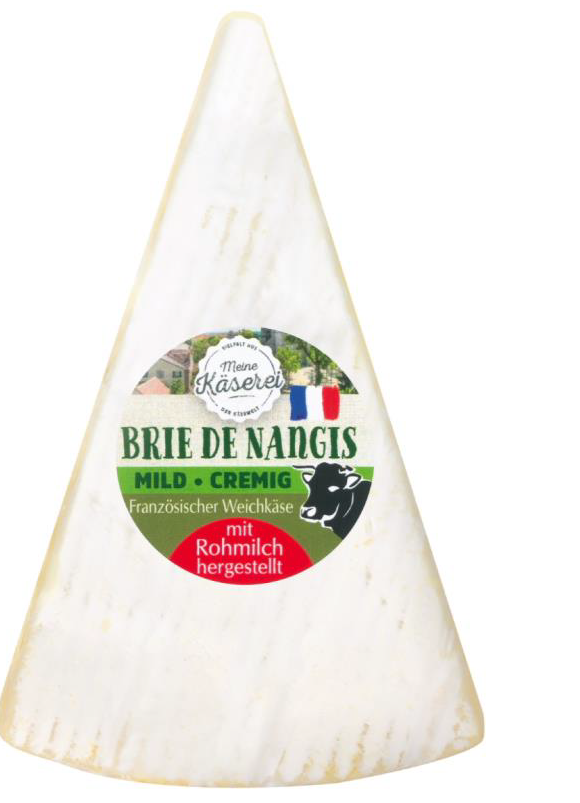
Germany – French soft cheese made with raw milk, 100 g – STEC E.coli

LMW

Warning type:

Food

Date of first publication:

28.10.2020

Product name:

My cheese dairy Brie de Nangis, French soft cheese made with raw milk, 100 g

Product pictures:

Image Filialplakat.png

Branch poster

Manufacturer (distributor):

JERMI Käsewerk GmbH, distributed by Lidl

Reason for warning:

Detection of verotoxin-producing Escherichia (E.) coli

Packaging Unit:

100 g

Durability:

October 27, 2020

Lot identification:

Lot numbers 394 and 395 with identity mark DE BW 331 EG

Additional Information:

Reference is made to the company’s customer information sheet attached.

Contact to the responsible authorities:

Baden-Württemberg:

poststelle@mlr.bwl.de

Bavaria:

poststelle@lgl.bayern.de

Berlin:

poststelle@senjustva.berlin.de

Brandenburg:

Konsumenterschutz@Msgiv.Brandenburg.de

Bremen:

Schnellwarnung@gesundheit.bremen.de

Hamburg:

poststelle@bgv.hamburg.de

Hesse:

Schnellwarnung@rpda.hessen.de

Mecklenburg-Western Pomerania:

poststelle@lm.mv-regierung.de

Lower Saxony:

poststelle@ml.niedersachsen.de

North Rhine-Westphalia:

poststelle@mulnv.nrw.de

Rhineland-Palatinate:

Poststelle.Referat22@lua.rlp.de

Saarland:

poststelle-luv@lav.saarland.de

Saxony:

poststelle@sms.sachsen.de

Saxony-Anhalt:

poststelle@ms.sachsen-anhalt.de

Schleswig-Holstein:

poststelle@jumi.landsh.de

Thuringia:

LM-Ueberektiven@tlv.thueringen.de

Research – The effects of environmental factors on the prevalence and diversity of bacteriophages lytic against the top six non‐O157 Shiga toxin‐producing Escherichia coli on an organic farm

Wiley Online

Bacteriophages (or phages) specific to Shiga toxin‐producing Escherichia coli (STEC) strains are frequently isolated from animal‐associated environments primarily because ruminant animals are the natural reservoir of STEC. However, little is known about these phages in produce‐growing environments. The objective of this study was to determine the effects of environmental factors on the prevalence of the phages lytic against O157 and the top six non‐O157 STEC on an organic farm. A total of 370 samples were collected from an organic farm, containing animal‐active and produce‐growing areas, for 1 year. A bacterial cocktail, including nonpathogenic and pathogenic Ecoli strains, was used for phage isolation. Meanwhile, culture methods and PCR were used to isolate STEC strains. Weather information was also collected for each sampling trip. Twenty‐eight samples contained phages lytic against STEC (or STEC‐infecting phages), of which 26 were collected from the animal‐active area. Moreover, the winter season had a higher phage prevalence than other seasons, likely due to high rain precipitation. The phages belonging to the Myoviridae family and those lytic against STEC O103 were the most prevalent. One Ecoli O103:H2 was isolated from a water sample where no STEC O103‐infecting phages were found. Additionally, no STEC O103 was present in the samples containing STEC O103‐infecting phages. The findings indicate that animal is the primary factor contributing to the prevalence of the STEC‐infecting phages in the surrounding environment of the organic farm, and the presence of these phages contributes to a negative correlation with their STEC hosts.

Norway – The inspection program for shellfish 2019

Mattilsynet

Shells along the Norwegian coast have low concentrations of E. coli, heavy metals and other undesirable substances. It shows the results from the annual monitoring of bacteria and environmental toxins in mussels from production areas and mussel samples taken in connection with the Norwegian Food Safety Authority’s mussel warning.

What did we investigate? Mussels, scallops, flat oysters, Pacific oysters, cow mussels, O-mussels, carpet mussels, king snails and Drøbakkråkebolle.
Period: 2019
What were we looking for? E. coli, Salmonella and the environmental toxins cadmium, mercury, dioxins and dioxin-like PCBs, as well as polyaromatic hydrocarbons.
What did we find? About 90 percent of all submitted mussels were below the limit of E. coli and there were no detections of Salmonella. A total of 453 E. coli samples and 26 salmonella samples were analyzed.

Mussels: All examined mussels were below the limits for environmental toxins.

Scallops: No excesses of environmental toxins in muscle and gonads. Flat oysters: Cadmium was detected above the limit value in two samples.

O-shells and king snails: The heavy metal cadmium was, as in previous years, proven well above the limit value. The majority of heavy metals, such as cadmium and lead, have previously been localized to the kidneys. The Norwegian Food Safety Authority therefore recommends that the kidneys be removed before consumption, so that edible parts fall well below the limit values.

France – Product recall: Picodon aop x2, x5 – Guinguette x6 – Goat cheese x3 from Les Fromagers Fermiers du Peytot

Oulah

Product recall: Picodon aop x2, x5 - Guinguette x6 - Goat cheese x3 from Les Fromagers Fermiers du Peytot

ENCOUNTERED PROBLEM

Presence of Escherichia coli O157: H7

PROPOSED SOLUTION

People who hold the product in question are asked not to consume them – and more particularly young children, pregnant women, immunocompromised people and the elderly – and to return them to the point of sale where they were purchased.

People who have consumed it and who present symptoms such as diarrhea, abdominal pain or vomiting should consult their doctor as soon as possible, mentioning this consumption and the possible link with the bacterium Escherichia coli.

If there are no symptoms within 10 days of consuming the affected products, there is no need to worry and consult a doctor.

The E. coli bacterium is naturally present in the digestive microflora of humans and warm-blooded animals. Some strains of E. coli are pathogenic, and can be responsible in humans for various disorders ranging from mild diarrhea to more serious forms such as hemorrhagic diarrhea or severe kidney damage such as HUS, mainly in young children.

FURTHER INFORMATION

▸ Type of packaging
Rolls x6, x5, x3, x2, tray x2 or bare

▸ Lots
• 23110
• 23810
• 24510
• 25210
• 25910
• 26610
• 27310

▸ Health
stamp FR 07.176.001 CE

▸ Marketing period
from August 17, 2020 to October 14, 2020

▸ Consumer service contact
La Sarl Les Fromagers Fermiers du Peytot is available to consumers to answer their questions by email at peytotsarl@gmail.com

▸ Source
https://www.supercasino.fr/