Category Archives: E.coli

USA – Raw Goat Milk and Yogurt recalled after positive E. coli test

Food Poison Journal

Consumers who purchased raw goat milk or raw goat milk yogurt, whey or cottage cheese on or before October 13 produced by Crystal Brook Farm, Lancaster County should immediately discard the products, the Pennsylvania Department of Agriculture said today. Tests completed during routine sampling indicated that the products tested positive for a disease-causing strain of E. coli bacteria.

Milk was sold in two Lancaster County locations: Crystal Brook Farm Store, 3568 Scenic Road in Gordonville, the Dutch Meadow Retail Store at 694 Country Lane in Paradise in plastic half gallons. Milk, whey and cottage cheese may have also been further distributed to other retail locations by Dutch Meadows Distribution Center at 753 Country Lane in Paradise.

USA – Dungeness Valley Raw Milk and Cream Recalled For E. coli

Food Poisoning Bulletin

According to the Washington State Department of Health, Dungeness Valley raw milk and cream is being recalled because it may be contaminated with toxin-producing E. coli bacteria. The dairy, which is located in Sequim, Washington, is telling consumers to discontinue consumption of the retail Dungeness Valley raw milk and cream products with best by dates of 9/29/20 and 9/30/20 and dispose of them, or return them to the place of purchase for a refund. No other best by dates are affected at this time.

RASFF Alerts – STEC E.coli – Chilled Hamburgers – Dried Fenugreek

European Food Alerts

RASFF

shigatoxin-producing Escherichia coli (O26 stx2+ eae+ /25g) in chilled hamburgers from the Netherlands in the Netherlands

RASFF

shigatoxin-producing Escherichia coli (VTEC /25g) and Salmonella (presence /25g) in dried fenugreek leaves from India in Germany

Netherlands – Important safety warning AH burgers, bratwurst and beef finches – STEC E.coli

NVWA

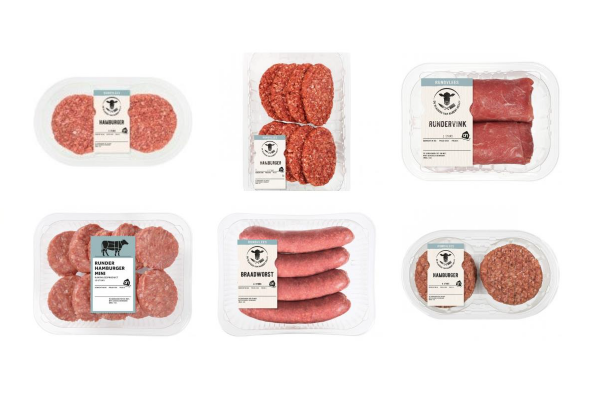
Albert Heijn warns against a number of beef products with an expiry date of 24 or 25 September 2020. The E.coli bacteria was found in the products.

It concerns the following products:

  • AH mini hamburger 10 pieces, TGT 24-09-2020
  • AH hamburger 8 pieces, use-by-date 9/24/2020 and 9/25/2020
  • AH beef bratwurst 4 pieces, TGT 24-09-2020
  • AH hamburger 2 pieces, TGT 25-09-2020
  • AH hamburger 4 pieces, TGT 25-09-2020
  • AH beef finch 2 pieces, TGT 25-09-2020

The beef products are no longer in Albert Heijn stores, but customers can have these products in the freezer. Albert Heijn asks customers not to eat the beef products and to return them to an Albert Heijn store where they will be reimbursed for the purchase price upon return.

See also the Albert Heijn website

Download ‘Important safety warning for AH burgers, bratwurst and beef finches’

PDF document | 1 page | 166 KB

Warning | 05-10-2020

E.coli

Eating a product with an E.coli bacteria (faeces bacteria, STEC, EHEC) can, if not thoroughly cooked, cause nausea, vomiting and (bloody) diarrhea within a week. Especially for young children, the elderly, people with low immunity and pregnant women. Consult your doctor or general practitioner for more information if you have health complaints after eating the said product.

6 packs of Albert Heijn beef products

Research – Recovery Rate of Cells of the Seven Regulated Serogroups of Shiga Toxin-Producing Escherichia coli from Raw Veal Cutlets, Ground Veal, and Ground Beef from Retail Stores in the Mid-Atlantic Region of the United States

Journal of Food Protection

A total of 482 veal cutlet, 555 ground veal, and 540 ground beef samples were purchased from retail establishments in the Mid-Atlantic region of the U.S. over a non-contiguous, two-year period between 2014 and 2017. Samples (325 g each) were individually enriched and screened via real-time PCR for all seven regulated serogroups of Shiga toxin-producing Escherichia coli (STEC). Presumptive STEC positive samples were subjected to serogroup-specific immunomagnetic separation and plated onto selective media. Up to five isolates typical for STEC from each sample were analyzed via multiplex PCR for both the virulence genes (i.e., eae , stx 1 and/or stx 2 , and ehxA ) and serogroup-specific gene(s) for the seven regulated STEC serogroups. The recovery rates of non-O157 STEC from veal cutlets (3.94%, 19 of 482 samples) and ground veal (7.03%, 39 of 555 samples) were significantly higher (P < 0.05) than that from ground beef (0.93%, 5 of 540 samples). In contrast, only a single isolate of STEC O157:H7 was recovered; this isolate originated from one (0.18%) of 555 samples of ground veal. Recovery rates for STEC were not associated with state, season, packaging type, or store type (P > 0.05), but were associated with brand and fat content (P < 0.05). Pulsed-field subtyping of the 270 viable/confirmed STEC isolates from the 64 total samples testing positive revealed 78 pulsotypes (50 to 80% similarity) belonging to 39 pulsogroups, with ≥90% similarity among pulsotypes within pulsogroups. Also, multiple isolates from the same sample displayed an indistinguishable pulsotype for 43 of 64 (67.7%) samples testing positive.  These findings support related data from regulatory sampling exercises over the past decade and confirm that recovery rates for the regulated STEC serogroups are appreciably higher for raw veal compared to raw beef samples as was also observed herein for meat purchased at food retailers in the Mid-Atlantic region of the U.S.

Research – Thermal Resistance of Single Strains of Shiga Toxin-Producing Escherichia coli O121:H19 and O157:H7 Based on Culture Preparation Method and Osmolyte-Reduced Water Activity

Journal of Food Protection

Pathogen thermal resistance studies on low-water activity foods (LWAF) use a variety of methods to inoculate food, as well as strategies to reduce water activity, which can influence thermal resistance observations. This study investigated effects of culture preparation method and osmolyte-induced water activity on thermal resistance of two Shiga toxin-producing Escherichia coli (STEC; O121:H19, O157:H7) challenged with isothermal conditions, determining D – and z -values for each isolate (56, 59, and 62 ° C). Tryptic Soy Broth (TSB) and Agar (lawn cultures) were compared. D -values of broth cultures were significantly and consistently larger than those of lawn cultures, and O121 was significantly more resistant than O157, but only at 56 ° C ( p < 0.05). To compare potential effects of water activity on STEC thermal resistance, cells were suspended in osmolyte solutions with varying water activity: high (TSB, a w 0.99), intermediate (61% glycerol or 26% NaCl, a w 0.75), and low (82% glycerol, a w 0.5). In most instances, STEC in high-water activity broth exhibited greater heat resistance compared to reduced-water activity solutions, except the glycerol intermediate-water activity solution (a w 0.75). Magnitudes varied with strain and temperature. The z -values of lawn cultures were significantly lower than those of broth cultures ( p < 0.05), but there were only some differences between high-a w and reduced-a w samples. There were no significant differences of z -values based on strain type. These results highlight that thermal resistance can be affected by culture preparation and that osmolyte-induced changes to water activity influence thermal inactivation of STEC by varying magnitudes. These results emphasize the challenges between extrapolating results from lab inactivation kinetic experiments to determine the inactivation of low water activity foods, especially those considered dry in nature.


Canada imposes new import measures for romaine lettuce from U.S.

Digital Journal

In an effort to prevent future E. coli illnesses from romaine lettuce, the Canadian Food Inspection Agency (CFIA) is imposing new import measures on shipments from parts of California where prior outbreaks originated.

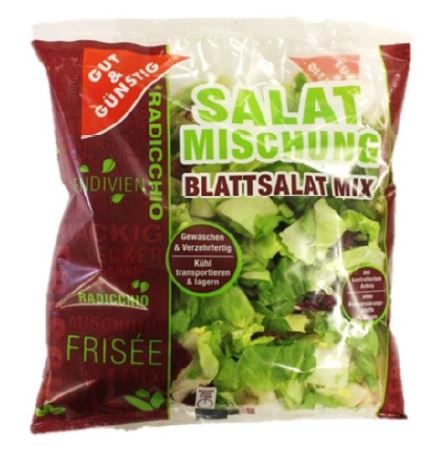
Germany – Good & cheap salad mix leaf salad mix – STEC E.coli

Warning type:

Food

Date of first publication:

02.10.2020

Product name:

Good & cheap salad mix leaf salad mix

Product pictures:

Product photo.jpg
Manufacturer (distributor):

GARTENFRISCH Jung GmbH

Reason for warning:

E. Coli producing shiga toxin

Packaging Unit:

150 g pack

Durability:

05/10/2020

Additional Information:

Reference is made to the attached press release from the food business operator.

Contact to the responsible authorities:

Baden-Württemberg:

poststelle@mlr.bwl.de

Bavaria:

poststelle@lgl.bayern.de

Hesse:

Schnellwarnung@rpda.hessen.de

Lower Saxony:

poststelle@ml.niedersachsen.de

Saxony:

poststelle@sms.sachsen.de

Thuringia:

LM-Ueberektiven@tlv.thueringen.de

Press releases and information
title Attachment or web link
Press release

Netherlands – Important safety warning AH beef burger – E.coli

NVWA

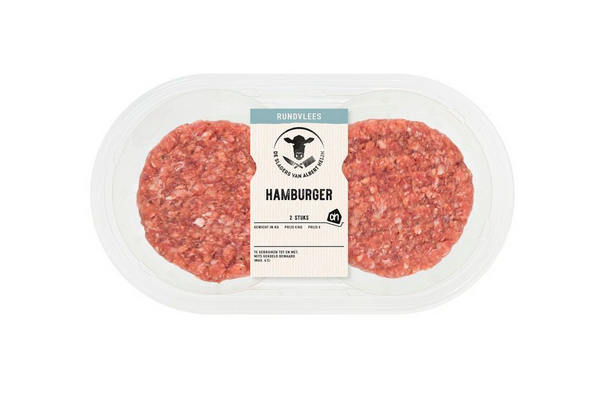
2 beef burgers in plastic packaging

Albert Heijn warns against AH beef burger 2 pieces with an expiration date 25 September 2020. The E.coli bacteria has been found in the product. The product is no longer in Albert Heijn stores, but customers may have this product in the freezer. Albert Heijn asks customers not to eat the beef burgers and to return them to an Albert Heijn store where they will be reimbursed for the purchase price upon return of the product.

See also the Albert Heijn website

Download ‘Important safety warning AH beef burger 2 pieces’

PDF document | 1 page | 45 kB

Warning | 02-10-2020

RASFF Alert – E.coli – Live Mussels

European Food Alerts

RASFF

too high count of Escherichia coli (3500 MPN/100g) in live mussels from France in France