Category Archives: E.coli O157:H7

USA -FDA – Investigations of Foodborne Illness Outbreaks

FDA

What’s New

  • A new outbreak of E. coli O157:H7 illnesses linked to a not yet identified product (ref #1221) has been added to the table. FDA has initiated traceback.
  • For the outbreak of Salmonella Typhimurium (ref #1218) in a not yet identified food, the case count has increased from 11 cases to 12 cases.
  • For the outbreak of Listeria monocytogenes (ref #1214) linked to queso fresco and cotija cheese, the advisory was updated on April 10, 2024. The outbreak has ended, and FDA’s investigation is closed.
  • For the investigation of elevated lead levels in Cinnamon Applesauce Pouches (ref # 1198), these products are off the market and no longer available for sale; however, they have a long shelf life. Consumers should check their pantries and discard any recalled products. FDA’s response has transitioned from this investigation to post-incident actions and activities. Future updates on lead-related actions and activities can be found on the FDA Post- Incident Response Activities: Elevated Lead & Chromium Levels: Cinnamon Applesauce Pouches page.

USA – FDA – Investigations of Foodborne Illness Outbreaks

FDA

What’s New

  • For the outbreak of E. coli O157:H7 (ref # 1215) linked to raw cheddar cheese, the advisory was updated on March 26, 2024. The outbreak has ended, and FDA’s outbreak investigation is closed.
24/2024 1214 Listeria
monocytogenes
Queso
Fresco
and
Cotija
Cheese
See
Advisory
Active

USA – Outbreak Investigation of E. coli O157:H7: Raw Cheddar Cheese (February 2024) – Is Over.

FDA

Raw Cheddar 8 oz block

FDA’s Outbreak Investigation is closed. CDC declares outbreak over.

Current Update

March 26, 2024

The FDA and CDC, in collaboration with state and local partners, investigated a multistate outbreak of E. coli O157:H7 linked to all sizes of RAW FARM-brand Raw Cheddar cheese blocks (with best by dates through 10/4/2024) and shredded cheese (with best by dates through 5/10/2024).

As part of this investigation, officials in CO, CA, and UT collected various RAW FARM-brand products for testing, and all samples were negative for E. coli. While E. coli has not been found in product samples, epidemiologic evidence shows that RAW FARM-brand Raw Cheddar cheese made by RAW FARM, LLC is the likely source of this outbreak.

As of March 26, 2024, CDC announced that the outbreak is over. CDC reports a total of 11 illnesses in five states. There has been a total of five hospitalizations; two developed hemolytic uremic syndrome (HUS), a serious condition that can lead to kidney failure. No deaths were reported. The last illness onset date was February 5, 2024. FDA’s outbreak investigation is closed.

FDA and CDC will continue to monitor for additional illnesses, and this investigation may be reopened if additional cases are identified.

USA – E. coli Outbreak linked to PCC Guacamole

Marler Blog

Public Health is investigating an outbreak of Shiga toxin-producing E. coli O157:H7 (also known as STEC). Three of the five people who got sick had testing that matched by genetic fingerprinting. This means they most likely got sick from the same source. Based on information collected, we found one common source for all sick people which was a store-made guacamole purchased at PCC Community Markets – West Seattle Co-op on February 10, 2024. Even though we think this is the most likely source of illness, we do not know for certain. We did not find out how the guacamole might have been contaminated with STEC and did not have any left to test. This outbreak appears to be over.

UK – FSA probes E. coli outbreak with 5 sick; discusses foodborne disease – E.coli O157

Food Safety News

Officials in the United Kingdom are looking into an E. coli outbreak linked to chili sticks that has affected five people.

The Food Standards Agency (FSA), Food Standards Scotland (FSS) and UK Health Security Agency (UKHSA) are investigating the outbreak of Shiga toxin-producing E. coli (STEC) O157 with five cases. Four sick people live in England and one in Scotland.

One person was hospitalized with illness linked to products from a Christmas market. Ongoing enquiries are concentrating on the supply of beef mince used in the product.

At the end of December 2023, Chiltern Artisan recalled its chili sticks because E. coli had been found in some of the products. The use-by date is also not always displayed on the packaging, according to the recall notice.

In December, Chiltern Artisan issued a statement for people who had bought its chili snap sticks between Oct. 14 and Dec. 24, 2023.

According to a message sent to the firm from an environmental health officer at Buckinghamshire Council, none of the patients were known to have consumed chili sticks or have any known links to Chiltern Artisan and spice samples were negative.

Research – Surveillance and source tracking of foodborne pathogens in the vegetable production systems of India

Science Direct

Abstract

Fresh vegetables are prone to foodborne pathogen infection due to improper cultivation methods and poor post-harvest handling practices. This paper describes the prevalence of foodborne pathogens in three vegetables (tomato, brinjal, and lablab) cultivated by small-scale producers of India. We assessed the possible entry of pathogens into the vegetable production chain. Samples from soil, manure, irrigation water, harvesting bins, and workers’ hands were assessed as sources of possible pathogen entry. In addition, further sampling was done to determine prevalence of these pathogens in the produce from the agricultural fields and markets. Total plate counts, yeast and mold count, total coliforms like general microbial indices, and possible foodborne pathogens like SalmonellaEscherichia coli O157, Staphylococcus aureusPseudomonas aeruginosa, and Norovirus were assessed in all the samples by standard microbiological, biochemical, and molecular methods. The results revealed that among the three vegetables we studied, brinjal had the highest load of general microbial indicators. Moreover, the total coliforms count of market vegetables was higher than that of on-farm vegetables, indicating poor hygiene in post-harvest operations. The pathogen Pseudomonas aeruginosa was found in the market tomatoes (0.35 log10 cfu/g), and E. coli was detected in the market samples of brinjal (2.98–3.89 log10 cfu/g) and lablab (0.59–2.21 log10 cfu/g), thereby revealing fecal cross-contamination during pre or post-harvest operations. None of the vegetable samples were contaminated with E. coli O157:H7, Staphylococcus aureusSalmonella sp., and norovirus. However, the microbiological source tracking of primary production farms showed that E. coli O157:H7 was present in manure (9/27), soil (6/27), harvest bins (6/27), and irrigation water samples (3/27) of SSP farms. In addition, soil (33%), manure (11%), and harvest bins (11%) had Pseudomonas aeruginosa. In conclusion, our study suggests that adequate knowledge of good agricultural practices for small-scale producers to cultivate microbiologically safe vegetable production and proper handling strategies for vegetable vendors is crucial to mitigate foodborne pathogen outbreaks through fresh vegetables.

Research – Genomic surveillance of STEC/EHEC infections in Germany 2020 to 2022 permits insight into virulence gene profiles and novel O-antigen gene clusters

Science Direct

Abstract

Shiga toxin-producing E. coli (STEC), including the subgroup of enterohemorrhagic E. coli (EHEC), are important bacterial pathogens which cause diarrhea and the severe clinical manifestation hemolytic uremic syndrome (HUS). Genomic surveillance of STEC/EHEC is a state-of-the-art tool to identify infection clusters and to extract markers of circulating clinical strains, such as their virulence and resistance profile for risk assessment and implementation of infection prevention measures. The aim of the study was characterization of the clinical STEC population in Germany for establishment of a reference data set. To that end, from 2020 to 2022 1257 STEC isolates, including 39 of known HUS association, were analyzed and lead to a classification of 30.4 % into 129 infection clusters. Major serogroups in all clinical STEC analyzed were O26, O146, O91, O157, O103, and O145; and in HUS-associated strains were O26, O145, O157, O111, and O80. stx1 was less frequently and stx2 or a combination of stx, eaeA and ehxA were more frequently found in HUS-associated strains. Predominant stx gene subtypes in all STEC strains were stx1a (24 %) and stx2a (21 %) and in HUS-associated strains were mainly stx2a (69 %) and the combination of stx1a and stx2a (12.8 %). Furthermore, two novel O-antigen gene clusters (RKI6 and RKI7) and strains of serovars O45:H2 and O80:H2 showing multidrug resistance were detected. In conclusion, the implemented surveillance tools now allow to comprehensively define the population of clinical STEC strains including those associated with the severe disease manifestation HUS reaching a new surveillance level in Germany.

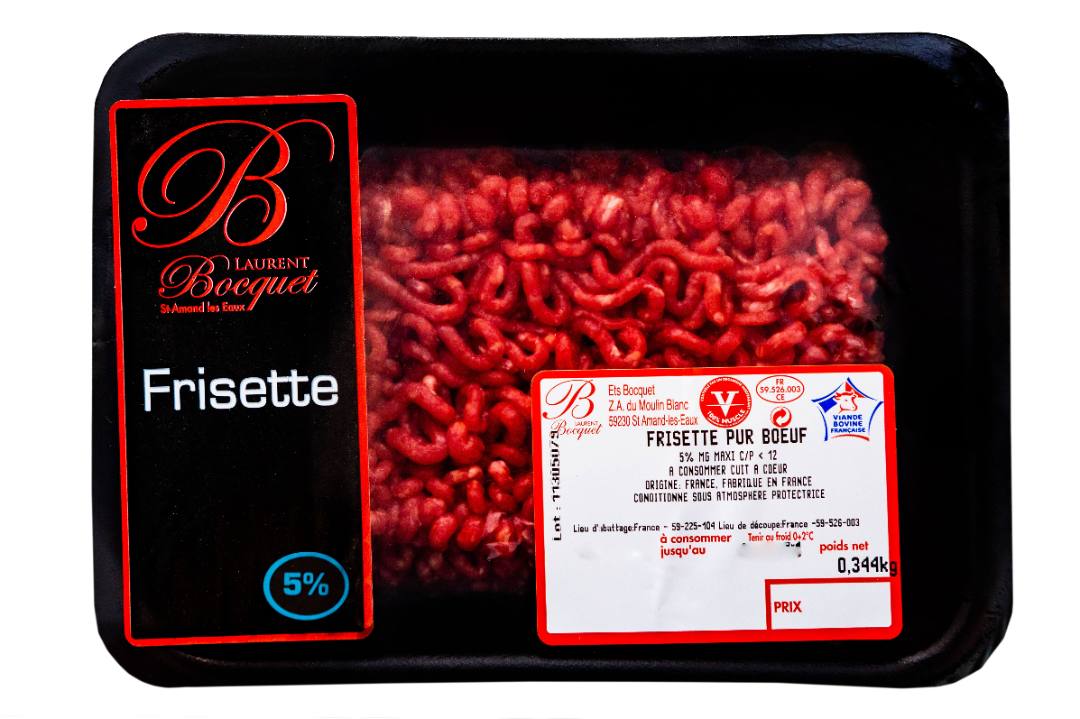
France – Ground steak 5% CORA – STEC E.coli O157

Gov France

Product category
Food
Product subcategory
Meats
Product brand name
CORA
Model names or references
Chopped Steak 5% x1 CORA VBF Frisette 500g 5% CORA VBF Chopped Steak x6 5% VBF CORA
Product identification
GTIN Batch Date
3257980351876 40595076 Use-by date 03/05/2024
3257984467894 40595076 Use-by date 03/05/2024
3257983721058 40595076 Use-by date 03/05/2024
Products List
traça_magasin.pdfAttachment
Packaging
Tray
Start/end date of marketing
From 02/29/2024 to 03/05/2024
Storage temperature
Product to keep in the freezer
Further information
Manufactured from 02/28/2024 to expiry date of 03/05/2024
Geographical sales area
Whole France
Distributors
CORA WATTIGNIES CORA DUNKERQUE SUPERMARKETS MATCH

France – Ground steak 5% – STEC E.coli O157

Gov France

Product category
Food
Product subcategory
Meats
Product brand name
Bocquet
Model names or references
PAVE AX VBF TOURNEDOSTEACK VBF STEAK AX x2 5% TRANSPARENT STEAK AX x6 5% VBF FRISETTE 500GR 5% VBF
Product identification
GTIN Batch Date
2655323000015 40595076 Use-by date 03/05/2024
3257980281807 40595076 Use-by date 03/05/2024
3258987085214 40595076 Use-by date 03/05/2024
3257985589748 40595076 Use-by date 03/05/2024
2655071000015 40595076 Use-by date 03/05/2024
Products List
traça_magasin.pdfAttachment
Packaging
Tray
Start/end date of marketing
From 02/29/2024 to 03/05/2024
Storage temperature
Product to keep in the refrigerator
Further information
Manufactured from 02/28/2024 to expiry date of 03/05/2024
Geographical sales area
Whole France
Distributors
AUCHAN CALAIS O’TERA MERIGNAC O’TERA VILLENEUVE LECLERC TEMPLEUVE SDN EXPLOITATION O’TERA AMIENS LECLERC DAINVILLE O’TERA FREJUS

Research – Fates of attached E. coli o157:h7 on intact leaf surfaces revealed leafy green susceptibility

Science Direct

Abstract

Leafy greens, especially lettuce, are repeatedly linked to foodborne outbreaks. This paper studied the susceptibility of different leafy greens to human pathogens. Five commonly consumed leafy greens, including romaine lettuce, green-leaf lettuce, baby spinach, kale, and collard, were selected by their outbreak frequencies. The behavior of E. coli O157:H7 87-23 on intact leaf surfaces and in their lysates was investigated. Bacterial attachment was positively correlated with leaf surface roughness and affected by the epicuticular wax composition. At room temperature, E. coli O157:H7 had the best growth potentials on romaine and green-leaf lettuce surfaces. The bacterial growth was positively correlated with stomata size and affected by epicuticular wax compositions. At 37 °C, E. coli O157:H7 87-23 was largely inhibited by spinach and collard lysates, and it became undetectable in kale lysate after 24 h of incubation. Kale and collard lysates also delayed or partially inhibited the bacterial growth in TSB and lettuce lysate at 37 °C, and they sharply reduced the E. coli O157:H7 population on green leaf lettuce at 4 °C. In summary, the susceptibility of leafy greens to E. coli O157:H7 is determined by a produce-specific combination of physiochemical properties and temperature.