Category Archives: E.coli O157:H7

Canada – Public Health Notice: Outbreak of E. coli infections linked to Hankook (Korean characters only) brand Original Kimchi – E.coli O157

PHAC

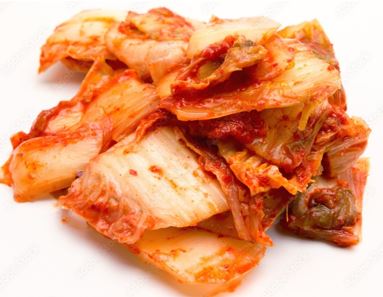
Kimchi

The Public Health Agency of Canada (PHAC) is collaborating with provincial public health partners, the Canadian Food Inspection Agency (CFIA) and Health Canada to investigate an outbreak of E. coli O157 infections involving 2 provinces: Alberta and Saskatchewan.

Based on the investigation findings to date, the outbreak is linked to Hankook (Korean characters only) brand Original Kimchi. Many of the individuals who were sick reported having eaten Hankook (Korean characters only) brand Original Kimchi before their illnesses occurred.

The CFIA issued a food recall warning on January 28, for Hankook (Korean characters only) brand Original Kimchi sold in 2L containers with a net weight of 1670 g, UPC code 6 23431 00030 4, and best before date January 29, 2022. The recalled product was distributed in British Columbia, Alberta, Saskatchewan, and Manitoba.

For more information on the recalled product, please consult CFIA’s website. The CFIA is continuing its food safety investigation, which may lead to the recall of other products. If other products are recalled, the CFIA will notify the public through updated food recall warnings.

Do not eat, use, sell, or serve the recalled kimchi or any products made with the recalled kimchi. This advice applies to individuals, as well as retailers, distributors, manufacturers and food service establishments such as hotels, restaurants, cafeterias, hospitals and long-term care homes, across Canada.

This public health notice will be updated as the investigation evolves.

Investigation summary

As of January 28, there have been 14 laboratory-confirmed cases of E.coli O157 illness linked to this outbreak in the following provinces: Alberta (13) and Saskatchewan (1).

Individuals became sick between early December 2021 and early January 2022. No deaths or hospitalizations have been reported. Individuals who became ill are between 0 and 61 years of age. The majority of cases (64%) are female.

The CFIA issued a food recall warning on January 28 for certain Hankook (Korean characters only) brand Kimchi products. The recalled product wasdistributed in British Columbia, Alberta, Saskatchewan, and Manitoba.

The CFIA is continuing its food safety investigation, which may lead to the recall of other products. If other products are recalled, the CFIA will notify the public through updated food recall warnings.

Who is most at risk

E. coli O157 is more likely to cause severe illness than other strains of E. coli. Pregnant women, those with weakened immune systems, young children and older adults are most at risk for developing serious complications.

Most people who become ill from an E. coli infection will recover completely on their own. However, some people may have a more serious illness that requires hospital care or causes long-lasting health effects. In rare cases, some individuals may develop life-threatening complications, including stroke, kidney failure and seizures, which could result in death. It is possible for some people to be infected with the bacteria and to not get sick or show any symptoms, but to still be able to spread the infection to others.

What you should do to protect your health

The following advice applies to individuals, as well as retailers, distributors, manufacturers and food service establishments such as hotels, restaurants, cafeterias, hospitals and long-term care homes, across Canada:

  • Do not eat, use, sell or serve the recalled kimchi or any products made with the kimchi. Check to see if you have recalled food products at home. If you do, throw them out and wash your hands.
  • Clean and sanitize all surfaces and storage areas that recalled kimchi or any products made with the recalled kimchi may have come in contact with, including countertops, containers, utensils, freezers, and refrigerators.
  • If you have been diagnosed with an E. coli infection or any other gastrointestinal illness, do not cook food for other people.

Symptoms

People infected with E. coli can have a wide range of symptoms. Some do not get sick at all, though they can still spread the infection to others. Others may feel as though they have a bad case of upset stomach. In some cases, individuals become seriously ill and must be hospitalized.

The following symptoms can appear within one to ten days after contact with the bacteria:

  • nausea
  • vomiting
  • headache
  • mild fever
  • severe stomach cramps
  • watery or bloody diarrhea

Most symptoms end within five to ten days. There is no real treatment for E. coli infections, other than monitoring the illness, providing comfort, and preventing dehydration through proper hydration and nutrition. People who develop complications may need further treatment, such as dialysis for kidney failure. You should contact your health care provider if symptoms persist.

What the Government of Canada is doing

The Government of Canada is committed to protecting the health of Canadians from enteric disease outbreaks.

PHAC leads the human health investigation into an outbreak and is in regular contact with its federal, provincial and territorial partners to monitor the situation and to collaborate on steps to address an outbreak.

Health Canada provides food-related health risk assessments to determine whether the presence of a certain substance or microorganism poses a health risk to consumers.
CFIA conducts food safety investigations into the possible food source of an outbreak.

Epidemiological information

Figure 1 is an epidemiological curve for this outbreak, which shows the numbers of new cases by week. Outbreak investigators use this information to show when illnesses begin, when they peak, and when they trail off. It can take several weeks from the time a person becomes ill to when the illness is reported and testing confirms a link to the outbreak. Data are available for 14 cases.
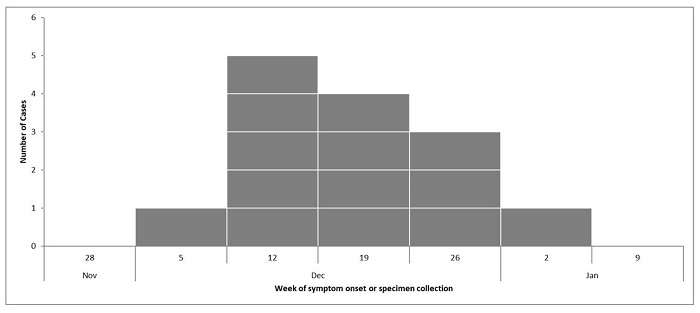
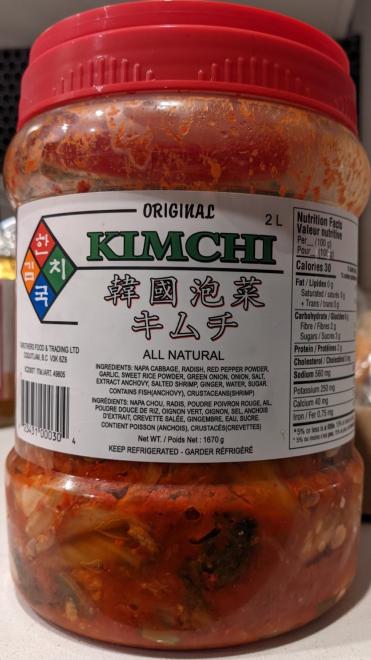
Figure 1. Number of people infected with E. coli O157:H7

Canada – Hankook (Korean characters only) brand Original Kimchi recalled due to E. coli O157:H7

CFIA

Hankook (Korean characters only) - Original Kimchi -1670 g

Summary

Product
Original Kimchi
Issue
Food » Microbial Contamination » E. Coli O157:H7
What to do

Do not consume the recalled product.

T-Brothers Food & Trading Ltd. is recalling Hankook (Korean characters only) brand Original Kimchi from the marketplace due to possible E. coli O157:H7 contamination.

The recalled product has been sold in British Columbia, Alberta, Saskatchewan and Manitoba.

What you should do

  • If you think you became sick from consuming a recalled product, call your doctor
  • Check to see if you have the recalled product in your home
  • Do not consume the recalled product
  • Recalled products should be thrown out or returned to the location where they were purchased

Food contaminated with E. coli O157:H7 may not look or smell spoiled but can still make you sick. Symptoms can include nausea, vomiting, mild to severe abdominal cramps and watery to bloody diarrhea. In severe cases of illness, some people may have seizures or strokes, need blood transfusions and kidney dialysis or live with permanent kidney damage. In severe cases of illness, people may die.

UK – FSA – Draft guidance for consultation: Less than thoroughly cooked beef burgers

FSA

Disease In Food

Summary of the less than thoroughly cooked beef burgers guidance for food businesses and local authorities.

This guidance gives advice to food businesses and local authority (LA) officers on controls and safe systems which can reduce the risks associated with less than thoroughly cooked (LTTC) beef burgers, sometimes referred to as rare, pink or lightly cooked burgers.

his document contains regulatory guidance and best practice. Regulatory guidance specifies how food business operators can comply with legislation. Best practice is not required by law.

Who is this publication for?

This guidance is for:

  • businesses serving LTTC beef burgers
  • local authority officers enforcing food hygiene official controls
  • it may also be of interest to manufacturers and processors of beef, minced beef and beef burgers intended to be less than thoroughly cooked

USA – Annual Reports on Foodborne Illness Source Attribution Estimates

CDC

Foodborne Illness Source Attribution Estimates for SalmonellaEscherichia coli O157, Listeria monocytogenes, and Campylobacter Using Multi-Year Outbreak Surveillance Data, United States.

Latest Report for 2019

IFSAC analyzed data from 1,532 foodborne disease outbreaks that occurred from 1998 through 2019 to assess which categories of foods were most responsible for SalmonellaE. coli O157, Listeria monocytogenes, and Campylobacter infections. These pathogens were chosen because of the frequency or severity of the illnesses they cause, and because targeted interventions can have a major impact in reducing them. The implicated foods were divided into 17 categories for the analysis, and the method gives the greatest weight to the most recent five years of outbreak data (2015–2019).

Read the 2019 report pdf icon[PDF – 14 pages]

USA – Core Outbreak Table Update

FDA

Date
Posted
Reference
#
Pathogen
Product(s)
Linked to
Illnesses

(if any)
Investigation
Status
1/10/

2022

1050 E. coli
O121:H19
Not Yet
Identified
Active
12/29/

2021

1052 E. coli
O157:H7
Packaged Salad Active
12/20/

2021

1039 Listeria
monocytogenes
Packaged Salad Active
12/15/

2021

1048 Listeria
monocytogenes
Packaged Salad Active
9/15/

2021

1031 Salmonella
Oranienburg
Red, Yellow,
and White Onions
Active

Research – Improving ready-to-eat apple cubes’ safety using chitosan-based active coatings

Wiley Online

The use of active coatings is shown as an option to offer safe ready-to-eat fruits and respond the growing demand of consumers for fresh, environmentally friendly and products free from chemical preservatives. In this work, chitosan (Ch), chitosan + vanillin (Ch-V), and chitosan + geraniol (Ch-G) coatings were applied on apple cubes to evaluate their microbiological quality for 12 days of refrigerated storage. All combinations applied demonstrated significant bactericidal effects on native microbiota, resulting in number of mesophilics, psychrotrophics, and yeasts and molds under the detection limit (<2.00 log) immediately after coating and during 12 days for most of them. Moreover, Escherichia coli O157:H7 and Listeria innocua artificially inoculated on apple cubes showed great reductions after coating treatments, exerting vanillin or geraniol enriched coatings outstanding antimicrobial activity. In fact, after 12 days of refrigerated storage, apple cubes treated with vanillin and geraniol (>2.00 log CFU/g) showed reductions in E. coli O157:H7 counts greater than 2.00 log in comparison with the control (4.68 log CFU/g). The preliminary results of this study demonstrated that Ch, Ch-Va, and Ch-Ge could be an interesting alternative to improve the safety of apple cubes and, therefore, a novel option to offer safe, ready-to-eat apple to consumers.

RASFF Alert – STEC E.coli O157 – Chilled Beef

RASFF

Shigatoxin-producing Escherichia coli (O157 stx1+ stx2+ eae+ /25g) in chilled beef from Belgium in the Netherlands

Denmark – Outbreak of diarrhea-causing E. coli O157

SSI

The Statens Serum Institut is currently investigating an outbreak with a diarrhea-causing and toxin-producing E. coli bacterium. It began in December and currently includes 13 people with possible common source of infection.

Since December 3, 13 patients related to an outbreak with the diarrhea-causing and shiga toxin-producing E. coli bacterium (STEC) with the serotype O157: H7 have been identified. Of these, identical bacteria have been found in nine patients by whole genome sequencing at the Statens Serum Institut (SSI).

Three children with acute renal failure

Among the patients are three children who have developed haemolytic uraemic syndrome / acute renal failure (HUS), which may be a serious consequence of infection with STEC.

The sick are four men and nine women between the ages of 2 and 90. They come from all regions in the country, except Region North Jutland. The sick have not been traveling and have not participated in joint events in the time leading up to their illness.

Nine patients have been hospitalized in connection with the infection.

A serious outbreak

“It is a serious outbreak, as this type of toxin-producing E. coli can in some cases cause acute renal failure. We are paying particular attention when three children with acute renal failure were reported here in December. Patients with severe diarrhea, especially bloody diarrhea, should seek medical attention to get a correct diagnosis “, says Epidemiologist Luise Müller from SSI. She continues:

“As we do not yet know the source of this outbreak, the best advice we can give is to remember to fry minced meat and rinse fruit and vegetables thoroughly before eating it. It is also important to separate raw meat from ready-to-eat food, such as salad, which is not heat-treated before eating. ”

Looking for the source of infection

To find out what may have made the patients ill, interviews are conducted with patients or parents of patients to obtain information on food intake, institutional contact, animal contact and other relevant exposures.

The outbreak is being investigated by SSI in collaboration with the Danish Veterinary and Food Administration and the DTU Food Institute.

Read more

Read more about the outbreak on this outbreak site.

Read more about E. coli infection, among others STEC / VTEC.

Read more about Hemolytic uremic syndrome .

Read more about how to avoid STEC in your food on the Danish Veterinary and Food Administration’s website.

Denmark – Deadly E. coli O157 outbreak sickens 13 in Denmark

Food Safety News

Officials in Denmark are investigating a deadly outbreak of Shiga toxin-producing E. coli (STEC) O157 that has affected more than a dozen people.

The outbreak began in December 2021 and includes 13 patients with a possible common source of infection, said the Statens Serum Institut (SSI). Nine people have been hospitalized and an elderly patient has died.

Since early December, 13 patients have been detected and samples from nine of those sick are closely related after an analysis by whole genome sequencing at the Statens Serum Institut. This means they were likely infected by a common source.

CPS – Research project Funding 2022 – Salads

CPS

Assessing Romaine lettuce “Forward Processing” for potential impacts on EHEC growth, antimicrobial susceptibility, and infectivity

Consumption of Romaine lettuce has been linked to multiple foodborne illness outbreaks due to contamination of pathogenic Escherichia coli strains. Recently, these outbreaks have occurred in the United States every year since 2016, causing great damage to consumer health and economic wellbeing of the fresh produce industry. The pathogen strains isolated from these outbreaks showed great similarity by genomic analyses. These outbreaks showed a pattern of heavy concentration especially in northeastern USA, prompting questions from the leafy green industry that the practice of “forward processing” could be linked to the outbreaks. “Forward processing” is a practice that the raw lettuce commodity is transported in trucks to facilities far away from the production area for washing and packaging, and regional marketing. We propose to work closely with the leafy green industry to comprehensively assess the forward processing for its effects on the integrity and safety of the raw commodity and the packaged products. In addition, the forward processing conditions will be simulated in the laboratory with the pathogenic E. coli strains. Emphases will be on how these conditions would affect the physiology of the pathogenic strains as well as other microorganisms on the raw commodity and packaged products. The findings in the research could provide important information that can be used by the leafy green industry for improving the forward processing practice and reducing the risks of fresh produce such as Romaine lettuce.

CPS

Quantifying risk associated with changes in EHEC physiology during post-harvest pre-processing stages of leafy green production

The goal of this project is to determine if the time between harvest and end use of romaine lettuce impacts E. coli O157:H7 pathogenicity and detectability resulting in increased health risk. Laboratory scale experiments with inoculated lettuce undergoing simulated harvest and cooling will be used to measure changes in E. coli O157:H7 stress tolerance and virulence. Input from industry partners including temperature data from commercial romaine harvesting and cooling, and details on supply chain logistics, will be combined with the laboratory scale experimental data and used to model risk associated with specific harvest and handling practices. The resulting quantitative tool will be publicly available and allow for growers and producers to determine any practices that should be implemented to reduce the potential for O157 transmission on romaine lettuce.