Category Archives: Decontamination Microbial

Research – Two Outbreaks of Foodborne Gastrointestinal Infection Linked to Consumption of Imported Melons, United Kingdom, March to August 2021 – Salmonella – STEC E.coli

Science Direct

Abstract

The aim of this study was to describe two foodborne outbreaks caused by contaminated imported melon and make recommendations for future practice. Between March and July 2021, there was an outbreak of 113 cases of Salmonella Braenderup in the UK (62% female, median age 61 years, 33% hospitalized). Analytical epidemiological studies identified Galia melons as the vehicle of infection (OR 671.9, 95% CI 39.0–58,074.0, p < 0.001). Subsequently, the outbreak strain was isolated from two samples of Galia melon imported from Latin America. In July and August 2021, there was an outbreak of 17 cases of Shiga toxin-producing Escherichia coli (STEC) O157:H7 in the UK (53% female, median age 21 years, 35% were hospitalized). Review of the STEC surveillance questionnaire data, followed by the analysis of responses from a modified hypothesis-generating questionnaire, implicated eating precut watermelon from retailer B sourced from Europe as the vehicle of infection. Outbreaks of gastrointestinal pathogens caused by contaminated food of nonanimal origin are a global public health concern. Given the difficulty in removing pathogens from the flesh of ready-to-eat fruit and vegetables, public health interventions should target all steps of the food chain prior to consumption, from cultivation on the farm to processing/packing and distribution.

Algeria – Food poisoning leaves one dead, 144 injured in Algeria

Roya News

A woman died and 144 people were injured after suffering food poisoning in Algeria earlier this week.

According to local reports, people have eaten sweets that are unfit for human consumption in the city of Magra, east of the country.

Research – Campylobacter contamination in broiler meat

Poultry World

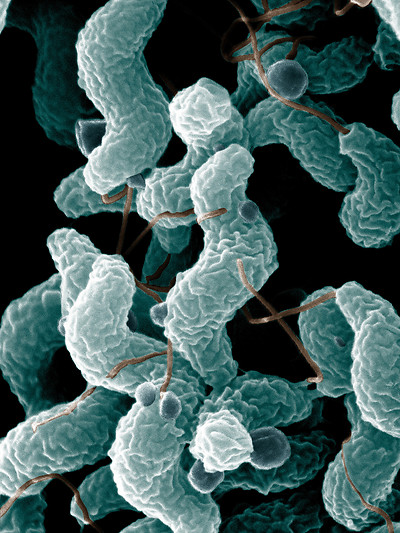
Campylobacter in broiler meat is one of the leading foodborne pathogens associated with health risks and negative economic impacts worldwide. Campylobacter has several adaptive responses throughout the broiler production chain. Thus, it survives from broiler farm to slaughterhouse and processing plant.

Research -France publishes 2021 Campylobacter data

Food Safety News

Data from Campylobacter surveillance in 2021 confirmed trends seen in previous years, according to the most recent statistics published by Santé Publique France.

Findings are based on the National Reference Center (CNR) for Campylobacter and Helicobacter and mandatory declaration of outbreaks. Past data from 2020 showed Campylobacter infections were not impacted by public health measures taken because of the COVID-19 pandemic.

Campylobacter has been increasing since 2013 when online data entry was introduced. Scientists said this could reflect an actual rise in infections or it may be because of other factors such as better detection methods.

USA -FDA – Investigations of Foodborne Illness Outbreaks

FDA

What’s New

  • On December 30, 2022, FDA issued an advisory for the outbreak Salmonella Typhimurium (reference #1137) linked to alfalfa sprouts. SunSprout Enterprises issued a voluntary recall on December 29, 2022 and later expanded their recall on the same day. FDA has also initiated traceback, an on-site inspection, and sample collection and analysis.
  • There are no other updates to this week’s table.

Hong Kong – Food Safety Tips for “Poon Choi”

CFS

Seasonal Food Safety Tips

Leaflet

Research – Raw Aquatic Food Products – A Source of Pathogens and Parasites

CFS

The harmful microorganisms of concern include both bacteria (e.g. Vibrio parahaemolyticus (VP) and Vibrio cholerae (VC)) and viruses (e.g. norovirus). VP occurs naturally in seawater (estuaries and coastal areas). Hence, some seafood is inevitably contaminated with VP. On the other hand, VC can live in both saltwater and freshwater such as rivers. In Hong Kong, norovirus is a prevalent foodborne virus that is commonly found in polluted seawater and shellfish living in polluted areas is easily contaminated.

Research – Effect of Ultra-High-Pressure Homogenization Processing on the Microbiological, Physicochemical, and Sensory Characteristics of Fish Broth

MDPI

Abstract

The effect of ultra-high-pressure homogenization (UHPH) treatments at 300 MPa at inlet temperatures (Ti) between 45 and 75 °C on the microbiological, physical, and sensorial characteristics of fish broth was evaluated. Before the application of UHPH treatments, different fish broth formulations were tested, selecting the formula with the best organoleptic and nutritional characteristics and the lowest cost, containing 45% monkfish heads and rock fish in the same proportion. The microbiological shelf-life of fish broth during cold storage at 4 and 8 °C was extended by a minimum of 20 days by applying UHPH treatments at inlet temperatures (Ti) between 45 and 65 °C. Fish broth UHPH-treated at Ti = 75 °C was microbiologically sterile during storage at 4 °C, 8 °C, and room temperature. Fish broth UHPH-treated was physically stable, significantly reducing the particle size. Color showed higher luminosity and lower yellowness as the inlet temperature increased. In fish broth UHPH-treated at Ti = 75 °C, selected for its microbiological stability, no differences were observed in the nutritional composition, antioxidant activity, and sensorial perception compared to untreated fish broth. Hence, UHPH treatments showed to be an alternative to preserving fish broth with an improved microbiological shelf-life and good sensorial characteristics.

Research – Surveillance of Human Cases of Salmonellosis, Campylobacteriosis, Listeriosis, and Hepatitis A in Campania (Southern Italy): Seven-Year Monitoring (2013–2019)

MDPI

Abstract

Foodborne infections cause illness and death every year worldwide. The aim of this study was to describe trends in 2013–2019 in the occurrence of human cases of salmonellosis, campylobacteriosis, listeriosis, and hepatitis A in the Campania region. Human case data were provided by the National Surveillance System of disease and were grouped by year, province, age group, and sex. Moreover, the number of people hospitalized was recorded. In the Campania region, the total number of confirmed human cases for the diseases investigated was 1924, with Hepatitis A and the Salmonellosis as the first most reported (1009 and 825 cases, respectively). The incidence rates of gastroenteritis under study were lower than those in Italy and European Union in the same period, with the exception of Hepatitis A whose incidence was higher than that recorded in Italy. Data on hospitalizations pointed out the onset of severe forms of infection also for listeriosis and campylobacteriosis, whose incidence was very low (27 and 63 cases, respectively). Unfortunately, no information on the foods implicated is available. Although probably underestimated, gastroenteritis due to foodborne agents still represents a burden in Campania, and continuous monitoring and implementation of the currently available regional surveillance system is required.

Research – Advances in science and risk assessment tools for Vibrio parahaemolyticus and V. vulnificus associated with seafood: meeting report

WHO

Globally, the Vibrio parahaemolyticus and Vibrio vulnificus represent important human pathogens associated with the consumption of seafood. In response to the requests for scientific advice from Codex Committee on Food Hygiene (CCFH), risk assessments for the pathogens V. vulnificus, V. cholerae, V. parahaemolyticus and guidance on methods for the detection of Vibrio spp. with seafood have been conducted and published previously by JEMRA. In order to provide an update on the state-of-the-art advice regarding risk assessment for V. parahaemolyticus and V. vulnificus in seafood, an expert meeting was convened.

Several critical developments in the last decade were subsequently noted by the expert working group: 1) The emergence of highly pathogenic strains; 2) In response to climate change, there has been a significant geographical spread regarding when and where these seafood-associated Vibrio infections; 3) Demographic considerations are very important; 4) A range of new approaches for best practice; and 5) A range of new methods, such as those utilising genomics and satellite imagery. This report describes the output of that expert meeting.