Category Archives: Decontamination Microbial

Canada – Solstice Ciderworks brand Haskap Cider recalled due to bursting cans – Microbial Contamination

CFIA

Summary

Product
Haskap Cider
Issue
Food – Microbial Contamination – Non harmful (quality or spoilage)
What to do

Do not use, sell, serve or distribute the affected product.

Audience
Retail

Affected products

Solstice Ciderworks brand Haskap Cider recalled due to bursting cans.

The recalled product has been sold in the Yukon.

Research – Aflatoxins contamination in raw and roasted cashew nuts in Mtwara, Tanzania

African Journal of Microbiology

Abstract

The aim of this work was to determine the contamination levels of raw and roasted cashew nuts sold in Masasi and Newala districts of Mtwara region in Tanzania. A total of 60 samples including 40 roasted (24 samples from Newala and 16 from Masasi) and 20 raw samples (12 from Newala and 8 from Masasi) were collected. Determination of total aflatoxins levels in raw and roasted cashew nuts samples was carried out by immune affinity high performance liquid chromatography (HPLC). The levels of contamination ranged from not detected (less than limit of quantification) to 3.29 µg/kg for both aflatoxin B1 and total aflatoxin in the cashew nuts samples. None of the samples had total aflatoxins contamination greater than the recommended maximum residues of 4 µg/kg set by European Commission (2010) or 10 µg/kg set by FAO and WHO (1995). About a quarter (38%) of the samples had total aflatoxins less than limit of quantification. All roasted cashew nut samples were found to have total aflatoxins less than 3 µg/kg while about 86% of raw cashew nut samples had total aflatoxins less than 3 µg/kg

Research – Detection of Clostridium botulinum in Some Egyptian Fish Products, Its Control In Vitro Using Citrus Leaves Extracts, and Applicability of Citrus limon Leaf Extract in Tuna

MDPI

kswfoodworld

Abstract

This study aims to detect Clostridium botulinum and its control using natural leaf extracts of Citrus limonCitrus sinensis, and Citrus unshiu in Egyptian fish products, e.g., canned tuna, canned sardine, canned mackerel, fesikh, moloha, and renga, as well the application of C. limon in tuna. Moreover, the antibacterial activity of the C. limon leaf extract was also estimated. In the water extract, ascorbic acid, total flavonoid content (TFC), and total phenolic content (TPC) were determined by volumetric, aluminum chloride, and Folin–Ciocalteu approaches, respectively. The antioxidant ability of the extract was analyzed in vitro via free radical scavenging (DPPH) and Ferric reducing assays. The results showed variability in the distribution of the total number of positive C. botulinum in fish samples from three different governorates under study, which were (24) Alexandria, (16) Beheira, and (17) Gharbia, out of the 120 tested samples in each governorate. Additionally, the findings revealed that all three Citrus extracts contain an appropriate number of secondary metabolites, with a sustainable presence of saponin and tannins in the C. limon extract. Furthermore, all Citrus extracts inhibited bacterial growth by increasing the inhibition zone, with C. limon being the best extract (25 mm) compared to C. sinensis and C. unshiu. The overall results showed the high antioxidant and anti-Clostridium powers (p < 0.05) of C. limon leaf extract, indicating its preservative activity in fishery products during storage. Finally, C. limon leaf extract can fight off C. botulinum and is considered a promising natural preservation candidate in ensuring safe and fresh fishery products.

Research – Extensive literature searches on bromine and Ochratoxin A in feed

EFSA

Two Extensive Literature Searches (ELSs) by using PubMed, Web of Science (WoS) and SciFinder for relevant studies on Ochratoxin A (OTA) and bromine, bromate and bromide (BRs) in feed were performed. Search queries allowed to obtain a total number of 8,953 and 34,183 references for OTA and BRs, respectively. The relevance analysis of the documents was performed by screening titles and abstracts against inclusion and exclusion criteria. Relevant references accounted in each Area, for OTA and BRs, were respectively: Area 1 (Information on analytical techniques for quantification) 117 and 117 documents, respectively; Area 2 (Information on occurrence/concentrations and formation) 176 and 176 documents, respectively; Area 3 (Information on exposure of farm and companion animals) 31 and 3 documents, respectively; Area 4 (Information on toxicokinetics (absorption, distribution, metabolism, excretion) in farm and companion animals) 37 and 8 documents, respectively; Area 5 (Information on toxicity of OTA/BRs in farm and companion animals) 249 and 23 documents, respectively; Area 6 (Information on the transfer of OTA/BRs from feed to animal derived food) 18 and 4 documents. A total number of 618 and 100 relevant non‐redundant documents was found for OTA and BRs, respectively. Those results were obtained after the full text analysis of all the document previously labelled as relevant.

Research – Contribution of MALDI-TOF-MS-based principal component analysis for distinguishing foodborne pathogens

Wiley Online

Abstract

Foodborne diseases are important to determine bacteria in strain level, which are analyzed by library-based devices and bioinformatics-enabled. The aim of this study was to investigate the contribution of principal component analysis (PCA) with matrix-assisted laser desorption ionization time-of-flight mass spectrometry (MALDI-TOF-MS) to distinguish according to the differences of bacterial strains as rapidly screening of foodborne bacteria. The MALDI-TOF-MS-based PCA analysis was used for differentiating bacterial strains isolated from ready-to-eat foods. According to the results of PCA analysis, the percentages of distance and proximity between species were evaluated by composite correlation indexes (CCI). Bacillus cereus were detected in burghul salad (BC1) and macaroni salad (BC2) taken from the SB2-snack bar, and the similarity rate was determined as 97%. Three other B. cereus bacteria (BC3, BC4, and BC5) in the same cluster were also isolated from salads collected from SB4-snack bar. The similarity of Klebsiella pneumoniae bacteria, which have the codes KP1 and KP2, isolated from macaroni salad and burghul salad taken from the SB2 snack bar respectively were 96%. Additionally, the CCI values of two E. coli strains in burghul (EC1) salad and Russian salad (EC2) in the same sampling point (SB1) were determined as 97%. In conclusion, this analysis with MALDI-TOF-MS based PCA has revealed the relationships between bacteria genera and species, beyond just the identification of bacteria and the rapid screening of bacteria in perishable foodstuffs. Similarities between bacterial strains identified for different samples from the same sampling point suggested that there were not adequate hygiene rules and storage requirements were not followed.

Research – Rare Recombinant GI.5[P4] Norovirus That Caused a Large Foodborne Outbreak of Gastroenteritis in a Hotel in Spain in 2021 – Food Handler

Journals ASM

Noroviruses are among the most important causes of acute gastroenteritis (AGE). In summer 2021, a large outbreak of norovirus infections affecting 163 patients, including 15 norovirus-confirmed food handlers, occurred in a hotel in Murcia in southeast Spain. A rare GI.5[P4] norovirus strain was identified as the cause of the outbreak.
The epidemiological investigation determined that norovirus transmission might have been initiated through an infected food handler. The food safety inspection found that some symptomatic food handlers continued working during illness. Molecular investigation with whole-genome and ORF1 sequencing provided enhanced genetic discrimination over ORF2 sequencing alone and enabled differentiation of the GI.5[P4] strains into separate subclusters, suggesting different chains of transmission. These recombinant viruses have been identified circulating globally over the last 5 years, warranting further global surveillance.
IMPORTANCE Due to the large genetic diversity of noroviruses, it is important to enhance the discriminatory power of typing techniques to differentiate strains when investigating outbreaks and elucidating transmission chains. This study highlights the importance of (i) using whole-genome sequencing to ensure genetic differentiation of GI noroviruses to track chains of transmission during outbreak investigations and (ii) the adherence of symptomatic food handlers to work exclusion rules and strict hand hygiene practices. To our knowledge, this study provides the first full-length genome sequences of GI.5[P4] strains apart from the prototype strain.

Norway pushes for an exemption to EU egg shelf life rules

Food Safety News

Norway is hoping for an exemption to European rules on shelf-life labeling of eggs, partly because of its good Salmonella record.

In December 2022, an EU regulation entered into force that extended the period eggs can be sold to the consumer to 28 days after laying by hens. However, another change moved a provision on the best-before date for table eggs to hygiene regulations, which are part of the EEA agreement. Norway is part of the European Economic Area (EEA) but is not an EU member state. As the rule didn’t previously cover Norway, the country uses an egg shelf life of 35 days after laying.

Two ministries in Norway believe the 28-day maximum shelf life rule is justified for public health reasons in many EU member states due to the occurrence of Salmonella in eggs. However, in Norway, there is a very low incidence of Salmonella in eggs.

USA – Listeria Outbreak Linked to Deli Meat and Cheese

CDC

This outbreak is over. Even when there are no ongoing Listeria outbreaks, people who are pregnant, aged 65 or older, or have a weakened immune system should reheat deli meat and deli-sliced cheese to an internal temperature of 165°F or until steaming hot to kill any germs.

Fast Facts
  • Illnesses: 16
  • Hospitalizations: 13
  • Deaths: 1
  • States: 6
  • Recall: No
  • Investigation status: Closed
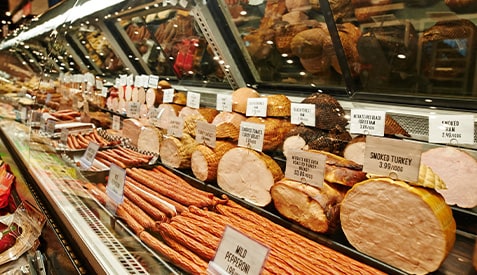
Store with deli meat and cheese on shelves
Listeria in Deli Meat and Deli-Sliced Cheese

Deli meats (cold cuts, lunch meats, hot dogs, and pâtés) and deli-sliced cheeses are known sources of Listeria illnesses. This is because Listeria can easily spread among food, food preparation surfaces like deli slicers, and hands. Listeria is a hardy germ that can be difficult to fully remove once it is present in a deli or a food processing facility. It can survive and grow at cold temperatures in a refrigerator.

Outbreak Investigation Summary

Data showed that deli meat and cheese bought at deli counters in multiple states were the likely sources of this outbreak.

  • Of 12 people interviewed, 11 reported eating meat or cheese from deli counters.
  • The outbreak strain of Listeria was found in open packages of mortadella, ham, and salami sliced at the deli, as well as a deli in Brooklyn, New York.

A single deli or food source was not identified. It is difficult for investigators to identify the specific source of outbreaks linked to deli meats and cheeses. This is because Listeria spreads easily between food and the deli environment, and it can live for a long time in deli display cases and on equipment. A contaminated food likely introduced the outbreak strain of Listeria into delis in multiple states.

Research – Multi-country outbreak of Salmonella Virchow ST16 infections linked to the consumption of meat products containing chicken meat

EFSA

Abstract

Since June 2017, a persistent cross-border outbreak of Salmonella Virchow ST16 has been ongoing in five European Union/European Economic Area (EU/EEA) countries, the United Kingdom (UK), and the United States (US). A total of 210 cases have been reported from the following countries: Denmark (2), France (111), Germany (26), Ireland (4), the Netherlands (34), the UK (32), and the US (1). Among the interviewed cases (55), hospitalisation rates ranged from 16.7% (2/12) in the UK, to 29.4% (5/17) and 38.5% (10/26) in France and Germany, respectively. No deaths have been reported. A majority of cases have been linked to local restaurants serving kebab meat. The number of confirmed cases represents only a small proportion of all infections in the EU/EEA, partly due to the varying sequencing capacities of countries.

The comparison of the representative outbreak strains with the available genome profiles of S. Virchow ST16 from non-human isolates, revealed that most of the matching isolates belonged to broiler meat and broiler-related environments, thereby supporting the hypothesis of chicken meat as a vehicle of infections.

The available information from case interviews, traceback investigations, and whole genome sequencing (WGS) cluster analysis, showed that kebab meat products containing contaminated chicken meat are the likely vehicles of infections, and that the clone has been circulating in the EU poultry meat production chain at least in France, Germany, and the Netherlands. In the absence of batch numbers of the contaminated kebab products and related Salmonella testing information, the source(s) of the infections could not be established.

New infections are likely to occur in the EU/EEA affecting any age group, until further investigations are performed to identify the source(s) and point(s) of contamination along the chicken meat production chain, including the primary production upstream lines. This will allow appropriate control measures to be implemented.

USA – Stewart Parnell looks for better Habeas in Atlanta than he just had in Mid-Georgia – Peanut Butter Salmonella Outbreak

Food Safety News

A decade after his indictment and a year after United States Magistrate Judge Thomas Q. Langstaff denied his petition for early release, one-time peanut butter mogul Stewart Parnell still has one more card to play.

Parnell, 68, has 15 years to run on his sentence imposed after a 2014 jury conviction for numerous federal felonies associated with the deadly 2008-09 multistate Salmonella outbreak traced to his Peanut Corporation of America peanut processing facility in Blakely, GA. He is serving his time at the federal correctional facility at Hazelton, WV.

Parnell begins this year with a new appeal of his Habeas corpus petition in the U.S. Court of Appeals for the 11th U.S. Circuit in Atlanta. A Habeas petition claims unlawful detention or imprisonment because of constitutional infractions. It can open cell doors,