Category Archives: Campylobacter

Research – Campylobacter infections expected to increase due to climate change in Northern Europe

Nature.com

Campylobacter kswfoodworld

Global climate change is predicted to alter precipitation and temperature patterns across the world, affecting a range of infectious diseases and particularly foodborne infections such as Campylobacter. In this study, we used national surveillance data to analyse the relationship between climate and campylobacteriosis in Denmark, Finland, Norway and Sweden and estimate the impact of climate changes on future disease patterns. We show that Campylobacter incidences are linked to increases in temperature and especially precipitation in the week before illness, suggesting a non-food transmission route. These four countries may experience a doubling of Campylobacter cases by the end of the 2080s, corresponding to around 6,000 excess cases per year caused only by climate changes. Considering the strong worldwide burden of campylobacteriosis, it is important to assess local and regional impacts of climate change in order to initiate timely public health management and adaptation strategies.

Research – Enhanced elimination of Salmonella Typhimurium and Campylobacter jejuni on chicken skin by sequential exposure to ultrasound and peroxyacetic acid

Wiley Online

The present study investigated the effects of combined ultrasound (37 kHz, 380 W for 5 min) and peroxyacetic acid (PAA; 50–200 ppm) treatment on the reduction of Salmonella Typhimurium and Campylobacter jejuni on chicken skin. Ultrasound was not sufficient to inactivate . Typhimurium (0.48 log CFU/g reduction) or C. jejuni (0.25 log CFU/g reduction), whereas PAA significantly ( < .05) reduced . Typhimurium (0.93–1.59 log CFU/g reduction) and C. jejuni (0.77–1.52 log CFU/g reduction). However, maximum reductions of 2.21 and 2.08 log CFU/g were observed for . Typhimurium and C. jejuni , respectively, for combined treatment with 5 min of ultrasound and 200 ppm PAA. Our results indicate that a combination of ultrasound treatment for 5 min and 200 ppm PAA was more effective in reducing . Typhimurium and C. jejuni compared to the individual treatments, without significantly affecting the color or texture of the chicken skin, thus, demonstrating its potential to increase the microbial safety during poultry processing.

New Zealand – Recall of raw milk containing Campylobacter from Lindsay Farm in Waipukurau

MPI


Raw (unpasteurised) drinking milk from Central Hawke’s Bay producers Lindsay Farm is being recalled after Campylobacter bacteria was found in some product.

The recall affects Lindsay Farm branded raw drinking milk with a date marking between 3 July and 11 August, distributed in a range of locations between Dannevirke and Auckland. The product is sold in 2-litre plastic bottles.

Hawke’s Bay District Health Board have confirmed Campylobacter infection in a person whose family regularly drank Lindsay Farm’s raw milk. The person was admitted to hospital but has since been discharged. There are no other reports of illness in the family.

Ministry for Primary Industries (MPI) food compliance manager Melinda Sando says people with Lindsay Farm raw milk at home should visit the MPI recalls website to check if it is among the batches of recalled product.

“If you have any of the recalled product, throw it out or return it to your supplier.

“You can also heat the raw milk until just boiling or at 70 degrees for 1 minute to kill any bacteria present before drinking it.

“Raw milk should also be refrigerated (at 4 degrees or less) to reduce the risk of any harmful bacteria in the milk growing to levels which may make you sick.

“If you have health concerns after drinking the product, talk to your doctor.

“Symptoms of Campylobacter infection are vomiting, diarrhoea, abdominal pain, fever, headache, and body aches.

“Drinking raw milk carries inherent risks as it may contain harmful bacteria which are killed through the pasteurisation process.

MPI is working with Hawke’s Bay District Health Board to minimise risk to the public.

Details of the recall, including the specific distribution points of the product

Last reviewed: 

New Zealand – Lindsay Farm brand raw (unpasteurised) drinking milk – Campylobacter

MPI

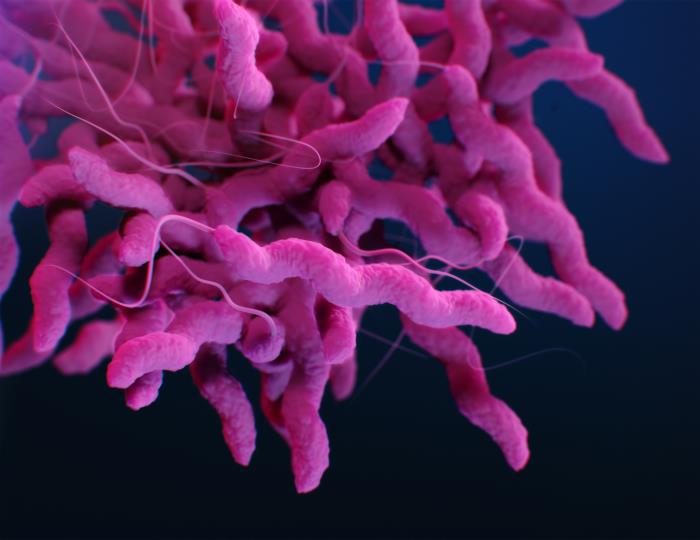
CDC Campy

Image CDC

Product identification
Product type Raw (unpasteurised) drinking milk
Name of product Lindsay Farm brand raw (unpasteurised) drinking milk
Date marking Received on and between 3 July to 11 August 2020.
Package size and description The product is sold in a 2L plastic bottle.
Distribution The product is sold via the following drop off points between Dannevirke and Auckland:

  • Betta Electrical, 46-48 Ruatainwha St, Waipukurau
  • Nature’s Nuture, 100 High St, Waipukurau
  • Otane Hotel, 40 Higginson St, Otane, Central Hawke’s Bay
  • Health Nuts, 26 High St, Dannevirke
  • The Village Green Cafe, 4 Donnelly St, Havelock North
  • Cornucopia Organic Foods, 21 Heretaunga St, East Hastings
  • Health 2000, 227 Gloucester St, Taradale, Napier
  • JJ’s Organics, 232 Riverbend Rd, Onekawa, Napier
  • Marewa Pharmacy, 126/128 Kennedy Rd, Marewa, Napier
  • Tangaroa, Tangaroa St, Ahuriri, Napier
  • Chantal Foods, 45 Hastings St, Napier
  • Berry Tasty, 600 Main North Rd, Napier
  • Mahia Ave Dairy, 24 Mahia Ave, Wairoa
  • M21 Meats, Spagate Shopping Centre, Taupō
  • Makaraka Veges, 97 Main Rd, Gisborne
  • Down to Earth, 131 Ormond Rd, Gisborne
  • Spencer’s, 299 Riddell Rd, Glendowie, Auckland
  • Titirangi Pick Up, 10 Warwick Ave, Titirangi, Auckland
  • IEproduce, 1 Barrys Rd, Takapuna, Auckland.
Notes This recall does not affect any other batches of Lindsay Farm brand raw (unpasteurised) drinking milk.

Consumer advice

Customers are asked to check the batch mark on the product.

If you have purchased any of the affected product listed on this notice, do not consume or alternatively heat to 70°C and hold at this temperature for one minute. If you don’t have a thermometer, heat the milk until it nearly reaches a boil (or scald the milk) before drinking it.

There have been reports of associated illness in New Zealand. If you have consumed any of this product and have any concerns about your health, seek medical advice.

Customers should return the product to their retailer for a full refund.

MPI’s information about Campylobacter

MPI’s advice on how to reduce the risk of illness if you drink raw unpasteurised milk

Who to contact

If you have questions, contact Lindsay Farm:

  • Phone: 06 858 5333
  • Address: Lindsay Road, Waipukurau, Central Hawke’s Bay.


Norway – Norway records slight decline in foodborne outbreaks

Food Safety News

The number of foodborne outbreaks in Norway declined slightly this past year from 2018, according to the country’s public health agency.

In 2019, 223 outbreaks from all sources were reported with 5,401 cases of disease. This was the same level of outbreaks as in 2018, but there was an increase in cases because of a large waterborne outbreak in Askøy municipality in 2019.

Campylobacter jejuni was detected in patients and drinking water in June 2019. In total, 2,000 patients were estimated. Contamination was suspected to have been caused after heavy rainfall.

The number of notified foodborne outbreaks decreased from 52 in 2018. The Norwegian Institute of Public Health (Folkehelseinstituttet) reported that 46 outbreaks were because of suspected food or waterborne infections in 2019. They affected more than 2,700 people with a range of two to 2,000. More than 150 outbreaks were registered in health institutions and 20 were classed as “other.”

Iceland – Screening for pathogenic microorganisms in meat on the market 2019

MAST

Screening for pathogenic micro-organisms in meat on the Icelandic market shows that the microbiological condition is generally good for salmonella and campylobacter. Shigatoxin-producing E. coli  (STEC) is detected in the flesh of Icelandic sheep, which is an indication that STEC is part of the natural flora of sheep. Surveillance of salmonella and Campylobacter in the early stages of the food chain is strong in Iceland. 

The Ministry of Industry and Innovation and the Food Administration, in collaboration with the municipal health inspectorate, organized sampling in 2019 of the most common pathogenic meat microorganisms on the market. The five largest health control areas in the country took care of the sampling. 

Samples were taken of domestic and foreign meat in supermarkets in the most populous areas of the country. The purpose of the sampling was to screen for pathogenic micro-organisms in products when the consumer receives them, and the sampling therefore took place in retail stores. 

Salmonella was not detected in unfrozen chicken meat. Campylobacter was detected in small quantities in 3 samples of frozen chicken meat. Salmonella was not detected in beef. Salmonella ( Salmonella Kedougou) was detected in one sample of domestic pork. Distribution was stopped and the meat was withdrawn from the market and recalled from consumers. In 22% of samples of sheep meat, STEC was diagnosed as malignant, of which E. coli was carried in 14% of the samples. The results of a report on screening for pathogenic bacteria in meat on the 2019 market are discussed in more detail .

A similar screening was carried out in Iceland for the first time in 2018, and the government has decided to continue increased monitoring of pathogenic microorganisms in fresh meat on the market at least this year. 

Research – Attributing human foodborne diseases to food sources and water in Japan using analysis of outbreak surveillance data

JFP

In Japan, strategies for ensuring food safety have been developed without reliable scientific evidence on the relation between foodborne infections and foods. The aim of this research was to provide information on the proportions of foodborne diseases caused by seven major causative pathogens ( Campylobacte r spp., Salmonella spp., EHEC, V. parahaemolyticus , Clostridium perfringens , Staphylococcus aureus , and Norovirus) attributable to foods using analysis of outbreak surveillance data. For the calculation of the number of outbreaks attributed to each source, simple-food outbreaks were attributed to the single-food category in question, and complex-food outbreaks were classified under each category proportionally to the estimated probability. Between 2007 and 2018, 8.730 outbreaks of foodborne diseases caused by seven pathogens were reported and another 6,690 (76.6%) were of “unknown source”. We observed fluctuations in the sources of foodborne diseases caused by the seven pathogens from 2013 to 2018 as follows: chicken products (92.9%, CI 92.6–92.9) for Campylobacter spp., beef products (40.1%, CI 38.2–41.2) and vegetables (39.3%, CI 38.2–41.2) for EHEC, eggs (22.8%, CI 14.9–31.9), chicken products (13,3%, CI 6.4–21.3) for Salmonella spp., finfish (86.3%, CI 62.5–95.8) and shellfish (13.7%, CI 4.2–37.5) for V. parahaemolyticus, grains and beans (47.2%, CI 31.2–62.5) for S. aureus, vegetables (69.3%, CI 50.8–79.7) and beef products (13.1%, CI 10.2–15.3) and chicken products (10.0%, CI 1.7–27.1) for C. perfringens , and shellfish (74.7%, CI 73.1–75.9) for Norovirus. In this study, we provide the best currently available basis to evaluate the link between foodborne diseases and foods. Additionally, our results reflected the effect of strict health regulations for raw beef during a given time period, and demonstrate the importance of controlling the contamination rate of Campylobacter spp. in chicken products at each step of the food supply chain.

Research – Research shows estimated 180 deaths per year in UK because of foodborne illness

Food Safety News

Researchers have estimated there are 180 deaths per year in the United Kingdom caused by foodborne diseases from 11 pathogens.

The Food Standards Agency (FSA) estimates that about 2.4 million cases of foodborne illness occur every year in the UK.

Foodborne norovirus is projected to cause 56 deaths per year, Salmonella 33 deaths, Listeria monocytogenes 26, Clostridium perfringens 25, and Campylobacter 21. Most fatalities occur in those aged 75 years and older.

Foodborne deaths from Shigella, Cryptosporidium, Giardia, adenovirus, astrovirus and rotavirus are rare, according to the study published in the journal BMJ Open Gastroenterology.

New Zealand – Research – Campylobacter Outbreak 2016

RNZ

The number of people infected in the Havelock North campylobacter crisis in 2016 was much higher than previously estimated, new research suggests.

Thousands of people were infected by drinking water from contaminated bores. Four people died and others were left permanently disabled.

joint study using gene-sequencing helped scientists discover the true scale of the outbreak.

The study suggests the campylobacteriosis case number could be as high as 8320, with up to 2230 of these living outside of Havelock North.

The Institute of Environmental Science and Research (ESR) science leader Dr Brent Gilpin said the study used DNA sequencing to link cases.

Research – Microbiological Quality of Cooked Chicken: Results of Monitoring in England (2013-17)

JFP

Results from monitoring of the microbiological quality of 2,721 samples of ready-to-eat cooked chicken collected between 2013 to 2017 in England were reviewed: 70% of samples were from retail, catering or manufacture and 30% were imported and collected at English ports. Samples were tested for a range of bacterial pathogens and indicator organisms. Six samples (<1%) had unsatisfactory levels of pathogens which were potentially injurious to health. Neither Salmonella nor Campylobacter were recovered from any sample. Two samples from catering settings contained either an unsatisfactory level of Bacillus cereus (5 x 10 6 CFU/g) or an unsatisfactory level of coagulase positive staphylococci (1.6 x 10 4 CFU/g). Listeria monocytogenes was recovered from 36 samples (one at manufacture, 26 at catering and nine at retail) and in four instances, unsatisfactory levels (≥10 2 CFU/g) were detected (three samples collected at catering and one at retail). For L. monocytogenes there were no significant differences between the rates of contamination with between the samples collected from ports, manufacture, retail supermarkets and other retailers (p = 0.288). There were no differences between the rates of contamination for other potential pathogens detected between samples from different settings. The prevalence of hygiene indicators ( Escherichia coli , Enterobacteriaceae and Aerobic Colony Counts) at import was significantly lower than in samples collected from manufacturers, retail or catering (p < 0.01). Samples collected from catering gave poorer results than all other settings. Regardless of the stage in the food chain, samples from Thailand and from other non-EU countries were of significantly better microbiological quality with respect to indicator organisms than those from the UK or from other EU countries (p = <0.001).