Monthly Archives: January 2023

RASFF Alert- Mold/Mould – Gouda Cheese

RASFF

Mould on gouda cheese from the Netherlands in Sweden and Denmark

RASFF Alert – Norovirus in Oysters from France

RASFF

Norovirus in Oysters from France in Hungary, Italy, Latvia, Moldova, Netherlands, Romania, Singapore and Switzerland

RASFF Alert – Vibrio cholerae – Shrimps

RASFF

Vibrio cholerae (NON 014/NON 0139) was detected in frozen shrimps from Venezuela in Spain

RASFF Alert – Listeria monocytogenes – Mixed Meat Platter – Chilled Smoked Salmon – Hummus – Mortadella – Gorgonzola

RASFF

Salmonella and Listeria in mixed meat platter from Belgium in Luxembourg

RASFF

Listeria monocytogenes (530 CFU/g) in chilled smoked salmon from France in Slovenia

RASFF

Listeria monocytogenes in hummus from the Netherlands in Germany

RASFF

Mortadelle – Listeria monocytogenes from Italy in France

RASFF

Listeria monocytogenes in gorgonzola from Italy in Austria

RASFF Alerts – Salmonella – Polish Chicken Products – Sesame Seeds – Black Pepper – Black Mushrooms – Steam Cooked Chicken Breast – Laying Hens – Mixed Meat Platter

RASFF

Salmonella in sesame seeds from Nigeria in Greece

RASFF

Salmonella in sesame seeds from Nigeria in Greece

RASFF

Salmonella in black mushrooms from Côte d’Ivoire in France

RASFF

Salmonella spp. in black pepper from Brazil in Germany

RASFF

Salmonella in sesame seeds from Nigeria in Greece

RASFF

Salmonella Mbandaka in frozen steam cooked chicken breast from Ukraine in Estonia and the Netherlands

RASFF

Zoonotic Salmonella enteritidis contamination in laying hens from Germany in the Netherlands

RASFF

Salmonella Enteritidis in chicken neck skin and chicken elements from Poland in Lithuania and Latvia

RASFF

Salmonella Kentucky and Salmonella Senftenberg in sesame seeds from India in Germany and Austria

RASFF

Salmonella and Listeria in mixed meat platter from Belgium in Luxembourg

RASFF Alert- Animal Feed – Mold/Mould – Feed Material

RASFF

Mould in feed material from Ukraine in Poland and Lithuania

USA – More Listeria cases linked to Enoki Mushrooms

Food Poison Journal

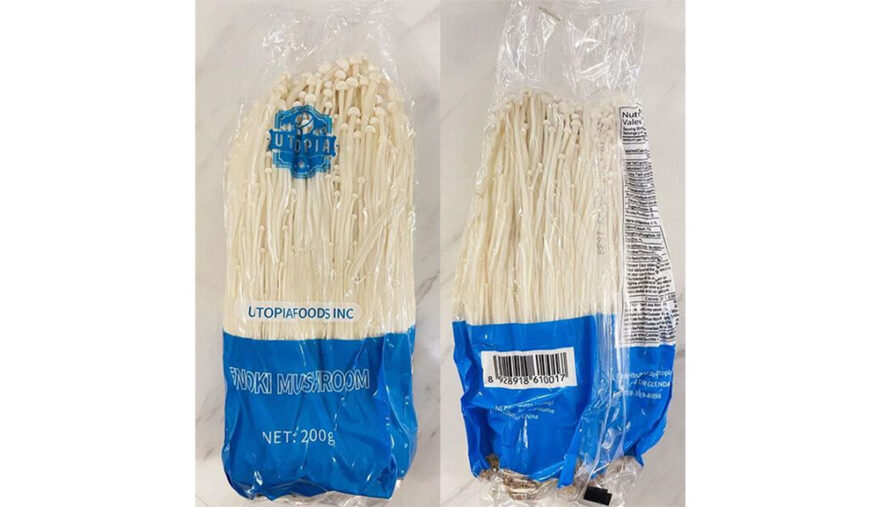
Epidemiologic and laboratory data show that enoki mushrooms are contaminated with Listeria and are making people sick. FDA found two strains of Listeria in an import sample of Utopia Foods brand enoki mushrooms. One strain is linked to the two illnesses that were already included in this outbreak, and the other strain is linked to one additional illness. Both strains are now included in this outbreak investigation.

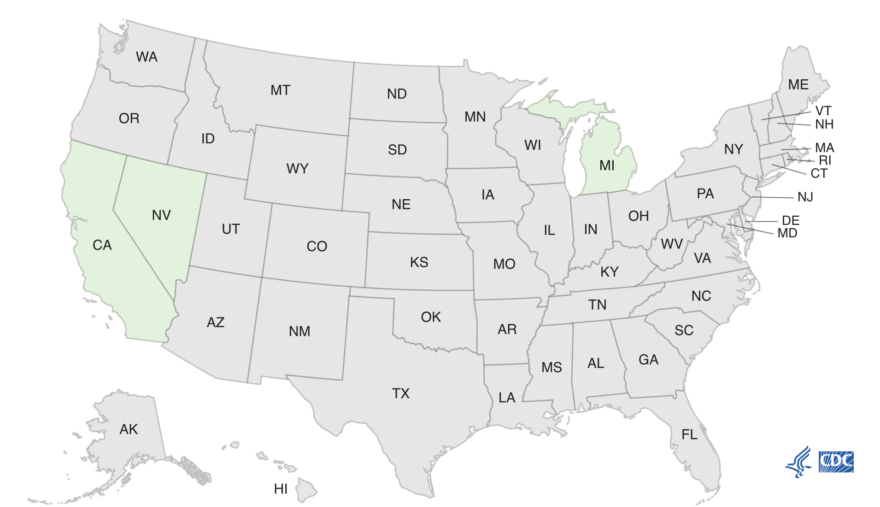
Since the last update on November 22, 2022, one more illness has been linked to this outbreak. As of January 18, 2023, three people infected with the outbreak strains of Listeria have been reported from three states. Sick people’s samples were collected from October 3, 2022, to October 8, 2022.

Sick people range in age from 30 to 56 years, with a median of 42 years, and 66% are male. Two people are Hispanic, and one person is Asian. All three have been hospitalized, and no deaths have been reported.

Two sick people reported eating enoki mushrooms or eating at restaurants with menu items containing enoki mushrooms. One patient did not report eating enoki mushrooms but reported shopping at various Asian grocery stores.

FDA found the outbreak strains of Listeria in an import sample of Utopia Foods brand enoki mushrooms.

Previously, in December 2022, Missouri state officials conducted routine sampling and found Listeria in a sample of Utopia Foods brand enoki mushrooms. The Listeria found in this sample was not the outbreak strains, and it was not linked to any reported Listeria illness in the United States. On December 13, 2022, Utopia Foods recalled these enoki mushrooms. On January 13, 2023, Utopia Foods expanded their recall of enoki mushrooms.

Do not eat, sell, or serve recalled enoki mushrooms. CDC also advises people who are pregnant, aged 65 or older, or have a weakened immune system to not eat any raw enoki mushrooms, even if they are not recalled. Instead, cook enoki mushrooms thoroughly before eating.

USA -FDA – Core Investigation Table – Investigations of Foodborne Illness Outbreaks

FDA

What’s New

  • An outbreak advisory has been issued for the outbreak of Listeria monocytogenes linked to enoki mushrooms (reference #1127).

Hong Kong – Food Safety Tips for Chinese New Year

CFS

Choosing and handling Chinese New Year foods and snacks

While purchasing or preparing new year foods, purchase them from reputable retail outlets. Buy sweetened lotus seeds and pistachio with natural colour and avoid those looking extraordinarily white because they may have been bleached with chemicals. Avoid buying melon seeds that are too glossy as they may contain mineral oil, which may cause gastrointestinal discomfort.

You should check the expiry date before buying any prepackaged festive items like puddings, sesame balls and sweets, and make sure the packaging is intact. Note the hygienic condition of the shop and the food containers and the hygiene practices of the staff, when buying unpackaged items like crispy triangles, sweetened dried fruits and melon seeds.

After purchase, pre-cooked foods like puddings should be stored in the refrigerator as soon as possible and be consumed before the “use by” date shown on the package. Fried festive foods such as sesame balls and crispy triangles should be kept in air-tight containers and stored in the refrigerator or in a cool, dry place.

Melon seeds and nuts are often served during the Chines Year. However, these foods contain hard hulls. Cracking melon seeds and nuts with your own teeth can result in tooth damage. Use a seed or nut cracker instead. Nut are also often used in making Chinese New Year foods. Should you be allergic to nuts or have other food allergy , read food allergen information on food labels to identify if any food or food ingredients of your allergic concern are present in the food. Avoid the food or food ingredients which you are allergic to.

Keep poon choi at safe temperatures

Chinese New Year is a great time of year to have ‘winter warmers’ such as poon choi when we host large gatherings. These dishes are often prepared through bulk cooking ahead of time, due to the large number of portions required. Poon choi contains various food ingredients and requires complicated and long preparation procedures such as cutting, marinating, precooking and cooling and finally re-heating. If the food is left at room temperature for too long after precooking, foodborne pathogens can multiply and some can even produce heat-stable toxins which are not readily eliminable by reheating.

Therefore, it is important to store food properly by storing precooked ingredients at 4°C or below to prevent the formation of toxins, cool down the precooked ingredients by dividing into small portions, placing in shallow containers or placing in ice bath. Reheating foods thoroughly to the core temperature of at least 75°C or above. Keep hot food above 60°C if it is not consumed immediately. Do not leave reheated food at room temperature for long, and discard it if held at room temperature for more than four hours. Of note, heat from the heat source may not be evenly distributed in a large poon choi during reheating, therefore requiring more time to bring poon choi to a boil before eating.

Safe handling of leftovers

Large holiday meals could leave you with leftovers, such as rice cake and puddings, to dig in for days. For the sake of food safety, all perishables should be refrigerated within two hours of being cooked or cooled, and discard items that have been left out for longer than four hours. To minimise spoilage, leftovers should be kept in clean and airtight containers, and refrigerated within two hours of finishing preparation. All leftovers should be reheated thoroughly with the core temperature of food reaching at least 75°C, and they should only be reheated once. Take note of the expiry dates of the food items before consumption. Food beyond its “use by” date should be discarded while be wary of the quality of food beyond the “best before” date.

Stop eating and discard puddings or other food that are found mouldy or with an abnormal taste. Abnormal taste indicates that the puddings have perished due to improper or prolonged storage. Remember, a “sniff test” is not an appropriate method for testing if food is safe to eat, as food can look and smell fine even after the “use by” date has passed. Any leftovers that have been kept in the refrigerator for more than three days should be disposed.

Sweden – Salmonella Enteritidis (December 2022-)

Folkhalsomyndigheten

hazegg.jpg

Since the beginning of December 2022, 22 cases of illness infected with one and the same strain of Salmonella Enteritidis have been reported to the Public Health Authority. The infection is suspected to originate from eggs that have now been recalled.

At the end of December 2022, Salmonella Enteritidis was identified at a major Swedish egg producer, which has led to several recalls of fresh eggs.

Recalls of eggs – January 2023 (livsmedelsverket.se)

An outbreak of Salmonella Enteritidis involving 22 people from eleven different regions has now been identified and is being investigated. Since several of the sick have eaten dishes containing raw eggs from the now recalled batches, there are strong reasons to suspect a connection to the earlier Salmonella finding at the egg producer. The disease cases are aged 7-90 years (median=40 years), twelve of the cases are women and the illnesses occurred between December 7, 2022 and January 6, 2023 (see Figure 2023-01-18).

During the past ten days, a larger number of people with salmonella infection than usual have been reported. The Salmonella isolates from these disease cases have not yet been typed to determine the specific strain, but since several have stated consumption of products with raw eggs from suspected contaminated batches, there is a risk that the number of people identified as infected in the outbreak will increase.

Although because of the recalls there should be no contaminated eggs left in stores or in restaurants, it is possible that you may have eggs left at home from the recalled batches. Via the Swedish Food Agency’s website, you can find out who these lots are and what you should do with these eggs.

The outbreak is being investigated in collaboration between the Swedish Agency for Agriculture, the Swedish Food Agency, SVA, the Public Health Agency, regional infection control and other regional and local authorities.