Salmonella in chicken by-products from Belgium in the Netherlands
Salmonella in complete feed for dogs from the Netherlands in Belgium
Salmonella in dried horse lung for dogs from Austria in the Netherlands

Salmonella in chicken by-products from Belgium in the Netherlands
Salmonella in complete feed for dogs from the Netherlands in Belgium
Salmonella in dried horse lung for dogs from Austria in the Netherlands
Hospitals and homes are havens for germs and disease — but a well-regulated hot water system can prevent the spread of waterborne pathogens, including an emerging infectious disease problem from ‘superbugs’ which can be resistant to most antibiotics.
However, Flinders University experts warn that some drinking water treatment methods may be ineffective against some waterborne pathogens that pose a threat to immune-compromised individuals — and point-of-use devices such as taps and showerheads may create havens for these microorganisms to grow.
The elderly, newborns and those with compromised immune systems are especially vulnerable to waterborne infections. Numbers are rising of people with conditions such as advanced age, cancer and immunodeficiency issues who may be more at risk of ‘opportunistic premise plumbing pathogens’ (OPPP) infection.
Regular changes to tap and outlet filters, hot water service maintenance checks (for heat and pressure) and effective cleaning of shower and tap faucets are recommended for immune-compromised patients receiving healthcare at home or post-surgical management.
Healthcare at home has emerged as an alternative to extensive inpatient hospital stays — especially through the COVID-19 pandemic, to reduce the burden on the healthcare system and to support those with potential long term respiratory side effects.
“These measures can help reduce the risk of waterborne infections in home care, along with quality treatments of mains water to provide safe drinking water,” says lead researcher Claire Hayward, from Flinders University’s College of Science and Engineering.
A new study published in the journal Current Opinion in Infectious Diseases, by environmental health experts at Flinders University, found evidence of hospital water as a source of potential infection and even antimicrobial and multidrug resistant organisms.
“Biofilms formed on taps, showers, drains and other outlets provide an ideal niche to harbour these dangerous antibiotic resistant pathogens originating from the supply water or the human microbiota from washing contaminated hands,” says Ms Hayward.
OPPP infections such as Legionella pneumophila, Pseudomonas aeruginosa and Mycobacterium avium are a group of waterborne pathogens that are slowly receiving increased public health attention in infection control guidelines.
“However, drinking water as a source of healthcare-associated infections continues to be overlooked or underestimated in this monitoring,” Ms Hayward says.
The OPPP waterborne pathogens can be disinfectant resistant and persist in refuges with low nutrients, then form biofilms capable of supporting other clinically relevant pathogens such as Staphylococcus aureus, Enterobacteriaceae, Klebsiella pneumoniae and Escherichia coli.
Once these biofilms are established on plumbing surfaces, there are many ways for contamination and transmission. The design of outlet devices that result in splashing and aerosolising of water can also increase the risk of contaminating nearby areas.
“The rise of these resistant pathogens has been identified by the World Health Organization and US Centers for Disease Control and Prevention as one of the most significant threats to global public health,” says research co-author, Flinders University microbiology expert Professor Melissa Brown.
“While the COVID-19 pandemic has increased the use of disinfectants and sanitisers, particularly in healthcare facilities, these antiseptic soaps do not tackle what’s going on behind the scenes in the water supply pipes and faucets,” she says.
The researchers recommend broad, universal surveillance guidelines to understand the role of drinking water and water-related devices to reduce healthcare associated infections and the rise of possible antimicrobial resistance that poses a threat to at risk individuals in residential and healthcare settings.
Posted in Contaminated water, Decontamination Microbial, Food Micro Blog, Food Microbiology, Food Microbiology Blog, Food Microbiology Research, Food Pathogen, microbial contamination, Microbiological Risk Assessment, Microbiology, Microbiology Investigations, Microbiology Risk, Pathogen, pathogenic, Research, Water, water microbiology, Water Safety
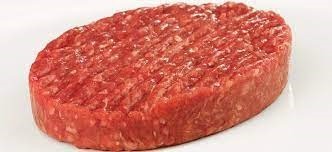
| Batch | ||
|---|---|---|
| GROUND BEEF STEAK sold at the butcher’s stand between 07/18/22 and 07/27/22 | ||
Posted in food contamination, food handler, Food Hazard, Food Hygiene, Food Inspections, Food Micro Blog, Food Microbiology, Food Microbiology Blog, Food Microbiology Testing, Food Pathogen, food recall, Food Safety, Food Safety Alert, Food Safety Management, Food Testing, Listeria, Listeria monocytogenes
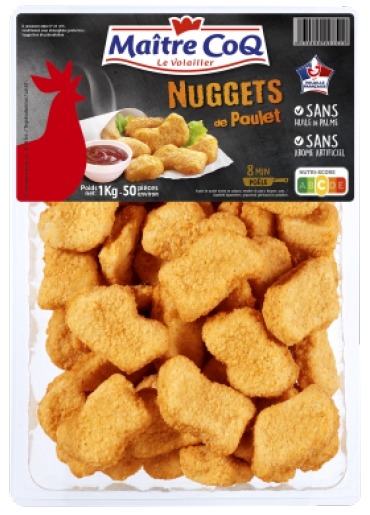
| GTIN | Batch | Date |
|---|---|---|
| 3230890027529 | 2P22201 | Use-by date 08/12/2022 |
Posted in food contamination, food handler, Food Hazard, Food Hygiene, Food Inspections, Food Micro Blog, Food Microbiology, Food Microbiology Blog, Food Microbiology Research, Food Microbiology Testing, Food Pathogen, food recall, Food Safety, Food Safety Alert, Food Safety Management, Food Testing, Listeria, Listeria monocytogenes
An additional 200 outbreaks were recorded in Belgium in 2021 versus the year before, according to the Federal Agency for the Safety of the Food Chain (FASFC).
There was a significant increase in the number of food poisoning outbreaks from 333 in 2020 to 547 in 2021. The number of people affected in them went from 1,262 with 27 hospitalizations and two deaths to 2,070 sick, 78 hospitalizations but no deaths in 2021.
FASFC, also known as AFSCA and FAVV, said it was important to remember 2020 was an exceptional year because of the closure of many food businesses caused by COVID-19 related restrictions.
Figures for the past year are still slightly lower than 2019, when 571 outbreaks were recorded and 2,457 people were affected.
The agent was unknown in 512 outbreaks with almost 1,700 illnesses in 2021, according to data from Sciensano, the national public health institute.
Read more at the link above.
Posted in food bourne outbreak, Food Illness, Food Micro Blog, Food Microbiology, Food Microbiology Blog, Food Microbiology Research, Food Microbiology Testing, Food Poisoning, Foodborne Illness, foodborne outbreak, foodbourne outbreak, Illness, microbial contamination, Microbiological Risk Assessment, Microbiology, Microbiology Investigations, Microbiology Risk, outbreak
| Date Posted |
Ref | Pathogen or Cause of Illness |
Product(s) Linked to Illnesses (if any) |
Total Case Count |
Status |
| 7/27/
2022 |
1084 | Cyclospora | Not Yet Identified | 51 | Active |
| 6/29/
2022 |
1076 | Not Yet Identified | Frozen Food | See Outbreak Advisory |
Active |
| 6/22/
2022 |
1075 | Salmonella Braenderup |
Not Yet Identified | 70 | Active |
| 6/22/
2022 |
1072 | Salmonella Paratyphi B var. L(+) tartrate+ |
Not Yet Identified | 14 | Active |
| 6/15/
2022 |
1070 | Listeria monocytogenes |
Not Yet Identified | 12 | Active |
| 6/8/
2022 |
1068 | E. coli O157:H7 |
Not Identified | 10 | Closed |
| 6/1/
2022 |
1066 | Hepatitis A Virus | Strawberries | See Outbreak Advisory |
Active |
| 5/25/
2022 |
1067 | Salmonella Senftenberg |
Peanut Butter | See Outbreak Advisory | Closed |
| 4/20/
2022 |
1064 | Not Yet Identified |
Dry Cereal | 558 adverse event reports |
Active |
| 4/13/
2022 |
1057 | Listeria monocytogenes |
Ice Cream | See Outbreak Advisory | Active |
| 3/30/
2022 |
1060 | None Identified |
Meal Replacement Drink |
6 adverse event reports |
Closed |
| 3/16/
2022 |
1055 | Salmonella Saintpaul |
Not Identified | 60 | Closed |
| 2/17/
2022 |
1056 | Cronobacter sakazakii |
Powdered Infant Formula |
See Advisory |
Active (IMG) |
| 2/9/
2022 |
1040 | Listeria monocytogenes |
Not Identified | 20 | Closed |
| 2/2/
2022 |
1054 | Enteroinvasive E. coli O143:H26 |
Not Identified |
16 | Closed |
| 1/10/
2022 |
1050 | E. coli O121:H19 |
Romaine | 4 | Closed |
Posted in Cronobacter sakazakii, Cyclospora, E.coli O121, E.coli O157, E.coli O157:H7, FDA, Food Micro Blog, Food Microbiology, Food Microbiology Blog, Food Microbiology Testing, Hepatitis A, Listeria, Listeria monocytogenes, microbial contamination, Microbiological Risk Assessment, Microbiology, Microbiology Investigations, Microbiology Risk, O143:H26, Salmonella

Recalled Foods , Published: July 27, 2022
KURNOOL: As many as 40 students of a Mandal Parishad upper primary school fell sick after reportedly eating mid-day meal on Tuesday. The school is located at Chakrala village in Pathikonda mandal of Kurnool district.All the students were immediately admitted to the Pathikonda government hospital, where the condition of five was stated to be critical.
According to reports, the authorised agency served mid-day meal to the students as usual in the afternoon. Out of the total strength of 220, 160 students had their lunch at the school. Later, they developed stomach ache, vomiting and motions.
Samples of water and food were collected for lab testing.
FDA’s investigation is complete; CDC declares outbreak over; additional information forthcoming
The FDA, along with CDC and state and local partners, investigated a multistate outbreak of Salmonella Senftenberg infections linked to certain Jif brand peanut butter products produced at the J.M. Smucker Company facility in Lexington, Kentucky.
J.M. Smucker Company voluntarily recalled certain Jif brand peanut butter products that have the lot codes described below. Photo examples are included below.
The FDA is preparing a report to discuss findings and provide information to assist in future prevention efforts.
The affected recalled products should no longer be available for sale. However, the product has a long shelf life and could still be in consumers’ homes. Consumers, restaurants, and retailers should not eat, sell, or serve any recalled Jif brand peanut butter, including recalled products that contain the recalled Jif peanut butter. Consumers should also avoid feeding recalled peanut butter to pets or other animals, including wild birds.
For Consumers
Follow these steps:
If you are unsure what to do with your recalled product, you can call or email J.M. Smucker Company for more information:
The J.M. Smucker Co. Hotline: 800-828-9980
Website: jif.com/contact-usExternal Link Disclaimer
FDA recommends that if you have used the recalled Jif brand peanut butter that have lot code numbers 1274425 through 2140425 and the first seven digits end with 425, you should wash and sanitize surfaces and utensils that could have touched the peanut butter. If you or someone in your household ate this peanut butter and have symptoms of salmonellosis, please contact your healthcare provider.
For Retailers, Re-packers, and Manufacturers
In addition to the steps above, FDA recommends referring to the firm’s recall press for the UPC codes and other retailer information. Do not sell or serve recalled peanut butter or products containing recalled peanut butter.
Posted in food bourne outbreak, food contamination, food handler, Food Hazard, Food Hygiene, Food Illness, Food Inspections, Food Micro Blog, Food Microbiology, Food Microbiology Blog, Food Microbiology Research, Food Microbiology Testing, Food Pathogen, food recall, Food Safety, Food Safety Alert, Food Safety Management, food safety training, Food Testing, Foodborne Illness, foodborne outbreak, foodbourne outbreak, Illness, outbreak, Salmonella, Salmonella Peanut Butter
ARRIVÉ SAS is recalling the following product:
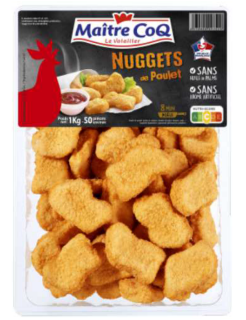
| Last name | Chicken nuggets |
| Mark | Master Rooster |
| Unity | 1kg |
| bar code | 3230890027529 |
| Use-by date (DLC) | 08/12/2022 |
| Batch | 2P22201 |
Danger : Presence of potential Listeria monocytogenes
Listeria monocytogenes can cause fever, headache and gastroenteritis. Vulnerable people such as immunocompromised and elderly people and young children may present with neurological symptoms due to meningitis. Pregnant women should also be especially alert to these symptoms. Gastroenteritis can appear between a few hours and 3 days after consumption, while neurological symptoms can only appear after 3 months. People who have consumed these products and have these symptoms are invited to consult a doctor and report this consumption to him.
Sale in Luxembourg by: Cora
A sale by other operators cannot be excluded.
Information Source: Cora Recall Notification
Click to access nuggets-maitre-coq-fr.pdf
Communicated by: Government Commission for Quality, Fraud and Food Safety .
Posted in food contamination, food handler, Food Hazard, Food Hygiene, Food Inspections, Food Micro Blog, Food Microbiology, Food Microbiology Blog, Food Microbiology Testing, Food Pathogen, food recall, Food Safety, Food Safety Alert, Food Safety Management, Food Testing, Listeria, Listeria monocytogenes

 FoodWorld