Monthly Archives: August 2021

Research – Anonymous Whistleblower Food Safety Incident Report Site Launched

Quality Assurance Mag

VIENNA — The Global Harmonization Initiative (GHI) announced the launch of the Whistleblower Food Safety Incident Report Site.

“Across the world, most food industry employees dare not report information about safety concerns externally because of the consequences of their employer finding out who they are. Some employees follow their conscience and the consequence is, that while saving people from harm, they often lose their job and may possibly suffer worse consequences. That is still the fate of many whistleblowers. For that reason, the GHI has developed an anonymous food safety incident reporting site. The emphasis is on anonymous and we have taken web-based privacy safeguards to ensure this. While filling in the online report, the reporter is also frequently reminded not to reveal anything that would make it possible to identify themselves” said Huub Lelieveld, GHI president.

Currently available in English, the site will soon be made available in local languages, GHI said. All of the serious incident reports that GHI receives will be evaluated by a team of food safety experts. For those concerns that GHI confirms as what it called “serious” (i.e., that could cause serious harm to consumers), GHI will inform the local authorities within the country of interest and ask them to investigate. The site is being launched together with a social media awareness campaign for people working in the food and beverage industry, to report any serious safety concerns that they have.

Ireland – Legionnaires’ disease

HSE

CDC legionella

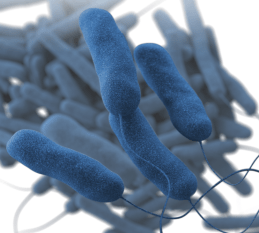
Legionnaires’ disease is a lung infection you can catch by inhaling droplets of water from things like air conditioning or hot tubs. It’s uncommon but can be very serious.

How you get Legionnaires’ disease

You can catch Legionnaires’ disease if you breathe in tiny droplets of water containing bacteria that cause the infection.

It’s usually caught in places like hotels, hospitals or offices where the bacteria have got into the water supply. It’s very rare to catch it at home.

You can catch it from things like:

  • air conditioning systems
  • spa pools and hot tubs
  • showers, taps and toilets

You cannot usually get it from:

  • drinking water containing the bacteria
  • other people with the infection
  • places like ponds, lakes and rivers

When to get medical help

Urgent advice:Get advice from your GP now if

you have a bad cough and:

  • it does not go away
  • you cannot breathe properly
  • you have severe chest pain
  • you have a high temperature or feel hot and shivery
  • you feel like you have severe flu

These could be symptoms of Legionnaires’ disease.

You should contact your GP and tell them where you have been in the past 10 days, such as if you stayed in a hotel, spa or hospital. Your GP will assess and advise you.

If you are unable to contact a GP and you are very unwell, you may need to go to your emergency department (ED).

Research – Fate of Salmonella Typhimurium and Listeria monocytogenes on Whole Papaya during Storage and Antimicrobial Efficiency of Aqueous Chlorine Dioxide Generated with HCl, Malic Acid or Lactic Acid on Whole Papaya

MDPI

Papaya-associated foodborne illness outbreaks have been frequently reported worldwide. The goal of this study was to evaluate the behavior of Salmonella Typhimurium and Listeria monocytogenes on whole papaya during storage and sanitizing process. Fresh green papayas were inoculated with approximately 7 log CFU of S. Typhimurium and L. monocytogenes and stored at 21 or 7 °C for 14 days. Bacteria counts were determined on day 0, 1, 7, 10 and 14. Fresh green papayas inoculated with approximately 8 log CFU of the bacteria were treated for 5 min with 2.5, 5 and 10 ppm aqueous chlorine dioxide (ClO2). The ClO2 solutions were generated by mixing sodium chlorite with an acid, which was HCl, lactic acid or malic acid. The detection limit of the enumeration method was 2.40 log CFU per papaya. At the end of storage period, S. Typhimurium and L. monocytogenes grew by 1.88 and 1.24 log CFU on papayas at 21 °C, respectively. Both bacteria maintained their initial population at inoculation on papayas stored at 7 °C. Higher concentrations of ClO2 reduced more bacteria on papaya. 10 ppm ClO2, regardless the acid used to generate the solutions, inactivated S. Typhimurium to undetectable level on papaya. 10 ppm ClO2 generated with HCl, lactic acid and malic acid reduced L. monocytogenes by 4.40, 6.54 and 8.04 log CFU on papaya, respectively. Overall, ClO2 generated with malic acid showed significantly higher bacterial reduction than ClO2 generated with HCl or lactic acid. These results indicate there is a risk of survival and growth for S. Typhimurium and L. monocytogenes on papaya at commercial storage conditions. Aqueous ClO2 generated with malic acid shows effectiveness in inactivating the pathogenic bacteria on papaya. View Full-Text

Research – Reduction of Salmonella enterica in Turkey breast slices kept under aerobic and vacuum conditions by application of lactic acid, a bacteriophage, and ultrasound

Wiley Online

The effects of different antimicrobial applications against Salmonella enterica subs. enterica DSM 18522 strain in turkey breast slices kept under either aerobic or anaerobic-vacuum conditions for different keeping times of 30 min and 6 hr at 4°C were evaluated. In this study, it was aimed to compare chemical (lactic acid, 3%), biopreservation (bacteriophage Felix O1, 1 × 108 pfu/ml), and physical (ultrasound, 20 kHz) antimicrobial applications in reducing a high initial S. enterica DSM 18522 count (~6 log cfu/g) in turkey breast slices at different conditions. The highest reduction in S. enterica DSM 18522 counts (1.62 log units) was observed in turkey breast slices kept under aerobic condition for 6 hr after being treated with lactic acid. The bacteriophage application significantly (p < .05) reduced S. enterica DSM 18522 counts 1.22 and 1.41 log cfu/g in turkey breast slices that kept under aerobic and anaerobic-vacuum conditions for 30 min, respectively. There was no significant effect of keeping time under aerobic or anaerobic-vacuum conditions on S. enterica DSM 18522 counts in turkey breast slices treated with bacteriophage or ultrasound. However, the reduction of S. enterica DSM 18522 counts in turkey breast slices treated with lactic acid increased with keeping time under aerobic or anaerobic-vacuum conditions. Regardless of keeping conditions, the lowest reductions in S. enterica DSM 18522 counts were detected in turkey breast slices treated with ultrasound. The results of this study show that lactic acid and bacteriophage applications are effective in reducing S. enterica DSM 18522 counts in turkey breast slices.

Research – Effects of Combined Aerosolization with Ultraviolet C Light-Emitting Diode on Enterohemorrhagic Escherichia coli and Staphylococcus aureus Attached to Soft Fresh Produce

MDPI

Washing soft fresh produce such as strawberries, baby leaves, and sliced onions with sanitizing agents is challenging due to their fragile texture. Thus, treatments like aerosolization using slightly acidic electrolyzed water (SAEW) and ultraviolet C light-emitting diode (UVC LED) irradiation may be good alternatives. In the present study, the reduction effects of a combined treatment of aerosolization using SAEW and UVC LED irradiation on enterohemorrhagic Escherichia coli (EHEC) and Staphylococcus aureus attached to strawberries, baby leaves, and sliced onions were investigated. The behaviours of EHEC and S. aureus, moisture loss, colour measurement, and visual appearance were also analyzed at 10 and 15 °C for 7 days. The reduction effect of the combined treatment with 100 SAEW and UVC LED was higher (0.53–0.92 log CFU g−1) than a single aerosolization treatment (0.11–0.41 log CFU g−1), regardless of samples or pathogens. A greater effect on EHEC and S. aureus reduction was observed in strawberries (0.74 and 0.92 log CFU g−1) than in baby leaves (0.62 and 0.53 log CFU g−1) and sliced onions (0.55 and 0.62 log CFU g−1). The combined treatment further reduced the EHEC and S. aureus populations in strawberries during 7 days of storage at 10 and 15 °C. However, the EHEC and S. aureus populations were maintained in baby leaves and sliced onions at 10 °C for 7 days. Additionally, the greatest effect on the maintenance of colour and appearance was obtained in the combined treatment. Since the combined treatment reduces EHEC and S. aureus populations and preserves visual quality, it could be expected to extend the shelf life of soft fresh produce at the retailer stage of the supply chain. View Full-Text

Research – Foodborne Botulism in Ukraine from 1955 to 2018

Mary Anne Liebert

kswfoodworld

We aim to identify possible biological, social, and economic factors that could influence the prevalence of foodborne botulism (FB). The objective of this article is to assess epidemiological peculiarities of FB in Ukraine from 1955 to 2018 using national epidemiological surveillance data. This article presents an epidemiological descriptive population-based study of the epidemiology of FB using correlation analysis. From 1955 to 2018, 8614 cases of botulism were recorded in Ukraine causing 659 deaths. The distribution of types of botulism toxins is represented by type A (7.97%), B (59.64%), suspected as C (0.56%), E (25.47%), others (5.33%), and unidentified (1.04%). From 1990 to 2015, the rate correlation between Human Development Index (HDI) and incidence of botulism was −0.75 ± 0.20. Homemade canned meat and fish continue to be the leading causes of botulism in Ukraine. Cases related to commercial food were rare or absent, but in recent years (2017–2018), their percentage has increased to 32.56%. The HDI and botulism have an inverse mathematical correlation and predictable logical relationship: with an HDI increase, the incidence of FB decreased. In general, food botulism in Ukraine is related to traditional socioeconomic factors related to cultural food habits. In the face of declining living standards and uncertainty that food products will be physically or economically available, homemade preservation increases. Home food preservation is a major cause of botulism in Ukraine. The elimination of FB is possible in Ukraine only with the complete cessation of home canning and state control over the manufacture and sale of commercial canned products.

Research – Fate of Salmonella and Enterohemorrhagic Escherichia coli on Wheat Grain

Journal of Food Protection

Wheat flour has been connected to outbreaks of foodborne illnesses with increased frequency in recent years, specifically, outbreaks involving Salmonella enterica and enterohemorrhagic Escherichia coli (EHEC). However, there is little information regarding the survival of these pathogens on wheat grain during long-term storage in a low-moisture environment. This study aims to evaluate the long-term survival of these enteric pathogens on wheat grain over the course of a year. Hard red spring wheat was inoculated with strains of four serovars of Salmonella enterica (Enteritidis , Agona, Tennessee, and Montevideo) and six serotypes of EHEC (O157:H7, O26:H11, O121:H19, O45:NM, O111:H8, and O103:H2) in triplicate, sealed in Mylar bags to maintain the water activity, and stored at room temperature (22 ± 1°C). The survival of each pathogen was evaluated by plating onto differential media . Viable counts of strains from all four serovars of Salmonella (Enteritidis , Agona, Tennessee, and Montevideo) were detected on wheat grain stored at room temperature (22 ± 1°C) for the duration of the study (52 weeks). Viable counts of strains from EHEC serotypes O45:NM, O111:H8, and O26:H11 were only detected for 44 weeks and strains from serotypes O157:H7, O121:H19, and O103:H2 were only detected for 40 weeks until they passed below the limit of detection (2.0 log CFU/g). D -values were found to be significantly different between Salmonella and EHEC (adj. p ≤ 0.05) with Salmonella D -values ranging from 22.9 ± 2.2 to 25.2 ± 1.0 weeks and EHEC D -values ranging from 11.4 ± 0.6 to 13.1 ± 1.8 weeks. There were no significant differences amongst the four Salmonella strains or amongst the six EHEC strains (adj. p > 0.05). These observations highlight the wide range of survival capabilities of enteric pathogens in a low-moisture environment and confirm these pathogens are a food safety concern when considering the long shelf life of wheat grain and its products.

Research – Application of chitosan microparticles against human Norovirus

Journal of Food Protection

Human norovirus (HuNoV) is the leading causative agent of foodborne outbreaks and is associated with the second most prevalent cause of waterborne infections in the United States. The goal of this research was to investigate the antiviral activity of chitosan microparticles (CM) against HuNoV GII.4 Sydney and its cultivable surrogate, Tulane virus (TuV), in suspensions mimicking fecally-contaminated water. CM was prepared by crosslinking chitosan molecules with sodium sulfate, and then its anti-noroviral activity was assessed using infectivity assay on TuV and RT-qPCR on TuV and HuNoV. A 3% CM suspension in PBS (pH 7.2) showed binding to TuV particles but with a negligible impact on virus infectivity (p>0.05). TuV and HuNoV suspended in fecal suspensions showed a 1.5-log10 reduction in genomic copies per ml following a 10-min contact time (p<0.05). Despite the negligible impact on viral infectivity, CM moderately binds to virus particles and helps purify environmental water by removing infectious virus particles. In this study, TuV served as a suitable surrogate for HuNoV by showing a similar log10 reduction in fecal suspension. Overall, the outcomes of thisresearch highlight the potential application of CM as a novel, natural treatment to minimize the spread of water-transmitted viral pathogens.


Research – FAO/WHO Joint Expert Meeting on Microbiological Risk Assessment (JEMRA): Twenty Years of International Microbiological Risk Assessment

MDPI

Since the late 1990s, the Food and Agriculture Organization (FAO) of the United Nations and the World Health Organization (WHO) has convened expert meetings and consultations to address the microbiological risk assessment (MRA). These meetings are held to provide scientific advice in response to requests for from Codex Alimentarius, the international food standard-setting body. Individuals participate in the FAO/WHO joint expert meetings on the microbiological risk assessment (JEMRA) in their personal capacity, as technical experts, yet bring diverse regional and national perspectives that contribute to practical applications, particularly for low- and middle-income countries (LMICs). Over 370 experts from around the globe have contributed to the meeting outcomes that have been published in nearly 40 monographs in the FAO/WHO microbial risk assessment (MRA) series, addressing particular food commodities with microbial hazard(s) combinations or a methodological aspect of microbial risk assessment. FAO/WHO MRA series inform Codex decision-making for the development of international standards for safe food and faire trade in food products; are consulted by risk managers such as food safety authorities and food business operators to make science-based decisions; and are used by academics to advance food safety research and educate the next generation of food safety professionals. View Full-Text

Research – Interaction of Escherichia coli with growing salad spinach plants

PubMed

In this study, the interaction of a bioluminescence-labeled Escherichia coli strain with growing spinach plants was assessed. Through bioluminescence profiles, the direct visualization of E. coli growing around the roots of developing seedlings was accomplished. Subsequent in situ glucuronidase (GUS) staining of seedlings confirmed that E. coli had become internalized within root tissue and, to a limited extent, within hypocotyls. When inoculated seeds were sown in soil microcosms and cultivated for 42 days, E. coli was recovered from the external surfaces of spinach roots and leaves as well as from surface-sterilized roots. When 20-day-old spinach seedlings (from uninoculated seeds) were transferred to soil inoculated with E. coli, the bacterium became established on the plant surface, but internalization into the inner root tissue was restricted. However, for seedlings transferred to a hydroponic system containing 10(2) or 10(3) CFU of E. coli per ml of the circulating nutrient solution, the bacterium was recovered from surface-sterilized roots, indicating that it had been internalized. Differences between E. coli interactions in the soil and those in the hydroponic system may be attributed to greater accessibility of the roots in the latter model. Alternatively, the presence of a competitive microflora in soil may have restricted root colonization by E. coli. The implications of this study’s findings with regard to the microbiological safety of minimally processed vegetables are discussed.