Monthly Archives: June 2019

USA – Outbreak of Salmonella Infections Linked to Karawan brand Tahini

CDC

This outbreak appears to be over, but recalled tahini products have a long shelf life and may still be in people’s homes. Consumers unaware of the recall could continue to eat these products and potentially get sick. Visit the FDA websiteexternal iconfor a full list of recalled products.

Final Outbreak Information
Illustration of a megaphone.
  • As of June 26, 2019, this outbreak appears to be over.
  • A total of 6 people infected with the outbreak strain of Salmonella Concord were reported from 3 states.
    • Illnesses started on dates ranging from March 9, 2019, to May 2, 2019.
    • One hospitalization and no deaths were reported.
  • Epidemiologic, traceback, and laboratory evidence indicated that Karawan brand tahini products were the likely source of this outbreak.
  • Do not eat, sell, or serve recalled tahini that is labeled as Karawan Tahini, El-Karawan Tahin,i or SoCo Tahini. Do not eat, sell, or serve products made with recalled tahini, such as hummus.
  • This outbreak was not related to another recent multistate outbreak of Salmonella Concord infections linked to tahini. Ill people in the previous outbreak were infected with a different outbreak strain of Salmonella Concord.

Research -Insights into Psychrotrophic Bacteria in Raw Milk: A Review

Journal of Food Protection

ABSTRACT

Supply of high-quality dairy products is the goal of every dairy producer throughout the world. However, psychrotrophic bacteria in raw milk, generally comprising bacterial species of the genera Pseudomonas, Acinetobacter, Aeromonas, Serratia, Bacillus, Lactococcus, Microbacterium, and Staphylococcus, are of special concern to the dairy industry because they can produce heat-stable enzymes. These enzymes may withstand various heat treatments during dairy processing, causing quality defects over the product storage period. The levels and diversity of psychrotrophic bacteria in raw milk are tightly linked to natural habitats, milking practices, and hygiene practices of farms in different countries. Most psychrotrophic bacteria can form biofilms on various milk storage and processing equipment, which serve as persistent sources of microbial contamination due to their biotransfer potential. A comprehensive review of the diversity of psychrotrophic bacteria in raw milk, the spoilage potential of these bacteria, the specific technological problems caused by biofilms and heat-resistant enzymes, and potential strategies for controlling dairy spoilage starting at the farm level is needed for improving our understanding of these spoilage bacteria.

HIGHLIGHTS
  • Levels of psychrotrophic bacteria in raw milk are affected by to habitats and farm hygiene.

  • Biofilms formed by psychrotrophic bacteria are persistent sources of contamination.

  • Heat-stable enzymes produced by psychrotrophic bacteria compromise product quality.

  • Various strategies are available for controlling dairy spoilage caused by psychrotrophic bacteria.

USA – Norovirus sickens dozens in outbreak linked to bar drinks

Outbreak News Today norovirus-1080x655

Officials with the Benton-Franklin Health District in Kennewick, WA reported on the investigation of a norovirus outbreak linked to a local restaurant.

According to the timeline, health officials received the first reports over President’s Day weekend and at the conclusion of the investigation, 26 patrons of 3 Eyed Fish, a wine bar and restaurant in Richland were reported as infected.

In addition, the investigation revealed that drink garnishes were sometimes handled with bare hands, after interviewing bartenders.The outbreak was linked to poor food handling practices by an infectious bartender. During the investigation, it was noted that the infectious employee who worked the night most ill patrons ate, returned to work less than 12 hours after they had an episode of diarrhea that same weekend.

Research – Organic sanitizer kills bacteria on fresh veggies

Fresh Plaza

Food scientists have found that a combination of lactic acid with food grade sodium hypochlorite is an effective sanitizer to process fresh organic vegetables.

Organic foods like vegetable sprouts are getting more popular as people become more aware of the potential benefits to their health and well being. However, food borne pathogen infection caused by contaminated vegetables during each stage of cultivation and the post-harvest process is a major issue, particularly for fresh organic vegetables.

A research team led by Yang Hongshun from the Food Science and Technology Programme at the chemistry department at the National University of Singapore has found that a combination of organic acid (lactic acid, 2 percent v/v) and food grade sodium hypochlorite (4 mg/L) is an effective sanitizer for organic food products. The team tested the sanitization ability of different combinations of electrolyzed water, sodium hypochlorite, and organic acids on organic broccoli sprouts containing a type of bacteria, Listeria innocua.

USA -Missouri Department of Health and Senior Services and Grant’s Farm in St. Louis Looking into Recent Illnesses Among Visitors – STEC E.coli

DHSS 19243

JEFFERSON CITY, MO — The Missouri Department of Health and Senior Services (DHSS), in collaboration with the Missouri Department of Agriculture (MDA), the United States Department of Agriculture (USDA) and local health agencies in the St. Louis metro area, is investigating five Shiga toxin-producing E. coli (STEC) cases that have visited Grant’s Farm since late May 2019. The investigation is ongoing and is focused on determining the specific risk that may have led to the illnesses.

MDA and DHSS have provided preliminary recommendations to Grant’s Farm to help remind patrons of the importance of handwashing after direct contact with animals. Grant’s Farm also is actively participating in the investigation by allowing animal specimens to be collected by investigators. This is in addition to routine visits from state inspectors to help supervise the health of the animals at the park.

UK – Update on investigation into food supply chain linked to Listeria

FSA

Update on investigation into food supply chain linked to listeria

Investigation continuing into foods linked to listeria infections in hospitals.
26 June 2019

The Food Standards Agency is leading the investigation into the food supply chain to identify the source of the listeria strain linked to the recent hospital cases with the support of Food Standards Scotland and local authorities. Products directly linked to the cases were identified and these were withdrawn from the food chain on the same day as the link was established. This strain was traced back to a producer which withdrew all their ready-to-eat foods on a precautionary basis. Investigations are continuing to try and determine the point of origin of the listeria strain.

  • All confirmed cases to date have been linked to sandwiches produced by The Good Food Chain. The Good Food Chain voluntarily ceased production on 5 June and withdrew all products which remained in date.  Evidence suggests that all individuals ate the affected products in hospitals before the withdrawal took place on the 25 May. No cases of listeriosis linked to this outbreak have been confirmed in people outside of hospital settings and therefore the risk to the public remains low.
  • The same strain of listeria was identified in meat produced by North Country Cooked Meats used by The Good Food Chain. North Country Cooked Meats, and their distributor North Country Quality Foods, voluntarily stopped distributing on 3 June and a withdrawal of all ready to eat products has been carried out on a precautionary basis. The products supplied by North Country Quality Foods to other businesses have not led to any reported cases to date. Both North Country Cooked Meats and North Country Quality Foods remain closed.
  • The investigation is now focused on identifying the source of the listeria infections. It is examining the supply chain of North Country Cooked Meats and looking at historical detections of listeria, including those within permitted legal limits. Further testing of products and environments for listeria is also being conducted to identify whether a match to the outbreak strain can be found.

Following extensive testing and verification by Stafford Borough Council, The Good Food Chain is no longer part of the ongoing investigation into the source of the outbreak.  With the investigation now focusing on suppliers further up the food supply chain, The Good Food Chain can restart production.

However, to ensure public health continues to be protected, an enhanced set of food safety measures are now in place and the local authority will continue to carry out strict monitoring and oversight of the company for the next three months, with further supervision to be determined by inspection findings. The business will have to reapply for accreditation before it can directly supply the NHS again.

These measures include:

  • The business has been verified as meeting food safety legislation and as following best practice for manufacturing, cleaning and environmental standards.
  • The site has undergone a comprehensive deep-cleaning process. Extensive environmental swabbing indicates the site is clear of potential sources of any strain of Listeria monocytogenes, including the outbreak strain.
  • The food safety hazard plan has been reviewed and will continue to be verified to ensure it is fit for purpose once production restarts.
  • Enhanced oversight will be carried out by Stafford Borough Council which includes additional product sampling, environmental testing and enhanced incoming supply verification.


Dr Colin Sullivan, Chief Operating Officer at the FSA said:

“This is a complex investigation, but we have worked to swiftly identify and remove from the food chain the products linked to these hospital cases.

“Our investigations are now focused on where the outbreak strain originated from and subject to strict verification and ongoing monitoring by Stafford Borough Council, The Good Food Chain company is now able to restart production.

“The company will be carefully monitored to ensure public health continues to be protected.

“Our thoughts remain with the families of those who have passed away.”

Councillor Jonathan Price, the Cabinet Member for Environment at Stafford Borough Council, said:

“We have worked tirelessly with the Good Food Chain and are reassured that their manufacturing processes, cleaning procedures and environmental standards meet those we expect for producing ready to eat foods.”

“But our work does not stop there as the health of the public is our top priority.

“So we will continue collecting environmental swabs from surfaces at the business, taking samples of food, and working with The Good Food Chain to ensure they have control measures in place to thoroughly assess those supplying products to them.”

Public Health England (PHE) and Health Protection Scotland (HPS) are testing all recent samples of listeria to check if they are linked to this outbreak.

For more details see PHE update: www.gov.uk/government/news/listeria-cases-being-investigated.

USA – Multistate Outbreak of Gastrointestinal Illnesses Linked to Oysters Imported from Mexico is Over

CDC

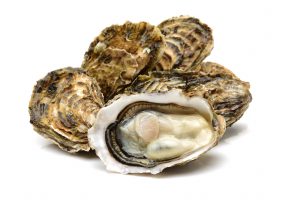
Photo of oysters.

Image CDC

This outbreak appears to be over. Consumers, restaurants, and retailers should always handle and cook oysters properly. Get CDC’s tips for preventing foodborne illness from oysters and other shellfish.

Final Outbreak Information
Illustration of a megaphone.
  • As of June 21, 2019, this outbreak appears to be over.
  • Sixteen ill people were reported from five states.
    • Illnesses started on dates ranging from December 16, 2018, through April 17, 2019.
    • Two people were hospitalized. No deaths were reported.
  • Laboratory testing on samples from patients identified multiple pathogens causing infections. Some people were infected with more than one pathogen.
  • Case counts by pathogen or illness:
    • Four cases of Shigella flexneri infection
    • Two cases of Vibrio parahaemolyticus infection
    • One case of Vibrio parahaemolyticus and Shiga toxin-producing Escherichia coli (STEC) non-O157 coinfection
    • One case of Vibrio parahaemolyticus and Shigella flexneri coinfection
    • One case of Shigella flexneri and Campylobacter lari coinfection
    • One case of Vibrio albensis infection
    • One case of norovirus genogroup 1 infection
    • One case of infection with Vibrio of unknown species
    • Four cases of illness without a pathogen identified
  • Epidemiologic and traceback evidence indicated that raw oysters harvested from Estero El Cardon in Baja California Sur, Mexico, were the likely source of this outbreak.
  • On May 6, 2019, one U.S. distributor of oysters harvested from Estero El Cardon issued a voluntary recallexternal icon.
  • At the request of Mexico’s public health authorities, all raw oysters distributed from Estero El Cardon from the last week of April 2019 through the first week of May 2019 were recalled pdf icon[PDF – 474 KB]external icon.


USA – Mai Tai Restaurant on Presque Isle with Hepatitis A issue

Food Poison Journal

The Maine Center for Disease Control and Prevention has identified a case of acute hepatitis A viral infection in Presque Isle.

Close contacts at risk are currently being notified and that the only potential risk to the public at this time involves those who ate at the Mai Tai Restaurant, CDC officials stated in a Friday press release. The individual that has acquired hepatitis A served food and drinks at the restaurant while infectious on May 26 and June 2.

Maine CDC recommends that anyone who ate or worked at the Mai Tai Restaurant in Presque Isle between 11 a.m. and 4:30 p.m. on June 2 receive the hepatitis A vaccine by Sunday, June 16, as there is a 14-day window during which prophylaxis is effective after exposure.

Anyone who visited the restaurant between 11 a.m. and 4:30 p.m. on May 26 is outside the window for which prophylaxis is recommended but should watch for symptoms and seek medical attention if symptoms develop.

USA – Seneca Harbor Station restaurant in Watkins Glen has a Hepatitis A problem

Food Poison Journal

Schuyler County health officials have issued an alert letting people know if they dined at Seneca Harbor Station restaurant in Watkins Glen between June 11 and 21 they could have been exposed to hepatitis A.

Most people do not get sick when an employee at a restaurant has hepatitis A, but there is still a risk, health officials said. People who may have been exposed are urged to receive treatment to prevent infection.

Schuyler County Public Health is advising anyone who ate food at the restaurant between June 12 and June 21 to receive a free hepatitis A vaccine during one of the upcoming vaccine clinics.

USA – Cartersville Willy’s Mexicana Grill has a Hepatitis A problem

Food Poison Journal

The Bartow County Health Department is warning people after a restaurant worker tested positive for Hepatitis A.

It happened at a Willy’s Mexicana Grill on Main Street in Cartersville.

The health department is offering free Hepatitis A immunizations.

Anyone who ate there between May 31st and June 17th could be at risk. They are being asked to:

  • Monitor their health for symptoms of hepatitis A infection up to 50 days after exposure.
  • Wash their hands with soap and warm water frequently and thoroughly, especially after using the bathroom and before preparing food.
  • Stay at home and contact their healthcare provider immediately if symptoms of hepatitis A infection develop.

Hepatitis A is a viral infection that affects the liver.