Sweden – Pandalus recall crayfish – may contain Salmonella

Livsmedelsverket

2022-08-31

Pandalus is recalling crayfish produced in China during 2022 as these may contain salmonella.

Canada – Enoki Mushroom recalled due to Listeria monocytogenes

CFIA

Summary

Product
Enoki Mushroom
Issue
Food – Microbial Contamination – Listeria
What to do

Do not consume, use, sell, serve, or distribute recalled products

Affected products

Issue

The affected product is being recalled from the marketplace due to possible Listeria monocytogenes contamination.

The recalled product has been sold in British Columbia.

What you should do

  • If you think you became sick from consuming a recalled product, contact your healthcare provider
  • Check to see if you have recalled products
  • Do not consume, serve, use, sell, or distribute recalled products
  • Recalled products should be thrown out or returned to the location where they were purchased

Food contaminated with Listeria monocytogenes may not look or smell spoiled but can still make you sick. Symptoms can include vomiting, nausea, persistent fever, muscle aches, severe headache and neck stiffness. Pregnant women, the elderly and people with weakened immune systems are particularly at risk. Although infected pregnant women may experience only mild, flu-like symptoms, the infection can lead to premature delivery, infection of the newborn or even stillbirth. In severe cases of illness, people may die.

Research – Persistence of Listeria monocytogenes ST5 in Ready-to-Eat Food Processing Environment

MDPI

Most human listeriosis is foodborne, and ready-to-eat (RET) foods contaminated by Listeria monocytogenes during processing are found to be common vehicles. In this study, a total of four L. monocytogens STs (ST5, ST121, ST120, and ST2) have been identified in two RTE food plants from 2019 to 2020 in Shanghai, China. The L. monocytogenes ST5 was predominant in one RTE food processing plant, and it persists in the RTE meat processing plant with continued clone transmission. The genetic features of the four STs isolates were different. ST5 and ST121 had the three genes clpL, mdrL, and lde; however, ST120 and ST2 had two genes except for clpL. SSI-1was present in ST5, ST121, and ST120. Additionally, SSI-2 was present only in the ST121 isolates. ST120 had all six biofilm-forming associated genes (actA, prfA, lmo0673, recO, lmo2504 and luxS). The ST2 isolate had only three biofilm-forming associated genes, which were prfA, lmo0673, and recO. The four ST isolates had different biofilm formation abilities at different stages. The biofilm formation ability of ST120 was significantly higher when grown for one day. However, the biofilm formation ability of ST120 reduced significantly after growing for four days. In contrast, the biofilm formation ability of ST5 and ST121 increased significantly. These results suggested that ST5 and ST121 had stronger ability to adapt to stressful environments. Biofilms formed by all four STs grown over four days can be sanitized entirely by a disinfectant concentration of 500 mg/L. Additionally, only ST5 and ST121 biofilm cells survived in sub-lethal concentrations of chlorine-containing disinfectant. These results suggested that ST5 and ST121 were more resistant to chlorine-containing disinfectants. These results indicated that the biofilm formation ability of L. monocytogenes isolates changed at different stages. Additionally, the persistence in food processing environments might be verified by the biofilm formation, stress resistance, etc. Alternatively, these results underlined that disinfectants should be used at lethal concentrations. More attention should be paid to ST5 and ST121, and stronger surveillance should be taken to prevent and control the clonal spread of L. monocytogenes isolates in food processing plants in Shanghai. View Full-Text

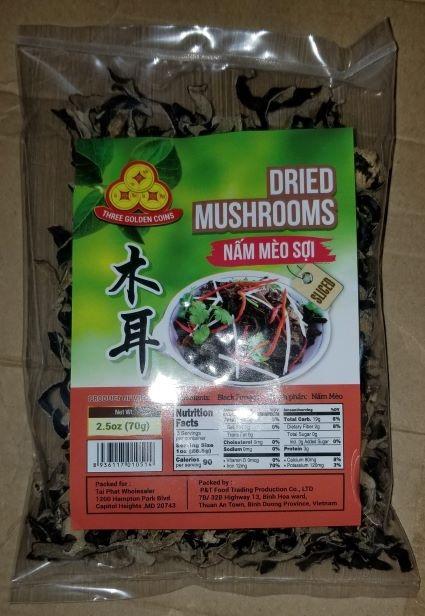
USA – Tai Phat Wholesalers, LLC Recalls “Three Coins Dried Mushrooms” Because of Possible Health Risk – Salmonella

FDA

1) Three Coins Dried Mushrooms Slices – Item #: 01051- Nam Meo Soi -S- 2.5 oz

Summary

Company Announcement Date:
FDA Publish Date:
Product Type:
Food & Beverages
Reason for Announcement:
Potential to be contaminated with Salmonella
Company Name:
Tai Phat Wholesalers, LLC
Brand Name:
Three Golden Coins
Product Description:
Dried whole or sliced mushrooms

Company Announcement

Tai Phat Wholesalers, LLC of Capitol Heights, MD is recalling 4 types of packages of its “Three Coins Dried Mushrooms” because they have the potential to be contaminated with Salmonella, an organism which can cause serious and sometimes fatal infections in young children, frail or elderly people, and others with weakened immune systems. Healthy persons infected with Salmonella often experience fever, diarrhea (which may be bloody), nausea, vomiting and abdominal pain. In rare circumstances, infection with Salmonella can result in the organism getting into the bloodstream and producing more severe illnesses such as arterial infections (i.e., infected aneurysms), endocarditis and arthritis.

The recalled Dried Mushrooms were distributed in specialty retail stores in the following states: Florida, Georgia, Kentucky, Maryland, Massachusetts, Minnesota, Mississippi, New Hampshire, New Jersey, New York, North Carolina, Pennsylvania, South Carolina, Tennessee, Virginia.

The product comes in four different types & sizes and are in a sealed clear plastic package with a label. The different types are as follows:

1)   Three Coins Dried Mushrooms Slices – Item #: 01051- Nam Meo Soi -S- 2.5 oz
2)   Three Coins Dried Mushrooms Slices – Item #: 01276- Nam Meo Soi -L- 10.5 oz
3)   Three Coins Dried Mushrooms Whole – Item #: 01052- Nam Meo Nguyen -S- 2.5 oz
4)   Three Coins Dried Mushrooms Whole – Item #: 01277- Nam Meo Nguyen -L- 10.5 oz

No illnesses have been reported to date in connection with this problem.

Canada – Several people seriously ill after suspected poisoning at Markham restaurant

City News

York Region Public Health is investigating an incident that left several people seriously ill and in hospital after dining at a restaurant in Markham over the weekend.

York Region’s Medical Officer of Health, Dr. Barry Pakes, tells CityNews that the eatery currently being investigated is Delight Restaurant & BBQ at Markham Road and Castlemore.

Dr. Pakes said the restaurant had been closed, noting that staff and owners are cooperating with the public health unit. It’s unclear how many patrons fell ill after eating at the restaurant.

“At this time, we cannot confirm the number of individuals hospitalized or the potential cause of the severe illness,” Dr. Pakes said. 

The public health unit advised that anyone who ate food from Delight Restaurant & BBQ on Saturday, August 27, or Sunday, August 28, who is experiencing symptoms should seek medical attention.

“This includes individuals who had dine-in, takeout and delivery; please throw out any leftovers or takeout from the restaurant,” Dr. Pakes said.

“Individuals can also contact Health Connection at 1-800-361-5653 Monday to Friday 8:30 a.m. – 4:30 p.m. to report their symptoms.”

Research – Bacillus cereus in Dairy Products and Production Plants

MDPI

Spore-forming Bacillus cereus is a common contaminant of dairy products. As the microorganism is widespread in the environment, it can contaminate milk at the time of milking, but it can also reach the dairy products in each phase of production, storage and ripening. Milk pasteurization treatment is not effective in reducing contamination and can instead act as an activator of spore germination, and a potential associated risk still exists with the consumption of some processed foods. Prevalences and concentrations of B. cereus in milk and dairy products are extremely variable worldwide: in pasteurized milk, prevalences from 2% to 65.3% were reported, with concentrations of up to 3 × 10⁵ cfu/g, whereas prevalences in cheeses ranged from 0 to 95%, with concentrations of up to 4.2 × 10⁶ cfu/g. Bacillus cereus is also well known to produce biofilms, a serious concern for the dairy industry, with up to 90% of spores that are resistant to cleaning and are easily transferred. As the contamination of raw materials is not completely avoidable, and the application of decontamination treatments is only possible for some ingredients and is limited by both commercial and regulatory reasons, it is clear that the correct application of hygienic procedures is extremely important in order to avoid and manage the circulation of B. cereus along the dairy supply chain. Future developments in interventions must consider the synergic application of different mild technologies to prevent biofilm formation and to remove or inactivate the microorganism on the equipment. View Full-Text

USA – Connoisseur’s Kitchen Recalls Imported Frozen Chicken Products Due to Possible Listeria Contamination

FSIS USDA

WASHINGTON, Aug. 30, 2022 – Connoisseur’s Kitchen, a Surrey, British Columbia establishment, is recalling approximately 880 pounds of frozen ready-to-eat (RTE) chicken entree products that may be adulterated with Listeria monocytogenes, the U.S. Department of Agriculture’s Food Safety and Inspection Service (FSIS) announced today.

The frozen RTE chicken entree items were produced on Aug. 3, 2022 and imported to the U.S. on Aug. 8, 2022. The following products are subject to recall [view labels]:

  • 2-lb. box packages containing “SPICE MANTRA CHICKEN KORMA” with lot code 220803-406US.
  • 2-lb. box packages containing “SPICE MANTRA BUTTER CHICKEN” with lot code 220803-400US.

The products subject to recall bear establishment number “780” inside the Canadian mark of inspection. These items were shipped to retail locations in Alaska and Washington.

The problem was discovered when the Canadian Food Inspection Agency notified FSIS that the products are associated with a sample that tested positive for Listeria monocytogenes.

There have been no confirmed reports of illness or adverse reactions due to consumption of these products. Anyone concerned about an injury or illness should contact a healthcare provider.

Consumption of food contaminated with L. monocytogenes can cause listeriosis, a serious infection that primarily affects older adults, persons with weakened immune systems, and pregnant women and their newborns. Less commonly, persons outside these risk groups are affected.

Click to access recall-028-2022-labels.pdf

UK – Vulnerable consumers advised of ongoing risk of Listeria associated with ready to eat smoked fish

FSA

The Food Standards Agency (FSA), Food Standards Scotland (FSS), and the UK Health Security Agency (UKHSA) are reinforcing their advice to vulnerable groups of consumers in relation to the risks of Listeria monocytogenes infection linked to ready to eat smoked fish.

The advice to those who are over 65, pregnant or have weakened immune systems is that they should ensure that ready to eat smoked fish is thoroughly cooked before they eat it. ‘Ready to eat smoked fish’ refers to chilled smoked fish products that would not normally be cooked at home before being eaten.

This is because of an ongoing outbreak of Listeria monocytogenes which is particularly unsafe for those who are susceptible to Listeria infection.

The investigation has identified 14 linked cases of listeriosis since 2020, with eight of these since January 2022. Cases have been identified in England and Scotland. The majority of these individuals reported eating ready to eat smoked fish. One case has been a pregnant woman.

Listeriosis is a form of food poisoning caused by the bacterium Listeria monocytogenes. Most people who are affected get mild gastroenteritis which subsides in a few days.

However, certain individuals are particularly at risk of severe illness such as meningitis and life-threatening sepsis. These include those over the age of 65, those with certain underlying conditions such as cancer, liver and kidney failure or who are taking medications which can weaken the immune system. Listeriosis in pregnancy can cause miscarriages and severe sepsis or meningitis in new-born babies.

While the risks to the general public of becoming seriously ill due to Listeria are very low, we need people who are vulnerable – specifically those over 65, pregnant women and people with weakened immune systems – to be aware of the ongoing risks of consuming ready to eat smoked fish.

If anyone from these groups is eating ready to eat smoked fish, we are reminding them of the advice to ensure that it is thoroughly cooked before they eat it including when served as part of a dish.

People can also further reduce the risk by keeping chilled ready to eat smoked fish cold (5⁰C or below), always using products by their use-by date, following the storage instructions on the label, and cooking it until it is piping hot right through.

Dr Caroline Handford, Acting Head of Incidents at the Food Standards Agency

Most people won’t have any symptoms of the infection or will only experience mild symptoms such as abdominal pain or diarrhoea, which usually pass within a few days without the need for treatment.

However, some people are at higher risk of much more serious illness, including those over 65, people who are pregnant or new-born babies, and those with weakened immune systems including people undergoing immunosuppressive treatment, and people with chronic liver or kidney disease.

In light of this ongoing outbreak, we are advising pregnant and vulnerable people to only eat ready to eat smoked fish that has been thoroughly cooked to reduce the risk of listeriosis. If you have any concerns about your health please speak to your midwife, GP or hospital specialist team.

Professor Saheer Gharbia, Interim Deputy Director Gastrointestinal Infections and Food Safety at UKHSA

More on Listeria:

Listeria is a bacterium that causes an illness called listeriosis. It is widespread in the environment and once a food product has been contaminated it can grow on food at standard refrigeration temperatures. It can be destroyed by thorough cooking. It is of most concern in chilled, ready to eat foods that are not normally cooked before being eaten, such as smoked fish. The full list risky foods associated with listeriosis is available on the NHS website: Listeriosis page.

The risk of listeriosis is particularly high but not completely limited to individuals above 65 years of age, those with cancer, organ transplants, patients taking steroids, patients undergoing immunosuppressive or cytotoxic treatment including biologics and chemotherapy, people who are pregnant and their unborn or new-born babies, those with uncontrolled HIV infection, uncontrolled diabetes, chronic liver or kidney disease, people with an alcohol dependency and those with iron overload.

More information can be found on the Listeria guidance page on the FSA website.

USA – What you need to know about E. coli O157:H7 and its complications during an Outbreak

Food Poison Journal

E. coli O157:H7 is one of thousands of serotypes of Escherichia coli.

E. coli O157:H7 was first recognized as a pathogen in 1982 during an investigation into an outbreak of haemorrhagic colitis associated with consumption of hamburgers from a fast-food chain restaurant. Retrospective examination of more than three thousand E. coli cultures obtained between 1973 and 1982 found only one isolate with serotype O157:H7, and that was a case in 1975. In the ten years that followed, there were approximately thirty outbreaks recorded in the United States. This number is likely misleading, however, because E. coli O157:H7 infections did not become a reportable disease in any state until 1987, when Washington became the first state to mandate its reporting to public health authorities. Consequently, an outbreak would not be detected if it was not large enough to prompt investigation.

E. coli O157:H7’s ability to induce injury in humans is a result of its ability to produce numerous virulence factors, most notably Shiga toxin (Stx), which is one of the most potent toxins known to man. Shiga toxin has multiple variants (e.g., Stx1, Stx2, Stx2c), and acts like the plant toxin ricin by inhibiting protein synthesis in endothelial and other cells. Endothelial cells line the interior surface of blood vessels and are known to be extremely sensitive to E. coli O157:H7, which is cytotoxigenic to these cells.

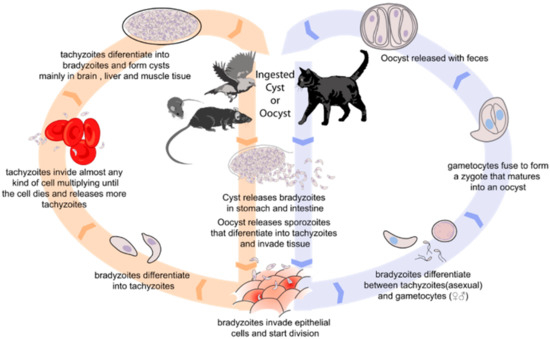
Research – Toxoplasma gondii in Foods: Prevalence, Control, and Safety

MDPI

Toxoplasma gondii is an obligate intracellular parasite that causes toxoplasmosis, with approximately one third of the population around the world seropositive. The consumption of contaminated food is the main source of infection. These include meat products with T. gondii tissue cysts, and dairy products with tachyzoites. Recently, contamination has been detected in fresh products with oocysts and marine products. Despite the great health problems that are caused by T. gondii, currently there are no standardized methods for its detection in the food industry. In this review, we analyze the current detection methods, the prevalence of T. gondii in different food products, and the control measures. The main detection methods are bioassays, cell culture, molecular and microscopic techniques, and serological methods, but some of these do not have applicability in the food industry. As a result, emerging techniques are being developed that are aimed at the detection of multiple parasites simultaneously that would make their application more efficient in the industry. Since the prevalence of this parasite is high in many products (meat and milk, marine products, and vegetables), it is necessary to standardize detection methods, as well as implement control measures. View Full-Text