
USA – Leafy Greens STEC Action Plan

FDA

Leafy greens are among the most widely consumed vegetables and an important part of an overall healthy diet. However, while millions of servings are consumed safely every day, leafy greens have been repeatedly associated with illnesses caused by Shiga toxin-producing E. coli (STEC), the most common of which is E. coli O157:H7. FDA is committed to breaking this cycle of reoccurring outbreaks.

Over the last several years the FDA and partners in the public and private sectors have worked to enhance the safety of leafy greens through the development and implementation of the Leafy Greens STEC Action Plan (LGAP). This work includes prioritized inspections, focused sampling, stakeholder engagement and collaboration, data sharing, root cause investigations, and advancements in the science of detection and prevention.

Collectively, this work has expanded our body of knowledge about how and why outbreaks linked to leafy greens have occurred, which has guided and informed the evolution of the action plan over the years. Still, we know that we cannot fix the issue of leafy green contamination on our own. Industry leadership, along with collaboration among growers, processors, retailers, state partners, and the broader agricultural community, is critical to establishing needed prevention measures and preventing foodborne illness.

The following table provides the approaches for three priority areas: Prevention, Response, and Addressing Knowledge Gaps, as well as accomplishments that have been made since the action plan launched in March 2020.
USA – FDA Core Table – Investigations of Foodborne Illness Outbreaks

FDA

What’s New

  • For the Salmonella Mississippi outbreak (ref# 1097) in a not yet identified product, the case count has increased from 99 to 100 cases.
  • For the Salmonella Senftenberg outbreak (ref# 1087) in a not yet identified food, the case count has increased from 22 to 27 cases.
  • For the Salmonella Typhimurium outbreak (ref# 1095) in a not yet identified food, the case count has increased from 73 to 78 cases.
  • For the Cyclospora outbreak (ref# 1080) the case count has increased from 75 to 79 cases.
  • For the Salmonella Braenderup outbreak (ref# 1075) the FDA investigation has closed. A product linked to illnesses was not identified.
  • The investigation associated with Dry Cereal (ref # 1064) has ended and the FDA investigation has closed with no pathogen or cause of the self-reported illnesses identified, despite extensive testing for numerous potential microbial and chemical adulterants.

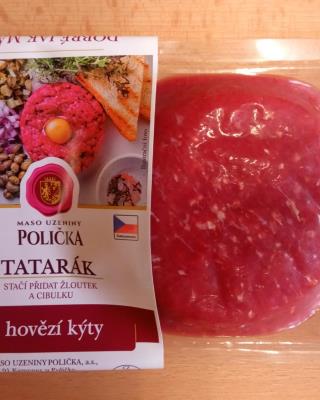
Czech Republic – Tartar beef leg steak 200g – Listeria monocytogenes

Potravinynapranyri

Illustrative photo #1

Place of inspection:
Kamenec u Poličky ( Kamenec u Poličky No. 300, 57201 Kamenec u Poličky )
ID: 25945491
Food group: Meat and meat products / Non-heat-treated non-perishable products

Tartar beef leg steak 200g
Category: Dangerous foods
Invalid parameter:

Listeria monocytogenes

The pathogenic bacteria Listeria monocytogenes was detected in the product . This bacteria can cause a disease called listeriosis.

Batch: L 989608
Expiration date: 5/23/2022
Packaging: plastic foil, vacuum packed
Quantity of the product in the package: 200 g
Producer: MASO UZENINY POLIČKA, as
Country of origin:  Czechia
Date of sample collection: 5/12/2022
Reference number: 22-000048-SVS-CZ
The sample was detected by the official control of the State Veterinary Administration.

Canada – Bonvallis brand Nevat (cheese) recalled due to generic E. coli

CFIA

Summary

Product
Nevat (cheese)
Issue
Food – Microbial Contamination – E. Coli – non-pathogenic
What to do

Do not use, sell, serve or distribute the affected product.

Audience
Retail

Affected products

Bonvallis brand Nevat (cheese) recalled due to generic E. coli.

The recalled product was sold in Quebec.

RASFF Alerts – Salmonella in Sesame Seeds

RASFF

SALMONELLA IN SESAME SEEDS FROM NIGERIA in Greece.

RASFF

SALMONELLA IN SESAME SEEDS FROM India in Greece.

RASFF

SALMONELLA IN SESAME SEEDS FROM India in Greece.

RASFF

Salmonella in sesame seeds from India  in Sweden

RASFF

SALMONELLA IN SESAME SEEDS FROM NIGERIA in Greece and Turkey

RASFF

SALMONELLA IN SESAME SEEDS FROM NIGERIA in Greece

RASFF

SALMONELLA IN SESAME SEEDS FROM NIGERIA in Greece

RASFF

Salmonella enterica ser. Albany and Salmonella enterica ser. Weybridge in sesame seeds from Nigeria in Germany

RASFF

SALMONELLA IN SESAME SEEDS FROM NIGERIA in Greece

RASFF

SALMONELLA IN SESAME SEEDS FROM NIGERIA in Greece and Turkey

RASFF

SALMONELLA IN SESAME SEEDS FROM NIGERIA in Greece and Turkey

RASFF

SALMONELLA IN SESAME SEEDS FROM NIGERIA in Greece

RASFF Alerts – E.coli – Mussels

RASFF

High count of Escherichia coli in mussels from France in Spain

RASFF Alerts – Mold/Mould – Pita Bread – Oat Snack Products

RASFF

Mold in oat snack products from Finland in Lithuania

RASFF

Mould growth in pita bread from the Netherlands in Denmark

RASFF Alert – Shellfish Toxins – Oysters

RASFF

Azaspiracid toxins above the regulatory limit in oysters from Ireland in France

RASFF Alert – Histamine- Frozen Indian Mackerel

RASFF

Histamine in frozen Indian mackerel from Vietnam in Sweden and Denmark

RASFF Alert- Spring Rolls – Staphylococcus

RASFF

Spring rolls_ Staphylococci from France in Ireland, Belgium and the Netherlands