USA – Miguel’s Cocina now linked to 35 with E. coli

Food Poison Journal

According to news reports, Miguel’s Cocina in San Diego’s 4S Ranch neighborhood had a “soft” reopening Friday night 10 days after voluntarily closing its doors in response to an E. coli outbreak that, as of Friday, has sickened at least 35 people including 10 who had to be hospitalized.

The news of the soft opening was confirmed Friday evening by San Diego County Health and Human Services (HHSA) Agency director of communications Tim McLain. The restaurant plans to return to normal operations Saturday.

Those who fell ill, or their families, reported eating at Miguel’s 4S Ranch location from October 6 to October 18 and developed symptoms from October 13 to October 19, according to the HHSA.

Thailand issues Streptococcus suis warning as 2 dozen deaths reported

Food Safety News

Health officials in Thailand are urging people not to eat raw or undercooked pork after hundreds of cases and two dozen deaths were recorded.

From January to November 2023, there were 500 Streptococcus suis cases with 24 deaths in several different provinces, according to the Department of Disease Control (DDC).

Patients reported eating raw or undercooked pork, meals with pig’s blood as well as working with potentially infected animals.

Officials highlighted a trend on social media that involved eating raw food and drinking alcohol but said this puts people at risk of being infected.

Hong Kong – Kindergarten teacher and 10 kids affected in suspected food poisoning cluster

The Standard HK

The Centre for Health Protection is now investigating a suspected food poisoning cluster affecting 10 children and a female teacher who have consumed steamed rice with pumpkin and diced pork.

The cluster involved eight boys and two girls, aged 3 to 5, and a female teacher, who developed abdominal pain and diarrhea about 5.5 to 15 hours after having lunch at a kindergarten in Eastern District on Wednesday.

One of them sought medical advice and none required hospitalization. All the kids and the teacher are in stable conditions.

Initial investigation of the CHP revealed that the affected persons had consumed common food and the food concerned was steamed rice with pumpkin and diced pork.

The poisoning might have been caused by Bacillus cereus or Clostridium perfringens; the CHP noted.

“The personnel from the Centre for Food Safety of the Food and Environmental Hygiene Department have conducted an investigation at the concerned premises. The CHP’s investigation is ongoing,” it said.

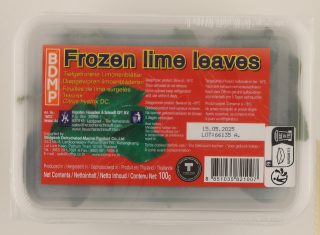
Belgium – Frozen lime leaves (Frozen lime leaves) from the BDMP brand – Salmonella

SAP

The following product is recalled in Luxembourg:

Name Frozen lime leaves
Brand BDMP
Unit 100g
Barcode 8851035821007
Minimum Durability Date (MBD) 05/15/2025
Batch 66135A

Danger  : Possible presence of Salmonella

Salmonella can cause symptoms such as nausea, vomiting, abdominal cramps, diarrhea, fever and headache within 6 to 72 hours after consumption. These symptoms may be aggravated in young children, immunocompromised individuals and the elderly. People who have consumed these products and present these symptoms are invited to consult a doctor and report this consumption.

The product can be distributed by different points of sale in Luxembourg.

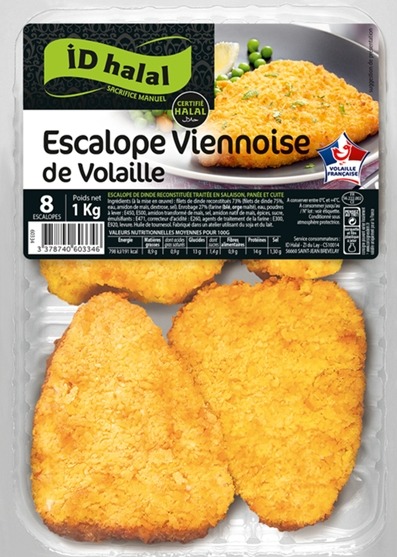
France – Viennese schnitzel under modified atmosphere – Listeria monocytogenes

Gov france

  • Product subcategory Meats
  • Product brand name ID’HALAL
  • Model names or references Bq8 ESC DDE VIEN 125G Sat ID’HAL NC, 1kg,
  • Product identification
    GTIN Batch Date
    3378740603346 4703487338 Use-by date 11/28/2023
  • Packaging Modified atmosphere tray, 1 kg
  • Start/end date of marketing From 10/24/2023 to 10/31/2023
  • Storage temperature Product to keep in the refrigerator
  • Health mark FR 56-222-002
  • Geographical sales area Whole France
  • Distributors HALLES MKT BONNO FDC,PROMOCASH,KIPLAMA,AUX QUATRE SEASONS,METRO,HYPER CHEAP,SAFAE,BENKHAPO SPRL,RHONE POULTRY,SEDIS TRADITION,MARCALI,JATI’MARKET AGEN,ETS MARCY,JLA SARL,FRANPRIX,MAISON BOUSHABA,MOUROUX DISCOUNT ,MAISON CLOTTES,URBAN FOOD MISCELLANEOUS,

Singapore – Recall of Marusan Banana Soy Milk (1000ml) from Japan due to possible product spoilage

SFA

The Consumer Affairs Agency, Government of Japan has recalled Marusan Banana Soy Milk from Japan due to possible  product spoilage. As the implicated product was imported into Singapore, SFA has directed the importer, Imei (Exim) Pte Ltd., to recall the implicated product. The recall is ongoing.
Consumers who have purchased the implicated products should not consume it. Those who have consumed the products and are unwell should seek medical attention. Consumers may contact their point of purchase for enquiries.
Details of the implicated product as follows:
Product Name:
Marusan Banana Soy Milk (1000ml)
Country of Origin: Japan
Lot No.: JAN code – 4901033 630188
Expiry Date: November 4, 2023 to April 12, 2024
Picture: Consumer Affairs Agency, Government of
Japan
Issued by the Singapore Food Agency
5 November 2023

Click to access for-immediate-release-recall-of-marusan-banana-soy-milk-(1000ml)-from-japan-due-to-possible-product-spoilage.pdf

Germany – Deer salami – VTEC/STEC E.coli

LMW

Alert type: Groceries
Date of first publication:

November 3, 2023

Product name: Deer salami
Manufacturer (distributor):

“Wurzener Wurstspezialitäten GmbH”

Reason for warning:

Contamination with VTEC bacteria

Packaging Unit: 180g and 400g
Durability: There is no clear best-before date.
Lot identification: 2318608 and 2318605
Additional Information:

The goods were sold to end customers and dealers in Baden-Würtemberg, Lower Saxony and Saxony. The goods were sold between July 18th. and October 23, 2023.

Click to access R%DCCKRUF+Hirschsalami.pdf

France – bone-in white ham cut – Listeria monocytogenes

Gov france

  • Product category Food
  • Product subcategory Others
  • Product brand name aosta
  • Model names or references white ham with rind on the bone Aosta cut
  • Product identification
    GTIN Batch Date
    2569753085400 0432440271 Use-by date 08/11/2023
  • Packaging 8,540kg
  • Start/end date of marketing From 03/10/2023 to 27/10/2023
  • Storage temperature Product to keep in the refrigerator
  • Health mark FR13.074.001.CE
  • Further information store gencode: 0209363000000
  • Geographical sales area traditional charcuterie Super U Bassens
  • Distributors Super U

Italy – Corn flour – Aflatoxin

Salute

Brand : Molino Riva Srl

Name : Corn flour

Reason for reporting : Recall due to chemical risk

Publication date : 3 November 2023

Documentation

Documentation

Research – USA -FDA -Cyclospora cayetanensis in Produce

FSIS USDA

Executive Summary of Findings
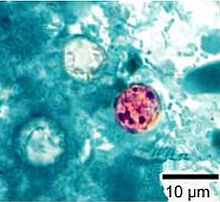
Cyclospora cayetanensis (C. cayetanensis) is a coccidian protozoan parasite, belonging
to the phylum Apicomplexa, order Eucoccidiorida, family Eimeriidae, described between 1993 to 1994 as a newly identified human gastrointestinal pathogen.

Within the genus Cyclospora, only C. cayetanensis is known to infect humans. However, recent advances in genomics separated C. cayetanensis into 3 proposed species, with the two new proposed species also considered parasitic to humans (Cyclospora ashfordi sp. nov. and Cyclospora henanensis sp. nov.).

For the purpose of this document and to reflect the proposed status of the new
nomenclature “C. cayetanensis” refers to all three species of Cyclospora parasitic in humans.
The parasite produces oocysts that are resistant to harsh environmental conditions and many
chemical treatments commonly used to reduce the presence of bacterial pathogens in the
specialty crop production environment and in agricultural inputs (e.g., agricultural water). C.
cayetanensis is the etiologic agent of cyclosporiasis, its host range is limited to humans.
Detected in association with human illness in many parts of the world, C. cayetanensis
previously was considered to be a pathogen acquired during childhood in developing nations.

In the United States, cyclosporiasis was previously associated with international travel or
consumption of contaminated imported foods. In recent years, the U.S. has seen an increase in cases and positive samples associated with domestically grown produce, both as raw
agricultural commodities and fresh cut. Laborers with the history of recent travel to countries
where C. cayetanensis is endemic have not been ruled out as the sources of the pathogen in
these outbreaks. Since 2016, the number of cyclosporiasis cases has increased approximately
3-fold, often linked to the consumption of leafy herbs and ready-to-eat salads. Fecal
contamination from symptomatic or asymptomatic carriers is, ultimately, the only known source of C. cayetanensis. The hypothesis that C. cayetanensis has become endemic in the production regions of the U.S. remains to be robustly supported. The hypothesis that farm workers with a history of recent travel to areas where the parasite is common are the likeliest source of the pathogen has not been ruled out. C. cayetanensis likely spreads via the fecal-environment-oral route when sanitation controls break down. Efforts have been made to develop molecular detection methods for C. cayetanensis in both food and environmental samples.

However, due to the high degree of genome-level conservation between C. cayetanensis and its close relatives that are not pathogenic in humans, results of some environmental surveys that relied solely on the PCR-based detection of ribosomal RNA genes likely overestimated the prevalence of C. cayetanensis. There remain significant knowledge and data gaps that hamper the implementation of effective measures to prevent the contamination of produce with the oocysts of this parasite. Awareness of the factors that can contribute to C. cayetanensis contamination of domestically grown and imported produce is key to developing an effective prevention and management strategy.