USA – Brady’s Steaks and Seafood – Hepatitis A

MSDH

JACKSON, Miss. – The Mississippi State Department of Health (MSDH) is investigating two cases of hepatitis A in Jackson County restaurant employees which may have led to possible exposure for customers.

Two employees of Brady’s Steaks and Seafood, 3801 Magnolia St. in Pascagoula have been diagnosed with hepatitis A infection, and worked at the restaurant while potentially infectious. Customers who ate at the restaurant between March 1 and April 3, 2021, may have been exposed to hepatitis A. At this time, there is no indication of an ongoing risk associated with the restaurant.

All individuals who ate at the restaurant between March 1 and April 3 should watch for any possible symptoms of hepatitis A and see their doctor if they become ill. Individuals who ate at the restaurant within the last two weeks should get a hepatitis A vaccination if not previously vaccinated. Vaccination can prevent hepatitis A only if given within 14 days of exposure.

Those who may have eaten at the restaurant within the last two weeks can receive a hepatitis A vaccination free of charge from 8 a.m. to 4 p.m. on Thursday, April 8th at the Jackson County Health Department, 46000 Lt. Eugene J. Majure Drive, in Pascagoula.

USA – Salmonella sickens Clark County resident

The Columbian

Salmonella kswfoodworld

Six Washingtonians, including a Clark County resident, have been sickened by Salmonella Typhimurium, which officials say they believe is linked to wild songbirds, such as pine siskins.

The Centers for Disease Control and Prevention on Monday reported 19 cases of salmonella in eight states – six in Washington, including one each in Clark, King, Lewis, Kitsap, Spokane and Thurston counties. Three Washington cases have required hospitalization, according to a state Department of Health news release.

Salmonella germs can spread between species of birds, to pets and to people. Wild birds can carry the germs.

France – Product recall: SAS Nicodis brand standard pork (E-Leclerc) – Salmonella

Oulah

Product recall: SAS Nicodis brand standard pork (E-Leclerc)

ENCOUNTERED PROBLEM

Presence of salmonella

PROPOSED SOLUTION

Those in possession of this product are asked not to consume it and to return it to the point of sale where it was purchased for reimbursement.

Foodborne illnesses caused by salmonella result in gastrointestinal disturbances, diarrhea, vomiting and abdominal pain, often accompanied by fever; these symptoms may be more severe in young children, immunocompromised individuals and the elderly. The incubation period can range from 6 to 72 hours.
People who have consumed the products mentioned below and who have these symptoms are invited to consult their doctor, notifying him of this consumption.

FURTHER INFORMATION

▸ Barcode
• 020845300000
• 020854000000
• 020849600000
• 020845500000
• 020844000000
• 020846500000
• 020846300000
• 020847100000
• 020846700000
• 020850900000
• 020849800000
• 020850000000
• 020850100000
• 020848400000
• 020848500000
• 020848700000
• 020848300000
• 020844600000
• 020844400000
• 020844500000
• 020847900000
• 020848000000

▸ Lot
E106704156

▸ DLC
03/15/2021

▸ Packaging
in variable weight trays

▸ Model names or references
Pork stir-fry box, ham rouelle a / bone, hind shank, roast tip w / bone, filet mignon, escalope tip x1 Pork shoulder without bone x2, roasting shoulder round, paddle w / bone, half pallet , bacon fat, rind throat, pork rind, rib loin

▸ Marketing
From 03/09/2021 to 03/15/2021

▸ Health mark
53061 Laval cedex 9

▸ Consumer service contact
0243497100

▸ Source
https://rappel.conso.gouv.fr/

France – France sees increase in foodborne outbreaks

Food Safety News

French public health officials have reported a rise in the number of foodborne outbreaks in 2019 compared to the year before.

Sante publique France, the public health agency, recorded 1,783 outbreaks in the country affecting 15,641 people. In total, 609 people needed hospital treatment and 12 died. In 2018, 1,630 outbreaks were declared affecting 14,742 people.

Winter 2019 saw a spike in outbreak reports with 134 associated with the consumption of oysters reported in December alone compared to between four and 30 in December to January in previous winters.

USA – FDA Releases Investigation Report Following Fall 2020 Outbreak of E. coli O157:H7 Illnesses Linked to Leafy Greens

FDA

As part of our ongoing efforts to combat foodborne illness, today the U.S. Food and Drug Administration published a report on the investigation into the Fall 2020 outbreak of Shiga Toxin-Producing E. coli (STEC) O157:H7 illnesses linked to the consumption of leafy greens grown in the California Central Coast. The report describes findings from the investigation, as well as trends that are key to understanding leafy green outbreaks that are linked to the California Central Coast growing region, specifically encompassing the Salinas Valley and Santa Maria growing areas every fall since 2017.

We released our preliminary findings earlier this year that noted this investigation found the outbreak strain in a sample of cattle feces collected on a roadside about a mile upslope from a produce farm. This finding drew our attention once again to the role that cattle grazing on agricultural lands near leafy greens fields could have on increasing the risk of produce contamination, where contamination could be spread by water, wind or other means. In fact, the findings of foodborne illness outbreak investigations since 2013 suggest that a likely contributing factor for contamination of leafy greens has been the proximity of cattle. Cattle have been repeatedly demonstrated to be a persistent source of pathogenic E. coli, including E. coli O157:H7.

Considering this, we recommend that all growers be aware of and consider adjacent land use practices, especially as it relates to the presence of livestock, and the interface between farmland, rangeland and other agricultural areas, and conduct appropriate risk assessments and implement risk mitigation strategies, where appropriate. Increasing awareness around adjacent land use is one of the specific goals of the Leafy Greens Action Plan we released last March, which we’re also announcing is being updated today to include new activities for 2021.

During our analysis of outbreaks that have occurred each fall since 2017, we have determined there are three key trends in the contamination of leafy greens by E. coli O157:H7 in recent years: a reoccurring strain, reoccurring region and reoccurring issues with activities on adjacent land. The 2020 E. coli O157:H7 outbreak associated with leafy greens represents the latest in a repeated series of outbreaks associated with leafy greens that originated in the Central Coast of California (encompassing Salinas Valley and Santa Maria) growing region.

In the investigation, the FDA recommends that growers of leafy greens in the California Central Coast Growing Region consider this reoccurring E. coli strain a reasonably foreseeable hazard, and specifically of concern in the South Monterey County area of the Salinas Valley. It is important to note that farms covered by the Food Safety Modernization Act (FSMA) Produce Safety Rule are required to implement science and risk-based preventive measures in the rule, which includes practices that prevent the introduction of known or reasonably foreseeable hazards into or onto produce.

The FDA also recommends that the agricultural community in the California Central Coast growing region work to identify where this reoccurring strain of pathogenic E. coli is persisting and the likely routes of leafy green contamination with STEC. Specifically, we have outlined specific recommendations in our investigation report for growers in the California Central Coast leafy greens region. Those recommendations include participation in the California Longitudinal Study and the California Agricultural Neighbors workgroup. When pathogens are identified through microbiological surveys, pre-harvest or post-harvest testing, we recommend growers implement industry-led root cause analyses to determine how the contamination likely occurred and then implement appropriate prevention and verification measures.

We issued the Leafy Green Action Plan last year to foster a more urgent and collaborative approach to preventing leafy greens outbreaks caused by STEC. We have updated our plan for 2021 to include a renewed emphasis on actions to help prevent contamination from adjacent land, to include new actions that build on the accomplishments and learnings from the 2020 plan, and to renew our commitment to actions that were difficult to accomplish in 2020 due to challenges presented by the COVID-19 pandemic.

The FDA has made significant progress on our Leafy Greens Action Plan this year by enhancing prevention strategies, improving response activities by the agency and other entities, and identifying and addressing the knowledge gaps that exist around STEC contamination of leafy greens. We launched the California Longitudinal Study, developed an efficacy protocol for the development and registration of antimicrobial treatments for pre-harvest agricultural water and took critical steps to advance traceability of leafy greens. We have also conducted several focused inspections, follow-up investigations and sampling assignments.

Although the FDA is keenly focused on taking steps to help mitigate recurring leafy green contamination events, we alone cannot fix this issue. Industry leadership and collaboration among growers, processors, retailers, state partners and the broader agricultural community is critical to reducing foodborne illnesses. At the FDA, the safety of leafy greens remains a top priority, and we are committed to working with all stakeholders to address this significant public health issue and further protect consumers.

The FDA, an agency within the U.S. Department of Health and Human Services, protects the public health by assuring the safety, effectiveness, and security of human and veterinary drugs, vaccines and other biological products for human use, and medical devices. The agency also is responsible for the safety and security of our nation’s food supply, cosmetics, dietary supplements, products that give off electronic radiation, and for regulating tobacco products.

Belgium – Raw milk goat crottins, different varieties – STEC E.coli

AFSCA

Le Larry
Products recalled: Raw milk goat crottins, different varieties.
Problem: Possible presence of Escherichia coli (STEC).


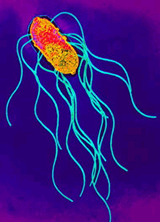
In agreement with the AFSCA, the company Le Larry is withdrawing from sale several references made from 125g raw milk goat cheese and is recalling them to consumers because of the possible presence of the E. coli STEC bacteria.

The company Le Larry asks its customers not to consume these products and to return them to the point of sale where they were purchased.

Description of the products

GANDA BIO CROTTIN NATURE 125G
– Lot n °: 2112401
      • DDM: 19/04/2021
      • sold from 29/03/2021

BIO CROTTIN OF GOAT CHEESE 125 G (7138)
– Lot n °: 2113101
      • DDM: 04/19/2021
      • Sold from

03/30/2021 BIO CROTTIN 125 G (6415)
– Lot n °: 2113101
      • DDM: 22/04/2021, 19/04/2021, 23/04/2021
      • Sold from 30/03/2021

BIO CROTTIN 4×125 G (6534 en 7673)
– Lot n °: 2113101, 2113201, 2113301
      • DDM: 04/14/2021 ; 04/16/2021; 04/20/2021
      • Sold from

03/29/2021 GOAT CHEESE CROTTIN 4 x 125 G (6539)
– Lot n °: 2113101, 2113301
      • DDM: 04/18/2021 ; 20/04/2021
      • Sold from 29/03/2021

BIO CROTTIN AUX HERBES 125 g (6541)
– Lot n °: 2112401; 2113101
      • DDM: 04/15/2021; 04/19/2021; 04/22/2021
      • Sold from 03/26/2021

GOAT CHEESE CROTTIN WITH HERBS 4×125 g (6561)
– Lot n °: 2112401, 2113101
      • DDM: 04/14/2021 ; 04/18/2021
      • Sold from 03/25/2021

GOAT CHEESE WITH SPRING ONIONS 4 x 125 g (6557)
– Lot n °: 2113101, 2113201, 2113301
• DDM: 04/08/2021; 04/06/2021; 04/10/2021
• Sold from

03/26/2021 BIO NATURE GOAT CHEESE CROTTIN WITH HERBS 6 x 125 g (7908)
– Lot n °: 2112401, 2113101
      • DDM: 04/15/2021, 19 / 04/2021
      • Sold from

03/26/2021 BUTTER SPICE CROTTIN (4x125g) (6583)
– Lot n °: 2113101
      • DDM: 04/18/2021
      • Sold from 03/26/2021

T he products were sold through Carrefour supermarkets, various wholesalers and food stores in Belgium.

For more information, please dial 09 326.81.88 or by e-mail mc@lelarry.be and ma@lelarry.be

Research – Isolation and characterization of a virulent bacteriophage for controlling Salmonella enteritidis growth in ready-to-eat mixed-ingredient salads

Journal of Food Protection

Recently, ready-to-eat vegetable salads have gained popularity worldwide. However, the microbial safety of ready-to-eat salads is a health concern, primarily due to Salmonella enteritidis contamination during the growing, harvesting, processing, and handling of produce. This study aimed to develop a bacteriophage-based strategy to control S. enteritidis growth in mixed-ingredient salads. A lytic Salmonella-specific phage SapYZU01 was isolated from a soil sample from a suburban vegetable field in Yangzhou, China. SapYZU01 exhibited characteristics such as a short latent period, a large burst size, and a lytic effect against 13 S. enteritidis strains isolated from various sources (human, pork, deli, chicken, and chicken meat). The SapYZU01 genome did not contain virulence or antibiotic resistance genes. SapYZU01 significantly decreased the viability of S. enteritidis cells in iceberg lettuce, chicken meat, and mixed-ingredient (lettuce+chicken) salads at 37 and 25 °C. Furthermore, bacterial counts in the salad decreased significantly (by 4.0 log colony-forming units (CFU)/g) at 25 °C upon treatment of contaminated lettuce with SapYZU01 at an MOI of 100 prior to salad preparation. Bacterial counts were decreased by 3.8 log CFU/g at 25 °C in (lettuce+chicken) salads treated with SapYZU01 at an MOI of 100 after the salad preparation. In contrast, treating cooked chicken meat with SapYZU01 at an MOI of 100 before mixing it with contaminated lettuce decreased the bacterial count of the salad by 1.2 log CFU/g at 25 °C. These findings indicate the potential application of SapYZU01 as a natural biocontrol agent against S. enteritidis in mixed-ingredient salads. Furthermore, the application of lytic bacteriophage SapYZU01 in mix-ingredient salads should considered the bacteriophage treatment method in addition to the bacteriophage concentration.

USA – Bacteria that causes Legionnaire’s disease found in N.J. prison water

NJ.com

Legionella A

New Jersey officials have found a potentially deadly bacteria in the water at one of New Jersey’s largest prisons, according to a staff memo obtained by NJ Advance Media.

Legionella was detected in a medical building at Northern State Prison in Newark, according to the document, and staff have since moved inmates out of the affected area. The bacteria causes Legionnaire’s disease, a form of pneumonia especially dangerous for people with compromised immune systems,

UK – Asda recall Asda 2 Original Chicken Chargrills because of presence of salmonella

FSA

Asda is recalling Asda 2 Original Chicken Chargrills because salmonella has been found in the product.

Product details

Asda 2 Original Chicken Chargrills
Pack size 170g
Batch code 31120953
Best before 05 September 2022

Risk statement

The presence of salmonella in the product listed above. Symptoms caused by salmonella usually include fever, diarrhoea and abdominal cramps.

Action taken by the company

Asda is recalling the above product. Point of sale notices will be displayed in all retail stores that are selling this/these product. These notices explain to customers why the products are being recalled and tell them what to do if they have bought the product. Please see the attached notice.

Our advice to consumers

If you have bought any of the above product do not eat it. Instead, return it to the store from where it was bought for a full refund.

About product recalls and withdrawals

If there is a problem with a food product that means it should not be sold, then it might be ‘withdrawn’ (taken off the shelves) or ‘recalled’ (when customers are asked to return the product). The FSA issues Product Withdrawal Information Notices and Product Recall Information Notices to let consumers and local authorities know about problems associated with food. In some cases, a ‘Food Alert for Action’ is issued. This provides local authorities with details of specific action to be taken on behalf of consumers.

Ref: FSA-PRIN-23-2021

USA – Salmonella Outbreak Linked to Wild Songbirds

CDC

Fast Facts
  • Illnesses: 19
  • Hospitalizations: 8
  • Deaths: 0
  • States: 8
  • Investigation status: Active

Birds can carry germs like Salmonella while looking healthy and clean. However, there are reportsexternal icon of wild songbirds, such as pine siskins (small, streaked, yellow-tinged songbirds in the finch family) sick with the same strain of Salmonella that is making people sick in this outbreak. Salmonella germs can spread between species of birds, to pets, and to people.

You can get sick when you touch your mouth with unwashed hands after touching wild birds, bird feeders or bird baths, or your pets that have contact with wild birds.

Help keep people and animals healthy around bird feeders and bird baths.

  • Clean and disinfect your bird feeder and bird bath weekly or when they are visibly dirty.
    • Clean feeders outside your house when possible. If you clean it indoors, use a laundry sink or bathtub, and thoroughly clean and disinfect the area right after. Do not clean bird feeders in your kitchen or places where food is prepared or stored.
    • Follow these five steps to clean and disinfect your bird feeder:
      1. Scrub feeder with warm soapy water to remove dirt. Rinse with clean water to remove soap.
      2. Soak in a bleach solution (9 parts water and 1 part bleach) for at least 10 minutes.
      3. Rinse with water to remove any remaining bleach solution.
      4. Let it dry before refilling it.
      5. Wash your hands with soap and water after touching your bird feeder.
    • Clean and refill your bird bath weekly or when it’s visibly dirty.
  • Keep pets away from bird feeders and bird baths and the areas under them.
  • If you find a sick or dead bird in your yard, remove your feeder and bath for two weeks and clean them outdoors.

Do not touch or hand-feed wild birds with your bare hands.

  • If you find a sick bird, call your state wildlife agencyexternal icon or wildlife rehabilitatorexternal icon.
  • If you find a dead bird, check with your state wildlife agencyexternal icon for information about reporting dead birds in your area.
    • Some state and local agencies collect dead birds to test for diseases.
  • If your local officials tell you to throw the dead bird away, wear gloves or place a plastic bag over your hand to pick it up. Place the bird in a plastic bag, tie the bag up, and throw it away, following your local officials’ instructions. Some locations may allow dead birds to be disposed of in your regular trash. Wash your hands with soap and water when you are finished.

Always wash your hands with soap and water:

  • Right after touching your bird feeder or bird bath
  • Right after handling a bird, even if you wore gloves or used a bag
  • Right after touching your pet or pet’s supplies (like food, bowls, and toys)
  • Right after picking up your pet’s feces (poop), even if you used a bag
  • Before you eat or drink

Call your healthcare provider right away if you have any of these severe Salmonella symptoms:

  • Diarrhea and a fever higher than 102°F
  • Diarrhea for more than 3 days that is not improving
  • Bloody diarrhea
  • So much vomiting that you cannot keep liquids down
  • Signs of dehydration, such as:
    • Not urinating (peeing) much
    • Dry mouth and throat
    • Feeling dizzy when standing up
Symptoms of Salmonella
  • Most people infected with Salmonella experience diarrhea, fever, and stomach cramps.
    • Symptoms usually start 6 hours to 6 days after swallowing the bacteria.
    • Most people recover without treatment after 4 to 7 days.
  • Some people—especially children younger than 5 years, adults 65 years and older, and people with weakened immune systems—may experience more severe illnesses that require medical treatment or hospitalization.
  • For more information about Salmonella, see the Salmonella Questions and Answers page.