Category Archives: Water

Ireland – Potentially dangerous parasite in County Limerick water supply – Cryptosporidium

Limerick Post

DRINKING water supplies in Foynes have come under the microscope with the ongoing detection of a parasite that could pose a threat to human health.

Cryptosporidium, a parasite found in human and animal faeces, has been detected in the Foynes/Shannon Estuary water treatment plant this year.

The Environmental Protection Agency said it was “very concerned” after it conducted an audit which detected two breaches of recommended limits of cryptosporidium at the plant on February 23 and April 13.

The EPA said that it was most likely due to “a deterioration in raw water quality combined with significant deficiencies and pressures on the treatment processes at the plant”.

The environmental watchdog said the incident was suitably escalated and managed to protect the health of the population of over 7,200 in the Foynes area who use the water supply.

USA – Several people sickened by bacterial outbreak in Sanders County – Campylobacter

KPAX

The source of a bacterial outbreak in Sanders County that caused several people to become ill has been confirmed.

State and county officials recently notified the Montana Department of Transportation (MDT) that the Kennedy Creek water box has been associated with a Campylobacter outbreak.

The Montana Department of Environmental Quality (DEQ) has labelled this untreated water as a health concern and advised MDT to close off public access to the water.

After Sanders County Public Health officials confirmed several cases of infection from Campylobacter bacteria, the water from the untreated creek was tested and the presence of this bacteria was confirmed, according to MDT.

Over 20 people have tested positive for the bacterial infection and have reported diarrhea, abdominal pain, nausea, and fever after drinking water from the location.

Namibia – Namibia closes oyster production areas, bans sale and consumption on harmful bacteria – Vibrio parahaemolyticus

China Org

WINDHOEK, June 14 (Xinhua) — Namibia has closed down the Walvis Bay Aquapark 4 production area for oyster harvesting as well as banning the sale and consumption of raw oysters after detecting Vibrio Parahaemolyticus bacteria, a food-borne pathogen that causes diarrhoea, officials said in a statement Tuesday.

According to Deputy Director of Aquaculture, Johannes Hamukwaya, it is potentially unsafe to consume oysters from Aquapark 4 until further notice.

“The symptoms of vibrio poisoning are acute dysentery and abdominal pain, accompanied by diarrhoea, nausea, vomiting, fever, chills and water-like stools. When any of these symptoms appear, seek immediate medical assistance,” he said.

According to information from the fisheries ministry, oysters have been produced commercially in Namibia since the late 1980s when commercial oyster farms were established while much of Namibia’s oysters are exported to Europe, South Africa and Asia, where Hong Kong and China are the most important importers and consumers of Namibian oysters.

Namibian oysters can range in size from 30 grams (cocktail oysters) to 150 grams (full maturity). Enditem

USA – Mystery 2021 Pennsylvania Pool E. coli and C. difficile Outbreak Finally Explained – 15 Sickened

Food Poison Journal

On June 7, 2021, the Pennsylvania Department of Health (PADOH) received multiple complaints of gastrointestinal illness from patrons of a community swimming pool. Two patrons reported positive Shiga toxin-producing Escherichia coli (STEC) and Clostridioides difficile from stool specimens. PADOH issued pool closure orders and initiated an outbreak response to identify a source and prevent additional illnesses.

Confirmed cases were defined as isolation of E. coli O157:H7 or detection of Shiga toxin or Shiga toxin genes from stool specimens of persons who visited the pool during May 31–June 7, 2021. Probable cases were defined as three or more loose stools in 24 hours with nausea, vomiting, fever, or cramps in persons who visited the pool during the same time frame. C. difficile results were deemed incidental upon consultation with experts (LC McDonald, MD, CDC, personal communication, June 2021) and were not included in the case definition.

Fifteen cases (nine confirmed, six probable) in persons aged 4–14 years were identified; 10 patients were male. All persons reported swimming at the pool on May 31, 2021, the seasonal opening date, and had no other common exposures. The total number of pool visitors on this date is unknown. Symptom onsets occurred during June 2–June 4, 2021. Thirteen patients sought medical evaluation, and six were hospitalized. Four received antibiotics for C. difficile. None developed hemolytic uremic syndrome.

Early findings suggested an unusual association between exposure to a chlorinated swimming pool and infections caused by two pathogens susceptible to chlorine. Pool inspection revealed an automatic chlorinator malfunction. Record-keeping was inconsistent with local requirements, and the few available records demonstrated at least one instance of no detectable chlorine. The pool reopened following chlorinator repair, after which no additional cases were identified.

Research – Influence of Metal Concentration and Plumbing Materials on Legionella Contamination

MDPI

Legionella colonization of water supply pipes is a significant public health problem. The objective of this work was to evaluate Legionella colonization in hotel hot water systems and to investigate the relationship between metal concentrations, piping materials (galvanized iron pipes and plastic pipes), and Legionella proliferation. Concentrations of calcium and magnesium ions and the presence of Legionella pneumophila were determined in a total of 108 water samples from the hot water systems of four hotels in Split-Dalmatia County over a 12-month period, and additional data on piping materials were collected. L. pneumophila was isolated in 23.1% of all samples—in 28.8% (15/52) of water samples from galvanized iron pipes and in 17.8% (10/56) of samples from plastic pipes. L. pneumophila serogroups 2–14 were isolated from all samples. This study found higher prevalence of L. pneumophila at higher concentrations of Ca and Mg ions (except for Mg and plastic pipes). The metal parts of the water supply may be important factors in Legionella contamination due to the possibility of lime scale or roughness of the pipes. Higher Ca and Mg ion concentrations increased the risk of Legionella colonization. View Full-Text

China – Outbreak Reports: Extensively Drug-Resistant (XDR) Salmonella Typhi Outbreak by Waterborne Infection — Beijing Municipality, China, January–February 2022

China CDC

kswfoodworld Salmonella

On February 6, 2022, an unusual infection event was noticed by hospitals and Beijing CDC: 4 clinically diagnosed typhoid cases (3 in Beijing, 1 in Chifeng City, Inner Mongolia Autonomous Region) were reported to China’s Infectious Disease Information System. The detailed epidemiological investigation was initiated by Changping District CDC. This outbreak involved 23 cases in an apartment in Changping District in Beijing and was caused by extensively drug-resistant (XDR) Salmonella Typhi (S. Typhi) through polluted water supply, which was confirmed by laboratory detection.

Based on the epidemiological curve by date of onset and spatial distribution of cases, a point outbreak was suggested. Considering the possibility of foodborne infection, we checked the dietary history of these cases for 14 days prior to onset, but no evidence of common food or dining together was found to support this. We did not conduct case-control studies, but we received information that most cases keep good hygiene in water usage: they did not drink raw water, but they used tap water to wash vegetables and brush teeth. During this survey, the residents reported that the household water had an odor for about half a month in late December 2021, and some reported that there was disruption of water supply and transient muddy water in mid-January 2022. Herein, the water supply in this apartment was further investigated. The domestic water was supplied from a self-provided well in the village, which was piped to six apartments including the apartment where the cases lived in. Water was pumped from a nearby branch well to storage tank on the roof of the apartment for 24 hours a day to ensure adequate water supply, and then distributed to each room. In field investigation, we learned that sewage pipeline reconstruction work was carried out in December 2021 near the apartment, and the sewage pipeline was just about 1 meter away from the branch well which supplied water for the apartment.

In summary, this was the first report of waterborne outbreak caused by XDR S. Typhi in China. Whole-genome comparison and drug resistance analysis indicated that it belonged to H58 lineage 4.3.1.1.P1 originating from Pakistan, which had the capacity to invade and spread globally by travel-associated international transmission, with the potential to replace native strains (4). However, it was unclear how this novel clone strain entered China and was associated with this outbreak, due to the lack of detailed historical epidemiological data. Importantly, in a modern city such as Beijing, especially in suburban or rural areas where the municipal water supply does not reach, there is still a potential risk of typhoid fever outbreak. So, it is urgent to appeal to relevant governmental authorities to provide safe and hygienic potable water, strengthen supervision on water quality, and educate the public to keep good hygiene habits. In addition, with narrow treatment options for typhoid fever, XDR typhoid itself should also attract great attention, which may lead to treatment failure, prolonged hospitalization, as well as recurrent and extensive transmission of the disease. Therefore, it is necessary to track the source of the XDR strains and to strengthen monitoring their spread through laboratory and extensive epidemiological investigations in the future.

Italy – Claudia sparkling mineral water – Staphylococcus aureus

Salute

Brand : CLAVDIA

Name : Claudia sparkling mineral water

Reason for reporting : Recall due to microbiological risk

Publication date : 11 May 2022

Documentation

Documentation

Research – France – Cholera

Sante Publique

Food Illness

Digestive poisoning , cholera is a notifiable disease caused by the ingestion of water or food contaminated by Vibrio cholerae bacilli of the toxigenic serogroups O1 and O139.

Cholera: the disease

A rare imported pathology in France

Cholera is an acute digestive poisoning caused by ingestion of water or food contaminated by Vibrio cholerae bacilli of toxigenic serogroups O1 and O139 (cholera vibrios).

Today, collective and individual sanitation and hygiene measures have led to the disappearance of cholera in France (excluding Guyana and Mayotte, where sporadic and limited epidemics were described in the decades 1990-2000 in the two previous decades). In mainland France, cholera, which is subject to mandatory notification , is indeed a rare imported pathology. Symptomatic cases of cholera are mainly linked to the absorption of contaminated drinks or food abroad.

Early reporting of suspected and confirmed cases, and notification of confirmed cases takes place from a single case. They allow the management of imported cholera cases as soon as possible. Between 0 and 2 cases of cholera have been declared each year in France since 2000, they concern travelers returning from endemic areas . This is a small and decreasing number.

Although rare in France, cholera can cause severe digestive symptoms and dehydration. Even if the risks of contamination and epidemic are very limited on French territory, the epidemiological surveillance of Public Health France requires the early notification of cases as soon as this infection is suspected in order to prevent its spread.

Human-to-human and environmental transmission

Man is the main reservoir of cholera. But in some regions, the environment can also play this role, resulting in the circulation of cholera vibrios in an endemic mode . Cholera is linked to the absorption of contaminated water or food. Bacilli , or cholera vibrios, secrete cholera toxin in the intestine, which causes the loss of water and electrolytes (up to 15-20 liters per day). Diarrheal stools released in large quantities spread bacilli in the environment and faecal-oral transmission .

High population concentrations, combined with poor environmental hygiene, favor the appearance and development of cholera epidemics.

Prevention through hygiene and vaccination

When the basic rules of hygiene are respected, the vibrio responsible for cholera is not very transmissible. Appropriate chlorination of water and basic hygiene measures are generally sufficient to prevent contamination.
In the event of a trip to these endemic areas , compliance with hygiene measures (food hygiene with consumption of cooked and hot food, capsulated bottled water, avoidance of ice cubes, and hand washing) remains the best prevention.

There is no active vaccine against Vibrio cholerae serogroup O139. On the other hand, health personnel going to work with patients or in refugee camps during an epidemic can benefit from the anti-cholera vaccine (against different Vibrio cholerae O1 strains and a recombinant cholera toxin B subunit) administered orally (2 doses one week apart for adults and 3 doses one week apart for children 2 to 6 years of age).

Severe intestinal symptoms

The incubation period of cholera is short, from a few hours to five days.

Most people infected with Vibrio cholerae show few or no symptoms, although the bacillus can be found in their stool for one to two weeks. In case of illness, 80 to 90% of episodes are mild or moderately severe and it is then difficult to distinguish them clinically from other types of acute diarrhoea.

Less than 20% of patients develop all the typical symptoms of cholera, with symptoms of moderate to severe dehydration: violent diarrhea profuse with “rice water”, vomiting, without fever.

In the absence of treatment, death occurs in 1 to 3 days, by cardiovascular collapse in 25 to 50% of cases. Mortality is higher in children, the elderly and vulnerable individuals.

The diagnosis of cholera is clinical and biological. It is based on the detection of V. cholerae serogroup O1 or O139 producing cholera toxin in the stools of a patient. In the event of suspected isolation of a strain of cholera vibrio, immediate contact should be made with the National Reference Center for vibrios and cholera for typing and confirmation of the diagnosis: https://www.pasteur.fr/fr/ public-health/cnr/the-cnr/vibrions-cholera

A treatment based on rehydration

The treatment of cholera essentially consists of compensating for the digestive losses of water and electrolytes. Depending on the degree of dehydration, rehydration takes place orally or intravenously. An improvement in the subject’s condition is visible quickly (in a few hours) and healing occurs in a few days. There are no sequels. Antibiotic therapy can be useful in certain severe cases, but multi-resistant strains may appear.

An endemic circulation in South Asia

Cholera is regularly the subject of epidemics in developing countries where it evolves according to the country on an endemic and/or epidemic mode .

The world has been experiencing the seventh cholera pandemic since 1961, caused by Vibrio cholerae serogroup O1 .

Cholera has been endemic in the Indian subcontinent for several centuries. Cholera spread from 1817 to all of Asia, the Middle East and part of Africa, during the first cholera pandemic. Subsequent pandemics also developed from Asia and were facilitated by improved transportation. The seventh pandemic started in Indonesia in 1961, affected Asia in 1962, the Middle East and part of Europe in 1965, Africa in 1970, and South America in 1991.
On the n the island of Hispaniola an epidemic has been ongoing since the emergence of V. cholerae serogroup O1 in 2010 in Haiti.
Today, Africa and Asia are the two areas most affected by cholera. The disease is spreading there. The outbreak declared in Yemen since 2016 is the largest ever documented.

In 1992, a strain of Vibrio cholerae belonging to the new  serogroup O139 appeared in India and Bangladesh. Since then, it has caused epidemics in several Asian countries and could one day be the cause of an eighth pandemic. Cholera is the first disease to have been the subject of international notification (since 1892).

Guatemala: Red tide alert issued, One fatality reported -Saxitoxins – PSP

Outbreak News Today

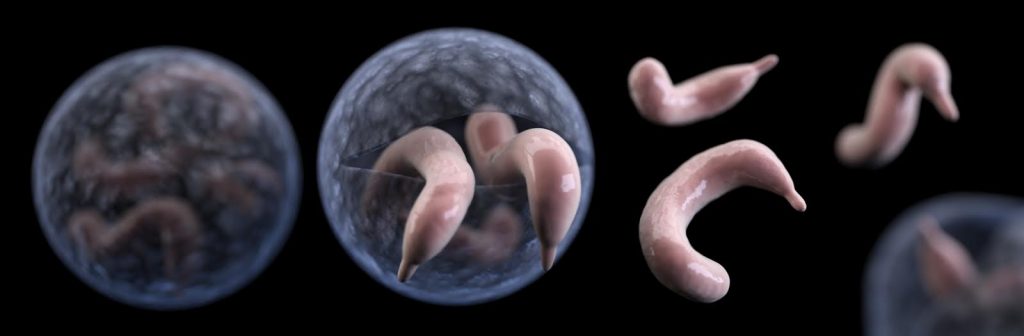
The National Commission for Surveillance and Control of the Toxic Red Tide in Guatemala, declared a red tide alert because the constant monitoring and analysis that is carried out showed high concentrations of saxitoxins above the appropriate limits.

The presence of toxic red tide was detected on the Pacific Coast, on the coast of Tiquisate, Escuintla, indicated Virginia Herzing de Stwolinsky, head of the Risk Management Unit of the Ministry of Public Health and Social Assistance (MSPAS).

For this reason, bivalve mollusks, such as mussels, clams and shells. The consumption of the aforementioned foods produces severe intoxication and could even cause death.

Saxitoxins are also known as paralytic shellfish poisons (PSPs). Most human saxitoxin toxicoses have been associated with the ingestion of marine shellfish, which accumulate saxitoxins produced by marine dinoflagellates. However, saxitoxins are also found in freshwaters, produced by cyanobacteria in the genera Anabaena, Aphanizomenon, Planktothrix, Cylindrospermopsis, Lyngbya and Scytonema

Pakistan – Heatwave, unhygienic food increase risk of seasonal infections

The News

Islamabad: Water and food-borne seasonal infections on the rise in the twin-cities of Rawalpindi and Islamabad as the current intense heatwave that has engulfed many parts of Pakistan has made favourable conditions for such infections to transmit rapidly.

The consumption of unhygienic food and locally made beverages has added to the situation as all the major public and private hospitals in the twin-cities including Holy Family Hospital, District Headquarters Hospital, Benazir Bhutto Hospital, and Pakistan Institute of Medical Sciences (PIMS) received a large number of patients with gastroenteritis.

One the major reasons behind the transmission of water-borne infections such as viral hepatitis A&E, and gastroenteritis is the inferno-like temperatures that are hitting the country hard and compelling people to consume more water and locally prepared juices, said Dr Naeem Yousaf.

“My children were also affected with diarrhoea as they went for swimming to beat the heat and unintentionally swallowed contaminated water of the swimming pool,” he added