Category Archives: Vibrio

RASFF Alert – Vibrio parahaemolyticus – Mussels

RASFF

Presenza vibrio parahaemolyticus in mitili/presence of Vibrio parahaemolyticus in mussels from Spain in Italy

USA- Decreased Incidence of Infections Caused by Pathogens Transmitted Commonly Through Food During the COVID-19 Pandemic — Foodborne Diseases Active Surveillance Network, 10 U.S. Sites, 2017–2020

CDC

Summary

What is already known about this topic?

Before 2020, the incidence of infections transmitted commonly by food had not declined for many years.

What is added by this report?

During 2020, FoodNet identified 26% fewer infections compared with the average annual number during 2017–2019, including decreased infections associated with international travel.

What are the implications for public health practice?

The pandemic and resulting public health response present challenges to explaining changes in observed foodborne illness incidences. Continued surveillance might help elucidate the impact of the COVID-19 pandemic on foodborne illness and identify strategies to decrease illnesses. Concerted efforts are needed to reduce the incidence of these infections from farm to processing plant to restaurants and homes. Consumers can reduce their risk of foodborne illness by following safe food-handling and preparation recommendations.

Foodborne illnesses are a substantial and largely preventable public health problem; before 2020 the incidence of most infections transmitted commonly through food had not declined for many years. To evaluate progress toward prevention of foodborne illnesses in the United States, the Foodborne Diseases Active Surveillance Network (FoodNet) of CDC’s Emerging Infections Program monitors the incidence of laboratory-diagnosed infections caused by eight pathogens transmitted commonly through food reported by 10 U.S. sites.* FoodNet is a collaboration among CDC, 10 state health departments, the U.S. Department of Agriculture’s Food Safety and Inspection Service (USDA-FSIS), and the Food and Drug Administration. This report summarizes preliminary 2020 data and describes changes in incidence with those during 2017–2019. During 2020, observed incidences of infections caused by enteric pathogens decreased 26% compared with 2017–2019; infections associated with international travel decreased markedly. The extent to which these reductions reflect actual decreases in illness or decreases in case detection is unknown. On March 13, 2020, the United States declared a national emergency in response to the COVID-19 pandemic. After the declaration, state and local officials implemented stay-at-home orders, restaurant closures, school and child care center closures, and other public health interventions to slow the spread of SARS-CoV-2, the virus that causes COVID-19 (1). Federal travel restrictions were declared (1). These widespread interventions as well as other changes to daily life and hygiene behaviors, including increased handwashing, have likely changed exposures to foodborne pathogens. Other factors, such as changes in health care delivery, health care–seeking behaviors, and laboratory testing practices, might have decreased the detection of enteric infections. As the pandemic continues, surveillance of illness combined with data from other sources might help to elucidate the factors that led to the large changes in 2020; this understanding could lead to improved strategies to prevent illness. To reduce the incidence of these infections concerted efforts are needed, from farm to processing plant to restaurants and homes. Consumers can reduce their risk of foodborne illness by following safe food-handling and preparation recommendations.

FoodNet conducts active, population-based surveillance of laboratory-diagnosed infections caused by Campylobacter, Cyclospora, Listeria, Salmonella, Shiga toxin-producing Escherichia coli (STEC), Shigella, Vibrio, and Yersinia reported from 10 sites covering approximately 15% of the U.S. population (approximately 50 million persons per U.S. Census Bureau estimates in 2019). Bacterial infections are defined as isolation of bacteria from a clinical specimen by culture or detection of pathogen antigen, nucleic acid sequence, or, for STEC, Shiga toxin or Shiga toxin genes by a culture-independent diagnostic test (CIDT).§ Listeria infections are defined as isolation of L. monocytogenes or detection of its nucleic acid sequences from a normally sterile site, or from placental or fetal tissue in the instance of miscarriage or stillbirth. Cyclospora infections are defined as detection of the parasite using ultraviolet fluorescence microscopy, specific stains, or polymerase chain reaction.

In this analysis, patients with no history of international travel or unknown travel were considered to have domestically acquired infection. Death was attributed to infection when it occurred during hospitalization or within 7 days after specimen collection for non-hospitalized patients. Incidence (cases per 100,000 population) was calculated by dividing the number of infections in 2020 by the U.S. Census estimates of the surveillance area population for 2019. Incidence measures included all laboratory-diagnosed infections. A negative binomial model with 95% confidence intervals (CIs) was used to estimate change in incidence during 2020 compared with those during 2017–2019, adjusting for changes in the population over time.

Surveillance for physician-diagnosed post-diarrheal hemolytic uremic syndrome (HUS), a complication of STEC infection characterized by renal failure, thrombocytopenia, and microangiopathic anemia, was conducted through a network of nephrologists and infection preventionists and by hospital discharge data review. This report includes HUS data for children aged <18 years for 2019, the most recent year for which data are available. FoodNet surveillance activities were reviewed by CDC and were conducted consistent with applicable federal law and CDC policy.**

During 2020, FoodNet identified 18,462 cases of infection, 4,788 hospitalizations, and 118 deaths (Table). The overall incidence was highest for Campylobacter (14.4 per 100,000 population), followed by Salmonella (13.3), STEC (3.6), Shigella (3.1), Yersinia (0.9), Vibrio (0.7), Cyclospora (0.6), and Listeria (0.2). During 2020, 26% fewer infections were reported compared with the average annual number reported during 2017–2019; the incidence in 2020 was significantly lower for all pathogens except Yersinia and Cyclospora. The percentage of infections resulting in hospitalization increased 2% compared with 2017–2019 (Figure 1). During 2020, 5% (958) of infections were associated with international travel compared with 14% during 2017–2019. In 2020, most (798; 83%) of these infections occurred during January–March.

Overall, 59% of bacterial infections were diagnosed using a CIDT (range = 14% [Listeria] to 100% [STEC]); this was a 2% increase from 2017−2019. The percentage diagnosed using only a CIDT (i.e., including specimens with negative cultures and those not cultured) was 1% higher during 2020 than the percentage during 2017−2019. Among specimens with a positive CIDT result during 2020, a reflex culture†† was performed for 73%, which was 2% lower than during 2017–2019. Reflex cultures decreased for Vibrio (by 15%), Yersinia (7%), Campylobacter (5%), and STEC (2%); increased for Salmonella (2%), and Shigella (2%); and did not change for Listeria.

Among 5,336 (91%) fully serotyped Salmonella isolates in 2020, the seven most common serotypes were Enteritidis (1.6 per 100,000 population), Newport (1.5), Javiana (1.0), Typhimurium (0.9), I 4,[5],12:i:- (0.5), Hadar (0.4), and Infantis (0.3). Compared with 2017–2019, incidence during 2020 was significantly lower for I 4,[5],12:i:- (48% lower), Typhimurium (37% lower), Enteritidis (36% lower), and Javiana (31% lower). Incidence was significantly higher for Hadar (617% higher; 95% CI = 382–967) and did not change significantly for Newport or Infantis. Most (73%) of the 631 outbreak-associated Salmonella infections during 2020 were caused by three serotypes: Newport (220; 35%), Hadar (135; 21%), and Enteritidis (108; 17%). All outbreak-associated Hadar infections were from one multistate outbreak linked to contact with backyard poultry; 47 (35%) illnesses resulted in hospitalization. Four serogroups accounted for 63% of the 955 culture-positive STEC isolates. Serogroup O157 was most common (264; 28%), followed by O26 (148; 15%), O103 (115; 12%), and O111 (78; 8%).

FoodNet identified 63 cases of post-diarrheal HUS in children aged <18 years (0.6 cases per 100,000 population) during 2019; 55 (87%) had evidence of STEC infection and 41 (65%) were in children aged <5 years (1.4 per 100,000 population). These rates were similar to those during 2016–2018.

USA – Florida Vibrio vulnificus update: Additional case/death in Orange County

Outbreak News Today

Food Illness

The Florida Department of Health reported Friday an additional Vibrio vulnificus case and death in Orange County, bringing the state total to 19 cases and seven deaths so far in 2021.

The even fatalities have been reported in Manatee (2), Duval, Escambia, Lee, Orange and Polk counties.

Since 2008, state officials have reported 471 cases and 124 deaths, including 36 cases and 7 deaths in 2020.

Vibrio vulnificus can cause disease in those who eat contaminated seafood or have an open wound that is exposed to warm seawater containing the bacteria. Ingestion of Vibrio vulnificus can cause vomiting, diarrhea and abdominal pain. Vibrio vulnificus can also cause an infection of the skin when open wounds are exposed to warm seawater; these infections may lead to skin breakdown and ulcers.

Research -Reducing the risks of bacterial-borne diseases in shrimp farms

The Fish Site

KSWFOODWORLD

Vibrios are some of the most unwelcome bacteria in the global shrimp farming sector, causing diseases including EMS and costing the sector billions as year. However, as we explain in this article, there are a huge number of ways for farmers to reduce the risks of vibrio-related diseases.

Vibriosis is one of the most severe bacterial diseases in shrimp aquaculture, and is caused by the infection of pathogenic and/or opportunistic Vibrio bacteria. It can lead to mortality of up to 100 percent and is estimated to cause the shrimp sector US$ 3 billion in global losses a year. One of the most recent cases of vibrio-related diseases is early mortality syndrome (EMS), which is also known as acute hepatopancreatic necrosis disease (AHPND) and has put a huge dent in the profits from Asian shrimp production in the last decade.

USA – Pacific Northwest heat wave causes vibrio bacteria outbreak in oysters

SeaFoodSource

Vibrio

A heat wave that sent temperatures into the triple digits for three days in the U.S. Pacific Northwest in late June and early July drove up levels of the vibrio bacteria in area oysters, causing record numbers of illnesses from the bacteria and prompting oyster recalls.

The Washington State Department of Health (DOH) reported 75 lab-confirmed cases of vibriosis as of Wednesday, 29 July, and said there are likely many unreported cases. According to figures provided by DOH, the previous record number of vibriosos cases through 28 July was 48 in 2018.

The outbreak occurred over the holiday weekend of 4 July and coincided with the reopening of many of Washington’s businesses and restaurants. DOH said that several people visiting the area had fallen ill, including tourists from California, Canada, and Mexico. Officials had traced 48 of the cases back to commercial growers, while five of the cases were from recreational catch. The other cases with either unknown or still under investigation.

Vibriosis cases have been traced back to 24 different growing in areas in Washington state, including Samish Bay and Hood Canal, both of which have large tracts of oysters. A recall was issued for all oysters harvested in Samish Bay from 29 June onward, and the area was closed until at least 6 August, pending the results of ongoing tests. Officials were working to gather harvest from the area, while the Interstate Shellfish Sanitation Conference reported that some oysters from the affected spot had been exported to China, Cambodia, and the Philippines.

Sweden – Vibrio infection (Sweden July 2021-)

Folkhalsomyndigheten

Food Illness

2021-07-29

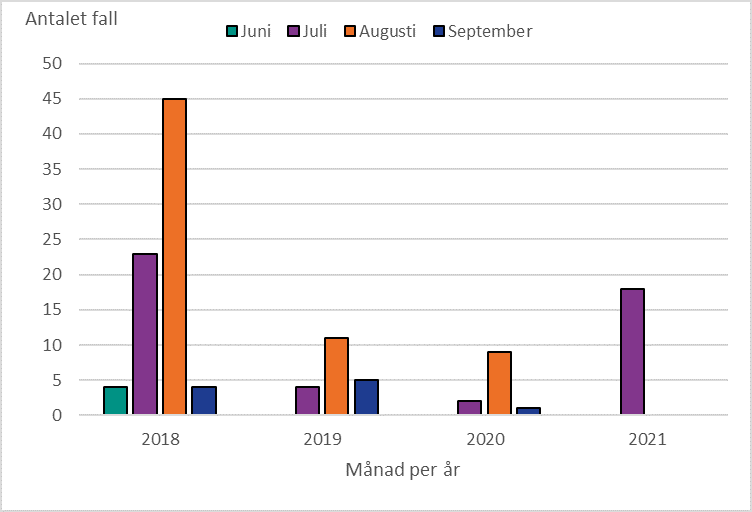
With continued warm temperatures in our bathing waters, there is a risk of growth of vibrio bacteria that are naturally occurring, especially in seawater. To date, 18 cases of more serious vibrio infections in wounds or blood (sometimes called bath ulcer fever) have been reported during the summer. The majority of cases are over 65 years old and more men than women have fallen ill. To prevent cases of illness, bathing is not recommended if you have significant wounds, especially if you are elderly and / or have a weakened immune system.

Figure. The number of cases of bath ulcer infection in Sweden reported per month from 2018-06-01 – 2021-07-28

The bar chart shows that there are now more cases of bathing fever reported for 2021 than during the whole of 2019 and 2020, respectively, and that in 2018 an unusual number of cases were reported during June to September, a total of 76 cases, of which 45 during August.

USA – Oysters and Vibriosis

CDC

What You Need to Know

  • Eating raw oysters and other undercooked seafood can put you at risk for infections, such as vibriosis.
  • Vibriosis is caused by some kinds of Vibrio bacteria.
  • Most Vibrio infections happen during warmer months, but they can happen anytime.
  • An oyster that contains Vibrio doesn’t look, smell, or taste different from any other oyster.
  • A way to kill Vibrio in oysters is to cook them properly.
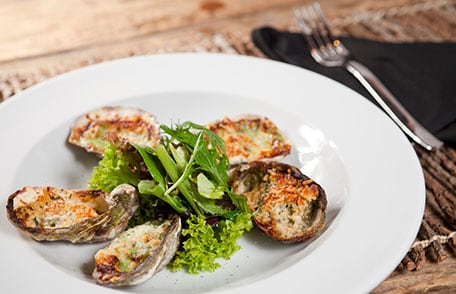
Plate of baked oysters

Many people enjoy eating raw oysters, and raw oyster bars are growing in popularity. But eating raw or undercooked oysters and other shellfish can put you at risk for foodborne illness.

Learn about vibriosis, an illness caused by infection with certain kinds of Vibrio bacteria, and steps you can take to protect your health when it comes to oysters and other shellfish.

Vibrio bacteria naturally inhabit coastal waters where oysters live. Because oysters feed by filtering water, Vibrio and other harmful bacteria and viruses can concentrate in their tissues. When someone eats raw or undercooked oysters, germs that might be in the oyster can cause illness.

CDC estimates that about 80,000 people get vibriosis—and 100 people die from it—in the United States every year. Most of these illnesses happen from May through October when water temperatures are warmer. However, you can get sick from eating raw or undercooked oysters during any month of the year, and raw oysters from typically colder waters also can cause vibriosis.

An oyster that contains harmful bacteria doesn’t look, smell, or even taste different from any other oyster. You can kill Vibrio in oysters and certain other shellfish, such as mussels and clams, by cooking them properly.

What are the symptoms of vibriosis?

Most Vibrio infections from oysters, such as Vibrio parahaemolyticus infection, result in mild illness, including diarrhea and vomiting. However, people with a Vibrio vulnificus infection can get very sick. As many as 1 in 5 people with a Vibrio vulnificus infection die. This is because Vibrio vulnificus infection can lead to bloodstream infections, severe blistering skin lesions, and limb amputations.

If you develop symptoms of vibriosis, tell your medical provider if you recently ate or touched raw oysters or other raw shellfish or came into contact with salt water or brackish water. Brackish water is a mixture of salt water and fresh water. It is often found where rivers meet the sea.

Who is more likely to get vibriosis?

Anyone can get vibriosis, but you may be more likely to get an infection or severe illness if you:

  • Have liver disease, cancer, diabetes, HIV, or the blood disorder thalassemia
  • Receive immune-suppressing therapy for the treatment of disease
  • Take medicine to lower stomach acid levels
  • Have had recent stomach surgery
  • Are 65 years or older

How do people get vibriosis?

Most people become infected by eating raw or undercooked shellfish, particularly oysters. Other people become infected by:

  • Getting brackish or salt water in a wound, such as when they’re swimming, wading, or fishing.
  • Cutting themselves on an item, such as a rock or pier, that has come into contact with brackish or salt water.
  • Getting raw seafood juices or drippings in a wound.

How can I stay safe?

Follow these tips to reduce your chances of getting an infection when eating or touching shellfish and other seafood:

  • Don’t eat raw or undercooked oysters or other shellfish. Fully cook them before eating, and only order fully cooked oysters at restaurants. Hot sauce and lemon juice don’t kill Vibrio bacteria and neither does alcohol.
    • Some oysters are treated for safety after they are harvested. This treatment can reduce levels of vibriosis in the oyster, but it does not remove all harmful germs. People who are more likely to get vibriosis should not eat any raw or undercooked oysters.
  • Separate cooked seafood from raw seafood and its juices to avoid cross contaminationexternal icon.
  • Wash your hands with soap and water after handling raw seafood.
  • Stay out of salt water or brackish water if you have a wound (including from a recent surgery, piercing, or tattoo).
    • Cover any wounds if they could touch raw seafood or raw seafood juices, or if you might come into contact with brackish or salt water.
  • Wash open wounds and cuts thoroughly with soap and water if they contacted salt water or brackish water or raw seafood or raw seafood juices or drippings.

What are tips for cooking shellfish?

Before cooking, discard any shellfish with open shells.

For shellfish in the shell, either:

  • Boil until the shells open and continue boiling another 3-5 minutes, or
  • Add to a steamer when water is already steaming and cook for another 4–9 minutes.

Only eat shellfish that open during cooking. Throw out any shellfish that do not open fully after cooking.

For shucked oysters, either:

  • Boil for at least 3 minutes,
  • Fry in oil for at least 3 minutes at 375°F,
  • Broil 3 inches from heat for 3 minutes, or
  • Bake at 450°F for 10 minutes.

RASFF Alert – Vibrio parahaemolyticus – Frozen Peeled Shrimp

RASFF

Vibrio parahaemolyticus (toxR+ tdh+ trh+ /25g) in frozen peeled shrimps from India in France

Singapore – Recall of raw oysters linked to Vibrio parahaemolyticusoutbreak in USA

Click to access sfa-media-release—recall-of-raw-oysters-linked-to-vibrio-parahaemolyticus-outbreak-in-usa.pdf

Hong Kong – Trade instructed to suspend importing and selling of ready to eat raw oysters harvested in Samish Bay in US – Vibrio parahaemolyticus

CFS

Vibrio

The Centre for Food Safety (CFS) of the Food and Environmental Hygiene Department today (July 23) instructed the trade to suspend the import of ready to eat raw oysters harvested in Samish Bay of the United States (US). The trade should also stop using or selling the product concerned immediately should they possess it.

A spokesman for the CFS said, “The CFS noticed that the Washington State Department of Health reported that ready to eat raw oysters harvested in Samish Bay of the US, which were suspected to be contaminated with Vibrio parahaemolyticus, were under recall. Upon learning of the incident, the CFS immediately contacted local major importers for follow-up. A preliminary investigation found that the importer, Asia-Taylor (A&T) Finefoods Limited, had imported some of the affected product which was on sale in its retail outlet. For the sake of prudence, the CFS has immediately instructed the trade to suspend the import into and sale within Hong Kong of all ready to eat raw oysters harvested in the abovementioned area in the US, and instructed the importer to stop sale and remove from shelves the affected product.”

The CFS is also tracing the distribution of the product concerned. The trade should also stop using or selling the product concerned immediately should they possess it.

The spokesman pointed out that as oysters feed by filtering a large volume of seawater, pathogens (such as Vibrio parahaemolyticus) can accumulate in them if they are grown in or harvested from contaminated water. Raw or partially cooked oysters are high risk foods. Susceptible groups, such as pregnant women, young children, the elderly and people with weakened immune systems or liver diseases, should avoid eating them.

The CFS will inform the US authorities and will also notify the local trade. It will continue to follow up on the incident and take appropriate action to safeguard food safety and public health. An investigation is ongoing.