Category Archives: STEC E.coli

Research – Two Generally Recognized as Safe Surfactants plus Acidulants Inactivate Salmonella, Escherichia coli O157:H7, and Listeria monocytogenes in Suspension or on Dip-Inoculated Grape Tomatoes

Journal of Food Protection

ABSTRACT

Contamination of fresh produce with the foodborne pathogens Salmonella enterica, Listeria monocytogenes, and Escherichia coli O157:H7 continues to be problematic, resulting in outbreaks of foodborne illness and costly corporate recalls. Various individual concentrations of citric or lactic acids (0.35 to 0.61%) or isopropyl citrate (0.16 to 0.54%) combined with two generally recognized as safe surfactants, 0.025% sodium-2-ethyl-hexyl sulfate and 0.025% sodium dodecylbenzene-sulfonate, were tested against these three pathogens in suspension and when inoculated and dried on the surface of grape tomatoes. The efficacy of sodium hypochlorite (NaClO; at 46 ppm) was also evaluated under dirty and clean conditions in suspension after addition of 0.3 or 0.03% bovine serum albumin, respectively, as an organic load. NaClO (46 ppm) inactivated the three pathogens in suspension by <0.76 log CFU/mL after 5 min in the presence of 0.3% bovine serum albumin, whereas 9 and 15 ppm of free chlorine inactivated the pathogens by 0.64 and 2.77 log CFU/mL, respectively, after 5 min under clean conditions. Isopropyl citrate (0.16% acidulant) plus 0.05% total concentration of the two surfactants inactivated the pathogens in suspension by up to 7.0 log CFU/mL within 2 min. When applied to grape tomatoes for 2 min, 0.54% isopropyl citrate plus 0.025% concentrations of each of the two surfactants reduced Salmonella, E. coli O157:H7, and L. monocytogenes by as much as ca. 5.47, 4.89, and 4.19 log CFU/g, respectively. These reductions were significantly greater than those achieved with 49 ppm of free chlorine. Citric acid and lactic acid plus surfactant washes achieved greater inactivation than water-only washes, reducing Salmonella, E. coli O157:H7, and L. monocytogenes on tomatoes by up to 4.90, 4.37, and 3.98 log CFU/g, respectively. These results suggest that these combinations of acidulants and surfactants may be an effective tool for preventing cross-contamination during the washing of grape tomatoes, for reducing pathogens on the fruit itself, and as an alternative to chlorine for washing fresh produce.

HIGHLIGHTS
  • Acidulants and surfactants were used in combinations against three foodborne pathogens.
  • Acidulant (0.16%) plus surfactants (0.05%) inactivated pathogens in suspension by up to 7.0 log CFU/mL.
  • Acidulant plus surfactant inactivated pathogens on dip-inoculated grape tomatoes by 3.35 to 5.47 log CFU/g.
Research – Phage Biocontrol Improves Food Safety by Significantly Reducing the Level and Prevalence of Escherichia coli O157:H7 in Various Foods

Journal of Food Protection

ABSTRACT

Management of Shiga toxin–producing Escherichia coli (STEC), including E. coli O157:H7, in food products is a major challenge for the food industry. Several interventions, such as irradiation, chemical disinfection, and pasteurization, have had variable success controlling STEC contamination. However, these interventions also indiscriminately kill beneficial bacteria in foods, may impact organoleptic properties of foods, and are not always environmentally friendly. Biocontrol using bacteriophage-based products to reduce or eliminate specific foodborne pathogens in food products has been gaining attention due to the specificity, safety, and environmentally friendly properties of lytic bacteriophages. We developed EcoShield PX, a cocktail of lytic bacteriophages, that specifically targets STEC. This study was conducted to examine the efficacy of this bacteriophage cocktail for reducing the levels of E. coli O157:H7 in eight food products: beef chuck roast, ground beef, chicken breast, cooked chicken, salmon, cheese, cantaloupe, and romaine lettuce. The food products were challenged with E. coli O157:H7 at ca. 3.0 log CFU/g and treated with the bacteriophage preparation at ca. 1 × 10⁶, 5 × 10⁶, or 1 × 10⁷ PFU/g. Application of 5 × 10⁶ and 1 × 10⁷ PFU/g resulted in significant reductions (P < 0.05) in E. coli O157:H7 levels of up to 97% in all foods. When bacteriophages (ca. 1 × 10⁶ PFU/g) were used to treat lower levels of E. coli O157:H7 (ca. 1 to 10 CFU/10 g) on beef chuck roast samples, mimicking the levels of STEC found under real-life conditions in food processing plants, the prevalence of STEC in the samples was significantly reduced (P < 0.05) by ≥80%. Our results suggest that this STEC-targeting bacteriophage preparation can result in significant reduction of both the levels and prevalence of STEC in various foods and, therefore, may help improve the safety and reduce the risk of recalls of foods at high risk for STEC contamination.

HIGHLIGHTS
  • Shiga toxin–producing E. coli is a major food safety challenge for the food industry.
  • EcoShield PX bacteriophage cocktail reduced E. coli O157:H7 levels in foods by up to 97%.
  • The bacteriophage cocktail reduced the prevalence of E. coli O157:H7 in foods by ≥80%.

Canada -Raw Beef and Veal Recall For E. coli O157:H7 in Canada Updated

Food Poisoning Bulletin

The food recall warning for raw beef and veal for E. coli O157:H7 in Canada that was issued on October 17, 2020 and many other dates has been updated with more information. This information was discovered during the Canadian Food InspectionAgency’s food safety investigation. The investigation has been closed.

You can see the long list of recalled products at the CFIA web site. The products include beef bone-in hind shank, beef back ribs, fresh beef, choice grain-fed veal scallopine (frozen), ground beef, boneless veal shank, flat iron, rump roast, beef liver, beef top sirloin, and boneless beef brisket, among others.

RASFF Alert – STEC E.coli – Frozen Lamb Loins

RASFF-Logo

RASFF – shigatoxin-producing Escherichia coli (O91 stx1+ stx2+ eae- /25g) in frozen lamb loins from New Zealand in Italy

Research – Tips For Handling Flour Safely to Avoid Food Poisoning

Food Poisoning Bulletin

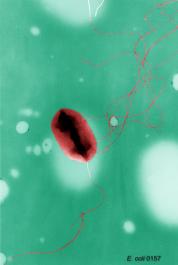
kswfoodworld E.coli O157

Image CDC


When an E. coli O157:H7 outbreak in 2009 was linked to the flour used in prepackaged cookie dough, many people were shocked. How could flour, which seems so innocuous, actually be contaminated with such a serious pathogen? Flour is dry. It seems inert and safe. But flour is a raw agricultural product, and can be contaminated with pathogens just like romaine lettuce. Learn some tips for handling flour safely to avoid food poisoning.

Europe – Large E. coli increase recorded for Europe in 2018

Food Safety News

The Shiga toxin-producing E. coli infection rate in Europe jumped by 40 percent in 2018 compared to the previous year, based on data from ECDC’s annual surveillance report.

After a stable period from 2014 to 2017, the rate increased by 41 percent in 2018. This made STEC the third most common zoonosis in Europe after Campylobacter and Salmonella.

A contributing factor may be the shift from culture to culture-independent diagnostic methods, with PCR more commonly used to diagnose cases, according to the European Centre for Disease Prevention and Control (ECDC).

STEC infection is mainly acquired through eating contaminated food and contact with animals and/or their feces. Adequate cooking of food, particularly beef, and use of pasteurized milk may reduce the risk of foodborne infections, added the agency.

Europe – Shiga toxin/verocytotoxin-producing Escherichia coli (STEC/VTEC) infection – Annual Epidemiological Report for 2018

ECDC

Executive summary

  • For 2018, 30 EU/EEA countries reported 8 658 confirmed cases of infection with Shigatoxin/verocytotoxin-producing Escherichia coli (STEC/VTEC).
  • The overall notification rate was 2.4 cases per 100 000 population.
  • After a stable period from 2014 to 2017, the notification rate increased by 41% in 2018.
  • The highest notification rates were reported in Denmark, Ireland, Malta, Norway and Sweden.
  • The highest rate of confirmed cases was observed in 0–4-year-old children (11.5 cases per 100 000 population).

RASFF Alert- STEC E.coli – E.coli O157 = Sliced Pepperoni

RASFF-Logo

RASFF – shigatoxin-producing Escherichia coli (O157) in sliced pepperoni from Germany, packaged in the United Kingdom in the UK

Ireland – Recall of a Batch of Co-op Sliced Pepperoni Due to Presence of E.coli O157

FSAI

Summary
Category 1: For Action
Alert Notification: 2020.20
Product: Co-op Sliced Pepperoni, pack size: 70g, approval number: DE NW 20158 EG
Batch Code: Use by date: 19.05.2020
Country Of Origin: uk

Message:

Co-op is recalling the above batch of its Sliced Pepperoni due to the detection of E.coli O157.  Point-of-sale recall notices will be displayed in stores supplied with the implicated batch.

Nature Of Danger:

Shiga toxin-producing Escherichia coli (STEC), also known as Verocytotoxigenic E. coli (VTEC), are a specific group of E. coli.  While most E. coli are harmless and live in the intestines of healthy humans, STEC produce a powerful toxin which can cause severe illness. Symptoms include abdominal cramps and diarrhoea which is sometimes bloody. Usually there is little or no fever, and patients recover within 5 to 10 days.  In some people however, particularly children under 5 years of age and the elderly, the infection can cause a complication called haemolytic uraemic syndrome (HUS), in which the red blood cells are destroyed and the kidneys can stop working properly.

Action Required:

Manufacturers, wholesalers, distributors, caterers & retailers:

Retailers are requested to remove the implicated batch from sale and to display a point-of-sale recall notice in stores where the affected batch was sold.

Consumers:

Consumers are advised not to eat the implicated batch.

UK – Co-op recalls Sliced Pepperoni because of contamination with E. coli

FSA

Co-op is recalling Co-op Sliced Pepperoni because E. coli O157 has been found in the product.

Product details

Co-op Sliced Pepperoni

Pack size 70g
Use by 19 May 2020

Risk statement

The presence of Shiga toxin-producing E. coli in the product listed above.

Symptoms caused by this organism include diarrhoea, abdominal pain, bloody diarrhoea, and haemolytic uremic syndrome, a serious condition that can lead to kidney failure and can be fatal.

Action taken by the company

Co-op is recalling the above product. Point-of-sale notices will be displayed in all retail stores that are selling this product. These notices explain to customers why the product is being recalled and tell them what to do if they have bought the product. Please see the attached notice.

Our advice to consumers

If you have bought the above product, do not eat it. Instead contact 0800 0686 727 or customer.careline@coop.co.uk to arrange a refund. If customers are making an essential trip to the store from where it was bought, they can return the item in-store for a full refund.