Category Archives: STEC E.coli

RASFF Alert – STEC E.coli – Frozen Croissants

RASFF

E coli STEC detected in frozen croissants from France

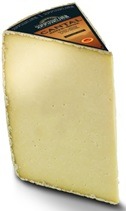
France – Cantal Entre-Deux with raw milk 1/8 wheel x1 (variable weight) – E.coli STEC 0103:H2

Gov france

Identification information of the recalled product

  • Product category Food
  • Product subcategory Milk and dairy products
  • Product brand name REFINERY COUNTER
  • Model names or references1/8 wheel format sold in the cutting department
  • Identification of products
    GTIN Batch Date
    3492840043960 batch: 35621472 Use-by date 31/01/2023
  • Packaging old at the cutting department
  • Marketing start/end date From 29/12/2022 to 03/01/2023
  • Storage temperature Product to be stored in the refrigerator
  • Health mark EN 15.196.001 CE
  • Geographic area of ​​sale Whole France
  • Distributors INTERMARCHE E. LECLERC (SOCAMAINE; SCANORMANDE; SCALANDES; SCACHAP)
  • List of points of sale point_of_sale_list.pdf

Practical information regarding the recall

  • Reason for recall Presence of E.coli STEC 0103:H2
  • Risks incurred by the consumer Toxigenic Shiga Escherichia coli (STEC)

Research -Control measures for Shiga toxin-producing Escherichia coli (‎STEC)‎ associated with meat and dairy products: meeting report

WHO

Although Shiga toxin-producing Escherichia coli (STEC) have been isolated from a variety of food production animals, they are most commonly associated with ruminants from which we derive meat and milk. Because of the widespread and diverse nature of ruminant-derived food production, coupled with the near ubiquity of STEC worldwide, there is no single definitive solution for controlling STEC that will work alone or in all situations. Instead, the introduction of multiple interventions applied in sequence, as a “multiple-hurdle scheme” at several points throughout the food chain (including processing, transport and handling) will be most effective.

This report summarizes the review and evaluation of interventions applied for the control of STEC in cattle, raw beef and raw milk and raw milk cheese manufactured from cows’ milk, and also evaluates available evidence for other small ruminants, swine and other animals. The information is presented from primary production, to the end of processing, providing the reader with information on the currently available interventions based on the latest scientific evidence.

This work was undertaken to support the development of guidelines for the control of STEC in beef, raw milk and cheese produced from raw milk by the Codex Committee on Food Hygiene (CCFH).

Research – Spraying an army of bacteria-eating viruses can save us from food poisoning

Interesting Engineering

Every year more than 40 million people in the U.S. suffer from foodborne illnesses caused by bacteria, viruses, and various other types of pathogens. Food contamination is often underestimated, but it is responsible for 420,000 deaths annually. This number represents more people than the entire population of Iceland.

After being produced on a farm, food passes through a lot of channels before it makes it to our platter. Preventing it from contamination is almost impossible. However, a team of researchers from McMaster University in Ontario has figured out a way to free food from disease-causing bacteria before it goes into your stomach, according to a press release.

They have developed a food decontamination spray that employs food-safe microscopic beads containing bacteriophages (viruses that kill bacteria). The researchers claim, during the study, they were able to free lettuce and meat from E. coli 0157, a common food-borne pathogen that infects the human intestine and causes health issues such as diarrhea. 

USA – Morasch Meats Inc. Recalls Raw Frozen Diced Beef Products Due to Possible E. Coli O157:H7 Contamination

FSIS USDA

WASHINGTON, Dec. 22, 2022 – Morasch Meats Inc., a Portland, Ore. establishment, is recalling approximately 3,930 pounds of raw frozen diced beef products that may be contaminated with E. coli O157:H7, the U.S. Department of Agriculture’s Food Safety and Inspection Service (FSIS) announced today.

The raw frozen diced beef items were produced on August 24, 2022. The following products are subject to recall [view labels]:

  • 30-lb. box packages containing “BEEF DICED 3/10# BAGS,” with case code FM010152, LOT#: 082422 and a date of 8/24/2022 on the case label. Each case contains three 10 lb. vacuum-sealed, clear plastic bags of the diced beef products.

The products subject to recall bear establishment number “EST. 4102” inside the USDA mark of inspection. These items were shipped to distributor locations in Oregon for further distribution to restaurants and other institutional users.

The problem was discovered by FSIS during review of testing results, which showed the product tested positive for E. coli O157:H7.

FSIS is concerned that some product may be in institutional or restaurant freezers. Restaurants and institutions are urged not to serve these products. These products should be thrown away or returned to the place of purchase.

Click to access recall-labels-045-2022_0.pdf

BFR

Flour is a natural product and a valuable foodstuff.

However, Shiga toxin-producing Escherichia coli (STEC) were detected in multiple flour samples (wheat, spelt and rye) during routine food monitoring in Germany in 2018. Escherichia (E.) coli are bacteria that occur naturally in the intestines of animals and humans and the detection of E. coli in food is a strong indicator of a faecal contamination.

Bacteria from the faeces or stool can be shed into the environment and subsequently contaminate various animal- and plant-based foods. Direct transmission between animals and humans and from humans to humans are also possible. Certain toxin producing variants of E. coli can cause serious diseases in animals and humans.

E. coli variants that can form Shiga toxins are of particular importance for humans. These are abbreviated as STEC. STEC, which cause diseases in humans, are referred to as entero-hemorrhagic E. coli (EHEC). The symptoms of an infection with STEC are initially gastrointestinal.

The possible severity of the disease ranges from watery to bloody diarrhea. In adults, the course of the disease can also proceed without symptoms. A particularly severe complication is the hemolytic-uremic syndrome (HUS). HUS is a disease that manifests in acute kidney failure, blood coagulation disorders and destruction of the red blood cells and can lead to death in individual cases. This form of the disease affects particularly sensitive groups of people, such as young chil-dren.

Research – Microbiological Quality of Ready-to-Eat Salad Products Collected from Retail and Catering Settings in England during 2020 to 2021

Journal of Food Protection

ABSTRACT

Salad and other fresh produce were collected in England from retail and catering businesses during 2020 to 2021 and were tested for Salmonella, Shiga toxin–producing Escherichia coli (STEC), Listeria, Bacillus cereus, and E. coli. Of the 604 samples collected, 57% were from retail settings and 43% were from catering settings; 61% were either salad leaves or salad leaves mixed with other products.

Equal numbers of samples were prepacked or loose, and 50% were refrigerated at the time of sampling. Combining results for all microbiological parameters, 84% were interpreted as satisfactory, 12% were interpreted as borderline, and 4% were interpreted as unsatisfactory. One sample (prepacked leaves, cucumber, and tomato from a caterer) was categorized as unacceptable and potentially injurious because of detection of STEC O76; no STEC from human infections in the United Kingdom matched this isolate.

No Salmonella enterica was detected, but Listeria monocytogenes was recovered from 11 samples: 1 at 20 CFU/g and the remainder at <20 CFU/g. B. cereus was detected at borderline levels (103 to ≤105 CFU/g) in 9% of samples and at an unsatisfactory level (>105 CFU/g) in one sample. E. coli was detected in 3% of samples at borderline levels (20 to ≤102 CFU/g) and in 4% at unsatisfactory levels (>102 CFU/g).

There was a significant association between detection of L. monocytogenes and borderline or unsatisfactory levels of E. coli. There were no specific risk profiles associated with products with the higher levels of B. cereus, STEC, or Listeria, but elevated levels of E. coli were predominantly confined to loose products from the United Kingdom collected from caterers in summer or autumn 2021 and may have resulted from relaxation of COVID-19 restrictions. Among the L. monocytogenes isolates, only one matched those from human cases and was recovered from a prepacked mixed salad from a catering business in 2021. This isolate was the same strain as that responsible for a multicountry outbreak (2015 to 2018) associated with Hungarian-produced frozen sweet corn; no link to the outbreak food chain was established.

Research – Control measures for Shiga toxin-producing Escherichia coli (‎STEC)‎ associated with meat and dairy products: meeting report

WHO

Overview

Although Shiga toxin-producing Escherichia coli (STEC) have been isolated from a variety of food production animals, they are most commonly associated with ruminants from which we derive meat and milk. Because of the widespread and diverse nature of ruminant-derived food production, coupled with the near ubiquity of STEC worldwide, there is no single definitive solution for controlling STEC that will work alone or in all situations. Instead, the introduction of multiple interventions applied in sequence, as a “multiple-hurdle scheme” at several points throughout the food chain (including processing, transport and handling) will be most effective.

This report summarizes the review and evaluation of interventions applied for the control of STEC in cattle, raw beef and raw milk and raw milk cheese manufactured from cows’ milk, and also evaluates available evidence for other small ruminants, swine and other animals. The information is presented from primary production, to the end of processing, providing the reader with information on the currently available interventions based on the latest scientific evidence.

This work was undertaken to support the development of guidelines for the control of STEC in beef, raw milk and cheese produced from raw milk by the Codex Committee on Food Hygiene (CCFH).

Report


Research – STEC infection – Annual Epidemiological Report for 2021

ECDC

For 2021, 6 534 confirmed cases of STEC infection were reported by 30 EU/EEA countries (Table 1). Twenty-seven countries reported at least two confirmed cases, and three countries reported no cases. The EU/EEA notification rate was 2.2 cases per 100 000 population, representing a 37.5% increase compared with the previous year.

Click to access AER%20STEC%20-%202021.pdf

Germany – Sachsen Flour Wheat Extract Flour Type 550 1kg – VTEC/STEC E.coli

LMW

Alert type: Food
Date of first publication: 16.12.2022
Product name:

Sachsen Flour Wheat Extract Flour Type 550 1kg

Product images:
Saxony flour_wheat flour 550.jpg


Manufacturer (distributor):

CF Rolle GmbH Mühle Waldkirchen/ Ore Mountains Zschopenthal 15 09579 Grünhainichen

Reason for warning:

Verotoxin producing Escherichia coli (VTEC/STEC)

Packaging Unit: 1 kg
Durability: 07.08.2024
Production date: 08/03/2022
Lot identification: Batch: 24276
Manufacturer’s website: