Category Archives: Research

Research – Competitive Exclusion Prevents Colonization and Compartmentalization Reduces Transmission of ESBL-Producing Escherichia coli in Broilers

Entero

Image CDC

Extended spectrum beta-lactamase (ESBL)-producing bacteria are resistant to extended-spectrum cephalosporins and are common in broilers. Interventions are needed to reduce the prevalence of ESBL-producing bacteria in the broiler production pyramid. This study investigated two different interventions. The effect of a prolonged supply of competitive exclusion (CE) product and compartmentalization on colonization and transmission, after challenge with a low dose of ESBL-producing Escherichia coli, in broilers kept under semi-field conditions, were examined. One-day-old broilers (Ross 308) (n = 400) were housed in four experimental rooms, subdivided in one seeder (S/C1)-pen and eight contact (C2)-pens. In two rooms, CE product was supplied from day 0 to 7. At day 5, seeder-broilers were inoculated with E. coli strain carrying blaCTX–M–1 on plasmid IncI1 (CTX-M-1-E. coli). Presence of CTX-M-1-E. coli was determined using cloacal swabs (day 5–21 daily) and cecal samples (day 21). Time until colonization and cecal excretion (log10 CFU/g) were analyzed using survival analysis and linear regression. Transmission coefficients within and between pens were estimated using maximum likelihood. The microbiota composition was assessed by 16S ribosomal RNA gene amplicon sequencing in cecal content of broilers on days 5 and 21. None of the CE broilers was CTX-M-1-E. coli positive. In contrast, in the untreated rooms 187/200 of the broilers were CTX-M-1-E. coli positive at day 21. Broilers in C2-pens were colonized later than seeder-broilers (Time to event Ratio 3.53, 95% CI 3.14 to 3.93). The transmission coefficient between pens was lower than within pens (3.28 × 10⁻⁴ day–2, 95% CI 2.41 × 10⁻⁴ to 4.32 × 10⁻⁴ vs. 6.12 × 10⁻² day–2, 95% CI 4.78 × 10⁻² to 7.64 × 10⁻²). The alpha diversity of the cecal microbiota content was higher in CE broilers than in control broilers at days 5 and 21. The supply of a CE product from day 0 to 7 prevented colonization of CTX-M-1-E. coli after challenge at day 5, likely as a result of CE induced effects on the microbiota composition. Furthermore, compartmentalization reduced transmission rate between broilers. Therefore, a combination of compartmentalization and supply of a CE product may be a useful intervention to reduce transmission and prevent colonization of ESBL/pAmpC-producing bacteria in the broiler production pyramid.
Research – Growth and Survival of Foodborne Pathogens during Soaking and Drying of Almond (Prunus dulcis) Kernels

Journal of Food Protection

ABSTRACT

The practice of soaking almonds prior to consumption is popular both commercially and at home. The food safety implications of soaking almonds was investigated through analysis of blogs and videos (n = 85 recipes) to identify both the reasons for soaking almonds and the common practices employed. Among the recipes analyzed, the most common reasons for soaking almonds (94.1%) were perceived benefits such as improved digestion and nutrient uptake. Most recipes (34.1%) suggested soaking at “room temperature” for times that ranged from 4 to 24 h or, more commonly, “overnight” (51.8%). Postsoaking drying instructions were provided in 40 recipes (47.1%). Among those providing a drying temperature (31.8%), 85% specified 66°C and lower. To evaluate the growth of foodborne pathogens during almond soaking, separate cocktails of Escherichia coli O157:H7, Listeria monocytogenes, and Salmonella enterica were inoculated onto raw almonds or into the soak water (almonds-to-water ratios of 1:1 and 1:3 [w/v]). Populations were monitored during soaking at 15, 18, and 23°C for up to 24 h, and during postsoak drying at 66°C for 14 h (for Salmonella only). At 15°C and a 1:1 almond:water ratio, no significant population increase (P > 0.05) was observed between 0 and 24 h for any of the pathogens. At 18°C, increases of 0.63, 1.70, and 0.88 log CFU per sample were observed over 24 h for populations of E. coli O157:H7, L. monocytogenes, and Salmonella, respectively. Populations of E. coli O157:H7, L. monocytogenes, and Salmonella increased by 3.48, 3.22, and 3.94 log CFU per sample, respectively, after 24 h at 23°C. When soaked almonds were dried for 14 h at 66°C, moisture and water activity decreased from 40 to ∼6% and 0.99 to 0.60, respectively, but no significant reduction in Salmonella populations was observed. Recommendations for using shorter times (<8 h) and cooler temperatures (≤15°C) should reduce the potential for foodborne pathogens, if present, to grow during soaking of almonds.

HIGHLIGHTS
  • Online recipes described soaking conditions that would support growth of pathogens.
  • Foodborne pathogens were able to multiply in almonds soaked at 18 and 23°C.
  • Pathogen populations significantly increased after 8 h of soaking at 23°C.
  • Foodborne pathogens did not multiply in almonds soaked at 15°C for 24 h.
  • Drying soaked almonds at 66°C for 14 h did not reduce populations of Salmonella.

Research – Occurrence of Listeria monocytogenes in Counter-Sliced Turkey Meat Samples from Independent Delis in New York City

Journal of Food Protection

Research suggests that small and independent delis are less likely to follow proper sanitation procedures, including slicer inspection, which could lead to a higher likelihood of these delis being a reservoir for Listeria monocytogenes growth and cross-contamination.    This study was undertaken to determine the incidence of L. monocytogenes in counter-sliced turkey deli meat obtained from independent delis in an urban city. Turkey deli meat, counter-sliced on site, was collected from 118 independent delis in New York City. The samples were analyzed for L. monocytogenes using USDA MLG methodology for isolation and confirmation.   The selection criteria for delis included using the city’s restaurant inspection and grading system. Two samples, from separate delis, were confirmed positive for L. monocytogenes (1.69%). Analysis of the genomic sequences of one of the samples revealed a close match to a cluster of 6 clinical isolates, which were part of an ongoing multi-state listeriosis outbreak spanning 4 different states.   The sequence of the second isolate matched a clinical isolate in a neighboring state. Both isolates were obtained from delis that did not have the top inspection grade. Although a snapshot of one urban area, this study is the first report on the current incidence of L. monocytogenes on counter-sliced deli meat from independent deli establishments. This study suggests that these delis can potentially serve as sources of L. monocytogenes contamination or contribute to downstream foodborne listeriosis. Information provided by city inspection and grading systems, in addition to the letter grade, may serve as a tool to identify delis with potential L. monocytogenes contamination issues and serve as a basis for product and environmental sampling by public health authorities.

Research – Use of a Novel Sanitizer To Inactivate Salmonella Typhimurium and Spoilage Microorganisms during Flume Washing of Diced Tomatoes

Journal of Food Protection

ABSTRACT

As demand for fresh-cut produce increases, minimizing the risk of salmonellosis becomes critical for the produce industry. Sanitizers are routinely used during commercial flume washing of fresh-cut produce to minimize cross-contamination from the wash water. This study assessed the efficacy of a novel sanitizer blend consisting of peracetic acid (PAA; OxypHresh 15) with a sulfuric acid–surfactant (SS) antimicrobial (PAA-SS; ProduceShield Plus) against Salmonella during simulated commercial washing of diced tomatoes. Triplicate 9.1-kg batches of Roma tomatoes were dip inoculated in a two-strain avirulent Salmonella cocktail (Salmonella Typhimurium LT2 and MHM112) to achieve 5 to 6 log CFU per tomato and air dried for 2 h. After mechanical dicing, the tomatoes were washed in a pilot-scale processing line for 60 s with or without an added organic load in 90 ppm of PAA-SS (pH 1.8), SS at pH 1.8, 90 ppm of PAA, 5 or 10 ppm of free chlorine or sanitizer-free water as the control. Overall, PAA-SS (1.75 ± 0.75 log CFU/g) was significantly (P ≤ 0.05) more effective than water (0.69 ± 0.42 log CFU/g), chlorine (0.35 ± 0.36 log CFU/g), or SS (0.36 ± 0.19 log CFU/g) in reducing Salmonella. After washing for 20 s, PAA-SS was the only sanitizer to show a significant (P ≤ 0.05) reduction (1.93 ±0.59 log CFU/g) in Salmonella. All wash water samples were negative for Salmonella, except for 5 and 10 ppm of chlorine and the water control. Using PAA-SS with an organic load, yeast and mold populations were below the limit of detection (1.40 log CFU/g) and significantly (P ≤ 0.05) lower on diced tomatoes after 14 days of refrigerated storage compared with the other treatments (8.37 ± 0.08 log CFU/g), with SS at pH 1.8 (3.91 ± 0.93 log CFU/g) most effective against yeast and mold in the absence of an organic load. On the basis of these findings, the safety and shelf life of commercially washed diced tomatoes can be improved with PAA-SS.

HIGHLIGHTS
  • PAA-SS yielded lower Salmonella populations in diced tomatoes than did chlorine (P ≤ 0.05).
  • Salmonella was not detected in the wash water using PAA-SS.
  • PAA-SS decreased Salmonella 1.93 log after 20 s of washing.
  • PAA-SS yielded lower (P ≤ 0.05) yeast and mold populations after 14 days of storage.

Research – Reduction of Norovirus in Foods by Nonthermal Treatments: A Review

Journal of Food Protection

ABSTRACT

Human noroviruses are enteric pathogens that cause a substantial proportion of acute gastroenteritis cases worldwide regardless of background variables such as age, ethnicity, and gender. Although person-to-person contact is the general route of transmission, foodborne infections are also common. Thorough cooking eliminates noroviruses, but several food products such as berries, leafy vegetables, and mollusks undergo only limited heat treatment, if any, before consumption. Novel applications of nonthermal processing technologies are currently being vigorously researched because they can be used to inactivate pathogens and extend product shelf life with limited effects on nutrient content and perceived quality. These technologies, adopted from several industrial fields, include some methods already approved for food processing that have been applied in the food industry for years. However, a majority of the research has been conducted with bacteria and simple matrixes or surfaces. This review focuses on elimination of norovirus in food matrixes by use of nonthermal technologies in four categories: high hydrostatic pressure, light, irradiation, and cold atmospheric plasma. We discuss the properties of noroviruses, principles and inactivation mechanisms of select technologies, and main findings of relevant studies. We also provide an overview of the current status of the research and propose future directions for related work.

HIGHLIGHTS
  • High pressure processing is the most promising nonthermal treatment for noroviruses.
  • High pressure processing, ionizing radiation, and UVC light can reduce noroviruses in foods.
  • Treatments used to eliminate viruses can impair food product quality.
  • Optimal virus elimination strategies should be validated independently for each food product.

Research – Mycotoxins and food security

EU

eu

Research – Research examines potential Listeria risks in distribution centers

CPS

Numerous research projects have examined potential risks from foodborne pathogens in field-grown produce as well as in packinghouses, but little work has looked at whether produce distribution centers (DCs) may be potential contamination sources.
“I think the DCs are a little out of sight, out of mind,” she said. “We have been so focused on foodborne outbreaks and what’s happening at the field level or packinghouse wash water and employees and hand hygiene.”
Key Take-Aways
• Produce distribution centers have been largely overlooked as potential foodborne pathogen sources.
• Project focuses on the Listeria genus because they do well indoors, form biofilms and are difficult to eliminate once established.
• Project outcome may yield a set of risk-reduction guidances for DCs.
Her two co-principle investigators — Laura K. Strawn, Ph.D., with Virginia Tech, and Ben Chapman, Ph.D., with North Carolina State University – are veterans at studying potential foodborne outbreak risks at the retail level.
“At least from my perspective, I don’t typically think of DCs,” Dunn said of potential risks. “It’s kind of something that our eyes have been opened up to.” Should they find potential Listeria risks, the researchers plan to develop written risk-reduction recommendations for DCs.
“I think given the trends we’re already seeing, we’re already pretty clear there will need to be some written guidances for DC management,” Dunn said. “These will be based on some high-risk areas, practices and/or equipment in DCs that we’ve found in the study.”
The researchers are focusing efforts on vented produce in breathable containers and stored in coolers. Among the items are berries, tomatoes and other items packed in plastic clamshells and onions in mesh bags.
Dunn said they are concentrating on Listeria because it forms biofilms and, once in a facility, is difficult to eliminate. Listeria also is more of an indoor pathogen and doesn’t compete as well in fields as Salmonella and E. coli, which tend to do better outdoors.
The researchers also are testing just for the Listeria genus and won’t be going further to differentiate between pathogenic Listeria monocytogenes and other more benign Listeria species.
“They’re family members, and they have similar growth environments, conditions and preferences,” she said. “We assume if we find Listeria that the conditions could possibly be right for Listeria monocytogenes to be there.”
Chapman will analyze the meta data to see if he can correlate positive finds at different facilities to commonalities. As part of the analysis, he’ll look at a myriad of variables, including on-site management practices, employee shifts, facility design, sanitation practices and sanitation materials.
As originally proposed, Dunn and colleagues were to visit at least 25 DCs throughout the nation to collect samples by swabbing numerous surfaces from Zones 2 through 4. Those areas don’t contact produce directly but are farther removed, such as pallets, forklift tires, floors, floor cracks, truck trailers and employee shoes.
Then the COVID-19 pandemic hit in March, and two of the three researchers are still under travel restrictions. As of this writing, they’ve collected samples from 11 DCs, and most of that sampling was before the pandemic.
Although the researchers had hoped to visit cooperating California DCs, Dunn said they may settle with operations east of the Mississippi River. So far, they’ve visited facilities in Texas, Michigan and New York and are trying to recruit one more partner from Florida, Georgia or Alabama, she said. Michelle Danyluk, Ph.D., with the University of Florida, has helped by collecting samples from DCs in her state.
What has made the project possible is the input and cooperation from participating DCs, Dunn said. In fact, distribution center representatives were the ones who brought their concerns to the Center for Produce Safety initially.
“We couldn’t do the work without them,” Dunn said. “This was one of the CPS target areas a couple years ago, and it was because our partners brought it forward. If they weren’t onboard, we couldn’t have brought this forward. Our partners have been a huge help. They conceived the idea, were instrumental in the project design and have been so accommodating in getting us into the facilities.”
She said the DCs wanted to be proactive, identify any potential risks and take care of them before they became issues.
Despite the COVID-19 challenges, Dunn said the researchers have been able to collect a substantial number of samples from each facility, and they should be able to put together a “nice packet of information” that will benefit DCs.

Research – Preharvest Treatment Improves Tomato Food Safety

Technology Networks

cherry-tomato-pristine-variety

When vegetable farmers harvest crops, they often rely on postharvest washing to reduce any foodborne pathogens, but a new University of Georgia study shows promise in reducing these pathogens — as well as lowering labor costs — by applying sanitizers to produce while it is still in the fields.

Salmonella, Shiga toxin-producing E. coli and Listeria monocytogenes are major causes of foodborne diseases and of public health concern in the U.S. Tomato-associated salmonella outbreaks reported to the Centers for Disease Control and Prevention have increased in frequency and magnitude in recent years, and fresh produce accounted for 21% of E. coli outbreaks reported to the CDC over a 20-year span.

Initially researchers were going to study the use of a nonchlorine-based sanitizer made of two food additives approved by the U.S. Food and Drug Administration — levulinic acid and sodium dodecyl sulfate — as a postharvest wash solution. However, at the suggestion of a producer involved in the study — Bill Brim of Lewis Taylor Farms in Tifton, Georgia — they designed the study using the solution in a preharvest spray, said Tong Zhao, associate research scientist with the Center for Food Safety on the UGA Griffin campus.

While producers commonly use chlorine-based disinfectants — including chlorine gas, sodium hypochlorite, calcium hypochlorite and chlorine dioxide — to treat produce postharvest, the preharvest application of bactericides is not a common practice, Zhao said.

Cambodia – K-State researchers to work on team targeting foodborne illness in Cambodia

K State

Kansas State researchers received a $760,000 grant from the Feed the Future Innovation Lab for Food Safety to help protect against foodborne diseases and increase food safety awareness in Cambodia.

The team, composed of researchers from K-State, Pennsylvania State University, Purdue University and Cambodia, will focus on the vegetable chain in Cambodia to reduce the prevalence of foodborne pathogens.

Jessie Vipham, assistant professor in animal sciences and industry and principal investigator on the grant, sees the project as an opportunity to expand access to safe food for all.

“From my personal perspective, I view food safety and the right to have safe food as a basic human right,” Vipham said. “When you think about a lot of the diseases that are associated with foodborne disease, they’re largely preventable and we have a lot of the technology and science and understanding to prevent foodborne disease.”

The project will last three and a half years and be a team effort between the U.S. and Cambodian researchers.

“This is really a collective research project that is meant to be country led and focus on questions that Cambodians thought were important,” Vipham said. “We’ve been given an opportunity to collaborate and work in a team atmosphere on a project that will develop food safety systems for Cambodia with Cambodia as major project partners.”

Valentina Trinetta, assistant professor in food safety and microbiology and researcher on the grant, said increasing knowledge about food safety will help protect Cambodians from the harmful diseases.

“Food safety in developing countries is very much linked to food insecurity, so improving the education in those countries might help to educate and save a lot of children that are mainly affected by food insecurity,” Trinetta said. “That will help them not to be developing anymore, but to advance faster.”

Research – Source attributed case-control study of campylobacteriosis in New Zealand

IJID

Campylobacter kswfoodworld

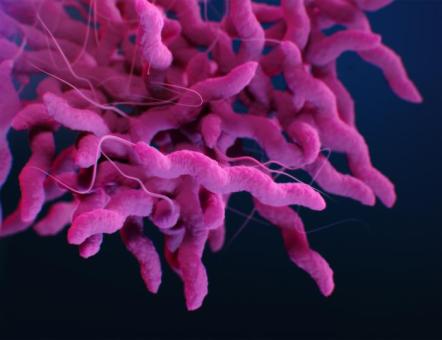
Image CDC

Background

Following an initial reduction in human campylobacteriosis in New Zealand after the implementation of poultry food chain-focused interventions during 2006–2008, further decline has been relatively small.
We report a year-long study of notified campylobacteriosis cases, incorporating a case control study combined with a source attribution study. The purpose was to generate up-to-date evidence on the relative contributions of different sources of campylobacteriosis in New Zealand.

Methods

The study approach included: A case-control study of notified cases (aged six months or more) sampled in a major urban centre (Auckland, every second case) and a mixed urban/rural area (Manawatū/Whanganui, every case), between 12 March 2018 and 11 March 2019.
Source attribution of human campylobacteriosis cases sampled from these two regions over the study period by modelling of multilocus sequence typing data of Campylobacter jejuni and C. coli isolates from faecal samples of notified human cases and relevant sources (poultry, cattle, sheep).

Results

Most cases (84%) were infected with strains attributed to a poultry source, while 14% were attributed to a cattle source. Approximately 90% of urban campylobacteriosis cases were attributed to poultry sources, compared to almost 75% of rural cases.
Poultry consumption per se was not identified as a significant risk factor. However specific risk factors related to poultry meat preparation and consumption did result in statistically significantly elevated odds ratios.

Conclusions

The overall findings combining source attribution and analysis of specific risk factors indicate that poultry meat remains a dominant pathway for exposure and infection.