Category Archives: Research

Research – Microbial load and Prevalence of Escherichia coli, and Salmonella spp. in Macadamia Nut Production Systems

Journal of Food Protection

This study evaluated the potential impact of environmental factors and harvesting practices on microbial load of macadamia nuts. Three farms located in the main macadamia nut production regions including Mbombela (A), Barberton (B) and White River (C) areas in Mpumalanga Province, South Africa were sampled over a ,rtwo-year period. A total of 264, irrigation water (54), soil (30) and macadamia nut (180) samples were collected and evaluated for microbial concentrations. All water samples had mean E. coli counts below 1000 CFU/100ml which is the standard regulatory requirement for agricultural water considered fit-for-purpose for irrigation of nut trees in south Africa. Mean total aerobic plate counts of on-tree nut-in-husk samples (3.91 log CFU/g; n=60) increased after harvesting (5.98 log CFU/g; n=60) but decreased with dehusking to 4.89 log CFU/g (n=60) on nut-in-shell. Salmonella spp. were only detected in water samples from two farm B (67 %; n=18) and C(15 %; n=18). However, neither Listeria monocytogenes nor Salmonella spp. were detected in any of the soil samples. Escherichia coli were only detected in 20 % (n=10) of soil samples collected from two farms (A and B). None of the E. coli isolated in this study were positive for the eae, stx 1, and stx 2, enterohaemorrhagic E. coli (EHEC), virulence genes. Information from this study provides basic data that can be used in the development of macadamia nut specific hazard assessment tools within primary production environments.

Research – Observed potential cross-contamination in retail delicatessens

Journal of Food Protection

Listeria monocytogenes (L. monocytogenes) is a persistent public health concern in the United States and is the third leading cause of death from foodborne illness. Cross-contamination of L. monocytogenes is common in delis (between contaminated and uncontaminated equipment, food and hands) and likely plays a role in the associated with retail deli meats. In 2012, EHS-Net conducted a study to describe deli characteristics related to cross-contamination with L. monocytogenes. The study included 298 retail delis in six state and local health departments’ jurisdictions and assessed how well deli practices complied with the Food and Drug Administration (FDA) Food Code provisions. Among delis observed using wet wiping cloths for cleaning, 23.6% did not store the cloths in a sanitizing solution between uses. Observed potential cross-contamination of raw meats and ready-to-eat foods during preparation (e.g., same knife used on raw meats and ready-to-eat foods, without cleaning in between) was present in 9.4% of delis. In 24.6% of delis with a cold storage unit, raw meats were not stored separately from ready-to-eat products in containers, bins, or trays. A proper food safety management plan can reduce gaps in cross-contamination and include the adoption of procedures to minimize food safety risks, training with instructions and in-person demonstrations and certifying staff on those procedures, and monitoring to ensure procedures are followed.

Research – Salmonella Infection in Nursery Piglets and Its Role in the Spread of Salmonellosis to Further Production Periods

MDPI

Few studies have focused on assessing Salmonella infection in the nursery and its role in further pig production periods. Mesenteric lymph nodes, intestinal content, and meat juice from 389 6-week-old male piglets intended for human consumption from five breeding farms and 191 pooled floor fecal samples from gilt development units (GDU) from the same farms were analyzed to estimate and characterize (by pulsed-field gel electrophoresis and antimicrobial resistance analyses) Salmonella infection. The prevalence of infection and shedding among piglets was 36.5% and 37.3%, respectively, shedding being significantly associated with infection (Odds Ratio = 12.7; CI 7.3–22.0). Salmonella Rissen; S. 4,[5],12:i:-; and S. Derby were the most common serotypes. A low level of Salmonella-specific maternal antibodies at the beginning of the nursery period suggested it was a period of high risk of infection. Resistance to 3rd- and 4th-generation cephalosporins was detected in piglet isolates although the piglets never received antibiotics, indicating they could be vectors of antimicrobial resistance. The same Salmonella clones were detected in piglet and GDU isolates, suggesting that infected piglets play a significant role in the infection of gilts and consequently of finishing pigs in the case of production farms. The control of Salmonella infection in nursery piglets may decrease the risk of abattoir and carcass contamination.

Research – New infrared heat treatment approaches to dry and combat fungal contamination of shelled corn

Wiley Online

Commercial application of infrared (IR) heat has been hampered by a lack of readily available data adaptable to high‐throughput (HT) drying requirements in the grain processing industry. This study evaluated the effectiveness of a continuous flow IR heating system to simultaneously dry and decontaminate corn over various drying bed thicknesses (1.5, 2.7, and 4.5 cm). Additionally, impacts of intermediate tempering treatment and variation of IR emitter angle (zero [E‐0] and 30 [E‐30] degrees) on drying and decontamination of the corn were determined. Although IR heating was able to dry and decontaminate corn at the initial moisture content (MC) of ≈21% wet basis (w.b.), moisture removal was most effective at the least bed thickness (1.5 cm). At 1.5 cm bed thickness, a safe storage MC (<14%) was achieved after 15 min of IR heating. At all the bed thicknesses, IR heating with intermediate tempering resulted in higher fungal inactivation than IR heating without tempering. Infrared heating of corn at 1.5 cm bed thickness plus tempering resulted in a total fungal count (TFC) reduction of 3.1 and 4.6 log CFU/g using IR emitters at E‐30 and E‐0° angles, respectively. However, increasing the bed thickness to 2.7 cm resulted in a TFC reduction of 4.8 and 4.6 log CFU/g using E‐30 and E‐0, respectively. Infrared heating using E‐0, compared to using E‐30, accelerated TFC reduction when corn samples were dried at 1.5 cm bed thickness. These results could help guide the design of HT corn drying and decontamination systems.

Research – Evaluation of a test method to detect hepatitis A virus in salted shellfish

Wiley Online

Contaminated salted shellfish were a suspected cause of the 2019 hepatitis A outbreak in Korea; however, no virus was detected in the shellfish by the virus detection tests used. In this study, we investigated the shortcomings of these detection tests for identifying hepatitis A virus in salted shellfish to serve as a guide for improvement of these tests. Salted shellfish were washed and desalted before collecting the mid‐guts for testing. For verification of the method, the mid‐guts were first inoculated with norovirus and then RT‐qPCR was performed to determine the presence of norovirus genes. The norovirus gene was amplified normally along with an internal positive control; however, when the nucleic acid was extracted to be concentrated, gene amplification was inhibited. Since NaCl was the suspected contaminant, RT‐qPCR was then performed on samples that had been desalinated for 2 days, and hepatitis A virus genes were successfully detected. Gene amplification enabled analyzing the relationship between patients in the outbreak and the distributed salted shellfish. To detect viral contamination in salted and fermented specimens such as salted shellfish, it is imperative to extract the mid‐gut intestinal tract and remove any PCR inhibitors (e.g., excess salt). In this study, desalting salted shellfish using sterile distilled water before harvesting the mid‐gut was effective in facilitating hepatitis A detection. Development of future test methods requires accurately determining the effect of PCR inhibitors through the incorporation of an IPC in genetic detection tests.

Research – Control of Salmonella and Pathogenic E. coli Contamination of Animal Feed Using Alternatives to Formaldehyde-Based Treatments

MDPI

kswfoodworld salmonella

This study compared a novel non-formaldehyde combination product developed for pathogen control in animal feed Finio (A), with a panel of three commonly used organic acid feed additive products: Fysal (B), SalCURB K2 (C) and Salgard (D). Products were evaluated for their ability to reduce Salmonella Typhimurium DT104 and avian pathogenic Escherichia coli in poultry feed. A commercial layer-hen mash was treated with each product and then mixed with feed previously contaminated (via inoculated meat and bone meal) with either Salmonella or E. coli. After 24 hours at room temperature, 10 replicate samples were taken from each preparation and plate counts were performed using a selective agar. All concentrations of product A (0.5, 1.0, 1.5, 2.0 and 2.5 kg per metric tonne (MT)) plus the higher concentration of products B and D (6.0 kg MT−1) significantly reduced Salmonella counts compared with those in the untreated control group (< 0.05). Product C did not significantly reduce levels of Salmonella under these conditions. Because of the poor recovery of E. coli, statistical comparisons for this organism were limited in scope, but only product A at the highest concentration appeared to have eliminated it.

Research – Vibrio parahaemolyticus: University of Exeter researchers discover how it can go dormant and then ‘wake up’

Outbreak News Today

Food Illness

Scientists have discovered how bacteria commonly responsible for seafood-related stomach upsets can go dormant and then “wake up”.

Vibrio parahaemolyticus is a marine bacterium that can cause gastroenteritis in humans when eaten in raw or undercooked shellfish such as oysters and mussels.

Some of these bacteria are able to turn dormant in poor growth conditions such as cold temperatures – and can remain in that state of hibernation for long periods before resuscitating.

University of Exeter scientists have identified a population of these dormant cells that are better at waking up, and have discovered an enzyme involved in that waking up process.

“Most of these bacteria die when they encounter poor growth conditions, but we identified sub-populations of bacteria that are able to stay dormant for long periods of time,” said lead author Dr Sariqa Wagley, of the University of Exeter.

Hong Kong – Bacillus cereus in Soybean Milk

CFS

Recently, the Centre for Food Safety (CFS) collected a soybean milk sample from a local food shop when following up on a food complaint. The sample was later found containing a bacterium known as Bacillus cereus (B. cereus) in an amount that exceeded the limit in the CFS’ Microbiological Guidelines for Food and was consided unsatisfactory. Soybean milk produced by local retail shops, such as soybean product shops and congee shops, usually has a short shelf life and requires stringent temperature control to maintain its safety. In this article, we will look into how the bacterium finds its way to survive in soybean milk production and how to prevent it.
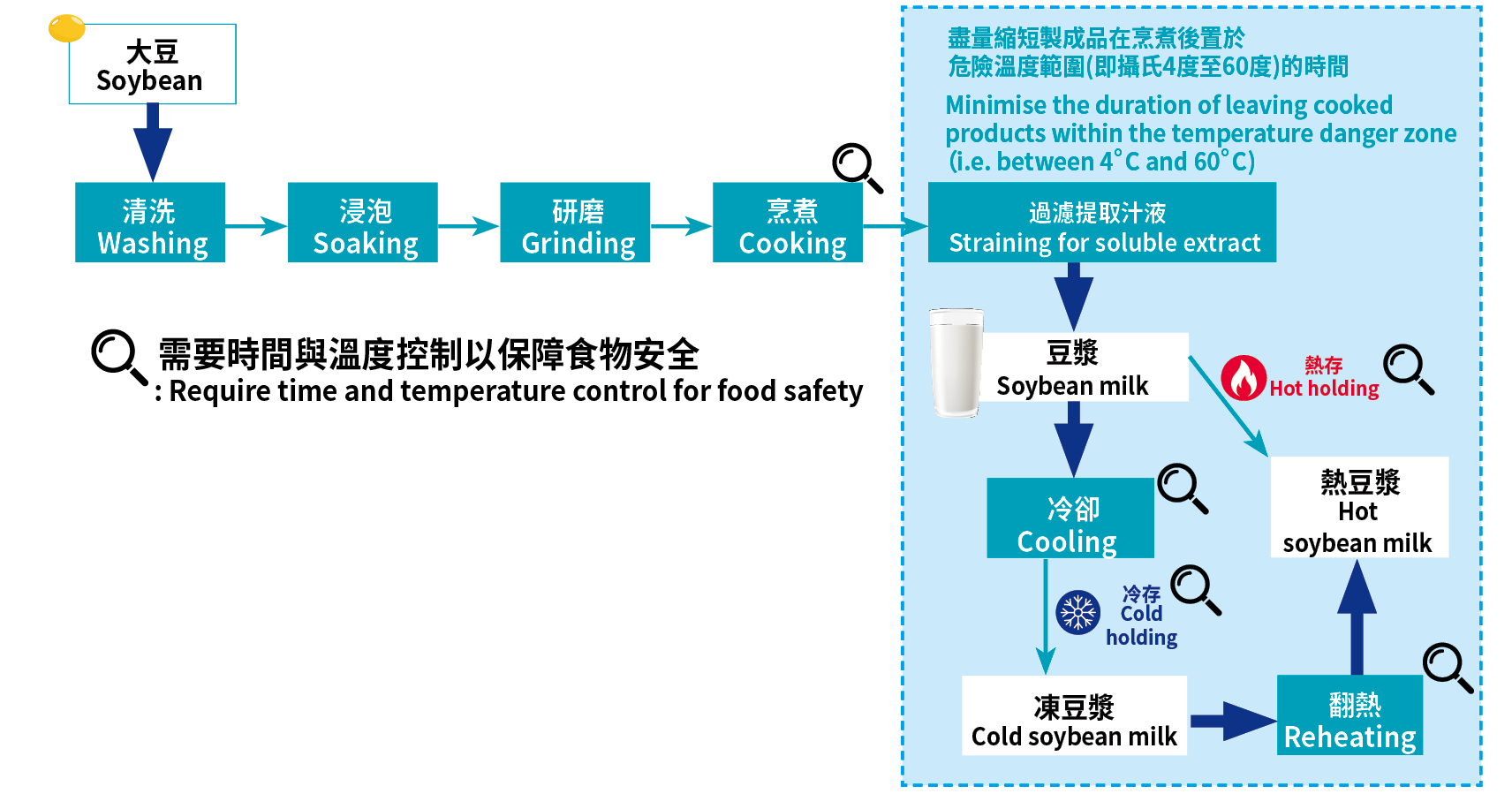
Figure 1 Highlights of processes requiring time and temperature control during production of soybean milk

Bacillus cereus Surviving Heat Treatment

B. cereus is a spore-forming bacterium and is ubiquitous in the environment. It is naturally present in soils, plants, agricultural products, etc. Hence, soybeans used in the production of soybean milk (see Figure 1) may contain B. cereus.

While cooking is effective to kill vegetative cells of B. cereus, its spores are heat-resistant and can only be eliminated by high temperature treatment, e.g. 121°C for 3 minutes. In this regard, the cooking temperature of soybean milk production at retail shops is not sufficient to kill the spores. Instead, the heat of cooking can not only induce the spores to germinate and become vegetative cells, but also create a favourable environment for the cells to grow by eliminating other microorganisms competing for growth. As a result, if the soybean milk is left under ambient condition for a prolonged period of time after cooking, vegetative cells can proliferate into a large number.

The vegetative cells can then produce a heat-resistant emetic (i.e. causes vomiting) toxin.  Even if contaminated soybean milk is reheated subsequently, it can still cause food poisoning that is characterised by causing the victim to vomit shortly after consumption.

Prevention by Time and Temperature Control

Despite the tenacious nature of B. cereus, soybean milk can still be safely produced. To prevent the microbiological hazard, certain production processes require time and temperature control (see Figure 1). First, the soybean slurry from grinding process has to be cooked thoroughly to kill B. cereus vegetative cells and other bacteria.  The heat treatment can also denature soybean enzymes that affect digestion of consumers.

After cooking, it is important to minimise the duration of leaving cooked products within the temperature danger zone, i.e. between 4°C and 60°C, in order to prevent the growth of vegetative cells of B. cereus formed from surviving spores. Cooked soybean slurry is strained through cheese cloth for soluble extract, i.e. soybean milk.  After straining, freshly made soybean milk can be held at above 60°C for hot serving.  As for cold soybean milk, it has to be cooled as quickly as possible, i.e. cooling to 20°C within two hours, and then to 4°C within the next four hours or less. Cooled soybean milk can then be stored at or below 4°C for cold serving. At certain food service businesses, soybean milk in cold holding may be reheated for serving. In that case, it has to be reheated with temperature reaching at least 75°C.

Last but not least, the production environment and equipment have to be kept hygienic to reduce microbiological contamination.  In particular, the equipment used after cooking processes, such as cheese cloth, container and dispenser, has to be cleaned after each use to minimise the building up of B. cereus which may contaminate cooked soybean milk of the next batch.

Key Points to Note

  1. Soybeans can be naturally contaminated with B. cereus. Normal cooking can kill vegetative cells of B. cereus, but not the spores and toxin of it.
  2. If cooked soybean milk is left at ambient temperature for too long, vegetative cells of B. cereus formed from surviving spores can produce toxin.
  3. It is important to minimise the duration of leaving soybean milk at a temperature range between 4°C and 60°C after cooking which favours the growth of B. cereus vegetative cells and toxin production.

Advice to the Trade

  • Avoid over-production as soybean milk has a short shelf life.
  • Speed up the cooling process by, for example, dividing soybean milk into small portions or using water bath or ice bath to cool bottled soybean milk.
  • Minimise the storage time of soybean milk, preferably clearing the stock within one day after production.

Advice to the Public

  • Consume soybean milk produced at retail shops as soon as possible.
  • Refrigerate the soybean milk at 4°C or below if it is not to be consumed immediately.

UK – The co-location of food and pet food production Guidance and advice for Food Business Operators and their enforcement agencies Published: December 2020

FSA

Click to access guidance-on-co-location-of-food-and-pet-food-production.pdf

Research – Light technology kills eggshell pathogens

KMA Land

hazegg.jpg

Pulsed ultraviolet light can be an alternative to some of the antimicrobial technologies now used in the poultry industry to kill pathogens, according to researchers at Pennsylvania State University. By reducing the microbial load on eggshells, foodborne illness associated with eggs and poultry meat can be reduced while chick health is maintained.

Paul Patterson, a professor of poultry science at Penn State, said the technology has merit for commercial application. The research team applied components of standard egg processing to a conveyor and sanitized eggs in a commercial setting, he said.

In the study eggshells were inoculated with nonpathogenic bacterial strains used for research. They were treated with pulsed ultraviolet light derived from a xenon flashlamp. Eggs were exposed on a modified egg-carrying conveyor that provided complete rotation of eggs under the flashlamp.

The researchers found that pulsed ultraviolet light treatment inactivated two different microbial strains with greater energy.