Category Archives: Research

Research – Monitoring online posts by consumers could help improve food safety

Phys Org

An estimated 48 million cases of foodborne illness are contracted in the United States every year, causing about 128,000 hospitalizations and 3,000 deaths, according to the Centers for Disease Control (CDC). In some instances, the source is well known, such as a batch of tainted ground beef that infected 209 people with E. Coli in 2019. But 80 percent of food poisoning cases are of unknown origin, making it impossible to inform consumers of hazardous food items.

David Goldberg, assistant professor of management information systems at San Diego State University, wants to improve the traceability and communication of risky  products. In a new study published by the journal Risk Analysis, his research team proposes a new Food Safety Monitoring System (FSMS) that utilizes consumer comments posted on websites to identify products associated with food-related illnesses.

The researchers utilized an AI technology called text mining to analyze comments and reviews from two websites: Amazon.com, the world’s largest e-commerce retailer, and IWasPoisoned.com, a site where consumers alert others to cases of food poisoning. The database consisted of 11,190 randomly selected Amazon reviews of “grocery and canned food” items purchased between 2000 and 2018, along with 8,596 reviews of food products posted on IWasPoisoned.com. These two datasets allowed the researchers to test the text mining tools before analyzing 4.4 million more Amazon reviews.

UK – An outbreak of human listeriosis associated with frozen sweet corn consumption: Investigations in the UK

Science Direct

The use of Whole genome sequencing (WGS) identified a multi-country outbreak of human listeriosis associated with consumption of frozen sweet corn produced in Hungary. The purpose of this report was to summarise information on the cases occurring in the UK which were part of this outbreak and outline investigations on the presence of Listeria monocytogenes in the affected food chain.

Prior to the international recall of this product in 2018, 12 UK cases of listeriosis were identified as infected by the outbreak strain between 2015 and 18. Epidemiological and microbiological investigations confirmed these cases as belonging to the outbreak. A further case occurred in 2019 and a contaminated frozen pack from one of the implicated batches of sweet corn was recovered from the patient’s domestic freezer.

The outbreak strain was also detected in products from a sandwich manufacturer in 2018 which added frozen sweet corn directly to sandwich fillings. The sandwich manufacturer’s sweet corn was supplied by a distributor in England which obtained frozen products from the Hungarian manufacturer implicated in the outbreak. Within the distributor’s premises, 208 food and environmental samples were taken: L. monocytogenes was detected in 44% of 70 samples of frozen sweet corn and 5% of 79 other foods.

The outbreak strain was detected in the frozen sweet corn, in one other frozen food (mixed vegetables) and in the factory environment. The outbreak strain was also recovered from frozen beans on retail sale in the first four months of 2019. Five other L. monocytogenes strains together with two other Listeria species were detected in samples from the importer’s premises. One of the L. monocytogenes strains in the importer’s factory, which was distinct from the outbreak strain, was also recovered from sweet corn collected from the sandwich manufacturer, sweet corn tested in England in 2013 and 2016 and the blood of two cases of human listeriosis which occurred in England in 2014. This report shows how analysis by WGS provides evidence to understand complex food chains.

This report also highlights risks for transmission of human listeriosis from frozen sweet corn and the potential for misuse of this food as a ready-to-eat product.

Germany – Germany warns of salmon linked to Listeria infections

Food Safety News

A significant proportion of listeriosis cases in Germany are caused by eating smoked or cured salmon products, according to the Robert Koch-Institut (RKI).

A total of 22 cross-federal state outbreaks of listeriosis have evidence pointing to smoked or cured salmon products as the cause of infections. This includes 15 illnesses from 2010 to 2015 and 41 in both 2019 and 2020.

These outbreaks include 236 clinical Listeria monocytogenes isolates and 208 cases of listeriosis could be assigned to these isolates.

Patients were diagnosed between 2010 and 2020. This past year 41 people got sick in 14 of the 22 outbreaks which suggests that the sources of infection persist and outbreaks are ongoing.

Information – Food Safety During Pregnancy

MPI

FW20017: Food Safety During Pregnancy
Most foods and drinks are safe to consume during pregnancy. But there are some products pregnant women should be careful with or avoid. Public Health and Food Safety authorities in most OECD countries provide risk communication material related to food safety during pregnancy. Such a resource is available on the New Zealand Food Safety (NZFS) website.
However, this advice was published in 2007 and was based on information available then. Since that time a range of new foods has been introduced and become popular in the diet of New Zealanders, while there is improved understanding over which foods might be a risk.
NZFS wants to ensure the food safety advice for pregnancy remains current with the latest science and dietary practices for New Zealand.It is important that food safety advice for pregnant women captures all of the foods that could be a risk, however it needs to balance this with ensuring pregnant women can maintain a varied diet and have access to the widest source of nutrition without being overly restrictive.
To achieve this a research project was commissioned to the Institute of Environmental Science and Research Limited (ESR) to provide a scientifically robust background for updating food safety advice for pregnant women. Food safety considerations are focused on Listeria monocytogenes, Toxoplasma gondii, mercury and caffeine, as these four hazards have known specific impacts on the foetus.
Other microbiological and chemical hazards were not targeted as the risks are not pregnancy specific and food safety advice for the general public is also applicable for pregnant women. This report is restricted to food safety issues and does not cover advice on healthy nutrition during pregnancy.Maternal exposure to the microbiological hazards Listeria monocytogenes and Toxoplasma gondii is strongly linked to adverse effects on the foetus. For two other microbiological hazards, Salmonella spp. and Campylobacter spp., associated with adverse outcomes specific to the pregnancy period, the supporting epidemiological evidence is weaker.
The report has examined up-to-date information on these two other hazards and provided safety advice where relevant.The research examined data on complex changes in the maternal immune system that include both down regulation and up regulation of aspects of the immune system. Evidently pregnant women may be more susceptible to some infections than non-pregnant women, but no more susceptible to most types of infections. However, the complications of common infections in pregnant women can be more severe.
The main outcome of the research is an evaluation of evidence for food safety advice during pregnancy. The report included an evaluation of all food groups listed in the current New Zealand Food Safety’s guide to food safety in pregnancy. Consideration was also given to a small number of foods that were not previously evaluated in relation to pregnancy. Additional advice was proposed for these foods. NZFS agrees with the suggestion that advice should

New Zealand Food Safety Food Safety During Pregnancy be included in the guide for sprouts, recommending that these foods are not eaten unless cooked; for dried herbs recommending thorough cooking and a recommendation to not drink unpasteurised fruit juice and cider (non-alcoholic). The report confirmed that in most cases, New Zealand Food Safety’s advice on foods to eat or not eat during pregnancy are consistent with the available scientific evidence.
In a small number of instances, suggestions were made to better align the advice with the current available evidence. NZFS agrees with these suggestions and intends to expand the advice accordingly. Based on the evidence provided NZFS agrees that the current advice related to low acid soft pasteurised cheeses (e.g. Brie, Camembert, blue, ricotta, mozzarella, feta) should be strengthened to recommend that pregnant women do not eat these cheeses unless cooked.The report supports NZFS’s intention to make its advice on a range of commercial pasteurised dairy products with relatively short shelf-life less restrictive. Currently the advice is to dispose products like pasteurised milk or yoghurt after two days of opening.
The reviewed scientific evidence identified that, if that the products are refrigerated in original packaging and care is taken not to contaminate lids when using, it is safe to follow manufacturer’s advice on the package. Suggested modifications will allow pregnant women better planning of their daily diets and will also reduce unnecessary food wastage.
The report has suggested the current advice related to soft serve ice cream be reconsidered. However, NZFS’s opinion is that, given the likelihood of Listeria sloughing into the product through its processing, current advice to avoid this product during pregnancy is adequate. For some foods the scientific evidence is not currently strong enough to support specific food safety advice on these foods, although the available evidence suggests they may represent potentially emerging risk foods for pregnant women. A brief summary of such foods is provided at the end of the report. NZFS will follow up on any new scientific research related to these products.

Europe – Yersiniosis – Annual Epidemiological Report for 2019

ECDC

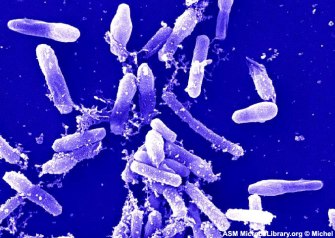
Yersinia p

For 2019, 29 countries reported 7 048 confirmed yersiniosis cases in the EU/EEA. The overall notification rate of 1.7 per 100 000 population remained stable from 2015 to 2019. The highest rates were reported by Finland, Lithuania and Czechia. The highest rate was detected in 0–4 year-old children, with 7.2 per 100 000 population for males and
5.9 per 100 000 population for females.

Download

Research – Listeria monocytogenes Biofilms in the Food Industry: Is the Current Hygiene Program Sufficient to Combat the Persistence of the Pathogen?

MDPI

Biofilms contain microbial cells which are protected by a self-produced matrix and they firmly attach themselves to many different food industry surfaces. Due to this protection, microorganisms within biofilms are much more difficult to eradicate and therefore to control than suspended cells. A bacterium that tends to produce these structures and persist in food processing plants is Listeria monocytogenes. To this effect, many attempts have been made to develop control strategies to be applied in the food industry, although there seems to be no clear direction on how to manage the risk the bacteria poses. There is no standardized protocol that is applied equally to all food sectors, so the strategies for the control of this pathogen depend on the type of surface, the nature of the product, the conditions of the food industry environment, and indeed the budget. The food industry performs different preventive and corrective measures on possible L. monocytogenes-contaminated surfaces. However, a critical evaluation of the sanitization methods applied must be performed to discern whether the treatment can be effective in the long-term. This review will focus on currently used strategies to eliminate biofilms and control their formation in processing facilities in different food sectors (i.e., dairy, meat, fish, chilled vegetables, and ready-to-eat products). The technologies employed for their control will be exemplified and discussed with the objective of understanding how L. monocytogenes can be improved through food safety management systems. View Full-Text

Research – Evaluation of foodborne pathogen die-off in back-sweetened wine and apple cider models

Journal of Food Protection

Wine and alcoholic apple cider are commonly back-sweetened with unpasteurized juice to produce fresh, natural, and palatable sweetened alcoholic beverages. Foodborne pathogens may be introduced from unpasteurized juice into alcoholic beverages through this back-sweetening process. Although pathogens generally do not survive under low pH conditions or high alcohol environment, the die-off of these pathogens has not been established to ensure the safety of the products. To determine the safety of these back-sweetened beverages, we evaluated the survival of three common foodborne pathogens, E. coli O157:H7, Salmonella enterica , and Listeria monocytogenes in modified white grape juice and apple juice models. White grape juice and apple juice were modified with hydrochloric acid/sodium hydroxide and ethanol to achieve conditions that are similar to the back-sweetened white wine and alcoholic apple cider. Pathogen cocktails were inoculated separately into modified juice models and their survival in the juice models were recorded over a 96-hour period. Our results show that a combination of low pH and high ethanol content resulted in a faster pathogen die-off compared to higher pH and lower ethanol conditions. The holding times required for different combinations of pH and ethanol concentration for each juice model to achieve 5-log reduction were reported. This research provides data to validate pathogen die-off to comply with Juice HACCP 5-log pathogen inactivation requirements for back-sweetened wine and alcoholic apple cider.

Research – Impact of a Combination of UV-C Irradiation and Peracetic Acid Spray Treatment on Brochothrix thermosphacta and Yersinia enterocolitica Contaminated Pork

MDPI

Efficient ways of decontamination are needed to minimize the risk of infections with Yersinia (Y.) enterocolitica, which causes gastrointestinal diseases in humans, and to reduce the numbers of Brochothrix (B.) thermosphacta to extend the shelf-life of meat. While many studies have focused on a single treatment of peracetic acid (PAA) or UV-C-irradiation, there are no studies about a combined treatment on meat. Therefore, in the present study, pork was inoculated with either Y. enterocolitica or B. thermosphacta, and was treated with a combination of 2040 mJ/cm2 UV-C irradiation followed by a 2000 ppm PAA spray treatment (30 s). Samples were packed under modified atmosphere and stored for 1, 7, or 14 days. The samples were examined for Y. enterocolitica and B. thermosphacta content, chemical and sensory effects, and meat quality parameters. For Y. enterocolitica, a significant reduction of up to 2.16 log10 cfu/cm2 meat and for B. thermosphacta, up to 2.37 log10 cfu/cm2 meat was seen on day 14 after UV-C/PAA treatment compared to the untreated controls.

Research – Case Report: Identification of the Source for Salmonella Contamination of Carcasses in a Large Pig Slaughterhouse

MDPI

To identify the major source of Salmonella contamination in a pig slaughterhouse, samples were collected from the clean and unclean area and Salmonella isolates were further typed. Carcasses entering the clean area showed a Salmonella contamination rate of 96.7% in the oral cavity and 55.0% in the rectum content samples. Evisceration seemed not to be critical as the contamination rate of the carcasses was similar before (16.7%) and after (18.3%) this slaughter step. In the unclean area, a limited number of oral cavity samples were positive after bleeding, while a dramatic increase of positives was observed after dehairing. Salmonella was detected in up to 0.01 mL of the recycled water collected from the dehairing machine. Genotyping of Salmonella isolates showed that similar pulsotypes were present in the oral cavity and recycled water. Based on these observations it can be concluded that the recycled water used in the dehairing machine was the major source for the carcass contamination in this slaughterhouse. View Full-Text

Research – High risk of potential diarrheagenic Bacillus cereus in diverse food products in Egypt

Journal of Food Protection

bacillus

Bacillus cereus is one of the important foodborne pathogens that can be found in various foodstuffs; causing diarrheal and/or emetic syndromes. This study aimed to evaluate the prevalence, antimicrobial susceptibility profile, pathogenic potential, and genotypic diversity of B. cereus isolated from diverse food products from markets in Cairo, Egypt. A total of 39 out of 165 food samples were positive for B. cereus (detection rate of 24%) with a contamination level ranged from 2 to 6 log CFU/g and a higher incidence of > 3 log bacterial count. Antimicrobial susceptibility testing showed that B. cereus isolates were fully sensitive to all tested antimicrobial agents except β-lactams. The pathogenic potential of the 39 B. cereus isolates was assessed by detecting and profiling the secreted virulence or toxin encoding genes including the chromosomal-carried genes hblA , bceT , plc , sph , nheA , entFM , cytK associated with the diarrheal syndrome and the plasmid-carried ces gene associated with the emetic syndrome. The most frequently detected  genes were hblA , nheA and entFM . All isolates harbored more than one of the diarrheal enterotoxins encoding genes with the genetic profile hblA-bceT-nheA-entFM-cytK-plc-sph was the most prevalent (in 20/39 isolates). The emetic toxin ces was not detected at all. ERIC-based analysis of the 20 B. cereus isolates harboring the prevalent genetic profile revelated that they were genetically distinct. In conclusion, the findings of this study provide useful information for public health management and serve as a warning of the potential risk of diarrheagenic B. cereus in diverse food products. Therefore, the consideration to extensively study the epidemiology of this food pathogen in Egypt is warranted. Additionally, strict procedures should be applied to monitor, protect, and safely handle food products, particularly ready to eat foodstuffs that are usually consumed without heat treatment.