Category Archives: Research

Research – Systematic risk ranking of microbiological hazards in infant foods

Science Direct

Abstract

Ensuring food safety, particularly for vulnerable groups, like infants and young children, requires identifying and prioritizing potential hazards in food chains. We previously developed a web-based decision support system (DSS) to identify specific microbiological hazards (MHs) in infant and toddler foods through a structured five-step process. This study takes the framework further by introducing systematic risk ranking (RR) steps to rank MH risks with seven criteria: process survival, recontamination, growth opportunity, meal preparation, hazard-food association evidence, food consumption habits of infants and toddlers in the EU, and MH severity. Each criterion is given a semi-quantitative or quantitative score or risk value, contributing to the final MH risk calculation via three aggregation methods: semi-quantitative risk scoring, semi-quantitative risk value, and outranking multi-criteria decision analysis (MCDA). To validate the criteria and ranking approaches, we conducted a case study to rank MH risks in infant formula, compared the results of the three risk ranking methods, and additionally evaluated the ranking results against expert opinions to ensure their accuracy. The results showed strong agreement among the three methods, consistently ranking Salmonella non-Typhi and Cronobacter spp. and Shiga-toxin-producing Escherichia coli as the top MH risks in infant formulae, with minor deviations. When MHs were ranked after an initial hazard identification step, all three methods produced nearly identical MH rankings, reinforcing the reliability of the ranking steps and the selected criteria. Notably, the risk value and MCDA methods provided more informative MH rankings compared to the risk scoring method. The risk value and risk scoring methods were implemented into an online tool, called the MIcrobiological hazards risk RAnking decision support system (Mira-DSS), available at https://foodmicrobiologywur.shinyapps.io/MIcrobial_hazards_RAnking/. In conclusion, our framework enables the ranking of MH risks, facilitating intervention comparisons and resource allocations to mitigate MH risks in infant foods, with potential applicability to broader food categories.
Research – Report on the establishment of the safe shelf life of certain ready-to-eat, sliced and pre-packaged foods in the retail trade in relation to the risk of Listeria monocytogenes

Wiley Online

Report on the establishment of the safe shelf life of certain ready-to-eat, sliced and pre-packaged foods in the retail trade in relation to the risk of Listeria monocytogenes
Abstract
The Barcelona Public Health Agency (ASPB) asked the Scientific Advisory Committee on Food Safety for an opinion on the safe shelf life of Listeria monocytogenes in certain products (cheeses, cooked meats, including pâtés, and cured meats) sliced and pre-packaged prior to retail sale.
In order to assess in which cases or under which conditions ready-to-eat foods under study may promote the growth of pathogenic microorganisms during their shelf life the methodology proposed by EFSA (2020) was used. In addition, the predictive model of growth / non-growth boundaries, based on the gamma concept approach, was applied.
To carry out this assessment, the ASPB provided a total of 90 samples (32 in 2020
and 58 in 2021) divided into 4 categories of ready-to-eat foods: cheese, cooked ham, pâté / foie and cured ham. In all cases, the food was sliced or cut into portions in retail establishments of the city of Barcelona, and packaged in different formats: vacuum-packed, in a heat-sealed or shrink-wrapped tray, or wrapped in film.
The results of the evaluation indicated that the ready-to-eat pre-packaged foods evaluated for the group of cheeses, cooked ham, pâtés and foie required the indication of “use by” date, as the handling conditions expose the product to a potential L. monocytogenes contamination and the pH and aw (water activity) characteristics associated with these products support its growth.
Considering a reasonably foreseeable scenario in relation to storage temperature
conditions in retail (2 days at 5 °C) and in a domestic refrigerator (5 days at 9.5 °C), the safe shelf life of the products that more would favor the growth of L. monocytogenes would be between 4.5 and 4.9 days (corresponding to the 5th and 10th percentile, respectively). This estimate is the result of a conservative approach that provides a margin of safety to the outcome of the evaluation.

Research – Mycotoxin control in cereals: safe guarding food

Safe Food Net

The aim of this research was to review (and where possible improve/refine
current rapid screening methods for the mycotoxin T-2 and its metabolites in
cereals for human consumption.
Researchers engaged with the relevant sector of the cereal processing industry in
Ireland and the UK, and the relevant primary production sector, to gain detailed,
valuable information.
The research conducted was designed to clarify deficits in T-2 toxin control in the
relevant processing and primary production sectors, evaluate the robustness of
current analytical detection and control methods therein, augment same if deemed
necessary, and implement workable T-2 toxin control solutions at sectoral level.
Objectives
The specific objectives of the research project were to:
• Conduct a literature review of the most up-to-date scientific and
regulatory data for T-2 toxin and its metabolites, the specific environmental conditions required for their production, and the impact of climate change on their occurrence and distribution.
• Undertake a thorough analysis of the currently available commercial rapid analytical techniques for the screening of T-2 and HT-2 toxins in cereals for direct human consumption.
• Undertake a survey of the relevant processing and primary production sectors to determine what testing they currently conduct for mycotoxins, to fully understand the shortfalls in relation to mycotoxin monitoring and control within the industry.
Conduct a survey of oats and barley (n≥100) using mass spectrometry to identify contamination levels of, not only the mycotoxins of interest, i.e., T-2 and HT-2, but also all other regulated mycotoxins including aflatoxins, deoxynivalenol, zearalenone, fumonisins and ochratoxin A.
• Perform a thorough evaluation of a selected number of rapid test kits to ascertain fitness for purpose and determine how to adapt the most robust methods for better performance. If required, undertake a training workshop on the use of the best performing rapid testing kits.
• Engage with stakeholders to discuss the implications of the findings of
the project and produce a series of conclusions and recommendations
for stakeholders on the island of Ireland.

Research – Staphylococcal Enterotoxins: Description and Importance in Food

MDPI

Abstract
Staphylococcus aureus stands out as one of the most virulent pathogens in the genus Staphylococcus. This characteristic is due to its ability to produce a wide variety of staphylococcal enterotoxins (SEs) and exotoxins, which in turn can cause staphylococcal food poisoning (SFP), clinical syndromes such as skin infections, inflammation, pneumonia, and sepsis, in addition to being associated with the development of inflammation in the mammary glands of dairy cattle, which results in chronic mastitis and cell necrosis. SEs are small globular proteins that combine superantigenic and emetic activities; they are resistant to heat, low temperatures, and proteolytic enzymes and are tolerant to a wide pH range. More than 24 SE genes have been well described (SEA-SEE, SEG, SEH, SEI, SEJ, SElK, SElL, SElM, SElN, SElO, SElP, SElQ, SElR, SElS, SElT, SElU, SElV, SElW, SElX, SElY, and SElZ), being a part of different SFP outbreaks, clinical cases, and isolated animal strains. In recent years, new genes (sel26sel27sel28sel31sel32, and sel33) from SEs have been described, as well as two variants (seh-2p and ses-3p) resulting in a total of thirty-three genes from Ses, including the nine variants that are still in the process of genetic and molecular structure evaluation. SEs are encoded by genes that are located in mobile genetic elements, such as plasmids, prophages, pathogenicity islands, and the enterotoxin gene cluster (egc), and housed in the genomic island of S. aureus. Both classical SEs and SE-like toxins (SEls) share phylogenetic relationships, structure, function, and sequence homology, which are characteristics for the production of new SEs through recombination processes. Due to the epidemiological importance of SEs, their rapid assessment and detection have been crucial for food security and public health; for this reason, different methods of identification of SEs have been developed, such as liquid chromatography coupled with high-resolution mass spectrometry (LC-HRMS), molecular methods, and whole-genome sequencing; providing the diagnosis of SEs and a better understanding of the occurrence, spread, and eradication of SEs. This review provides scientific information on the enterotoxins produced by S. aureus, such as structural characteristics, genetic organization, regulatory mechanisms, superantigen activity, mechanisms of action used by SEs at the time of interaction with the immune system, methods of detection of SEs, and recent biocontrol techniques used in food.

Research – Global prevalence of staphylococcal enterotoxins in food contaminated by Staphylococcus spp.—Systematic review and meta-analysis

Wiley Online

Abstract

This systematic review (SR) and meta-analysis integrates the results of studies on the occurrence of staphylococcal enterotoxin (SE), the knowledge related to the profile of the foods most often involved, and the types of SE found. The study followed the guidelines of the Preferred Reporting Items for SR and Meta-Analyses, and its protocol was registered on the PROSPERO platform (CRD42021258223). Primary cross-sectional studies that report the analysis of SEs in food contaminated by Staphylococcus spp. were selected. All stages of study selection and data extraction were performed by two researchers independently, and in cases of conflicts, a third researcher was consulted. To assess the risk of bias, we used the critical appraisal checklist of the Joanna Briggs Institute. A total of 3012 reports were listed initially and 217 after the search update. After removing the duplicates, 2535 studies were found combining all databases and manual searches. Thus, 38 studies were included in this SR. In the meta-analysis, group 1 (dairy products) showed a prevalence of positive samples for SE of 15.38%, group 2 (meat products) 1.78% and group 3 (other foods) 27.11%. The results showed a considerable prevalence of SE in food contaminated by Staphylococcus spp., especially in group 3, which included mixed and ready-to-eat foods. This SR contributes to the study of the epidemiological profile and highlights the importance of adopting more effective prevention measures and policies aimed at improving public health.

Research – Efficacy of organic acids, lactic and formic acid, and peracetic acid in decontaminating process water and carcasses in chicken slaughter

Wiley Online

Abstract

Foodborne pathogens pose a persistent threat in broiler chicken production, particularly during the slaughter process, where contamination with zoonotic pathogens remains a concern. This study focuses on the potential of organic acids, such as formic and lactic acid, and the oxidizing agent peracetic acid, to decontaminate scalding water and enhance the hygiene of chicken carcasses. We conducted suspension tests introducing various organic loads to mirror the conditions of practical scalding water. Additionally, the surface tests were performed on chicken skin. Both methods were further tested in an experimental slaughtering facility. In suspension tests, the organic acids achieved impressive decontamination, with a 5-log10 reduction of the test organisms Enterococcus hiraeSalmonella Typhimurium and Campylobacter jejuni at minimal concentrations (between 0.04% and 2% for formic acid; between 0.1% and 4.5% for lactic acid). Peracetic acid also effectively sanitized model water and chicken skin, even when used in low concentrations (between 0.001% and 0.1%), both in the laboratory-based testing and in the experimental slaughtering facility. These results suggest that the tested disinfectants can effectively sanitize process water, even under conditions mimicking practical scalding water with organic matter. Peracetic acid, in particular, proved highly effective in improving chicken skin hygiene even at low concentrations.

Research – Innovative Hurdle Strategies for Listeria Control on Food-Contact Surfaces: A Peroxyacetic Acid–Steam Approach

MDPI

Abstract

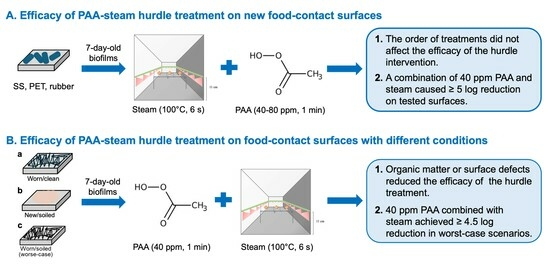
The persistence of Listeria monocytogenes biofilms on equipment surfaces poses a significant risk of cross-contamination, necessitating effective surface decontamination strategies. This study assessed the effectiveness of hurdle treatments combining peroxyacetic acid (PAA) and saturated steam against 7-day-old L. innocua (a non-pathogenic surrogate for L. monocytogenes) biofilms on stainless steel (SS), polyester (PET), and rubber surfaces. Results demonstrated >6 log10 CFU/coupon L. innocua reductions on SS and PET surfaces after PAA (40 ppm, 1 min) followed by steam treatment (100 °C, 6 s). On rubber surfaces, PAA (80 ppm, 1 min) followed by steam treatment (100 °C, 6 s) resulted in ~5 log10 CFU/coupon L. innocua reduction. The presence of apple juice soil reduced the efficacy of hurdle treatments, with PAA (40 ppm, 1 min) and steam exposure (6 s) resulting in 5.6, 5.8, and 4.2 log10 CFU/coupon reductions of L. innocua on SS, PET, and rubber, respectively. The efficacy of this antimicrobial combination was further reduced by surface defects, especially in the presence of organic matter. Nevertheless, the treatment still achieved >5 log10 CFU/coupon reductions of L. innocua on worn SS and PET soiled with apple juice and ~4.5 log10 CFU/coupon reduction on worn, soiled rubber surfaces. These findings highlight that PAA treatments followed by a brief steam exposure are effective strategies for controlling Listeria on food-contact surfaces.

Research – Persistence of Salmonella and Campylobacter on Whole Chicken Carcasses under the Different Chlorine Concentrations Used in the Chill Tank of Processing Plants in Sri Lanka

MDPI

Abstract

The persistence of non-typhoidal Salmonella and Campylobacter in chicken meat is a considerable public health risk and a future challenge. This study aimed to determine the prevalence of Salmonella and Campylobacter in poultry processing lines where different chlorine concentrations were used in the chill tank. The samples were collected from four types of processing plants in Sri Lanka, considering the chlorine concentration used in the chill tank, which ranged from 2 ppm to 50 ppm. Salmonella and Campylobacter were isolated from whole carcass washings, neck skin, and cecal samples. Subsequently, an antimicrobial susceptibility test was performed for the isolates. The results revealed the overall prevalence of Salmonella and Campylobacter was 78.25% and 63.5%, respectively. Positive percentages of Salmonella and Campylobacter were high in the carcasses compared to the neck skin and ceca. The Campylobacter counts on the whole carcasses were significantly low (p < 0.001), at higher chlorine concentrations ranging from 20 to 30 ppm and 40 to 50 ppm. The pathogen prevalence in the whole carcasses was 84.7% Campylobacter coli, 39.1% Campylobacter jejuni, 71.1% Salmonella Typhimurium, and 28.8% Salmonella Infantis. The highest resistance was observed for tetracycline (63.8%) in Salmonella, while it was for gentamicin (87.8%) in Campylobacter. The prevalence percentage of multidrug-resistant Campylobacter was 51.2%, while it was 2.12% for Salmonella. The persistence of multidrug-resistant Salmonella and Campylobacter on the post-chill carcasses was highlighted in the present study as a significant public health threat that has to be addressed urgently.

Research – Cryptosporidium spp.

ACSA

crypto

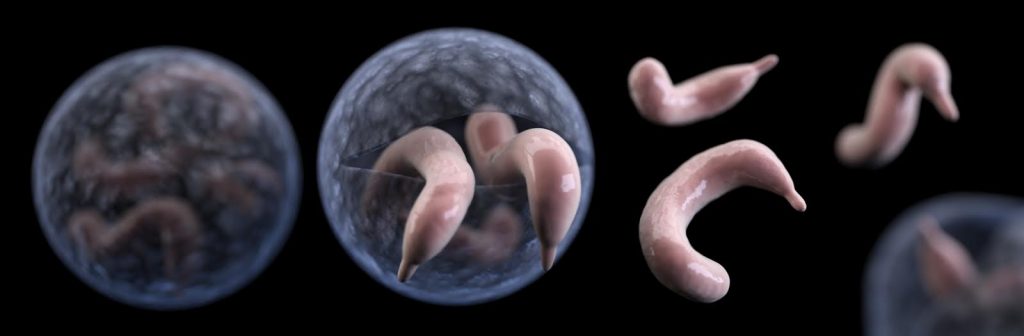
When the European Food Safety Authority published a review of the public health risk of foodborne parasites in 2018, it focused on three, which it considers to be the most pressing today and in the future immediate, either for current production systems, the effectiveness of control measures, eating habits or because of their severity. The selection included Cryptosporidium spp., Toxoplasma gondii and Echinococcus ssp. These parasites are resistant in the environment, they do not have specific controls, and the food industry’s awareness of them is variable, in contrast to what happens with Trichinella spiralis and Anisakidae .

Cryptosporidiosis is generally associated with acute gastrointestinal conditions, has no specific treatment, and outbreaks have occurred related to the consumption of contaminated fresh produce.

EFSA

Research – Clostridium perfringens in the Intestine: Innocent Bystander or Serious Threat?

MDPI

Abstract

The Clostridium perfringens epidemic threatens biosecurity and causes significant economic losses. C. perfringens infections are linked to more than one hundred million cases of food poisoning annually, and 8–60% of susceptible animals are vulnerable to infection, resulting in an economic loss of more than 6 hundred million USD. The enzymes and toxins (>20 species) produced by C. perfringens play a role in intestinal colonization, immunological evasion, intestinal micro-ecosystem imbalance, and intestinal mucosal disruption, all influencing host health. In recent decades, there has been an increase in drug resistance in C. perfringens due to antibiotic misuse and bacterial evolution. At the same time, traditional control interventions have proven ineffective, highlighting the urgent need to develop and implement new strategies and approaches to improve intervention targeting. Therefore, an in-depth understanding of the spatial and temporal evolutionary characteristics, transmission routes, colonization dynamics, and pathogenic mechanisms of C. perfringens will aid in the development of optimal therapeutic strategies and vaccines for C. perfringens management. Here, we review the global epidemiology of C. perfringens, as well as the molecular features and roles of various virulence factors in C. perfringens pathogenicity. In addition, we emphasize measures to prevent and control this zoonotic disease to reduce the transmission and infection of C. perfringens.