Category Archives: Pseudomonas

Research – Detrimental Effect of Ozone on Pathogenic Bacteria

MDPI

Background: Disinfection of medical devices designed for clinical use associated or not with the growing area of tissue engineering is an urgent need. However, traditional disinfection methods are not always suitable for some biomaterials, especially those sensitive to chemical, thermal, or radiation. Therefore, the objective of this study was to evaluate the minimal concentration of ozone gas (O3) necessary to control and kill a set of sensitive or multi-resistant Gram-positive and Gram-negative bacteria. The cell viability, membrane permeability, and the levels of reactive intracellular oxygen (ROS) species were also investigated;

Material and Methods: Four standard strains and a clinical MDR strain were exposed to low doses of ozone at different concentrations and times. Bacterial inactivation (cultivability, membrane damage) was investigated using colony counts, resazurin as a metabolic indicator, and propidium iodide (PI). A fluorescent probe (H2DCFDA) was used for the ROS analyses;

Results: No reduction in the count colony was detected after O3 exposure compared to the control group. However, the cell viability of E. coli (30%), P. aeruginosa (25%), and A. baumannii (15%) was reduced considerably. The bacterial membrane of all strains was not affected by O3 but presented a significant increase of ROS in E. coli (90 ± 14%), P. aeruginosa (62.5 ± 19%), and A. baumanni (52.6 ± 5%);

Conclusion: Low doses of ozone were able to interfere in the cell viability of most strains studied, and although it does not cause damage to the bacterial membrane, increased levels of reactive ROS are responsible for causing a detrimental effect in the lipids, proteins, and DNA metabolism. View Full-Text
RASFF Alert- Pseudomonas aeruginosa – Natural Mineral Water

RASFF

Presence of Pseudomonas aeruginosa in Alcalia Natural Mineral Water from Bulgaria in Ireland and Poland

Research – The Application of Bacillus subtilis for Adhesion Inhibition of Pseudomonas and Preservation of Fresh Fish

MDPI

Inhibiting the growth of spoilage bacteria, such as Pseudomonas spp., is key to reducing spoilage in fish. The mucus adhesion test in vitro showed that the adhesion ability of Bacillus subtilis was positively correlated with its inhibition ability to Pseudomonas spp. In vivo experiments of tilapia showed that dietary supplementation with B. subtilis could reduce the adhesion and colonization of Pseudomonas spp. in fish intestines and flesh, as well as reduce total volatile basic nitrogen (TVB-N) production. High throughput and metabolomic analysis showed treatment with B. subtilis, especially C6, reduced the growth of Pseudomonas spp., Aeromonas spp., Fusobacterium spp., and Enterobacterium spp., as well as aromatic spoilage compounds associated with these bacteria, such as indole, 2,4-bis(1,1-dimethylethyl)-phenol, 3-methyl-1-butanol, phenol, and 1-octen-3-ol. Our work showed that B. subtilis could improve the flavor of fish by changing the intestinal flora of fish, and it shows great promise as a microecological preservative. View Full-Text

Research – Recent Advances in the Mechanisms and Regulation of QS in Dairy Spoilage by Pseudomonas spp.

MDPI

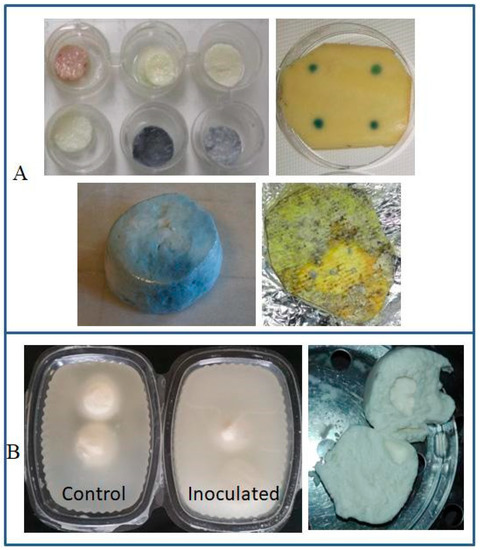
Food spoilage is a serious issue dramatically impacting the worldwide need to counteract food insecurity. Despite the very expensive application of low temperatures, the proper conservation of fresh dairy products is continuously threatened at different stages of production and commercialization by psychrotrophic populations mainly belonging to the Pseudomonas genus. These bacteria cause discolouration, loss of structure, and off-flavours, with fatal implications on the quality and shelf-life of products. While the effects of pseudomonad decay have been widely reported, the mechanisms responsible for the activation and regulation of spoilage pathways are still poorly explored. Recently, molecule signals and regulators involved in quorum sensing (QS), such as homoserine lactones, the luxR/luxI system, hdtS, and psoR, have been detected in spoiled products and bacterial spoiler species; this evidence suggests the role of bacterial cross talk in dairy spoilage and paves the way towards the search for novel preservation strategies based on QS inhibition. The aim of this review was to investigate the advancements achieved by the application of omic approaches in deciphering the molecular mechanisms controlled by QS systems in pseudomonads, by focusing on the regulators and metabolic pathways responsible for spoilage of fresh dairy products. In addition, due the ability of pseudomonads to quickly spread in the environment as biofilm communities, which may also include pathogenic and multidrug-resistant (MDR) species, the risk derived from the gaps in clearly defined and regulated sanitization actions is underlined. View Full-Text

USA – Livia Global Announces Voluntary Recall of Two Lots of Its Liviaone Liquid Probiotics Because of The Potential for Contamination With Pseudomonas aeruginosa

FDA

Summary

Company Announcement Date:
FDA Publish Date:
Product Type:
Food & Beverages
Reason for Announcement:
Pseudomonas aeruginosa
Company Name:
Liva Global, Inc.
Brand Name:
LivaOne and BioLifePet
Product Description:
Probiotics

Company Announcement

VISALIA, CA December 1, 2021 – Livia Global, Inc a health and wellness company that offers LiviaOne Liquid Probiotics & BioLifePet Liquid Probiotics, today announced that it is voluntarily recalling two lots of its liquid probiotics due to the possibility of contamination by Pseudomonas aeruginosa. Pseudomonas aeruginosa is a microorganism found in the environment that, if ingested, can cause life-threatening infection in immunocompromised individuals. P. aeruginosa infections are generally limited to hospital settings.

This recall only affects the following products with the Lot# 001005-1 Best by: 04/2023 & LiviaOne Nasal Probiotics with Lot# 010620-1 Best by 08/2023 with the following ship dates:

LiviaOne Daily Probiotics 2oz – UPC 030915 107112 Ship dates 04/16/2021 – 08/30/2021 (1067 units)

LiviaOne Daily Probiotics 4oz – UPC 030915 107167 Ship dates 07/09/2021 – 08/30/2021 (384 units)

LiviaOne Topical Spray Probiotics 4oz – UPC 030915 107105 Ship dates 07/08/2021 – 07/30/2021 (571 units)

LiviaOne Nasal Probiotics 1oz – UPC 030915 107198 Ship dates 04/21/2021 – 05/12/2021 (480 units)

LiviaOne Nasal Probiotics 1 oz – UPC 030915 107198 Ship dates 07/14/2021 – 08/24/2021 (600 units)

LiviaOne Nasal Probiotics 1 oz – Lot# 010620-1 UPC 030915 107198 Ship dates 10/27/2021 – 11/25/2021 (50 units)

BioLifePet Probiotics for Cats – UPC 030915 107044 Ship dates 05/05/2021 – 07/26/2021 (128 units)

BioLifePet Probiotics for Dogs – UPC 030915 107037 Ship dates 05/05/2021 – 08/25/2021 (128 units)

Lot numbers are located on the side of the bottle and on the bottom of the outer container in which the product is sold. (See below) No other lots or ship dates or any other LiviaOne products are affected by this recall. These products are distributed nationwide through Amazon, wholesale, and direct sales from the company’s website.

The company discovered the potential issue during routine 3rd party laboratory testing, which is part of Livia Global’s quality assurance procedures and safety protocols and decided to take this precautionary measure. Even though the company has not received a direct complaint from using their products, we felt compelled to do this out of abundance of caution.
“We apologize for any concern or inconvenience this situation causes our customers and are here to support them,” said Deborah Moreno, Chief Operations Officer. “Livia Global is dedicated to the safety, health and welfare of its customers above all else. We continue to invest in the safety and quality protocols to ensure we produce only the best products.”

The company is asking consumers who have product from the above-mentioned Lot and ship dates to dispose of products. Impacted consumers may contact Livia Global Customer Care to request a full refund (please have order # available), see contact information provided below.

For more information, please contact Deborah Moreno, Livia Global via phone, 1-559-372-8593 or email support@liviaglobal.com. Hours of operations are from 8:30AM – 4:30PM PST Monday – Friday.


Company Contact Information

Consumers:
Deborah Moreno
 1-559-372-8593
 support@liviaglobal.com

India – Five instances of food poisoning in Kozhikode in less than a month

The Hindu

Health Department issues advisory on checking quality of drinking water sources. (Cholera)

At least five incidents of suspected food poisoning have occurred in Kozhikode district in less than a month, prompting the Health Department to issue an advisory on checking the quality of drinking water sources.

Fifteen girl students of a private entrance coaching centre at Perumanna were admitted to hospital after they had stomach upset and other symptoms on October 25.

Two-and-a-half-year-old Mohammed Yamin of Narikkuni died on November 13, just a couple of days after he had food at a wedding event. A dozen children and some elders too fell ill.

Hundreds sought medical treatment at Puthoor in Vadakara on November 15 after they had food at another wedding event in the previous days. Those who had idli and sambar from two temples at Mukkom complained of uneasiness, and 22 people sought treatment on November 19.

Fourteen students of a hostel at Pantheerankavu sought treatment at the Government Medical College Hospital, Kozhikode, after they had breakfast on November 20.

Another instance of food poisoning was averted in the nick of time when an alert food safety inspector detected pseudomonas bacteria in eggs scheduled to be distributed at a school at Payyadimeethal near Pantheerankavu on November 10.

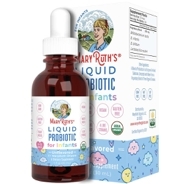
USA – Out of an Abundance of Caution MaryRuth’s Announces Voluntary Recall of Two Lots of Its Liquid Probiotic for Infants Because of the Potential for Contamination With Pseudomonas aeruginosa

Business Wire

(Photo: Business Wire)

MaryRuth’s, a leading omni-channel health and wellness brand that offers vitamins, minerals, and supplements for the entire family, today announced that, out of an abundance of caution, it is voluntarily recalling two lots of its liquid probiotic for infants (1oz) due to the possibility of contamination by Pseudomonas aeruginosaPseudomonas aeruginosa is a microorganism found in the environment that, if ingested, can cause infection in immunocompromised individuals or, rarely, in very young infants. P. aeruginosa infections in immunocompromised infants are generally limited to hospital settings. In such settings, there is the chance that the infant’s immature gut will not be able to prevent P. aeruginosa from gaining access to the blood, and from there it can disseminate elsewhere in the body, resulting in the possibility of serious adverse health consequences.

This recall only affects two lots of the product, Lot #100420218 and Lot #100520218, UPC barcode number 856645008587. Lot numbers are located on the side of the bottle and on the bottom of the outer container in which the product is sold. No other lots or any other MaryRuth’s products are affected by this recall. This product is distributed nationwide through Target, Amazon, and direct sales from the company’s website.

Israel – Natural Mineral Spring Water – Pseudomonas aeruginosa

 Neviot recalls Natural Mineral Spring Water (500 ml; Best before 11.10.2022 and 12.10.2022) due to possible Pseudomonas aeruginosa contamination.

Click to access rcl-17102021.pdf

Research – Microbiome population dynamics of cold smoked sockeye salmon during refrigerated storage and after culture enrichment 

Journal of Food Protection

Cold smoked salmon is a ready-to-eat seafood product of high commercial importance. The processing and storage steps facilitate the introduction, growth and persistence of foodborne pathogens and spoilage bacteria. The growth of commensal bacteria during storage and once the product is opened also influence the quality and safety of cold smoked salmon. Here we investigated the microbial community through targeted 16s rRNA gene and shotgun metagenomic sequencing, as means to better understand the interactions among bacteria in cold smoked salmon. Cold smoked salmon samples were tested over 30 days of aerobic storage at 4℃ and cultured at each timepoint in buffered Listeria enrichment broth (BLEB) commonly used to detect Listeria in foods. The microbiomes were comprised of Firmicutes and Proteobacteria namely, Carnobacterium , Brochothrix , Pseudomonas , Serratia , and Psychrobacter . Pseudomonas species were the most diverse species with 181 taxa identified. Additionally, we identified potential homologs to 10 classes of bacteriocins in microbiomes of cold smoked salmon stored at 4°C and corresponding BLEB culture enrichments. The findings presented here contribute to our understanding of microbiome population dynamics in cold smoked salmon, including changes in bacterial taxa during aerobic cold storage and after culture enrichment.  This may facilitate improvements to pathogen detection and quality preservation of this food.

Research – Identification of Microorganisms from Several Surfaces by MALDI-TOF MS: P. aeruginosa Is Leading in Biofilm Formation

MDPI

New ecological trends and changes in consumer behavior are known to favor biofilm formation in household appliances, increasing the need for new antimicrobial materials and surfaces. Their development requires laboratory-cultivated biofilms, or biofilm model systems (BMS), which allow for accelerated growth and offer better understanding of the underlying formation mechanisms. Here, we identified bacterial strains in wildtype biofilms from a variety of materials from domestic appliances using matrix-assisted laser desorption/ionization-time of flight mass spectroscopy (MALDI-TOF-MS). Staphylococci and pseudomonads were identified by MALDI-TOF-MS as the main genera in the habitats and were analyzed for biofilm formation using various in vitro methods. Standard quantitative biofilm assays were combined with scanning electron microscopy (SEM) to characterize biofilm formation. While Pseudomonas putida, a published lead germ, was not identified in any of the collected samples, Pseudomonas aeruginosa was found to be the most dominant biofilm producer. Water-born Pseudomonads were dominantly found in compartments with water contact only, such as in detergent compartment and detergent enemata. Furthermore, materials in contact with the washing load are predominantly colonized with bacteria from the human. View Full-Text