Archives
-
Join 343 other subscribers
KSWFoodWorld
Blog Stats
- 428,174 Views
Category Archives: pathogenic
Research – A Review of Modern Methods for the Detection of Foodborne Pathogens
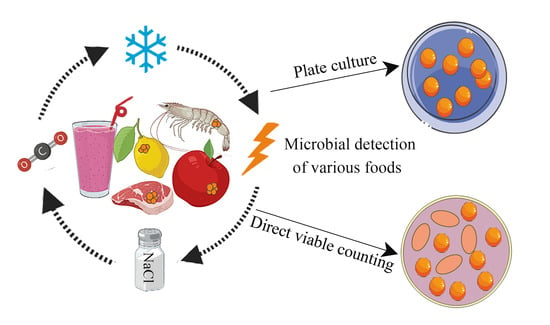
Despite the recent advances in food preservation techniques and food safety, significant disease outbreaks linked to foodborne pathogens such as bacteria, fungi, and viruses still occur worldwide indicating that these pathogens still constitute significant risks to public health. Although extensive reviews of methods for foodborne pathogens detection exist, most are skewed towards bacteria despite the increasing relevance of other pathogens such as viruses. Therefore, this review of foodborne pathogen detection methods is holistic, focusing on pathogenic bacteria, fungi, and viruses. This review has shown that culture-based methods allied with new approaches are beneficial for the detection of foodborne pathogens. The current application of immunoassay methods, especially for bacterial and fungal toxins detection in foods, are reviewed. The use and benefits of nucleic acid-based PCR methods and next-generation sequencing-based methods for bacterial, fungal, and viral pathogens’ detection and their toxins in foods are also reviewed. This review has, therefore, shown that different modern methods exist for the detection of current and emerging foodborne bacterial, fungal, and viral pathogens. It provides further evidence that the full utilization of these tools can lead to early detection and control of foodborne diseases, enhancing public health and reducing the frequency of disease outbreaks.
Posted in Bacterial Toxin, Decontamination Microbial, Food Micro Blog, Food Microbiology, Food Microbiology Blog, Food Microbiology Research, Food Microbiology Testing, Food Pathogen, Food Toxin, Food Virus, foodborne disease, Foodborne Illness, foodborne outbreak, foodbourne outbreak, microbial contamination, Microbial growth, Microbiological Risk Assessment, Microbiology, Microbiology Investigations, Microbiology Risk, Mycotoxin, Pathogen, pathogenic
Research – Human Salmonellosis: A Continuous Global Threat in the Farm-to-Fork Food Safety Continuum
Abstract
Salmonella is one of the most common zoonotic foodborne pathogens and a worldwide public health threat. Salmonella enterica is the most pathogenic among Salmonella species, comprising over 2500 serovars. It causes typhoid fever and gastroenteritis, and the serovars responsible for the later disease are known as non-typhoidal Salmonella (NTS). Salmonella transmission to humans happens along the farm-to-fork continuum via contaminated animal- and plant-derived foods, including poultry, eggs, fish, pork, beef, vegetables, fruits, nuts, and flour. Several virulence factors have been recognized to play a vital role in attaching, invading, and evading the host defense system. These factors include capsule, adhesion proteins, flagella, plasmids, and type III secretion systems that are encoded on the Salmonella pathogenicity islands. The increased global prevalence of NTS serovars in recent years indicates that the control approaches centered on alleviating the food animals’ contamination along the food chain have been unsuccessful. Moreover, the emergence of antibiotic-resistant Salmonella variants suggests a potential food safety crisis. This review summarizes the current state of the knowledge on the nomenclature, microbiological features, virulence factors, and the mechanism of antimicrobial resistance of Salmonella. Furthermore, it provides insights into the pathogenesis and epidemiology of Salmonella infections. The recent outbreaks of salmonellosis reported in different clinical settings and geographical regions, including Africa, the Middle East and North Africa, Latin America, Europe, and the USA in the farm-to-fork continuum, are also highlighted.
Posted in Decontamination Microbial, food bourne outbreak, Food Micro Blog, Food Microbiology, Food Microbiology Blog, Food Microbiology Research, Food Microbiology Testing, Food Pathogen, foodborne outbreak, foodbourne outbreak, microbial contamination, Microbial growth, Microbiological Risk Assessment, Microbiology, Microbiology Investigations, Microbiology Risk, outbreak, Pathogen, pathogenic, Salmonella, Serotype
Research – Deep ultraviolet fluorescence sensing with multispectral imaging to detect and monitor food-borne pathogens on the leafy green phyllosphere
Demand for sustainable and safe raw agricultural commodities is growing rapidly worldwide. Reducing the risk of foodborne illnesses associated with fresh produce is a task which the industry and academic researchers have been struggling with for many years. There is an immediate need to devise a non-invasive optical detection system to monitor the food-borne pathogens on the leaf surface. The detection of foodborne pathogens on leafy produce is performed often too late because of the invasive techniques used to evaluate the pathogen colonization. Use of deep ultraviolet fluorescence (DUVF) sensing and visible–near infrared multispectral imaging (MSI) has previously been used to monitor plant interactions against both biotic and abiotic stress regimes. Using the patho-system that we developed to monitor Salmonella sp. and Listeria sp. ingression in leafy greens such as lettuce/spinach, we show that plant response in terms of fluctuation of chlorophyll pigments post-Salmonella/Listeria treatment is rapid. We also show that the mode of application of Salmonella/Listeria via foliar or root supplementation changes the ChlA response. Our data also reveals that the plant sentinel response in terms of early photosynthetic response may be critical to detect food-borne pathogens on leafy greens. MSI demonstrated that plant stress was detectable and proportional to the bacterial inoculation rate on plants. Our research may lead to implementation of better strategies and technology to increase yield and reduce risks associated with contamination of foodborne bacterial pathogens.
Posted in Decontamination Microbial, Food Micro Blog, Food Microbiology, Food Microbiology Blog, Food Microbiology Research, Food Microbiology Testing, Food Pathogen, Listeria, Listeria monocytogenes, microbial contamination, Microbial growth, Microbiological Risk Assessment, Microbiology, Microbiology Investigations, Microbiology Risk, Pathogen, pathogenic, Salmonella
Research – Presence of Foodborne Bacteria in Wild Boar and Wild Boar Meat—A Literature Survey for the Period 2012–2022
Abstract
The wild boar is an abundant game species with high reproduction rates. The management of the wild boar population by hunting contributes to the meat supply and can help to avoid a spillover of transmissible animal diseases to domestic pigs, thus compromising food security. By the same token, wild boar can carry foodborne zoonotic pathogens, impacting food safety. We reviewed literature from 2012–2022 on biological hazards, which are considered in European Union legislation and in international standards on animal health. We identified 15 viral, 10 bacterial, and 5 parasitic agents and selected those nine bacteria that are zoonotic and can be transmitted to humans via food. The prevalence of Campylobacter, Listeria monocytogenes, Salmonella, Shiga toxin-producing E. coli, and Yersinia enterocolitica on muscle surfaces or in muscle tissues of wild boar varied from 0 to ca. 70%. One experimental study reported the transmission and survival of Mycobacterium on wild boar meat. Brucella, Coxiella burnetii, Listeria monocytogenes, and Mycobacteria have been isolated from the liver and spleen. For Brucella, studies stressed the occupational exposure risk, but no indication of meat-borne transmission was evident. Furthermore, the transmission of C. burnetii is most likely via vectors (i.e., ticks). In the absence of more detailed data for the European Union, it is advisable to focus on the efficacy of current game meat inspection and food safety management systems.
Posted in Brucella melitensis, Brucellosis, Decontamination Microbial, Food Micro Blog, Food Microbiology, Food Microbiology Blog, Food Microbiology Research, Food Microbiology Testing, Food Pathogen, Listeria, Listeria monocytogenes, microbial contamination, Microbial growth, Microbiological Risk Assessment, Microbiology, Microbiology Investigations, Microbiology Risk, Mycobacterium, Pathogen, pathogenic, STEC, STEC E.coli, Yersinia, Zoonosis
Research – Contribution of MALDI-TOF-MS-based principal component analysis for distinguishing foodborne pathogens
Abstract
Foodborne diseases are important to determine bacteria in strain level, which are analyzed by library-based devices and bioinformatics-enabled. The aim of this study was to investigate the contribution of principal component analysis (PCA) with matrix-assisted laser desorption ionization time-of-flight mass spectrometry (MALDI-TOF-MS) to distinguish according to the differences of bacterial strains as rapidly screening of foodborne bacteria. The MALDI-TOF-MS-based PCA analysis was used for differentiating bacterial strains isolated from ready-to-eat foods. According to the results of PCA analysis, the percentages of distance and proximity between species were evaluated by composite correlation indexes (CCI). Bacillus cereus were detected in burghul salad (BC1) and macaroni salad (BC2) taken from the SB2-snack bar, and the similarity rate was determined as 97%. Three other B. cereus bacteria (BC3, BC4, and BC5) in the same cluster were also isolated from salads collected from SB4-snack bar. The similarity of Klebsiella pneumoniae bacteria, which have the codes KP1 and KP2, isolated from macaroni salad and burghul salad taken from the SB2 snack bar respectively were 96%. Additionally, the CCI values of two E. coli strains in burghul (EC1) salad and Russian salad (EC2) in the same sampling point (SB1) were determined as 97%. In conclusion, this analysis with MALDI-TOF-MS based PCA has revealed the relationships between bacteria genera and species, beyond just the identification of bacteria and the rapid screening of bacteria in perishable foodstuffs. Similarities between bacterial strains identified for different samples from the same sampling point suggested that there were not adequate hygiene rules and storage requirements were not followed.
Posted in Bacillus cereus, Decontamination Microbial, E.coli, Food Micro Blog, Food Microbiology, Food Microbiology Blog, Food Microbiology Research, Food Microbiology Testing, Food Pathogen, Klebsiella, Malditof, microbial contamination, Microbial growth, Microbiological Risk Assessment, Microbiology, Microbiology Investigations, Microbiology Risk, Pathogen, pathogenic
Research – Listeria in Food: Prevalence and Control
Listeria monocytogenes is a foodborne pathogen characterized by its psychrotrophic and ubiquitous nature as well as its ability to survive and proliferate in a wide range of harsh environments and foods. These features make the pathogen a primary concern in the food industry, especially in the cold chain of ready-to-eat (RTE) food products. Although the incidence of listeriosis is low compared to other foodborne illnesses (e.g., salmonellosis), its high hospitalization and case fatality rates, mainly in high-risk population groups, pose a significant threat to public health.
The prevalence of L. monocytogenes has been reduced in many food categories over the last two decades, especially in meat and meat products, due to the application of improved control measures. As highlighted by Abdeen et al. [1] in this Special Issue, the application of suitable control measures along the food chain to reduce pathogen levels and prevent product recontamination together with the continuous training of food handlers are key to reduce the pathogen incidence. They found that the prevalence of L. monocytogenes in different RTE food products from Egypt was higher compared to other Listeria species. In addition, the pathogen isolates carried multiple virulence-related genes (hlyA, iap, and actA) and showed phenotypic resistance to six antibiotics. This highlights the importance of monitoring the emergence of resistant and virulent strains.
The presence of persister cells and biofilms in food processing environments also requires attention. In the study by Panebianco et al. [2], the effectiveness of gaseous ozone against the biofilm of L. monocytogenes isolates from different sources was evaluated. They concluded that ozone gas was not sufficient to completely counteract the pathogen biofilm, but it may be useful as an additional tool to improve the existing sanitization procedures in food processing environments. On the other hand, the development of innovative control approaches with reduced environmental impact is necessary to offer consumers more natural solutions and chemical-free products. In this context, van Gijtenbeek et al. [3] assessed the bioprotective potential of the Lacticaseibacillus rhamnosus strain Lrh-FQ to inhibit the growth of L. monocytogenes in creamed cottage cheese. The mechanism underlying the pathogen inhibition was based on competitive exclusion through the depletion of manganese content in the food matrix by Lrh-FQ.
A rapid and accurate detection of L. monocytogenes in food is also important to avoid sanitary and economic problems. Different methods are currently used for the detection of L. monocytogenes in food, such as conventional methods based on ISO standards using chromogenic media or biochemical tests. Alternative methods that reduce timing in pathogen detection are needed to prevent its dissemination through the food chain. In this context, Estévez et al. [4] evaluated the Vitek Immuno Diagnostic Assay System (VIDAS) to detect and count L. monocytogenes in various food items, demonstrating that VIDAS showed high efficiency and was not influenced by the food matrix or interfering microorganisms.
Predictive microbiology is a useful tool to estimate food shelf life and assist regulators in decision making. The development and/or validation of predictive models in real food products and the use of pathogen isolates from particular foods are essential to obtain accurate predictions of food systems. In this regard, Posada-Izquierdo et al. [5] modeled the effect of salt concentration on autochthonous isolated L. monocytogenes strains in an artisanal fresh cheese. Finally, Bolívar et al. [6] quantified and modeled the growth dynamics of six L. monocytogenes strains isolated from different fish products in salmon pâté. Both studies have demonstrated the growth potential of the pathogen under all tested conditions, providing interesting data about its kinetic behavior in RTE food products with significant consumption and commercial value.
The prevention of listeriosis relies on a comprehensive approach from farm to fork. This Special Issue of Foods, including five original articles and one short research communication, provides a deep understanding on the prevalence and genetic characteristics of L. monocytogenes, its growth dynamics in different RTE food products by suitable predictive tools, as well as the efficacy of different detection and control approaches. This insight can support the development of new and robust risk management strategies aimed at reducing the risk of listeriosis.
Posted in Decontamination Microbial, Food Micro Blog, Food Microbiology, Food Microbiology Blog, Food Microbiology Research, Food Microbiology Testing, Food Pathogen, Listeria, Listeria monocytogenes, microbial contamination, Microbial growth, Microbiological Risk Assessment, Microbiology, Microbiology Investigations, Microbiology Risk, Pathogen, pathogenic
Research – Current Perspectives on Viable but Non-Culturable Foodborne Pathogenic Bacteria: A Review

Abstract
Foodborne diseases caused by foodborne pathogens pose risks to food safety. Effective detection and efficient inactivation of pathogenic bacteria has always been a research hotspot in the field of food safety. Complicating these goals, bacteria can be induced to adopt a viable but non-culturable (VBNC) state under adverse external environmental stresses. When in the VBNC state, pathogens cannot form visible colonies during traditional culture but remain metabolically active and toxic. The resulting false negative results in growth-related assays can jeopardize food safety. This review summarizes the latest research on VBNC foodborne pathogens, including induction conditions, detection methods, mechanism of VBNC formation, and possible control strategies. It is hoped that this review can provide ideas and methods for future research on VBNC foodborne pathogenic bacteria.
Posted in Food Micro Blog, Food Microbiology, Food Microbiology Blog, Food Microbiology Research, Food Microbiology Testing, Food Pathogen, microbial contamination, Microbial growth, Microbiological Risk Assessment, Microbiology, Microbiology Investigations, Microbiology Risk, Pathogen, pathogenic, Research
Research – Human Pathogens in Primary Production Systems
Human pathogenic micro-organisms can contaminate plants. Plants whose products can be consumed freshly or after minimal processing are of specific concern. It is under debate whether contaminations only occur at harvest or the after harvest processing of crops, or if they can already occur at the primary plant production stages.
Plants may be considered as secondary habitats for human pathogens [1], and, although they do not possess the full capacity to invade and colonize internal tissues of plants, like plant pathogens and endophytes do [2], they are still capable of maintaining themselves in the neighborhood of, and even inside, plants [3], and to proliferate in these ecosystems. Human pathogens can respond to chemical signals from plants [4] and, from that perspective, human pathogens may share properties with other micro-organisms commonly present in plant microbiomes. From an evolutionary perspective, it make sense that particular groups of zoonotic species are able to use plants as secondary habitats. These microbes can be transferred via feces among different flocks that graze on the same land [5]. Longer persistence on grazed plants may contribute to a wider distribution over different flocks. It is an important message for plant production that microbial interconnectivity will exist between ecosystems and that human pathogens can circulate between animals and plants when animal manure is applied to soil for fertilization [6]. Water used for irrigation is another human pathogen source in agricultural production systems, especially when derived from surface water bodies [7]. Human pathogens can contaminate surface water via drainage from arable fields recently fertilized with animal manure [8], but also from sewage overflow after severe precipitation [9] and wildlife [10].
The contamination of plant-derived products with human pathogens thus does not only result from harvest and post-harvest handlings, but can also occur at the primary production stage. The network activities of the EU COST Action on the control of human pathogens in plant production systems (HUPLANTcontrol) comprehended important aspects that were intended to gain a better understanding on the role of human pathogens in plant microbiomes in relation to ecology, taxonomical identity, and presumed virulence to humans. This information was relevant for the formulation of recommendations and guidelines to growers, but also to provide public information on the consequences of the presence of human pathogens in plant production systems. This Special Issue was dedicated to the main objectives of our network activities and resulted in seven manuscripts that are related to the topic of human pathogens in their relationship with plants.
It was shown that Escherichia coli, introduced via manure and seeds in production systems, had a higher preference for the root zone (roots and rhizosphere soil) than for the above-soil compartments [11,12]. Although different E. coli strains were incidentally found in stem parts shortly after their introduction, their abundance rapidly declined to levels below detection, whereas near, on, and inside roots, the introduced strains remained present up to plant senescence. As both experiments were performed under field-realistic circumstances, the key message derived from both manuscripts is critical for practice, because it would imply that plant roots are potential carriers of human pathogens once they are disseminated into production systems via external sources. The ability for microbial species to jump over from plant to animal kingdoms was indicated for two taxonomically distinct micro-organisms, Fusarium musae [13] and Bacillus cereus [14]. Namely, F. musae strains with the same genetic profile could infect both humans and plants (banana fruit), whereas B. cereus strains derived from 17 different agricultural soils sampled across Europe possessed genes that are potentially involved in human pathogenicity. Both studies made clear that human pathogens in plant production systems do not necessarily originate from external sources, but can be intrinsic members of soil and plant ecosystems. Soil treatment with composted sewage sludge resulted in a shift in the soil microbiome composition [15]. Salmonella enterica survived longer when simultaneously applied with composted sewage sludge to soil than when applied separately via irrigation. Changes in microbiomes as a result of soil amendments may thus influence the persistence of human pathogens in food production soils, and this information is relevant for understanding the mechanisms behind the soil persistence of human pathogens. Finally, it revealed that plants themselves can influence the behavior of human pathogens. Upon plant inoculation, flagellin expression was down-regulated in a vast majority of S. enterica cells, whereas high expression was found in a subfraction of the introduced population [16]. Heterogenous flagellin expression is an adaptational strategy of S. enterica inside plants. Plants defend themselves upon colonization by human pathogens via activating defensive networks [17]. Bioactive compounds produced by plants antagonize human pathogens in plants, offering new opportunities for the control of human pathogens in plant production systems.
The seven manuscripts in this Special Issue provide new and important information on the ecological behavior of human pathogens in the plant–soil environment and the roles that microbiomes play. They also demonstrated that plant microbiomes themselves harbor species that can potentially cross plant–animal frontiers and that the plant environment is a specific ecosystem where human pathogens are able to adapt to local prevailing circumstances. Valuable information was provided for further translation into practical recommendations, which is needed for the control of human pathogens in, or nearby, growing plants. Finally, the information provided is relevant for the transition towards extensive and circular agricultural production systems. The use of animal manure and other organic waste streams and reclaimed water as alternatives for fertilizers and irrigation water will become more opportune in this transition, affecting the introduction of human pathogens into plant production systems.
Posted in Decontamination Microbial, Food Micro Blog, Food Microbiology, Food Microbiology Blog, Food Microbiology Research, Food Microbiology Testing, Food Pathogen, Fumomisins, Fumonsins, Fusarium Toxin, microbial contamination, Microbial growth, Microbiological Risk Assessment, Microbiology, Microbiology Investigations, Microbiology Risk, Pathogen, pathogenic, Salmonella
USA – Canned Shrimp recalled due to Botulism risk
Kawasho Foods USA Inc. of New York, NY, is voluntarily recalling one lot of canned GEISHA Medium Shrimp 4oz. because of reported swelling, leaking, or bursting cans. There is a possibility that the product has been under processed, which could lead to the potential for spoilage organisms or pathogens.
The Product was distributed to retail stores (Walmart, Associated Food Stores, Stater Bros Markets, Safeway, Albertsons) in California, Utah, Arizona, and Colorado.
The GEISHA Medium Shrimp is packaged in a 4oz. metal can, with UPC 071140003909. The one lot being recalled is LGC12W12E22; BEST BY: MAY/12/2026 and this code appears on the bottom of the product can.
Posted in Clostridium, Clostridium botulinum, Clostridium Sulphite Reducer, food contamination, food handler, Food Hazard, Food Hygiene, Food Inspections, Food Micro Blog, Food Microbiology, Food Microbiology Blog, Food Microbiology Testing, Food Pathogen, Food Poisoning, Food Quality, food recall, Food Safety, Food Safety Alert, Food Safety Management, Food Safety Regulations, food safety training, Food Spoilage, Food Testing, Food Toxin, Pathogen, pathogenic
USA – Kawasho Foods USA Inc. Announces a Voluntary Recall of a Single Lot of GEISHA Medium Shrimp 4oz. Because of Possible Health Risk

Company Announcement
Kawasho Foods USA Inc. of New York, NY, is voluntarily recalling one lot of canned GEISHA Medium Shrimp 4oz. because of reported swelling, leaking, or bursting cans. There is a possibility that the product has been under processed, which could lead to the potential for spoilage organisms or pathogens.
The Product was distributed to retail stores (Walmart, Associated Food Stores, Stater Bros Markets, Safeway, Albertsons) in California, Utah, Arizona, and Colorado.
The GEISHA Medium Shrimp is packaged in a 4oz. metal can, with UPC 071140003909. The one lot being recalled is LGC12W12E22; BEST BY: MAY/12/2026 and this code appears on the bottom of the product can.
Consumers should not use this product, even if it does not look or smell spoiled. No illnesses or other adverse consequences have been reported to date in connection with this product.
Consumer who have purchased this product are urged to return to place of puchase for a full refund. If you have any question regarding this recall, please contact us at (212)841-7400 (Monday to Friday, 9:00 a.m. to 5 p.m. EST) or via email at info@geishabrand.com.
Posted in FDA, food contamination, food handler, Food Hazard, Food Hygiene, Food Inspections, Food Micro Blog, Food Microbiology, Food Microbiology Blog, Food Pathogen, Food Quality, food recall, Food Safety, Food Safety Alert, Food Safety Management, Food Safety Regulations, Food Spoilage, Food Testing, Pathogen, pathogenic