Category Archives: outbreak

FDA – Core Outbreak Table – Investigations of Foodborne Illness Outbreaks

FDA

What’s New

  • An outbreak of Salmonella Mississippi (ref# 1097) in a not yet identified product has been added to the table and FDA has initiated traceback.
  • For the E. coli O157:H7 outbreak (ref# 1081) in a not yet identified food, sample collection and analysis have been initiated.
  • For the Salmonella Senftenberg outbreak (ref# 1087) in a not yet identified food, the case count has increased from 22 to 25 cases.
  • For the Salmonella Typhimurium outbreak (ref# 1095) in a not yet identified food, the case count has increased from 62 to 73 cases, an on-site inspection and sample collection and analysis has been initiated.
  • For the Cyclospora outbreak (ref# 1080) the case count has increased from 70 to 75.
  • For the Cyclospora outbreak (ref# 1084), the case count has increased from 41 to 42.
  • For the Salmonella Braenderup outbreak (ref# 1075), the case count increased from 74 to 75.
  • For the outbreak of Listeria monocytogenes (ref# 1057) linked to ice cream, FDA initiated an on-site inspection.

Research – Scientists blame Listeria’s low priority for regulatory support as the likely true cause for a low-burn listeria outbreak

Food Safety News

Government prosecutors wrapped conspiracy and fraud around the head of the former president of Blue Bell ice cream, but a hung jury did not buy it. That Texas jury was 10-to-2 in favor of acquittal.

But how then should be explained the illnesses and deaths associated with the 2015 listeriosis outbreak. Does science explain less human responsibility?

Nineteen expert researchers worked on that question, and they’ve produced a 22-page research paper with their answers. They point to an event beginning long before Blue Bell Creameries knew Listeria contamination was a threat.

Almost 50 sick in Scotland in an outbreak from E. coli O157

Food Safety News

Nearly 50 people are part of an outbreak of E. coli infections in Scotland, which has closed five nurseries.

E. coli has been confirmed in three nurseries, while another two are shut as investigations and testing are carried out.

A total of 47 cases have been confirmed. Officials previously said E. coli O157 had sickened a number of young people in the East Lothian area. Some patients were hospitalized but most people had mild symptoms and did not require hospital treatment.

USA – What you need to know about E. coli O157:H7 and its complications during an Outbreak

Food Poison Journal

E. coli O157:H7 is one of thousands of serotypes of Escherichia coli.

E. coli O157:H7 was first recognized as a pathogen in 1982 during an investigation into an outbreak of haemorrhagic colitis associated with consumption of hamburgers from a fast-food chain restaurant. Retrospective examination of more than three thousand E. coli cultures obtained between 1973 and 1982 found only one isolate with serotype O157:H7, and that was a case in 1975. In the ten years that followed, there were approximately thirty outbreaks recorded in the United States. This number is likely misleading, however, because E. coli O157:H7 infections did not become a reportable disease in any state until 1987, when Washington became the first state to mandate its reporting to public health authorities. Consequently, an outbreak would not be detected if it was not large enough to prompt investigation.

E. coli O157:H7’s ability to induce injury in humans is a result of its ability to produce numerous virulence factors, most notably Shiga toxin (Stx), which is one of the most potent toxins known to man. Shiga toxin has multiple variants (e.g., Stx1, Stx2, Stx2c), and acts like the plant toxin ricin by inhibiting protein synthesis in endothelial and other cells. Endothelial cells line the interior surface of blood vessels and are known to be extremely sensitive to E. coli O157:H7, which is cytotoxigenic to these cells.

USA – What you and your family need to know during the Wendy’s E. coli Outbreak

Food Poison Journal

Last week the CDC reported 84 E. coli cases – 53 in Michigan, 23 in Ohio, 6 in Indiana and 2 in Pennsylvania.  However, Michigan reports at least 115 and Wood County in Ohio reports at least 23 which would bring Ohio case numbers to 37.

Read the link above to find out more

USA – Wendy’s E. coli outbreak in Indiana, Michigan, Ohio and Pennsylvania has sickened between 84 to 160 people

Food Poison Journal

Last week the CDC reported 84 E. coli cases – 53 in Michigan, 23 in Ohio, 6 in Indiana and 2 in Pennsylvania.  However, Michigan reports at least 115 and Wood County in Ohio reports at least 23 which would bring Ohio case numbers to 37.

USA – Over 100 Cases Reported so Far in the Wendy’s E coli Outbreak

Food Poisoning News

In the latest update posted by the CDC on August 19th, 37 cases of E. coli O157:H7 infections were reported in the states of Ohio (19), Michigan (15), Indiana (1), and Pennsylvania (2). However, experts believe the actual number of infections to be much higher than 100, with estimates of at least 200 cases. Most notably, despite the CDC reporting 15 of the 37 cases occurring in Michigan, the Michigan Department of Health and Human Services (MDHHS) has reported 43 confirmed E. coli O157 infections. In total, the MDHHS received 98 reports of E. coli infections in August from Michigan residents. For reference, Michigan officials only received 20 reports of E. coli infections during the same time period in 2021. The 43 Michigan E. coli O157 infections have been confirmed to match the same strain of E. coli as the Wendy’s outbreak strain and all cases match the illness onset date of late July through early August. Michigan health officials are currently testing at least 55 additional E. coli infections to determine if they are also connected to the Wendy’s outbreak.

In Ohio, officials in Wood Country are testing samples from 22 residents with E. coli infections and have so far confirmed 9 of the cases to have stemmed from the same strain of E. coli bacteria. Experts believe that the true number of cases involved in the Wendy’s outbreak is much higher than reported and expect to see an increase of reported cases in the days to come.

USA – E. coli Outbreak with Unknown Food Source

CDC

Fast Facts
  • Illnesses: 84
  • Hospitalizations: 38
  • Deaths: 0
  • States: 4
  • Recall: No
  • Investigation status: Active
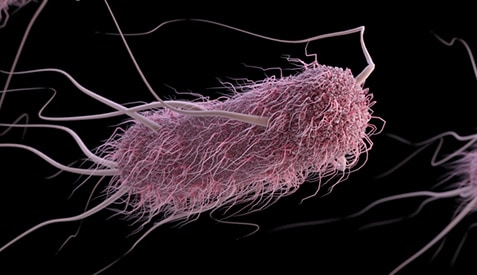
Illustration of E. coli pathogen
Update on the Source

A specific food has not yet been confirmed as the source of this outbreak, but many sick people reported eating sandwiches with romaine lettuce at Wendy’s restaurants in Indiana, Michigan, Ohio, and Pennsylvania before getting sick. Based on this information, Wendy’s has taken the precautionary measure of removing the romaine lettuce being used in sandwiches from restaurants in that region. Wendy’s uses a different type of romaine lettuce for salads. Investigators are working to confirm whether romaine lettuce is the source of this outbreak, and whether romaine lettuce used in Wendy’s sandwiches was served or sold at other businesses. Wendy’s is fully cooperating with the investigation.

What You Should Do

CDC is not advising that people avoid eating at Wendy’s restaurants or that people stop eating romaine lettuce.

  • Wendy’s has taken the precautionary measure of removing the romaine lettuce being used in sandwiches from restaurants in this region.
  • At this time, there is no evidence to indicate that romaine lettuce sold in grocery stores, served in other restaurants, or in people’s homes is linked to this outbreak.
  • CDC will update this advice if the investigation identifies foods to avoid.

Research – Listeria monocytogenes Illness and Deaths Associated With Ongoing Contamination of a Multi-Regional Brand of Ice Cream Products, United States, 2010–2015 

Academia Edu

Abstract

Background

Frozen foods have rarely been linked to Listeria monocytogenes illness. We describe an outbreak investigation prompted both by hospital clustering of illnesses and product testing.

Methods

We identified outbreak-associated listeriosis cases using whole-genome sequencing (WGS), product testing results, and epidemiologic linkage to cases in the same Kansas hospital. We reviewed hospital medical and dietary records, product invoices, and molecular subtyping results. Federal and state officials tested product and environmental samples for L. monocytogenes.

Results

Kansas officials were investigating five cases of listeriosis at a single hospital when, simultaneously, unrelated sampling for a study in South Carolina identified L. monocytogenes in Company A ice cream products made in Texas. Isolates from four patients and Company A products were closely related by WGS, and the four patients with known exposures had consumed milkshakes made with Company A ice cream while hospitalized. Further testing identified L. monocytogenes in ice cream produced in a second Company A production facility in Oklahoma; these isolates were closely related by WGS to those from five patients in three other states. These ten illnesses, involving three deaths, occurred from 2010 through 2015. Company A ultimately recalled all products.

Conclusion

In this U.S. outbreak of listeriosis linked to a widely distributed brand of ice cream, WGS and product sampling helped link cases spanning five years to two production facilities, indicating longstanding contamination. Comprehensive sanitation controls and environmental and product testing for L. monocytogenes, with regulatory over

Research – E. coli O104:H4 is similar to the 2011 outbreak strain found in Europe

Food Safety News

A type of E. coli similar to what caused a large outbreak in 2011 has recently been detected in Europe, according to researchers.

Two cases of Shiga toxin-producing Enteroaggregative E. coli (EAEC) O104:H4 were reported in the Netherlands in 2019 and 2020 and in one food isolate from 2017. There was also a patient from Austria in 2021.

In 2011, a huge outbreak caused by STEC O104:H4 occurred in Europe, mainly Germany and France, that was associated with sprouts grown from fenugreek seeds from Egypt. The outbreak resulted in more than 4,000 infections and 54 deaths from 16 countries, including six cases in the United States.

After this outbreak, only a few sporadic infections with EAEC O104:H4 were reported, most related to travel to Turkey or North Africa, said the study published in Emerging Infectious Diseases.