Category Archives: Microbiology

USA – Vibrio Vulnificus in Connecticut: Unusual number of infections prompt warning

Outbreak News today

Food Illness

Connecticut state health officials have issued a warning for the public in shoreline areas about the potential dangers of exposure to salt or brackish water along Long Island Sound, due to an unusually high number of Vibrio vulnificus infections.

Since July, five cases of Vibrio vulnificus infections have been reported to the Department of Public Health (one infection in July, four in August).  The patients are from Fairfield (1), Middlesex (1), and New Haven (3) counties and are between 49 – 85 years of age (median 73); 4 are male, 1 female.

Two patients had septicemia (infection of the bloodstream) and three had serious wound infections. All five cases patients were hospitalized. No deaths have been reported.

All five cases reported exposure to salt or brackish water during activities such as swimming, crabbing, and boating.  All five patients had pre-existing wounds or sustained new wounds during these activities which led to the Vibrio infections.

Research – Persistent contamination of raw milk by Campylobacter jejuni ST-883

PubMed

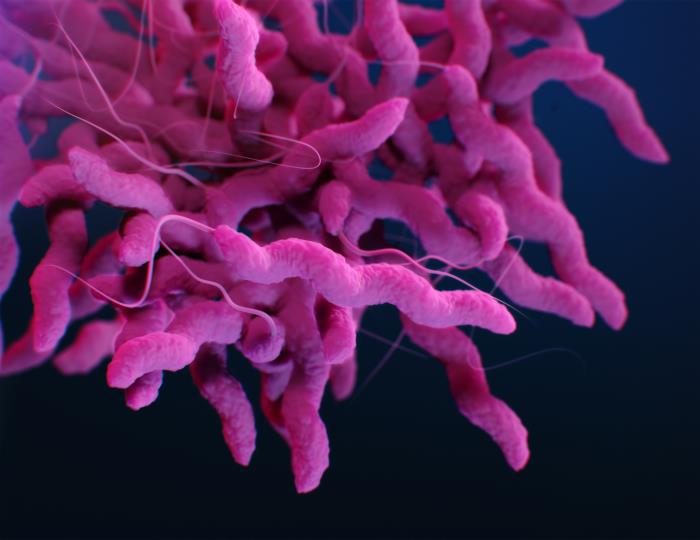
Raw Milk Food Safety KSW FoodworldCampylobacter kswfoodworld

Campylobacter jejuni has caused several campylobacteriosis outbreaks via raw milk consumption. This study reports follow-up of a milk-borne campylobacteriosis outbreak that revealed persistent C. jejuni contamination of bulk tank milk for seven months or longer. Only the outbreak-causing strain, representing sequence type (ST) 883, was isolated from milk, although other C. jejuni STs were also isolated from the farm. We hypothesized that the outbreak strain harbors features that aid its environmental transmission or survival in milk. To identify such phenotypic features, the outbreak strain was characterized for survival in refrigerated raw milk and in aerobic broth culture by plate counting and for biofilm formation on microplates by crystal violet staining and quantification. Furthermore, whole-genome sequences were studied for such genotypic features. For comparison, we characterized isolates representing other STs from the same farm and an ST-883 isolate that persisted on another dairy farm, but was not isolated from bulk tank milk. With high inocula (105 CFU/ml), ST-883 strains survived in refrigerated raw milk longer (4-6 days) than the other strains (≤3 days), but the outbreak strain showed no outperformance among ST-883 strains. This suggests that ST-883 strains may share features that aid their survival in milk, but other mechanisms are required for persistence in milk. No correlation was observed between survival in refrigerated milk and aerotolerance. The outbreak strain formed a biofilm, offering a potential explanation for persistence in milk. Whether biofilm formation was affected by pTet-like genomic element and phase-variable genes encoding capsular methyltransferase and cytochrome C551 peroxidase warrants further study. This study suggests a phenotypic target candidate for interventions and genetic markers for the phenotype, which should be investigated further with the final aim of developing control strategies against C. jejuni infections.

RASFF Alerts – Salmonella – Black Pepper – Basil – Chicken Breast Fillets – Pre-Cooked Fish Products – Gouda Cheese – Rucola – Turkey Thigh Meat – Chicken Breast and Inner Fillet

European Food Alerts

RASFF

Salmonella enterica ser. Rubislaw (present /25g) in black pepper in Germany

RASFF

Salmonella enterica ser. Newport (presence /25g) in black pepper from Brazil in Germany

RASFF

Salmonella (presence /25g) and Salmonella enterica ser. Sandiego (presence /25g) in black pepper from Brazil in Germany

RASFF

Salmonella (presence /25g) and Salmonella enterica ser. Rubislaw (presence /25g) in black pepper from Brazil in Germany

RASFF

Salmonella enterica ser. Oranienburg (presence /25g) in black pepper from Brazil in Germany

RASFF

Salmonella enterica ser. Cerro and Salmonella enterica ser. Oranienburg (presence /25g) in black pepper from Brazil in Germany

RASFF

Salmonella enterica ser. Sandiego (presence /25g) in black pepper from Brazil in Germany

RASFF

Salmonella enterica ser. Münster (presence /25g) in black pepper from Brazil in Germany

RASFF

Salmonella enterica ser. München (presence /25g) and Salmonella enterica ser. Rubislaw (presence /25g) in black pepper from Brazil in Germany

RASFF

Salmonella enterica ser. Javiana (presence /25g) and Salmonella enterica ser. Sandiego (presence /25g) in black pepper from Brazil in Germany

RASFF

Salmonella enterica ser. Poona (presence /25g) in black pepper from Brazil in Germany

RASFF

Salmonella enterica ser. Enteritidis (in 1 out of 5 samples /25g) in chilled chicken breast fillets from Poland in Poland

RASFF

Salmonella in mix of frozen precooked fish products from Italy in Austria

RASFF

Salmonella (presence /25g) in gouda cheese cubes from the Netherlands in the Netherlands

RASFF

Salmonella enterica ser. Minnesota (presence /25g) in black pepper from Brazil in Germany

RASFF

Salmonella (presence /25g) in basil from Laos in Germany

RASFF

Salmonella in rucola from Poland, with raw material from Italy in Poland

RASFF

Salmonella enterica ser. Bargny in frozen boneless turkey thigh meat from Poland in Bulgaria

RASFF

Salmonella enterica ser. Paratyphi B (presence /25g) in fresh chicken breast fillets and inner fillet from the Netherlands in the UK

RASFF

Salmonella (presence /25g) in basil from Cambodia in Germany

RASFF

Salmonella (presence /25g) in basil from Cambodia in Germany

RASFF Alert – E.coli – Live Mussels

European Food Alerts

RASFF

too high count of Escherichia coli (1100 MPN/100g) in live mussels (Mytilus edulis) from Ireland in France

RASFF Alert – Bacillus cereus – Cooked Scorpions!

RASFF

Bacillus cereus (5.58x10E10 CFU/g) in cooked whole scorpions (Mesobuthus martensii) from Thailand in Germany

RASFF Alert – Ochratoxin A – Raisins

European Food Alerts

RASFF

ochratoxin A (44.93 µg/kg – ppb) in raisins from Slovakia in Hungary

RASFF Alert – Yeast – Skyr Cheese

European Food Alerts

RASFF

high count of yeasts in skyr cheese from Germany in Bulgaria

RASFF Alerts – Listeria monocytogenes – Chilled Roasted Chicken Breast Pieces – Frozen Caviar- Raw Milk Goats Cheese – Chilled Pate with Nuts

European Food Alerts

RASFF

Listeria monocytogenes (in 3 out of 5 samples /25g) in chilled roasted chicken breast pieces from Ireland in Ireland

RASFF

Listeria monocytogenes (presence /25g) in frozen caviar from Poland in Poland

RASFF

Listeria monocytogenes in raw milk goat’s cheese from Belgium in Belgium

RASFF

Listeria monocytogenes (presence /25g) in chilled paté with nuts from Belgium in Belgium

RASFF Alerts – Aflatoxin – Berbere Spice – Pistachios – Peanut Butter – Dried Figs – Roasted and Salted Pistachios – Groundnuts – Ground Ginger – Peanuts

European Food Alerts

RASFF

aflatoxins (B1 = 5.3; Tot. = 18 µg/kg – ppb) in berbere spice from Ethiopia in the UK

RASFF

aflatoxins (B1 = 46.8; Tot. = 48.5 µg/kg – ppb) in pistachios in shell from the United States in Germany

RASFF

aflatoxins (B1 = 18.2; Tot. = 20.4 µg/kg – ppb) in pistachios from Iran in Germany

RASFF

aflatoxins (B1 = 17.6; Tot. = 20.3 µg/kg – ppb) in pistachios in shell from the United States in Germany

RASFF

aflatoxins (B1 = 55.8; Tot. = 62.7 µg/kg – ppb) in pistachios in shell from Iran in Germany

RASFF

aflatoxins (B1 = 16.8; Tot. = 18.5 µg/kg – ppb) in pistachio kernels from Iran in Germany

RASFF

aflatoxins (B1 = 13.1 µg/kg – ppb) in dried figs from Turkey in Germany

RASFF

aflatoxins (B1 = 99.3; Tot. = 110.6 µg/kg – ppb) in roasted and salted pistachios in shell from Turkey in Germany

RASFF

aflatoxins (B1 = 36.6; Tot. = 40.1 µg/kg – ppb) in pistachios from Iran in Germany

RASFF

aflatoxins (B1 = 9.9; Tot. = 20.8 µg/kg – ppb) in organic diced dried figs from Turkey in Germany

RASFF

aflatoxins (B1 = 20.9; Tot. = 23.7 µg/kg – ppb) in pistachios from Iran in Germany

RASFF

aflatoxins (B1 = 110.2; Tot. = 153.2 µg/kg – ppb) in unshelled groundnuts from Egypt in Germany

RASFF

aflatoxins (B1 = 119.9; Tot. = 153.7 µg/kg – ppb) in unshelled pistachios from Iran in Germany

RASFF

aflatoxins (B1 = 7.1; Tot. = 8.8 µg/kg – ppb) in peanut butter from the United States in the UK

RASFF

aflatoxins (B1 = 31; Tot. = 34 µg/kg – ppb) in ground ginger from Hungary in Slovenia

RASFF

aflatoxins (B1 = 82; Tot. = 90 µg/kg – ppb) in groundnuts from the United States in Denmark

RASFF

aflatoxins (B1 = 17.3; Tot. = 18.4 µg/kg – ppb) in peanuts in shell from China in the Czech Republic


RASFF Alert – Deoxynivalenol (DON) and Zearalenone in Wheat

European Food Alerts

RASFF

deoxynivalenol (DON) and zearalenone in wheat from the Czech Republic in Germany