Category Archives: Microbiology

Taiwan – TFDA Initiated 2021 Inspection Project for Ice Cube – Food Safety

TFDA

Ice cubes are usually used to cooling drinks and foods during the summer and hot weather days in Taiwan. In order to continuously ensure the sanitation and safety of ice cube product for consumers, Taiwan Food and Drug Administration (TFDA) will initiate the 2021 Inspection Project for Ice Cube, and will be conducted with local government health bureaus to improve food safety and sanitation management.

The inspection items will focus on the registration requirements for food businesses, the Regulation on Good Hygiene Practice for Food (GHP), the product liability insurance, the self-management, the product traceability, the transport control, the food practitioner sanitation management. And the ice cube products will be checked of labeling and hygiene compliance. Violating provisions of the Act Governing Food Safety and Sanitation will be punished by law.

TFDA strongly recommends food businesses effectively implementing the self-management following the Act Governing Food Safety and Sanitation to ensure ice cubes safety and sanitation to protect the health of consumers.
Research – Microbial Safety of Smoothie Drinks from Fresh Bars Collected in Slovakia

MDPI

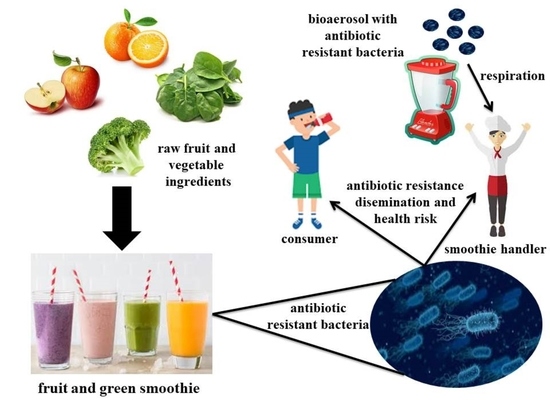
Among the many consumers in Slovakia, smoothies are nowadays gaining popularity. Smoothie drinks are prepared from raw fruits and vegetables. Therefore, their microbiological safety depends on hygiene standards. The aim of this work was to monitor and quantify selected sensitive and antibiotic-resistant microorganisms present in collected smoothies. Twenty analyzed smoothie samples were collected from six food service establishments (fresh bars) in the capital city of Slovakia, Bratislava. Antibiotic-resistant bacteria were found in at least one of each fresh bar. Antibiotic-resistant coliform bacteria prevailed, especially in green smoothies or juices containing more vegetable ingredients. Resistance to ampicillin, ciprofloxacin, tetracycline, chloramphenicol, and gentamicin was observed in the case of coliform bacteria. More than half of the smoothie drink samples did not contain resistant enterococci. On the other hand, vancomycin-resistant enterococci were detected in 20% of samples. The most frequently isolated antibiotic-resistant strains belonged to the Enterobacter spp. or Klebsiella spp. genus. In the last part of the work, the pretreatment effect of smoothie components on the selected microorganisms’ counts in the final product was investigated. Washing ingredients with an aqueous solution of a biocide agent containing silver and hydrogen peroxide proved to be the most effective way to decrease bacterial counts. View Full-Text

Luxembourg – TUPELO FARM BRAND TURKEY ROULADE -Salmonella

SAP

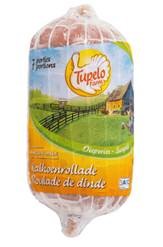
The ALDI company recalls the following product:

Last name Turkey roulade
Mark Tupelo farm
Unit 700 g
Use by date (DLC) 12/11/2021
Lot RPS 27615 09:46

Danger  : Presence of Salmonella

Salmonella can cause symptoms such as nausea, vomiting, abdominal cramps, diarrhea, fever and headache within 6 to 72 hours after consumption. These symptoms may be aggravated in young children, immunocompromised individuals and the elderly. People who have consumed these products and who have these symptoms are advised to consult a doctor, notifying him of this consumption.

Sale in Luxembourg by: ALDI

A sale by other operators cannot be excluded.

Information source: ALDI recall notification

Research – Assessment of aflatoxin B1 in animal feed and aflatoxin M1 in raw milk samples of different species of milking animals from Punjab, Pakistan

Wiley Online

The research was designed to investigate the amount of aflatoxin B1 (AFB1) in animal feed (corn, wheat bran, peanut cake, soybean meal, and cotton seed meal) and aflatoxin M1 (AFM1) in raw milk of animals (cow milk, buffalo milk, goat milk and sheep milk), from Punjab, Pakistan collected March 2017 till February 2018. The samples were examined with liquid chromatography, with a fluorescence detector. The findings demonstrated that 126 (65.3%) out of 193 samples of animal feed were found positive with AFB1, and 88 (45.6%) samples have levels higher than 5 μg/kg; positive samples are those whose levels of AFM1 ≥ LOD. The highest average amount of AFB1 was found in mustard oil cake meal (25.0 ± 4.5 μg/kg). Out of 278 samples of milk, 134 (48.2%) were found positive with AFM1, and 48 (17.3%) samples have levels of AFM1 higher than the European Union legal limit (i.e., 50 ng/L). The highest mean level of 70.5 ± 10.5 ng/L was found in raw milk of buffalo. The levels of AFM1 in milk from the urban region versus suburb region showed a significant difference (at α 0.05) except sheep milk samples, which presented a significant difference at α 0.01. Samples, 65 (64.4%) out of 140 from the urban region, and 69 (50%) from the suburb region were found positive with AFM1 in milk samples. The amount of AFB1 in animal feed and AFM1 in milk samples are comparatively high and could pose health hazards for local consumers.

Research – Persistence of Foodborne Pathogens on Farmers Market Fomites

Journal of Food Protection

The number of farmers markets registered by the U. S. Department of Agriculture (USDA) has seen a significant increase, jumping from 1,755 in 1994 to 8,771 in 2019. Microbial studies have found evidence that produce sold at farmers can yield higher microbial counts than their retail counterparts; however, no previous literature explored the efficacy of microbial (bacteria and virus) persistence on a variety of different farmers market fomites over a 2-month period. The objectives of the current study were to conduct observations to determine the most commonly used food contact surface fomites at farmers markets and to investigate the persistence of key foodborne pathogens ( Escherichia coli O157:H7, Listeria monocytogenes, Salmonella spp., Staphylococcus aureus, and MS2 bacteriophage) on these fomites. A repeated-measures analysis of variance was used to compare the persistence rates of foodborne pathogens on cardboard, plastic, tablecloth, molded pulp fiber, and wicker baskets used to store, transport, and display produce at farmers markets. In general, molded pulp fiber, plastic and wicker surface materials supported the persistence of foodborne pathogens the most, with S. aureus demonstrating the highest log concentrations over the longest period of time. Additionally, Salmonella and E. coli strains also persisted for a significant period of time (approximately 32-days) on all fomites with the exception of tablecloth. The results suggest that foodborne pathogens on these fomites pose a high-risk of cross-contamination particularly if the fomites cannot be washed, rinsed, and sanitized effectively (e.g. cardboard). The results highlight the need avoid using porous, single-use storage containers such as cardboard, molded pulp fiber and wicker containers for extended periods of time and suggest the use of easily cleanable materials such as plastic containers.

Research – Growth of Listeria monocytogenes in Partially Cooked Battered Chicken Nuggets as a Function of Storage Temperature

MDPI

Battered poultry products may be wrongly regarded and treated by consumers as ready-to-eat and, as such, be implicated in foodborne disease outbreaks. This study aimed at the quantitative description of the growth behavior of Listeria monocytogenes in fresh, partially cooked (non-ready-to-eat) battered chicken nuggets as function of temperature. Commercially prepared chicken breast nuggets were inoculated with L. monocytogenes and stored at different isothermal conditions (4, 8, 12, and 16 °C). The pathogen’s growth behavior was characterized via a two-step predictive modelling approach: estimation of growth kinetic parameters using a primary model, and description of the effect of temperature on the estimated maximum specific growth rate (μmax) using a secondary model. Model evaluation was undertaken using independent growth data under both constant and dynamic temperature conditions. According to the findings of this study, L. monocytogenes may proliferate in battered chicken nuggets in the course of their shelf life to levels potentially hazardous for susceptible population groups, even under well-controlled refrigerated storage conditions. Model evaluation demonstrated a satisfactory performance, where the estimated bias factor (Bf) was 0.92 and 1.08 under constant and dynamic temperature conditions, respectively, while the accuracy factor (Af) value was 1.08, in both cases. The collected data should be useful in model development and quantitative microbiological risk assessment in battered poultry products. View Full-Text

Ireland – Recall of Additional Batches of SFC Chicken Poppets Due to Presence of Salmonella

FSAI

Summary
Category 1: For Action
Alert Notification: 2021.20 update 1
Product: The Original SFC Chicken Poppets, pack size:190g
Batch Code: Best before dates: 24.09.2021 and 31.10.2021
Country Of Origin: United Kingdom

Message:

Further to the FSAI’s food alert 2021.20SFC is recalling the above additional batches of its Chicken Poppets due to the detection of Salmonella. Batches with a best before date of 28.02.2022 were recalled previously. Point-of-sale recall notices will be displayed in Tesco stores.

Nature Of Danger:

People infected with Salmonella typically develop symptoms between 12 and 36 hours after infection, but this can range between 6 and 72 hours.  The most common symptom is diarrhoea, which can sometimes be bloody.  Other symptoms may include fever, headache and abdominal cramps.  The illness usually lasts 4 to 7 days. Diarrhoea can occasionally be severe enough to require hospital admission. The elderly, infants, and those with impaired immune systems are more likely to have a severe illness.

Action Required:

Consumers:

Consumers are advised not to eat the implicated batches.

SFC Chicken Poppets

France – Product recall: 200g tip of brie from Les Croisés brand – Listeria monocytogenes

Oulah

Product recall: 200g tip of brie from Les Croisés brand

ENCOUNTERED PROBLEM

Risk of presence of Listeria monocytogenes

PROPOSED SOLUTION

Those in possession of this product are asked not to consume it and to return it to the point of sale where it was purchased.

People who have consumed this product and who present with fever, isolated or accompanied by headaches, are invited to consult their attending physician, notifying him of this consumption.
Pregnant women should pay special attention to these symptoms, as well as immunocompromised people and the elderly. These symptoms may suggest listeriosis, a disease that can be serious and can take up to eight weeks to incubate.

FURTHER INFORMATION

▸ Barcode
3564700014745

▸ Packaging
200g

▸ DDM
04/07/2021

▸ Health
stamp FR 88.115.001 CE

▸ Consumer service contact
0 800 86 52 86 Free service and call

▸ Source
https://www.e.leclerc/

France – Product recall: Les coquillages de la Baie d’Isigny brand fishing mussels – E.coli

Oulah

Product recall: Les coquillages de la Baie d'Isigny brand fishing mussels

ENCOUNTERED PROBLEM

Presence of Escherichia coli

PROPOSED SOLUTION

Those in possession of this product are asked not to consume it and to return it to the point of sale where it was purchased.

Foodborne illness caused by salmonella results in gastrointestinal disturbances, diarrhea, vomiting and abdominal pain, often accompanied by fever; these symptoms may be more severe in young children, immunocompromised individuals and the elderly. The incubation period can range from 6 to 72 hours.
People who have consumed the products mentioned below and who have these symptoms are invited to consult their doctor, notifying him of this consumption.

FURTHER INFORMATION

▸ Marketing period
from 02/26/2021 to 03/01/2021 (included)

▸ Type of packaging
in assisted sale on the fishmonger’s stall

▸ Consumer service contact
The supplier “Shellfish from the Bay of Isigny” is available to consumers to answer any questions: Toll-free number
: 06 14 21 85 96
Hours: 8 am to 6 pm

▸ Source
https://www.auchan.fr/

RASFF Alerts – Salmonella – Chilled Pork Chop – Sesame Seeds – Frozen Chicken Fillets – Frozen Chicken Cuts – Sliced Salami – Chicken Drumsticks

European Food Alerts

RASFF

Salmonella enterica ser. Brandenburg (5 out of 5 samples /25g) in chilled pork chop from Lithuania in Latvia

RASFF

Salmonella (presence /25g) in hulled sesame seeds from Nigeria, dispatched from Turkey in Greece

RASFF

Salmonella enterica ser. Enteritidis (presence /25g) in frozen chicken fillets from Poland in France

RASFF

Salmonella enterica ser. Enteritidis (presence /25g) in frozen chicken cuts from Poland in France

RASFF

Salmonella enterica ser. Infantis (presence /25g) in frozen chicken fillets from the Netherlands in Sweden

RASFF

Salmonella (presence /25g) in chilled sliced salami from Germany in Germany

RASFF

Salmonella enterica ser. Paratyphi B (presence /25g) in frozen chicken drumsticks from the Netherlands in Italy

RASFF

Salmonella (presence /25g) in hulled sesame seeds from Nigeria, dispatched from Turkey in Greece