Category Archives: Microbiology

Research – What to know about Scombroid Poisoning

Medical News Today

Read the full article at the link above.

Scombroid poisoning is a form of food poisoning. It happens when a person eats fish species containing high amounts of a chemical called histidine.

Histidine is an amino acid that naturally occurs in fish. When people do not keep the fish in a refrigerator, bacteria break down the histidine and turn it into histamine.

Histamine is responsible for the toxicity that causes scombroid poisoning, according to the American Academy of Allergy, Asthma & Immunology (AAAAI).

When a person consumes large quantities of fish with histamine, they experience symptoms that resemble an allergic reaction, such as hives. However, it is not a true allergy to a particular fish, according to the National Capital Poison Center.

The condition usually is not long-term or severe, according to the Food and Drug Administration (FDA)Trusted Source. Mild cases often disappear on their own without treatment, but antihistamine medications may help some people.

A person experiencing severe symptoms, such as chest pain or breathing trouble, should go to an emergency room or call local emergency services.

Research – Monitoring AMR in Campylobacter jejuni from Italy in the last 10 years (2011–2021): Microbiological and WGS data risk assessment

EFSA

Campylobacter jejuni is considered as the main pathogen in human food‐borne outbreaks worldwide. Over the past years, several studies have reported antimicrobial resistance (AMR) in C. jejuni strains. In Europe, the official monitoring of AMR comprises the testing of Campylobacter spp. from food‐producing animals because this microorganism is responsible for human infections and usually predominant in poultry. Food‐producing animals are considered to be a major source of campylobacteriosis through contamination of food products. Concerns are growing due to the current classification of C. jejuni by the WHO as a ‘high priority pathogen’ due to the emergence of resistance to multiple drugs such as those belonging to the fluoroquinolones, macrolides and other classes, which limits the treatment alternatives. Knowledge about the contributions of different food sources to gastrointestinal disease is fundamental to prioritise food safety interventions and to establish proper control strategies. Assessing the genetic diversity among Campylobacter species is essential to the understanding of their epidemiology and population structure. Using a population genetic approach and grouping the isolates into sequence types within different clonal complexes, it is possible to investigate the source of the human cases. The work programme was aimed for the fellow to assess the AMR of C. jejuni isolated from humans, poultry and birds from wild and urban Italian habitats. Given the public health concern represented by resistant pathogens in food‐producing animals and the paucity of data about this topic in Italy, the aim was to identify correlations between phenotypic and genotypic AMR and comparing the origin of the isolates. The work programme allowed the fellow to acquire knowledge, skills and competencies on the web‐based tools used by IZSAM to process the NGS data and perform bioinformatics analyses for the identification of epidemiological clusters, the study of AMR patterns in C. jejuni isolates, and the assessment of the human exposure to such AMR pathogens. Furthermore, the fellow became able to transfer the acquired knowledge through innovative web‐based didactical tools applied to WGS and clustering of specific food‐borne pathogens, with particular reference to C. jejuni. To achieve this objective, 2,734 C. jejuni strains isolated from domestic and wild animals and humans, during the period 2011–2021 were analysed. The resistance phenotypes of the isolates were determined using the microdilution method with EUCAST breakpoints, for the following antibiotics: nalidixic acid, ciprofloxacin, chloramphenicol, erythromycin, gentamicin, streptomycin, tetracycline. The data were complemented by WGS data for each strain, uploaded in the Italian information system for the collection and analysis of complete genome sequence of pathogens isolated from animal, food and environment (GENPAT) developed and maintained at IZSAM; information like clonal complex and sequence type to understand the phylogenetical distance between strains according to their origins were also considered. This work underlines that a better knowledge of the resistance levels of C. jejuni is necessary, and mandatory monitoring of Campylobacter species in the different animal productions is strongly suggested.

Research – Public Health Response to Multistate Salmonella Typhimurium Outbreak Associated with Prepackaged Chicken Salad, United States, 2018

CDC

Abstract

Quantifying the effect of public health actions on population health is essential when justifying sustained public health investment. Using modeling, we conservatively estimated that rapid response to a multistate foodborne outbreak of Salmonella Typhimurium in the United States in 2018 potentially averted 94 reported cases and $633,181 in medical costs and productivity losses.

The US Centers for Disease Control and Prevention estimates that 48 million illnesses, 128,000 hospitalizations, and 3,000 deaths are caused by foodborne illnesses each year in the United States (1). Salmonella alone accounts for 1.35 million illnesses, 26,600 hospitalizations, and 421 deaths in the United States annually (2). Although incidence of Salmonella enterica serotype Typhimurium has declined since 2000, infection with this serotype continues to pose a public health burden because it can result in higher rates of hospitalization and longer lengths of stay in a hospital relative to other serotypes (36). A subset of Salmonella illnesses are identified and reported as part of an outbreak (defined as >2 persons who become ill from the same exposure); 96% of Salmonella outbreaks are caused by foodborne transmission (7). Outbreaks provide an opportunity to identify implicated food vehicles, as well as root causes for contamination, which can in turn inform broader food safety prevention efforts. If a Salmonella outbreak is suspected, public health officials can limit further cases by quickly identifying the source and issuing a recall for the implicated product or making other recommendations for restricting exposure to it.

Research – What is Campylobacter gastroenteritis?

Medical News Today

See full article at the link above

Campylobacter gastroenteritis is a common intestinal infection that occurs due to Campylobacter bacteria.

According to the Centers for Disease Control and Prevention (CDC), Campylobacter bacteria are the most common bacterial cause of diarrheal illness, affecting 1.5 million people in the United States each year.

The bacteria may be present in the meat or milk of an animal or pass to water or produce through feces or contact with infected meat.

Campylobacter gastroenteritis can lead to symptoms such as:

The World Health Organization (WHO)states that infections are typically mild and will subside on their own. However, young children, older adults, and people with weakened immune systems have a higher risk of developing severe illness.

Causes

Campylobacter gastroenteritis occurs when a person comes into contact with Campylobacter bacteria.

The WHO notes that Campylobacter bacteria are present in many animals, including:

  • poultry
  • pigs
  • cattle
  • sheep
  • ostriches
  • shellfish

They can also be present in pets, such as cats and dogs.

The main route of exposure is through eating undercooked meat. When an animal is slaughtered, the bacteria from the feces can contaminate the meat.

People can also come into contact with the bacteria via:

  • raw or unpasteurized milk
  • contaminated water and ice
  • unwashed fruits and vegetables

Milk can become contaminated when Campylobacter bacteria are present in the udder. Fruits and vegetables can become contaminated if they come into contact with water or soil that contains animal feces.

Rarely, the condition is a result of exposure to contaminated water during recreation such as swimming. Lakes and streams can become contaminated with animal faeces.

Research – In-House Validation of Multiplex PCR for Simultaneous Detection of Shiga Toxin-Producing Escherichia coli, Listeria monocytogenes and Salmonella spp. in Raw Meats

MDPI

The aim of the study was to perform in-house validation of the developed multiplex PCR (mPCR)-based alternative method to detect Shiga toxin-producing Escherichia coli (STEC), Listeria monocytogenes (L. monocytogenes) and Salmonella spp. in raw meats following the ISO 16140-2: 2016. A comparative study of the developed mPCR against the Bacteriological Analytical Manual (BAM) method was evaluated for inclusivity and exclusivity, sensitivity and the relative level of detection (RLOD). Inclusivity levels for each target bacterium were all 100%, while exclusivity for non-target bacteria was 100%. The sensitivity of the developed mPCR was calculated based on the analysis of 72 samples of raw meat. The sensitivity of the developed mPCR was 100%. The RLOD values of the developed mPCR for STEC, L. monocytogenes and Salmonella spp. were 0.756, 1.170 and 1.000, respectively. The developed mPCR showed potential as a tool for the fast, specific and sensitive detection of the three bacteria in the raw meat industry View Full-Text

Research – Foodborne Illness Outbreaks Reported to National Surveillance, United States, 2009–2018

CDC

Abstract

Foodborne outbreaks reported to national surveillance systems represent a subset of all outbreaks in the United States; not all outbreaks are detected, investigated, and reported. We described the structural factors and outbreak characteristics of outbreaks reported during 2009–2018. We categorized states (plus DC) as high (highest quintile), middle (middle 3 quintiles), or low (lowest quintile) reporters on the basis of the number of reported outbreaks per 10 million population. Analysis revealed considerable variation across states in the number and types of foodborne outbreaks reported. High-reporting states reported 4 times more outbreaks than low reporters. Low reporters were more likely than high reporters to report larger outbreaks and less likely to implicate a setting or food vehicle; however, we did not observe a significant difference in the types of food vehicles identified. Per capita funding was strongly associated with increased reporting. Investments in public health programming have a measurable effect on outbreak reporting.

Foodborne diseases remain a major public health challenge in the United States, where 31 known pathogens cause an estimated 9 million illnesses, 56,000 hospitalizations, and 1,300 deaths annually (1). Efforts to improve food safety and reduce the burden of foodborne disease rely on data from foodborne disease surveillance and outbreak investigations to help prioritize food safety interventions, policies, and practices. Data from foodborne illness outbreaks reported to the Centers for Disease Control and Prevention (CDC) provide vital information on the foods causing illness and common food–pathogen pairs. Those data are used by the Interagency Food Safety Analytics Collaboration (IFSAC) to inform outbreak-based attribution models that attribute illnesses to specific food categories (2,3).

Foodborne illness outbreaks are investigated by local, state, and territorial health departments, CDC, the US Food and Drug Administration (FDA), and the Food Safety and Inspection Service of the United States Department of Agriculture and are reported to CDC’s Foodborne Disease Outbreak Reporting Surveillance System (FDOSS) through the web-based National Outbreak Reporting System (NORS). Although reported outbreaks are a rich data source, they represent a subset of all outbreaks occurring in the United States; not all outbreaks will be detected, investigated, and reported. Factors influencing which outbreaks are detected, investigated, and reported to CDC include both structural factors associated with the jurisdiction in which the outbreak occurred (e.g., infrastructure and capacity) and characteristics of the outbreak (e.g., size, geographic location, pathogen).

We integrated data from a variety of sources to examine structural factors and describe outbreak characteristics of foodborne outbreaks involving Salmonella, Shiga toxin–producing Escherichia coli (STEC) O157, norovirus, and bacterial toxins that were reported to national surveillance. In addition, we assessed the effects of state variation in outbreak reporting on the types of food vehicles identified.

Research – Inactivation of viruses related to foodborne infections using cold plasma technology

Wiley Online

Globally, there is a rise in day-to-day demand for minimally processed foods to supply nutritious, wholesomeness and safe foods to the consumers. Contamination of food by pathogens is a serious problem resulting in several outbreaks. Food pathogens like molds, bacteria were detectable and can be inactivated. The virus detection in foods is always a difficult task as their presence could not alter any noticeable change in the quality. Norovirus, Hepatitis A viruses are well-known for their foodborne outbreaks and illnesses. Enveloped viruses are resistant and have the stability to the current traditional preservation methods due to the presence of a protective capsid layer and an envelope. The current thermal processing has shown significant effect on the product quality. The use of chemical disinfestation compounds is not suitable for food commodities. There is a need for alternative nonthermal food processing technologies for decontamination of food and food packages and preserving the food quality as well. Cold plasma is one of the emerging nonthermal, chemical-free residues, and eco-friendly technology widely being applied to the different food sectors. The main antiviral mechanism is the disruption of the capsid protein layer, the oxidation and denaturation of viral proteins. The method has also caused damage to the envelope layer and genetic material. This review focuses on cold plasma inactivation efficiency on different viruses.

Cambodia – About 50 people sick in suspected mass food poisoning

Khmer Times

At least 50 people are seeking for treatment after a suspected mass food poisoning incident. The people all ate raw vegetables in a festival.

Of the 52 people who were poisoned 20 were rushed to the Maung Russey District Health Centre and Referral Hospital. According to the inspector, this case is still being investigated by the specialized police force.

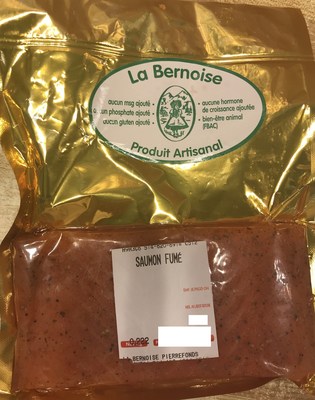
Quebec – Notice not to consume smoked salmon sold by the company La Bernoise boucherie charcuterie inc.

Quebec

The Ministry of Agriculture, Fisheries and Food (MAPAQ), in collaboration with the Food Inspection Division of the City of Montreal and the company La Bernoise Boucherie Charcuterie Inc. located at 3988, boulevard Saint-Charles in Pierrefonds (Montreal), warns the public not to consume the product indicated in the table below, because it has not been packaged in such a way as to ensure its harmlessness.

Product name

Format

Affected lot

“SMOKED SALMON”

Variable

Units sold until May 31, 2022

The product that is the subject of this warning was offered for sale until May 31, 2022, only at the establishment mentioned above. It was packaged in a clear plastic wrapper with a gold bottom and offered refrigerated. The product label includes, in addition to its name, the words “La Bernoise” and “Produit Artisanal”.

The operator is voluntarily recalling the product in question. It has agreed with MAPAQ and the Food Inspection Division of the City of Montreal to issue this warning as a precautionary measure. In addition, people who have this product in their possession are advised not to consume it. They must return it to the establishment where they bought it or throw it away. Even if the affected product shows no signs of tampering or suspicious odors, its consumption may represent a health risk. However, no case of disease associated with the consumption of this food has been reported to MAPAQ to date.

Additional information

The Ministry publishes various information documents concerning food safety. Interested persons can consult them in the “Food Consumption” section of the MAPAQ website: www.mapaq.gouv.qc.ca/consommation  . They also have the possibility of registering online by visiting www.mapaq.gouv.qc.ca/rappelsfoods  to receive, by e-mail, the food recall press releases published by the Ministry. Finally, it is possible to follow “MAPAQfoods” on Twitter at the following address: www.twitter.com/MAPAQfoods  .

smoked salmon (CNW Group/Ministry of Agriculture, Fisheries and Food) 

Hazard Classification:  Class 1

Reference Number: 4558

Source

Media relations
Direction des communications
Ministry of Agriculture, Fisheries
and Food
Tel. : 418 380-2100, extension 3512
www.mapaq.gouv.qc.ca 

Quebec – Notice not to consume smoked fish sold by Euro Victoria European Market

Quebec

The Ministry of Agriculture, Fisheries and Food (MAPAQ), in collaboration with the Food Inspection Division of the City of Montreal and the company Euro Victoria European Market located at 4751, avenue Van Horne in Montreal, warns the population not to consume the products indicated in the table below, because they have not been packaged in such a way as to ensure their harmlessness.

Frozen smoked salmon (CNW Group/Ministry of Agriculture, Fisheries and Food)

Product name

Format

Affected lot

Cold smoked salmon steak

Variable

Units sold until May 31, 2022

Cold smoked sprats

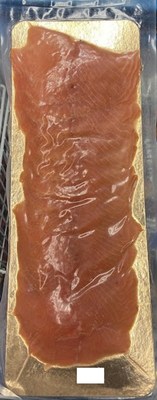
The products that are the subject of this warning were offered for sale until May 31, 2022, only at the establishment mentioned above. They were placed on a Styrofoam tray covered with transparent plastic wrap and offered refrigerated. The label of the products includes, in addition to their name, the mention “Euro Victoria”. People who have these products in their possession are advised not to consume them. They must return them to the establishment where they purchased them or throw them away.

In addition, MAPAQ, in collaboration with the same company, advises the public not to consume the product indicated in the table below if it has not been kept in the freezer at all times since the time of purchase. . In fact, the product label does not include the information necessary for its safe consumption, namely the statement “Keep frozen” which is required.

Product name

Format

Affected lot

“Smoked Atlantic salmon slices”

454g

Units sold until May 31, 2022

The operator is voluntarily recalling the product in question. It has agreed with MAPAQ and the Food Inspection Division of the City of Montreal to issue this warning as a precautionary measure. In addition, people who have the product indicated in the second table in their possession and who have not kept it in the freezer at all times since the time of purchase are advised not to consume it. They must return it to the establishment where they bought it or throw it away. Even if the affected product shows no signs of tampering or suspicious odors, its consumption may represent a health risk. However, no case of disease associated with the consumption of this food has been reported to MAPAQ to date.