Category Archives: Microbiology Investigations

RASFF Alert – Aflatoxin – Organic sun cake expeller

RASFF

Aflatoxins in organic sun cake expeller from Italy in Denmark

RASFF Alert- Animal Feed – Enterobacteriaceae – Fish Meal

RASFF

Too high count of Enterobacteriaceae (360 CFU/g) in fish meal from Morocco in Spain

USA – FDA Warning Letter – Old Europe Cheese, Inc. – Listeria monocytogenes

FDA

Dear Mr. Navarro,

The United States Food and Drug Administration (FDA) inspected your ready-to-eat (RTE) soft and semi-soft cheese manufacturing facility, located at 1330 E. Empire Avenue, Benton Harbor, MI, from September 13, 2022 through October 6, 2022. The inspection, conducted jointly with the Michigan Department of Agriculture and Rural Development (MDARD), was initiated as part of a multistate outbreak of Listeria monocytogenes (L. monocytogenes) infections linked to RTE soft cheese products supplied by your facility. According to the Centers for Disease Control and Prevention (CDC), six (6) ill people from six (6) states were infected with the outbreak strain of L. monocytogenes. On September 30, 2022, your firm recalled all RTE Brie and Camembert Soft Cheese products because they had the potential of being contaminated with L. monocytogenes. On October 5, 2022 your firm expanded the recall to also include Baked Brie Cheeses. One (1) environmental swab isolate collected by FDA during our inspection of your manufacturing facility matched the clinical outbreak isolates, based on Whole Genome Sequencing (WGS) analysis. According to the CDC, epidemiologic, traceback, and laboratory data showed that cheese made by Old Europe Cheese, Inc. made people sick.

USA – FDA – Core Outbreak Table – Investigations of Foodborne Illness Outbreaks

FDA

Date
Posted
Ref Pathogen
or
Cause of
Illness
Product(s)
Linked to
Illnesses

(if any)
Total
Case
Count

Status
3/29/2023 1141 Salmonella Infantis Raw Flour See
CDC
Investigation
Notice
Active
3/8/2023 1144 Salmonella Hartford Not Yet
Identified
53 Active
3/1/2023 1143 Hepatitis A Virus Frozen Organic
Strawberries
See
Outbreak
Advisory
Active
2/15/2023 1123 Listeria
monocytogenes
Not Yet
Identified
See
CDC
Investigation
Notice
Active
11/9/2022 1127 Listeria
monocytogenes
Enoki
Mushrooms
See
Outbreak
Advisory
Active

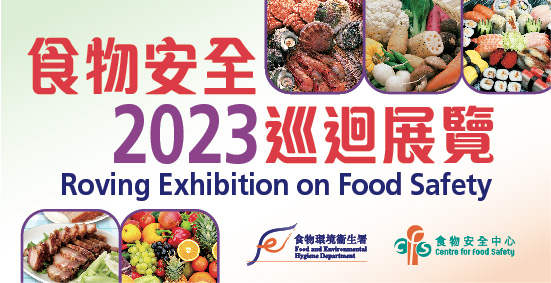
Hong Kong – Roving Exhibitions on Food Safety in 2023

CFS

Roving Exhibitions on Food Safety in 2023

The Centre for Food Safety (CFS) holds a series of exhibitions across the territory every year.  Panels covering different topics such as food safety and nutrition are shown to enhance public knowledge on how to make safe and suitable food choices.

FOUR roving exhibitions will be held in the following venues in April 2023. Details are as follows:

Date Time Venue Theme
4/4 10am – 4pm Causeway Bay Market Nutrition Labelling; Prevention of Cross-contamination; Take Notice of Eating Scallops
12/4  10am – 4pm Smithfield Market Nutrition Labelling; Prevention of Cross-contamination; Trans Fats
21/4  10am – 4pm Tsuen Wan Government Offices Nutrition Labelling; Ciguatoxins; Enhance Food Traceability, Strengthen Food Safety
26/4  10am – 4pm Sai Wan Ho Market Nutrition Labelling; Genetically Modified Food; Acrylamide

New arrangements of the exhibitions will be announced regularly and members of the public are welcome to visit the CFS website.  For any enquiries, please contact our Communication Resource Unit at 2381 6096.

RASFF Alerts – Animal Feed- Salmonella -Soybean Meal – Sunflower Meal – Granulated Wheat Bran

RASFF

Salmonella in soybean meal from the Netherlands in Finland

RASFF

Salmonella in sunflower meal extracted from Serbia in Austria

RASFF

Salmonella Enteritidis in granulated wheat bran from Ukraine in Poland

UK – FSA and FSS share findings from the evaluation of the recall system

Food Safety News

An updated food recall system in the United Kingdom has improved the situation but there are still areas to develop and things to consider for the future, according to an evaluation.

In 2016 and 2017, the Food Standards Agency (FSA) and Food Standards Scotland (FSS) held a review to improve the way food is recalled. This resulted in changes to the withdrawals and recalls system, including new guidance, a revised point-of-sale notice template for shops, and additional training for food businesses.

RSM UK Consulting was commissioned by FSA and FSS in 2021 to evaluate the development of the new system. This included a desk review, interviews with those who worked on the updated system, case studies of real recalls, looking at hypothetical scenarios, and consumer focus groups.

Those who worked on the new traceability, withdrawals, and recalls guidance said it was an improvement on the old document. However, one concern was that smaller businesses have fewer resources to implement the new processes and understand the legalities behind them. Lack of resources was also discussed as a barrier by local authorities.

USA – Consumer Reports compiles a list of 10 ‘risky foods’ to watch out for

Food Safety News

Consumer Reports is out with a new analysis of what it describes as risky foods consumers should know about.

The list was compiled after the organization looked at data from 2017 through 2022. The researchers focused on widely consumed foods that had recalls during the study period. They did not include recalled food related to allergens or extraneous materials. The report ranked recalls based on how many people died or became ill, as well as how widespread the outbreaks were and how many times a food was recalled.

The 10 foods that made the list are:

  • Leafy greens
  • Deli cheese and meat
  • Ground beef
  • Onions
  • Turkey
  • Chicken
  • Papayas
  • Peaches
  • Cantaloupe
  • Flour

“We aren’t saying people need to avoid these foods entirely, said Brian Ronholm, director of food policy at Consumer Reports, who lead the analysis.

“After all, these foods are usually safe and many of them are in fact import parts of a healthy diet.” Instead, he says, the list underscores the “importance of following best food safety practices with all of your foods, including knowing how to track and respond to food recalls when they happen.”

Vanuatu: Dozens of ciguatera cases reported since the beginning of the year

Outbreak News Today

The Vanuatu Ministry of Health reports that from January 1 to March 19, 27 ciguatera fish poisoning cases were recorded, all were clinically diagnosed.

The cases were distributed as follows: Seventeen (17) cases from Efate, 6 cases from Maewo, 2 cases from Ambrym, 1 from Ambae, 1 from Pentecost and 1 from Santo.

No deaths have been recorded.

From the cases reported, 69% of the cases consumed reef fish – not specified, 16 consumed Snapper and 15% consumed grouper.

More than 400 species of fish, including barracuda, black grouper, blackfin snapper, cubera snapper, dog snapper, greater amberjack, hogfish, horse-eye jack, king mackerel, and yellowfin grouper have been implicated in this food borne illness that’s relatively common in several areas of the world.

Research – Major pathogens rise in Ireland in 2022

Food Safety News

Campylobacter, Salmonella, E. coli, and Listeria infections all increased in Ireland in 2022, according to the latest figures.

Data from the Health Protection Surveillance Centre (HPSC), which is part of the Health Service Executive (HSE), shows the number of reports for the four pathogens rose compared to 2021.

Notifications of Salmonellosis doubled and the number of E. coli infections passed 1,000.

Full reports on these four pathogens and for outbreaks have not been published since 2018 because of the impact of the COVID-19 pandemic response and limited capacity at HPSC.

Campylobacter infections went up from 3,147 in 2021 to 3,619 in 2022.

Salmonella cases doubled from 173 in 2021 to 342 in 2022 but this is similar to 2018 and 2019 levels.

More than 1,000 Shiga toxin-producing E. coli (STEC) notifications were noted. Up from 962 in 2021.

A total of 18 listeriosis cases were recorded, up from 15 in 2021. Fourteen were men and four were women. Fifteen cases were in the over-65 age group while two were less than 1 to 4 years old.

Figures also show three cases of Bacillus cereus foodborne infection or intoxication compared to none in 2021.

The published data, which covers 2018 to 2022, reveals two cases of botulism, although it is unclear if food was the cause. There was also one report of brucellosis in 2022. All other years reported no notifications of these diseases.

There were 17 yersiniosis cases in 2022 compared to 18 in 2021. Cryptosporidiosis declined from 845 in 2021 to 566 in 2022.

Shigellosis went up from 70 in 2021 to 157 in 2022. Norovirus also increased from 439 in 2021 to 990 in 2022.