Category Archives: Microbiology Investigations

USA – Investigations of Foodborne Illness Outbreaks

FDA

What’s New

  • A new outbreak of Cyclospora cayetanensis (ref #1163) in a not yet identified product has been added to the table. FDA has initiated sample collection and analysis.
  • For the outbreak of Cyclospora cayetanensis (ref #1159), the case count has increased from 36 to 37 cases.
Date
Posted
Ref Pathogen
or
Cause of
Illness
Product(s)
Linked to
Illnesses

(if any)
Total
Case
Count

Status
7/6/2023 1163 Cyclospora
cayetanensis
Not Yet
Identified
105 Active
6/14/2023 1157 Salmonella
Paratyphi B
var. L(+)
tartrate+
Not Yet
Identified
34 Active
6/14/2023 1159 Cyclospora
cayetanensis
Not Yet
Identified
37 Active
5/24/2023 1156 Salmonella
Enteritidis
Raw
Cookie
Dough
See
Advisory
Active
4/26/2023 1152 Not Yet
Identified
Morel
Mushroom
See
Advisory
Active
3/1/2023 1143 Hepatitis
A Virus
Frozen
Strawberries
See
Advisory
Active

Research – Local Salmonella Enteritidis restaurant outbreak investigation in England provides further evidence for eggs as source in widespread international cluster, March to April 2023

Eurosurveillance

An outbreak of food-borne infection linked to a restaurant was reported to the UK Health Security Agency (UKHSA) East of England Health Protection Team (HPT) in early April 2023. Whole genome sequencing (WGS) results indicated  Enteritidis infection, with all cases in a 5-single nucleotide polymorphism (SNP) cluster falling into a wider genomically diverse 10-SNP cluster investigated in several countries. We identified additional cases in the 5-SNP cluster with no known links to the restaurant, and historical cases reported since July 2022.

Our investigations aimed to define common exposures for cases in the 5-SNP cluster to determine the likely source of infection and implement control measures.

A confirmed case was defined as a person with laboratory-confirmed  Enteritidis infection belonging to the 5-SNP cluster 1.2.3.18.180.7268.% [1] in England since 1 March 2023. A probable case was defined as a person with gastroenteritis or confirmed  spp. infection in England who dined at the restaurant of interest from 1 March to 1 April 2023. Confirmed cases were further categorised as having known, unknown or no exposure to the restaurant.

In early April 2023, UKHSA was notified via Accident and Emergency doctors, general practitioners, and a local authority environmental health (EH) department of multiple cases of gastroenteritis following food consumption at a restaurant, with attendance or take-away dates in late March. We identified  Enteritidis as the causative organism.  isolates are routinely sent to the UKHSA Gastrointestinal Bacteria reference unit (GBRU) for sequencing [2]. The outbreak cases were confirmed to be within a 5-SNP cluster defined at UKHSA as 1.2.3.18.180.7268.% matching the Enterobase cgMLST hierarchical cluster HC2_316378 [3], falling into a wider genomically diverse cluster 1.2.3.18.180.%/HC5_2301 that is subject to several national and international investigations.

Cases identified through initial case notifications were interviewed using generic food history questionnaires; for cases notified since 2 May 2023, a bespoke menu-based questionnaire was used. Early cases were re-interviewed with the bespoke questionnaire completed by telephone or online. Additional cases identified through WGS were contacted to establish whether they were linked to the restaurant, and if so, asked to complete the bespoke questionnaire by telephone or online. Cases who did not reveal exposure to the restaurant completed a modified  trawling questionnaire focussed on poultry products.

Quebec- Notice not to consume the Pam Pi Gou brand 100% Haitian seasoning mix sold by the company Épicerie antillais et casse-croute Ében-Ézer – Clostridium botulinum

Quebec

QUEBEC CITY , July 6. 2, 2023 /CNW/ – The Ministère de l’Agriculture, des Pêcheries et de l’Alimentation (MAPAQ), in collaboration with Épicerie antillais et casse-croute Ében-Ézer, located at 125, rue Valmont, in Repentigny , advises the population not to consume the product indicated in the table below, because it has not been prepared and packaged in such a way as to ensure its harmlessness. Indeed, this product could promote the proliferation of the bacterium  Clostridium botulinum .

Product name

Format

Affected lot

“100% HAITIAN SEASONING”

500ml  _

Units sold until July 5, 2023

The product that is the subject of this warning was offered for sale until July 5, 2023, and only at the place designated above. The product was packaged in a Mason type glass jar and sold chilled. The product label includes, in addition to its name, the words “PAM PI GOU”.

The operator is voluntarily recalling the product in question. It has agreed with MAPAQ to issue this warning as a precautionary measure. In addition, people who have this product in their possession are advised not to consume it. They must return it to the establishment where they bought it or throw it away.

Even if the affected product shows no sign of tampering or suspicious odor, it could be contaminated with Clostridium botulinum bacteria . Foods contaminated with the toxin of this bacterium can cause, when ingested, the following symptoms: facial paralysis, non-reactive or fixed pupils, difficulty swallowing, droopy eyelids, vision and speech disorders. In severe cases, the disease can cause death.

It should be noted that no case of illness associated with the consumption of this food has been reported to MAPAQ to date.

New in August on Netflix – Poisoned: The Dirty Truth About Your Food

Food Poison Journal

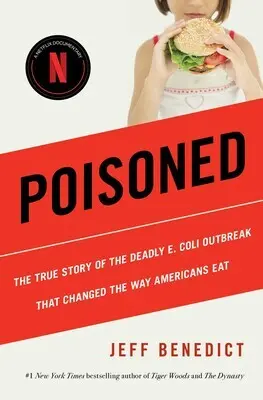
The doc first premiered at the Tribeca Film Festival with multiple screenings taking place between June 9th and June 17th first premiering at the SVA Theatre on June 9th.  It also was shown in the author, Jeff Benedict’s, hometown, as well as Bill Marler’s, the main character of the film.

Here’s what you can expect from the documentary based on the book Poisoned by Jeff Benedict (which has an updated cover to reflect the Netflix adaptation).Netflix was first announced to be attached to develop the documentary on the 2011 book back in November 2022.  Here is the link and the cover:

Sweden – Increase in cases of illness with Campylobacter infection

Folkhalsomyndigheten

Campylobacter kswfoodworld

In recent weeks, there has been an increase in the number of people who have contracted campylobacter infection. The rise in the number of cases is preceded by an increase in campylobacter in broiler flocks. Good hygiene when handling raw chicken reduces the risk of becoming infected.

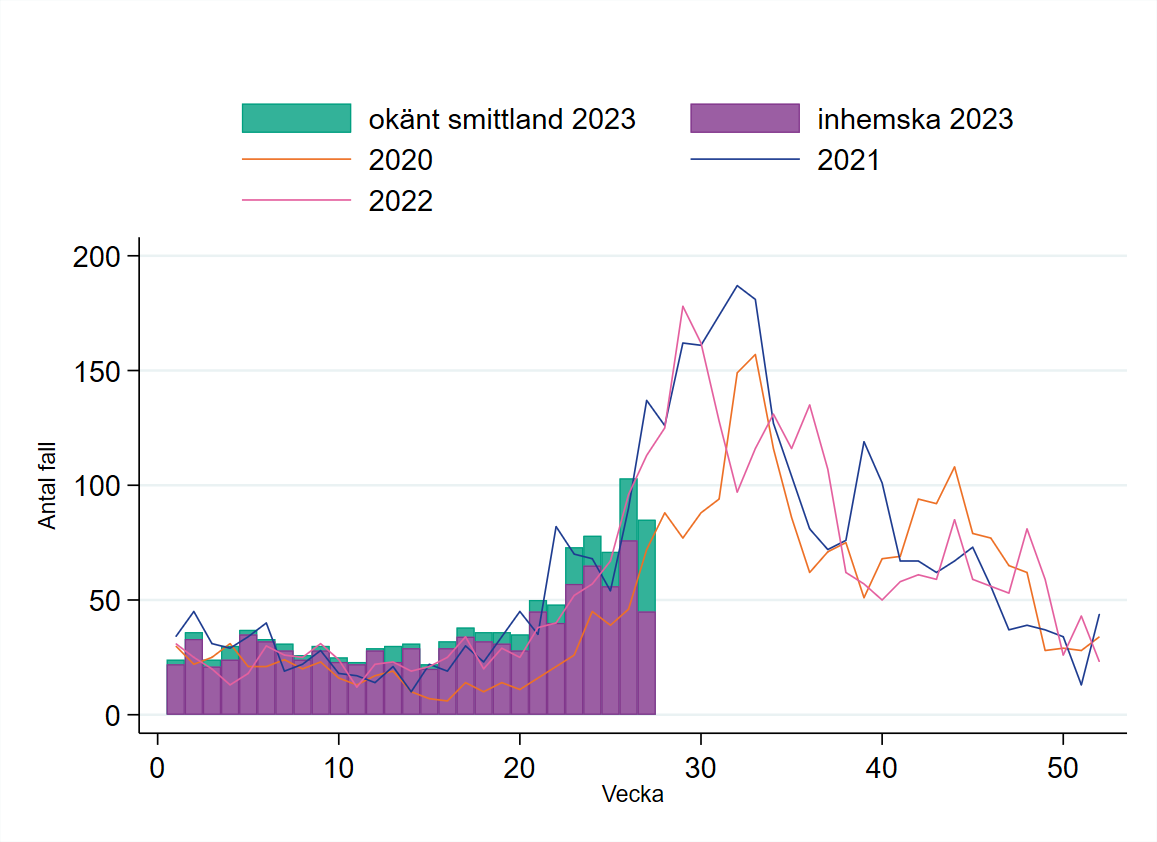
There has been an increase in the number of people who have been infected by the intestinal bacteria campylobacter in recent weeks. During week 26, the number of reported cases increased further compared to previous weeks and the increase looks set to continue.

Figure: The number of reported cases of campylobacter per week infected in Sweden or with an unknown country of infection (230706). Week 27 is not yet complete.

The number of sick people increased from week 21 to 60 cases per week from 30 cases.  In week 26, the cases increased further, a similar increase is seen in 2020-2022.

From mid-June, an increase in the occurrence of campylobacter in Swedish broiler flocks has also been observed. Previous studies have shown a connection between campylobacter infection and the consumption of fresh chicken, where around a third of those who have contracted the disease have been linked to fresh chicken. Campylobacter infection in humans is more common in summer as is the presence of campylobacter in broiler flocks.

Sweden sees another rise in illnesses for 2022


Food Safety News

Most foodborne infections rose in Sweden in 2022 compared to the year before, according to the latest figures.

A report by the National Veterinary Institute (SVA), Folkhälsomyndigheten (the Public Health Agency of Sweden), Livsmedelsverket (the Swedish Food Agency) and Jordbruksverket (Swedish Board of Agriculture) showed a rise for Campylobacter, Salmonella, Listeria, and E. coli infections. Some of this was because of increased travel and more people being infected abroad.

A total of 5,165 cases of campylobacteriosis were reported in 2022 and 57 percent of these were domestic. This is up on more than 4,000 cases in 2021. For domestic infections in 2022, the median age was 51 with a range of 0 to 101. More men, 54 percent, than women were sick.

A correlation between human cases and Campylobacter-positive broiler batches underscores the need for further preventive measures, said the report.

Research – Is Legionella Bacteria Becoming Antibiotic Resistant?

Legionella Control

In this article the water safety specialists at Legionella Control International look at the role of antibiotics in protecting humans against pathogenic organisms, paying particular attention to waterborne bacteria including Pseudomonas aeruginosa and legionella.

USA – No reduction in human illnesses from poultry-caused Salmonella

Food Safety News

“While the prevalence of Salmonella contamination in regulated poultry products has decreased by more than 50 percent in recent years, there has not been a reduction in human illnesses attributable to poultry,” a new USDA report says.

USDA’s Food Safety and Inspection Service (FSIS) has released a survey of Not-Ready-to-Eat Breaded and Stuffed Chicken Products for Salmonella. The June report was prepared by FSIS’s Laboratory Quality Assurance, Response, and Coordination (LQARCS) staff in the Office of Public Health.

According to the survey report: “FSIS worked with the Food Emergency Response Network to test for the presence of Salmonella and sanitary indicator aerobic organism counts using the current validated methods employed by 11 state public health and agriculture laboratories. From July 1, 2022, to September 30, 2022, the laboratories purchased approximately 15 samples of the product per month from nearby retail locations.

USA – Notes from the Field: Multistate Outbreak of Escherichia coli O157:H7 Infections Linked to a National Fast-Food Chain — United States, 2022

CDC

In August 2022, the Michigan Department of Health and Human Services alerted CDC to an approximately fivefold increase in regional cases of Escherichia coli O157:H7 infection. Whole genome sequencing was used to characterize isolates from laboratory-confirmed infections in ill persons. Initial patient interviews indicated that many had consumed meals from the same national fast-food chain. Federal, state, and local officials initiated an investigation to identify the outbreak source and prevent additional cases. This activity was reviewed by CDC and was conducted consistent with applicable federal law and CDC policy.*

CDC defined a case as an E. coli O157:H7 infection with an isolate highly related to the outbreak strain (within 0–2 alleles) by core genome multilocus sequence typing, with illness onset during July 26–August 24, 2022. PulseNet, CDC’s national molecular subtyping network for enteric disease surveillance, detected 109 cases from six states, including Michigan (67; 61%), Ohio (24; 22%), Indiana (11; 10%), Pennsylvania (four; 4%), Kentucky (two; 2%) and New York (one; 1%). The median patient age was 22 years (range = 1–94 years), and 49 (45%) were female. Fifty-two (48%) patients were hospitalized, and 13 (12%) developed hemolytic-uremic syndrome, a recognized complication of E. coli O157:H7 infection; no deaths occurred.

Belgium – Ferrero finds Salmonella again at Belgian factory

Food Safety News

Ferrero has informed Belgian authorities that it has found Salmonella at the site that was behind a major outbreak in 2022.

The confectionery company notified the Federal Agency for the Safety of the Food Chain (FASFC) of the Salmonella detection in the environment of the Arlon factory. It is not clear when the Salmonella positive was found, when authorities were told or whether it is the same type that was behind the outbreak.