Archives
-
Join 346 other subscribers
KSWFoodWorld
Blog Stats
- 453,485 Views
Category Archives: Microbiology Investigations
Research – Minimizing microbial contamination in primary production of fruits, vegetables, herbs and spices
In the recent past, many plant-based ingredients, either processed or unprocessed, were found to be contaminated with pathogenic bacteria, viruses or parasites:–
In 2010, 272 individuals were infected with the bacterium Salmonella. This US outbreak was traced back to contaminated black pepper.–
In 2003, 640 people were sick and four died due to Hepatitis A virus in green onions. This was the most widespread Hepatitis A outbreak in the US.–
In 2015 in the US, 546 people were ill due to the parasite Cyclospora in fresh cilantro. Contamination was found to be caused by poor agricultural practices.
Where does the contamination at farm level come from?
Contamination can have several origins, these are the so-called “routes of microbial contamination”. Seven routes have been identified:
1. Growing field and adjacent land;
2. Animals;
3.Manure-based soil amendments;
4.Agricultural water;
5. Hygiene and human health;
6.Worker harvesting practices;
7.Equipment, premises and transportation.
See the full guide at the link above
USDA – Don’t Fumble Food Safety on Super Bowl Sunday
WASHINGTON, Feb. 3, 2022 — On February 13, millions of Americans will come together to watch Super Bowl LVI and feast on hot and cold snacks throughout the four-hour event. This uniquely American tradition scores big on entertainment, but it is also rife with opportunity for foodborne illness.
“As families and friends safely gather to watch the big game, keep food safety in mind. No matter who you’re rooting for, foodborne illness is a dangerous opponent we face during the game,” said Agriculture Secretary Tom Vilsack. “Millions of people get sick from food poisoning each year. Following guidance on keeping food at safe temperatures, proper handwashing and avoiding cross-contamination will protect you and your party guests.”
Unlike other food holidays when meals are often consumed within an hour, Super Bowl fans often snack on food throughout the game. Perishable foods, such as chicken wings, deli wraps and meatball appetizers, as well as cut fruit and vegetable platters, can only be left out for two hours before they become at risk of bacteria multiplying to dangerous levels. USDA recommends you put out small amounts of food and replenish it frequently.
Here are some food safety tips for Super Bowl Sunday:
#1 Remember Your Four Steps to Food Safety
- Clean: Wash hands for 20 seconds before and after handling raw meat and poultry. Clean hands, surfaces and utensils with soap and warm water before cooking and after contact with raw meat and poultry. After cleaning surfaces that raw meat and poultry has touched, apply a commercial or homemade sanitizing solution (1 tablespoon of liquid chlorine bleach per gallon of water). Use hand sanitizer that contains at least 60 percent alcohol.
- Separate: Use separate cutting boards, plates and utensils to avoid cross-contamination between raw meat or poultry and foods that are ready-to-eat.
- Cook: Confirm foods are cooked to a safe internal temperature by using a food thermometer.
- Chill: Chill foods promptly if not consuming immediately after cooking. Don’t leave food at room temperature for longer than two hours.
#2 Cook Your Food to a Safe Internal Temperature
- Using a food thermometer, ensure you reach a safe internal temperature when cooking: meat (whole beef, pork and lamb) 145 F with a 3-minute rest; ground meats 160 F; poultry (ground and whole) 165 F; eggs 160 F; fish and shellfish 145 F; and leftovers and casseroles 165 F.
- If chicken wings are on the menu, use a food thermometer on several wings to gauge the doneness of the entire batch. If one is under 165 F, continue cooking all wings until they reach that safe internal temperature.
#3 Avoid the Danger Zone
- Bacteria multiply rapidly between 40 F and 140 F. This temperature range is called the Danger Zone.
- Perishable foods, such as chicken wings, deli wraps and meatball appetizers, should be discarded if left out for longer than two hours. To prevent food waste, refrigerate or freeze perishable items within two hours.
- Keep cold foods at a temperature of 40 F or below by keeping food nestled in ice or refrigerated until ready to serve.
- Keep hot foods at a temperature of 140 F or above by placing food in a preheated oven, warming trays, chafing dishes or slow cookers.
- Divide leftovers into smaller portions and refrigerate or freeze them in shallow containers which helps leftovers cool quicker than storing them in large containers.
#4 Keep Takeout Food Safe
- If you order food and it’s delivered or picked up in advance of the big game, divide the food into smaller portions or pieces, place in shallow containers and refrigerate until ready to reheat and serve. You can also keep the food warm (above 140 F) in a preheated oven, warming tray, chafing dish or slow cooker.
- When reheating food containing meat or poultry, make sure the internal temperature reaches 165 F as measured by a food thermometer.
- If heating food in the microwave, ensure that contents are evenly dispersed. Because microwaved food can have cold spots, be sure to stir food evenly until the food has reached a safe internal temperature throughout.
RASFF Alerts – Animal Feed – Salmonella – Feeder Mice – Rapeseed Extraction Meal
Salmonella spp. in rapeseed extraction meal from Germany in the Netherlands
Salmonella detected in Feeder Mice from Lithuania in the UK, Poland and Netherlands
Posted in Animal Feed, Animal Feed Salmonella, Animal Feed Testing, Decontamination Microbial, Food Micro Blog, Food Microbiology, Food Microbiology Blog, Food Microbiology Testing, microbial contamination, Microbiological Risk Assessment, Microbiology, Microbiology Investigations, Pet Food, Pet Food Testing, raw pet food, Salmonella
Research – Effect of phenolic compounds and cold shock on survival and virulence of Escherichia coli pathotypes
Phenolic compounds (PC) affect many metabolic processes of microbes; however, there is no information about their effectiveness when these act in combination with low temperatures for the control of Escherichia coli pathotypes. In this study, four PC, (tannic acid [TA], gallic acid [GA], methyl gallate [MG], and epigallocatechin gallate [EG]) in combination with cold shock (CS, 10°C) were evaluated for their effect on growth, swarming motility, biofilm formation, and expression of selected virulence-related genes of E. coli pathotypes [enteropathogenic (EPEC), enterohemorrhagic (EHEC), and enterotoxigenic (ETEC)]. Sub-inhibitory concentrations of the PC were used alone (37°C) or in combination with CS. For CS assays, E. coli strains were grown at 37°C until mid-log phase and then subjected to 10°C for 4 hr. Membrane damage was determined by flow cytometry; swarming motility was measured on soft-LB agar, biofilm formation was analyzed by crystal violet staining, and gene expression of CS, biofilm, and swarming motility related-genes was determined by qPCR. Sub-inhibitory concentrations of the PC did not affect the viability of the strains. The combination of CS + TA provoked the highest (p ≤ .05) mortality in all pathotypes. CS + GA inhibited (100%) the motility of EHEC and ETEC. PC and CS + PC reduced (p ≤ .05) biofilm formation. The combination of PC and CS affected virulence factors and their gene expression of pathogenic E. coli presenting a novel alternative for its control in foods.
Posted in Biofilm, Decontamination Microbial, E.coli, EHEC, EPEC, Food Micro Blog, Food Microbiology, Food Microbiology Blog, Food Microbiology Research, Food Microbiology Testing, Food Technology, microbial contamination, Microbiological Risk Assessment, Microbiology, Microbiology Investigations, Research, STEC, STEC E.coli
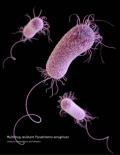
UK – Water quality – Risk assessments for Pseudomonas aeruginosa and other waterborne pathogens. Code of practice

Overview
What is BS 8580-2 – Risk assessments for Pseudomonas aeruginosa about?
Our experts identified a lack of guidance on how to conduct risk assessments for Pseudomonas aeruginosa (PA) and other opportunistic waterborne pathogens other than Legionella. To fill that gap, BS 8580-2 is a new British Standard recommending a PA risk assessment process and supplying information and support on how to understand microbial hazards, prioritize actions and minimize risks.
Who is BS 8580-2 – Risk assessments for Pseudomonas aeruginosa for?
BS 8580-2 on risk assessments for pseudomonas aeruginosa applies in all types of healthcare provision, including hospitals, and care, nursing and residential homes, together with other settings where water systems and associated equipment can pose a risk. This can include in the educational, travel, industrial, leisure and beauty sectors, including health spas, nail bars and tattoo parlours.
Users of BS 8580-2 will be building and design engineers and architects; providers of fittings, outlets and components for water systems; installers and commissioners; risk assessors; regulatory bodies; building services engineers; water treatment consultants; travel, leisure and other relevant buildings owners and operators; and those responsible for the safe management of water systems, especially within leisure centres, schools, swimming pools, passenger vessels, spa pools, hot tubs etc.
BS 8580-2 will also interest clinicians, microbiologists, augmented care specialists and infection controllers in healthcare.
What does BS 8580-2 – Risk assessments for Pseudomonas aeruginosa cover?
BS 8580-2 gives recommendations and guidance on how to carry out risk assessments for pseudomonas aeruginosa (PA) and other waterborne pathogens whose natural habitat is within constructed water systems and the aqueous environment (autochthonous), rather than those present as a result of a contamination event. It includes those pathogens that can colonize and grow within water systems and the associated environment.
BS 8580-2 also covers risk assessments of distributed water systems and associated equipment, system components and fittings as well as above ground drainage systems. It covers PA risk assessment reviews and reassessments where a previous assessment has been undertaken and risk factors identified. It takes account of all relevant environmental and clinical factors and aspects of human behaviour leading to contamination events. It considers risk factors within the associated environment leading to conditions which can encourage the colonization and growth of waterborne pathogens and transfer of antibiotic resistance.
NOTE: BS 8580-2 does not cover risk assessments for Legionella spp.; these are covered in BS 8580-1, or risk assessments for enteric microorganisms derived from human or animal faecal contamination or sewage ingress.
Why should you use BS 8580-2 – Risk assessments for Pseudomonas aeruginosa?
You should use BS 8580-2 on risk assessments for pseudomonas aeruginosa because:
- It plugs an information gap in relation to pseudomonas aeruginosa (PA) risk assessments, taking its unique additional considerations into account
- It codifies the latest and most efficient approach to multidisciplinary PA risk assessments
- Its recommended processes can be applied to other opportunistic waterborne pathogens
- It can help healthcare providers demonstrate compliant risk management in respect of Dept of Health Guidance
- It can help leisure sector organizations maintain compliance with their legal health and safety obligations
- It can help users develop their expertise in risk assessment and strengthen organizational risk management
BS 8580-2 contributes to UN Sustainable Development Goal 3 on good health and well-being and Goal 6 on clean water and sanitation.
Posted in Contaminated water, Decontamination Microbial, Food Micro Blog, Food Microbiology Blog, Food Microbiology Research, Food Microbiology Testing, microbial contamination, Microbiological Risk Assessment, Microbiology, Microbiology Investigations, Pseudomonas, Pseudomonas aeruginosa, Water, water microbiology, Water Safety
USA -FDA Warning Letter – 5,000 Years Foods, Inc.
The U.S. Food and Drug Administration (FDA or we) inspected your kimchi operation located at 3465 N. Kimball Ave, Chicago, IL 60618 from June 14, 2021 through August 3, 2021. FDA conducted this inspection as a follow up to the Regulatory Meeting held with your firm on February 21, 2019.
During the inspection, FDA investigators found serious violations, described below, of the Current Good Manufacturing Practice, Hazard Analysis, and Risk-Based Preventive Controls for Human Food regulation (CGMP & PC rule), Title 21, Code of Federal Regulations, Part 117 (21 CFR Part 117). At the conclusion of the inspection, FDA issued an FDA Form 483, Inspectional Observations, listing deviations found at your facility.
Based on FDA’s inspectional findings, we have determined that the ready-to-eat kimchi products manufactured in your facility are adulterated within the meaning of Section 402(a)(4) of the Federal Food, Drug, and Cosmetic Act (the Act) [21 United States Codes (U.S.C.) § 342(a)(4)] in that they were prepared, packed, or held under insanitary conditions whereby they may have become contaminated with filth or whereby they may have been rendered injurious to health. In addition, failure to comply with the requirements under Section 418 of the Act [21 U.S.C. § 350h] is a prohibited act under section 301(uu) of the Act [21 U.S.C. § 331(vv)]. You can find the Act and FDA’s regulations through internet links in FDA’s home page at http://www.fda.gov.External Link Disclaimer
We received your written responses dated July 3, 2021, and August 17, 2021, which included a summary of corrective actions by your facility. After reviewing the inspectional findings and your response to the observations listed in the FDA Form 483, we are issuing this letter to advise you of FDA’s concerns and provide detailed information describing the findings at your facility.
Hazard Analysis and Risk-Based Preventive Controls (21 CFR Part 117, Subpart C):
1. Your hazard analysis did not evaluate known or reasonably foreseeable hazards to determine whether there are any hazards requiring a preventive control for your ready-to-eat kimchi products (e.g., sliced cabbage kimchi, cube cut radish kimchi, and white whole kimchi), as required by 21 CFR 117.130(a). Your “Hazard List” consisted of a number of potential hazards but did not evaluate which ones actually require a preventive control. Specifically:
a. You did not evaluate environmental pathogens, such as Listeria monocytogenes, to determine whether they are a hazard requiring a preventive control, to comply with 21 CFR 117.130(c)(1)(ii). For example, you manufacture ready-to-eat sliced cabbage kimchi which is exposed to the environment at the steps of cabbage halving, brining, rinsing, draining, chopping, mixing with sauce, and packaging. The kimchi does not receive a lethal treatment or otherwise include a control measure (such as a formulation lethal to the pathogen) that would significantly minimize the pathogen. Thus, environmental pathogens are a hazard likely to occur in the absence of preventive controls (i.e., sanitation controls). Your “Hazard List” identified but did not otherwise evaluate contamination from the “food handling environment.”
We note that at the start of the inspection, your written procedures for sanitation of food-contact surfaces consisted of a generic “Cleaning and Disinfection” document downloaded from the internet, which indicated general tips for completing and checking sanitation tasks. The document was not specific to your facility or food. In addition, your monitoring record was a general-facility (b)(4) “Cleaning Record” which did not specify what was being cleaned or monitored and which was not subject to record review. Further, deficiencies in your sanitation monitoring are evidenced by FDA investigators’ observations on June 14-15, 2021, that the (b)(4) that was cleaned, sanitized, and deemed ready for production of ready-to-eat kimchi had apparent food residue on the blades and behind the feed mechanism used to push the (b)(4) through the (b)(4) blades.
During the closeout meeting at the end of the inspection, you provided an updated blank sanitation monitoring record (“Environm[en]tal Cleaning & Sanitizing Log”) with a statement at the top on how to clean and sanitize specific pieces of food-contact equipment such as the (b)(4), cutting boards, preparing tables, utensils, and kimchi mixer. The form did not cover your tanks for cabbage brining and mixing. The form instructed to clean with soap and water but did not describe the type and concentration of soap or the tools and technique for cleaning. The form instructed to sanitize the equipment “using a mixture of (b)(4) of (b)(4) to (b)(4)” but did not actually describe how to sanitize the equipment with the solution.
FDA’s current inspection included the collection of environmental swabs on June 15, 2021, during the production of ready-to-eat kimchi, and confirmed five (5) of sixty-six (66) swabs positive for Listeria monocytogenes. Of the positive findings, three (3) swabs were collected from areas adjacent to food-contact surfaces where RTE ingredients were being prepared, including:
• Topside of a large white cutting board used to hold baskets of cabbage for draining after brining and rinsing. During our inspection, cabbage was observed hanging off the side of the baskets and in direct contact with cutting boards.
• Underside of a white cutting board was used to hold draining baskets of cabbage.
• Side of wet and difficult to clean wooden crate used to hold cutting boards that were holding the draining baskets of cabbage.
Whole genome sequencing (WGS) was conducted on the above referenced L. monocytogenes isolates obtained from the FDA environmental samples. Based on the results of the WGS analysis, the environmental samples collected at your facility represent one (1) unique strain. We advised you of the importance of these WGS results via a conference call on September 10, 2021.
L. monocytogenes is a pathogenic bacterium that is widespread in the environment and may be introduced into a food processing facility from raw materials, humans or equipment. Without proper controls, it can proliferate in food processing facilities where it may contaminate food. Once L. monocytogenes is established in a production area, personnel or equipment can facilitate the pathogen’s movement and contamination of food-contact surfaces and finished product. It is essential to identify the areas of the food processing plant where this organism is able to survive, and to take such corrective actions as necessary to eradicate the organism by rendering these areas unable to support the survival and growth of the organism and prevent the organism from being re-established in such sites.
Note that environmental monitoring is required when contamination of a ready-to-eat food with an environmental pathogen is a hazard requiring a preventive control (see 21 CFR 117.165(a)(3)). Environmental monitoring is used to verify that sanitation preventive controls are designed and functioning to reduce the hazard of environmental pathogens such as Listeria monocytogenes contaminating your finished product.
Posted in Decontamination Microbial, Food Hazard, Food Micro Blog, Food Microbiology, Food Microbiology Blog, Food Microbiology Research, Food Microbiology Testing, HACCP, Listeria, Listeria monocytogenes, microbial contamination, Microbiological Risk Assessment, Microbiology, Microbiology Investigations
USA – FDA Core Investigation Table Update
| Date Posted |
Reference # |
Pathogen |
Product(s) Linked to Illnesses (if any) |
Investigation Status |
| 2/2/
2022 |
1054 | Enteroinvasive E. coli O143:H26 |
Not Yet Identified | Active |
| 1/10/
2022 |
1050 | E. coli O121:H19 |
Romaine | Active |
| 12/29/
2021 |
1052 | E. coli O157:H7 |
Packaged Salad | Active |
| 12/20/
2021 |
1039 | Listeria monocytogenes |
Packaged Salad | Active |
| 12/15/
2021 |
1048 | Listeria monocytogenes |
Packaged Salad | Active |
Posted in E.coli O121, E.coli O157, E.coli O157:H7, FDA, food bourne outbreak, Food Illness, Food Micro Blog, Food Microbiology, Food Microbiology Blog, Food Microbiology Research, Food Microbiology Testing, Foodborne Illness, foodborne outbreak, foodbourne outbreak, Illness, Listeria, Listeria monocytogenes, microbial contamination, Microbiological Risk Assessment, Microbiology, Microbiology Investigations, O143:H26, outbreak, STEC, STEC E.coli
Research – The Risk of Salt Reduction in Dry-Cured Sausage Assessed by the Influence on Water Activity and the Survival of Salmonella

Water activity (aw) is the main hurdle for microbial control in dry-cured sausages. The aw can be influenced by drying or adding electrolytes or humectants. Dry-cured meat products are partially dried, which, together with added salt, results in safe aw values. Currently, there is a trend to reduce salt in meat products, which can compromise the preservation process. The present work aims to evaluate the influences of added salt levels (1% or 3%) and the use or omission of phosphates and wine on the aw of a dry-cured sausage, and to evaluate the possibility of estimating the aw from the moisture loss and the behavior of Salmonella during dry-cured sausage (chouriço) processing. There was a strong relationship between moisture and aw, regardless of the salt level and the presence of phosphates or wine. Predicting aw from moisture loss is possible using the Boltzmann sigmoid function. The salt level strongly influences Salmonella behavior, mainly through aw reduction. An increase in aw by 0.01 units reduced the odds of achieving a 5-log reduction in Salmonella counts to half. Increasing added salt from 1% to 3% increased the odds of achieving a 5-log Salmonella reduction 7.5-fold. The current trend to reduce salt in foods must be carefully approached if applied to cured meat products, as it has substantial consequences on aw evolution and Salmonella survival.
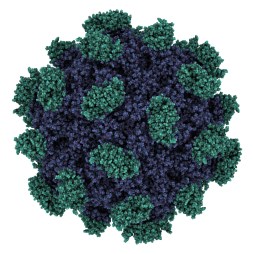
Research – Hepatitis E virus defies alcohol-based hand disinfectants

The hepatitis E virus (HEV) can cause serious liver inflammation and is the most common cause of acute virus-mediated hepatitis worldwide. Infection can be prevented through appropriate hygiene measures. Scientists from TWINCORE, Centre for Experimental and Clinical Infection Research, the Hannover Medical School (MHH) and the Ruhr Universität Bochum (RUB), together with partners from industry, have investigated the effectiveness of various common hand disinfectants against HEV. They were able to show that most formulations do not completely inactivate the virus.
In Germany and Europe, HEV has its natural reservoir in pigs. The infection can spread from animals to humans, which is called a zoonosis. This often happens through incompletely heated or raw meat products such as minced meat. In tropical regions of the world, infections occur via contaminated water, sometimes causing large outbreaks. “Some of these infections could possibly be prevented with the right hygiene measures,” says Dr. Patrick Behrendt, physician in the Department of Gastroenterology, Hepatology and Endocrinology at the MHH and head of the junior research group “Translational Virology” at TWINCORE. This includes, above all, correct hygienic hand disinfection in everyday clinical practice when dealing with hepatitis E patients and infected animals.
Together with the team of Professor Eike Steinmann, head of the Department of Molecular and Medical Virology at RUB, Behrendt has investigated whether common hand disinfectants can render the virus harmless. “We tested the effect of the alcohols ethanol and propanol, both individually and in the mixing ratios recommended by the WHO, and also commercial hand disinfectants,” says Steinmann. “However, only one product that contained another component was effective.”
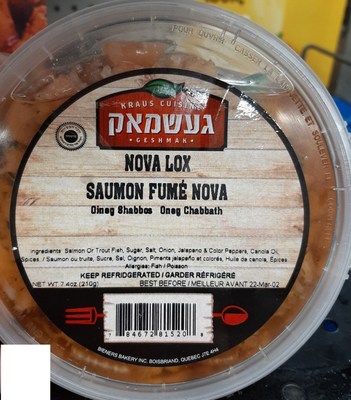
Canada – Warning not to consume Nova smoked salmon sold by Kiryas Tosh supermarket
WARNING TO THE POPULATION
QUEBEC CITY, Feb. 2, 2022 /CNW Telbec/ – The Ministry of Agriculture, Fisheries and Food (MAPAQ), in collaboration with the Kiryas Tosh supermarket , located at 601, chemin de Tash, in Boisbriand , advises the population not to consume the product indicated in the table below, because it has not been packaged in such a way as to ensure its harmlessness.
|
Product name |
Format |
Affected lot |
|
“NOVA smoked salmon” |
210g |
Units sold until February 2, 2022 |
The product that is the subject of this warning was offered for sale until February 2, 2022, and only at the establishment mentioned above. The product was packaged in a clear plastic container and was offered refrigerated. The product label bears the words “Kraus Cuisine”.
The operator is voluntarily recalling the product in question. It has agreed with MAPAQ to issue this warning as a precautionary measure. In addition, people who have this product in their possession are advised not to consume it. They must return it to the establishment where they bought it or throw it away. Even if the affected product shows no signs of tampering or suspicious odors, its consumption may represent a health risk. It should be noted that no case of illness associated with the consumption of this food has been reported to MAPAQ to date.
Additional information
The Ministry publishes various information documents concerning food safety. Interested persons can consult them in the “Food Consumption” section of the MAPAQ website: www.mapaq.gouv.qc.ca/consommation . They also have the possibility of registering online, by visiting www.mapaq.gouv.qc.ca/rappelsfoods , to receive, by e-mail, the food recall press releases published by the Ministry. Finally, it is possible to follow “MAPAQfoods” on Twitter at the following address: www.twitter.com/MAPAQfoods .
Hazard Classification: Class 1
Reference Number: 4488
Source:
Media relations
Direction des communications
Ministry of Agriculture, Fisheries
and Food
Tel. : 418 380-2100, extension 3512
www.mapaq.gouv.qc.ca